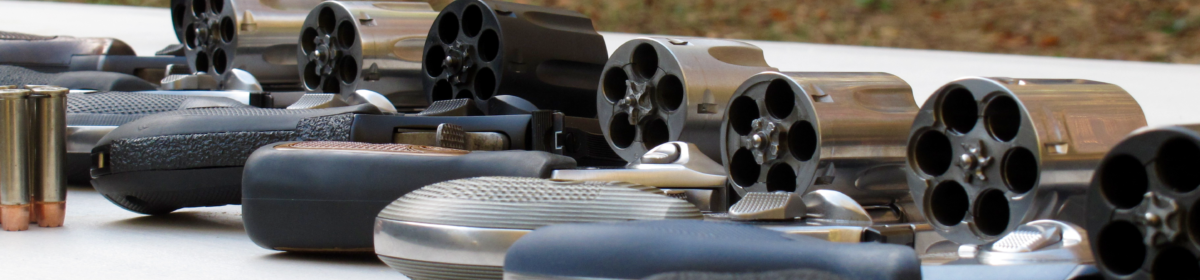

The .327 Federal Magnum was introduced in 2008 as a joint venture between Federal Ammunition and Sturm Ruger, Inc. It was conceptualized as a defensive cartridge that would maximize performance from small revolvers. The .327 was developed to operate at a SAAMI ceiling of 45,000 psi, permitting serious velocity from 32 caliber bullets weighing 70-130 grains. Its predecessor, the .32 H&R Magnum, is enjoying a revival of interest thanks to the Ruger LCR and the S&W 432/632 UC revolvers. While some balk at calling the .32 H&R a “Magnum” cartridge based on its pressure limit, the .327 handily earns the title.
slim pickin’s
The .327 Federal has a loyal if limited following; its popularity after 17 years resembles that of the 10mm Auto at the same point. It’s a worthy round, and I hope that it catches a second wind like the 10mm has done.
The .327’s “niche” status affects the number of available factory loadings for the chambering. Perusing a few online vendors, Midway USA lists 10 choices in the .327 Federal. By comparison, they show 116 choices for the .38 Special and 97 for the .357 Magnum. Lucky Gunner carries 8 loadings in the .327. Of those, 6 are offerings from Federal, one of the other two is Speer’s Gold Dot HP.
care package
Speer is owned by the same company as Federal, The Kinetic Group, an offshoot of Vista Outdoors that handles ammunition. Recently, Mike’s contact from Vista was good enough to send me samples of current Federal loadings, and some Gold Dot to boot.
The care package included the American Eagle Jacketed Soft Points in 85 and 100 grain weights, The recently introduced 104 gr. HST Jacketed Hollow Point, and the proven Speer 100 gr. Gold Dot.

Federal advertises their American Eagle line as target ammunition; The 85 gr. JSP makes a good companion load to Federal’s 85 gr. reduced recoil Hydra Shok. The 100 gr. JSP serves likewise for the Gold Dot or the HST round. If either of the American Eagle rounds are pressed into a defensive role, keep in mind that these JSP’s typically don’t expand much in gel tests and tend to over penetrate.

The HST and the Gold Dot are purpose built for self defense use and are well regarded for that application, regardless of caliber. I was pleased to see Federal offer their excellent HST bullet in the .327. The Gold Dot was originally offered in a 115-grain weight; the projectile weight was reduced to 100 grains 5 or 6 years ago.
Shots fired
I tested all the loads in a Taurus 327 TORO with a 3” barrel and a Ruger LCR with a 1.87” barrel. The loads were fired over a chronograph and shot at 15 yards offhand to check for “practical” precision. In anticipation of this test, I swapped the Crimson Trace Laser Grips that the LCR usually wears for the Hogues that come standard on the gun. Previous experience with .327 Magnum loads in the LCR proved the Laser Grips weren’t the best choice for extended range sessions. The heavier Taurus wore OEM Hogues with the open backstrap and had a Shield SMS2 Optic mounted.

The American Eagle 85 grain JSP was first up. It struck just low and left of the X with the Taurus; it being zeroed with 100 grain bullets running a little slower. It also impacted a bit left in the LCR. Both guns provided respectable groups with the 85 gr. JSP. The blast was not horrid; the recoil was quite manageable. There was a little bit of that speckling sensation that magnum cartridges give with unburned powder in short-barreled revolvers, but it wasn’t oppressive.

The 100 grain JSP was a little snottier than the 85. The peppering of unburned powder was more noticeable (especially in the Taurus), as was the blast. Recoil was stout but tolerable in both guns. It shot very close to the Red Dot zero in the Taurus and to the sights with the Ruger.

The HST was fired next, starting with the Taurus. Recoil was sharp and snappy but not punishing in the 25-ounce gun. The report was impressive, giving an audible crack. There was no peppering with the HST; it hit precisely to the dot, yielding an impressive group. The velocity averaged a blistering 1405 fps from the Taurus 3” barrel.

Shooting the HST from the LCR was an experience. The Hogues shielded my hands from trauma, but the first shot separated my support hand from my shooting hand completely. I had never had a round do that with the LCR. I firmed up my grip on the second shot, the HST laughed at me. I grasped harder for every shot; it took me to the last round in the cylinder to maintain a two-handed grip. Bullets impacted just high of aimpoint in a decent group. The HST’s averaged just shy of 1300 fps in the LCR.

I finished with the Gold Dot, which (curiously) was housed in brass cases instead of nickel. I hadn’t seen one in a brass case since the GDHP’s were introduced in the 1990’s. The Gold Dot shot to the Taurus’ zero averaging around 1360 fps. Blast, recoil, and report were perceptibly less than the HST. The Gold Dot shot like a match round in the LCR, hitting to the sights and providing a pleasingly small group at 15 yards. Recoil was stout but didn’t disrupt my grip like the HST did. A batch of .327 GDHP I fired through this LCR a few years back peppered my face with unburned powder; this one did not. They averaged 1285 fps. The factory grips were much more comfortable than the Crimson Trace Laser Grips when firing the GDHP.

choices, choices
If you’re looking to maximize the effectiveness of a revolver chambered in .327 Magnum, the defensive offerings from Federal and Speer are hard to beat.
In heavier guns like the Taurus or a Ruger SP101, the 104 gr. HST would be superior. In an LCR, I would consider the Gold Dot as a maximum load. I typically carry the Federal Low Recoil 85 grain Hydra-Shok in mine, but the performance and accuracy of the GDHP is extremely compelling- if you’re willing to deal with the recoil and sharp report.

My chronograph was set 12 feet from the muzzles on a 70-degree day. Velocities were 100-200 fps less in the Taurus than with the four-inch vent barrel used by the factory, and a bit more than 200 fps slower in the LCR. Nonetheless, speeds were impressive for short-barreled revolvers. Ignition was 100% with both guns, and (even with the high pressures generated) all fired cases ejected smoothly.
Bravo, Federal and Speer!

Another great ammo review! Thanks Kevin.
I’m a big Gold-Dot fan and use them in all my 38 Special and 357 mag carry guns. I’m really hoping that Speer will produce a Gold-Dot in 32 H&R Magnum? That would be awesome.
Again, I really enjoy your ammo reviews, especially when your review validates Speer Gold-dots as an excellent defensive ammo choice.
You’re welcome, Glenn. I agree, Gold Dots are excellent, proven bullets- it’s hard to go wrong with them even though they’re not the latest greatest thing. That would be outstanding if Speer released one in .32 H&R Mag- good call on that! How about it, Speer?
I’d be all over that for my LCR .32 H&R which has become my new favorite carry snub.
Thanks for the chronography report, Kevin. If you were inclined to do a Part Two I expect it would be informative to see the difference between 327 and 32 H&R when it comes to scores/times/splits on the usual defensive drills. Yes, I have my suspicions. Keep up the good work. Be well.
You bet, Michael. That’s a good suggestion on the comparison drills; I believe my suspicions mirror yours! The .327 Federal is sort of the “Mongo” of mouse guns, and you don’t get something for nothing when it comes to practical ballistics (dadgum physics!). The .32 H&R Mag has certainly earned its place as a serious contender in the lightest of these guns. Thank you, Sir!
The entire .32 family of centerfire handgun cartridges seems like a winning concept to this shooter. I just wish more gun owners supported it so manufacturers could justify making more of the fodder for lower costs.
Amen, Spencer. I keep hoping the ammo market will catch up with the growing tribe of shooters that appreciate and carry .32’s. It’s moving slower than hoped for, but I’m optimistic that the manufacturers will respond to it. It seems like the guns are selling well and folks are seeing the benefits of the .32 family of cartouches. Speer? .32 Gold Dot? Federal? .32 H&R HST? 🙂
Kevin, very good writeup. Sounds like you’ve become a .32 caliber convert, maybe ? Around my part of the country, I’ve yet to see a .327 revolver in the wild. A few .32 H&Rs are around, very few.
My observations, and ‘prejudices’ are from experience on the street with, and as a devotee of the .38 Special and .357 Magnum rounds. I hold both of those rounds in very high regard, and they both have their niche – around town, my .38 Specials tag along. When in the mountains Jeeping, or on road trips, the .357 goes for the ride. (We have 4-legged cougars and coyotes in North Georgia).
That said, one potential downside I see to the .327 Magnum, particularly as a defensive round, is for the less than avid shooting nerd. The report and recoil is apt to totally offset any positive attributes of the round. Muzzle blast can startle a less than skilled shooter into a freeze moment. You end up creeping over that point of diminishing returns.
If you as an experienced and competent shooter had “issues” with the recoil, particularly in the LCR, imagine Joe Bleaux who goes to the range once a year – if that. My gut tells me that the .32 H&R Magnum would be the better bet for controlled and manageable fire in snub guns, while the .327 would best be suited in larger frame guns like your Taurus.
Aside from the effect for the shooter, I would be curious to see how running 45,000 psi rounds through these smaller guns will affect longevity and durability over the long haul, both from being battered about with recoil, but also the effects of high pressure, high temperature gas cutting of the forcing cone and cylinder window.
Hey S. Bond, thank you for reading it and for your thoughtful comments. I’m a big fan of that extra round in the cylinder. that is one of the biggest plusses for me, in a J frame sized gun. I’m not sure I’m doctrinally a convert, because I carry a six shot .38 Special more often than my .32’s. I do feel adequately armed if I happen to be carrying a 432 UC or the 327 LCR, both of which I prefer to a .38 J frame for the extra round of capacity. The .32 H&R is plenty in an alloy J frame, I carry mine with the Double Tap solid Copper HP load that hits to the sights when a conventional sight picture is applied (I was happy to see that testing that DB and Jason Cloessner recently did showed that bullet to perform pretty well through auto glass). I wouldn’t want to shoot a .327 Fed Mag in a gun that light. The steel framed LCR is the bare minimum for .327 loads- carefully picked ones at that. You rightfully point out that the .327 is not a sound choice for novice shooters, or for general snub gun use. That .327 Gold Dot is absolute max in the LCR, and for most of us, better sent from a steel framed gun. I have no desire to longevity test .327 full house loads through these small guns, Sir! I think your suspicions would bear out on that- sorta like a steady diet of blue flamer .357 125 gr. JHP’s would treat an old Model 19. Practicing with .38’s in those old K frames and .32 H&R’s in the .327 snubs strikes me as a very prudent practice. I do think that well placed .327 HST bullets would work just peachy on Coyotes and those big kitties in Georgia!
I’m not a fan of the .327 Federal, personally. The increased blast, noise, recoil (and pressure) are turn offs for me, especially in a compact revolver. .32 H&R is more than adequate for me in a defensive revolver.
That said, I think .327 could be an effective cartridge out of a lever-action rifle. I suspect it would be flatter-shooting than the .357. Too bad only Henry makes a .327 lever-action, and it doesn’t have a loading gate. If Rossi made their Winchester 92 clone in .327 Federal, I’d buy one.
Perhaps the Ruger-Marlin company is thinking about producing a .327 Federal version of their Model 1894 Trapper and SBL series lever guns. Now that would be worth the wait.
Ruger has done the best job of any gun maker to date in supporting the .327 Federal cartridge. That would be a logical and welcome intro for them. Like you, I would ask them to concentrate on a Trapper sized and possibly light weight version of an 1894. a 16″ barreled carbine with an overall weight of 5-6 pounds would sure be handy…
Henry makes several LA models in .327 FM
The .32 H&R works well for defensive use, particularly in the smallest, lightest revolvers.
I think you’re right about rifle potential, Axel. The .32-20 did (still does, if you have one) a solid job in that role in a 92 Winchester for a long time. The .327 Magnum has more horsepower and handloaded with slow burning powders for 16 inch plus barrels, it should be really impressive. 100-130 grain bullets at 2000 fps should be realistically attainable. It would be a fun project to explore.
How I Learned to Stop Worrying and Love the .327…
That first cylinder of Federal JSP 100gr from the LCR made me grateful for having a strong grip and quality ear protection! The abuse was fun enough that acquisitions of SP101, GP100, Single Seven 7″, and Blackhawk 8-rounder soon followed, along with a Henry carbine…total commitment, as it were!
Now that the range in SLO is open again, thank you Kevin for helping me decide on what to bring!
Hahaha! But Ricky, they’ll see the Big Board! 😆
Glad the range is open, Ricky, and glad I could help with range bag contents decisions!
Good article. I would appreciate more info on .32 cartridges and reloading of same.
Thank you, CG. I wrote an article here in 2021 about handloading for the Ruger LCR .327. You can find it with the search feature on the site. It was about finding practical midrange loads for snubs like the LCR. I talk about handloading in the feature on the Taurus 327 TORO and the 432 UC here too, if you hadn’t seen those. I’ll try to keep them coming!
I had no opinion on this cartridge until trying a friend’s Ruger after an ICORE match last fall.
I was really surprised at the unpleasant bark of the cartridge. It seemed to bypass my stout hearing protection and penetrate my skull to my inner ear in an extremely unpleasant, jarring way. That did it for me. I’ll pass.
Having said that, as long as no one fires it near me, have at the rest of you!
Hey Brett, you touched on what is probably the biggest check in the “con” column for the pros and cons of this cartridge. It can dish out some wicked decibels, no doubt.
Complaints about the 327’s bark are no surprise. Attempts to chamber revolvers for 30 Carbine are instructive.
The U.S. Army tested a five inch M&P so chambered in 1944. “The velocity from a five-inch barrel was reported to be 1277 feet per second.” Sound familiar? “The downsides were a reported massive increase in muzzle blast and concussion.” Quelle surprise.
In the 1970s (late in the “Hearing Protection is for Sissies” Era) I spoke with a fella who bought a Ruger Blackhawk chambered for 30 Carbine. He rolled a running coyote with his first two shots out of the box, and never fired it again. Said his ears rang for day. That model was discontinued in 1972 after a four year run. That lesson long forgotten, Ruger has chosen to reintroduce the 30 Carbine Blackhawk. Perhaps it will be shipped with ear plugs…
I was unaware of that .30 Carbine M&P, Michael, thanks for the lesson. History proves our gun ideas are cyclical, and we tend to forget why some of them don’t stick! Perhaps a lanyard ring with some of those foamy earplugs on a string attached should be mandatory for revolvers chambered in .30 Carbine and .327 Federal!
How about objective measurements of the sound made by various revolver calibers and cartridges, using test equipment to analyze sound levels and frequencies? This comparison should include magnum (.32H&R, .327, .357, .41, .44) and non-magnum (.38SPL, .44SPL, 9mm) varieties.
In each caliber, compare at least two different barrel lengths, with several different cartridges. Repeat these tests both outdoors and indoors.
For extra credit, include ported versions of these revolvers in this noise shootout.
Objectively speaking, any cartridge that is subsonic will be less loud than those going supersonic. Hence why .38 Special is often preferred over .357 Magnum if you ever had to shoot indoors.
I suspect the reason .327 Federal has a reputation for being loud us because it’s shooting a smaller, lighter bullet at a high pressure. According to SAAMI, .327 has a maximum pressure of 45,000 PSI. That’s even higher than SAAMI’s 35,000 PSI for .357 Magnum.
That would be a pretty cool test that would likely yield some good info, Ricky. I hope someone with the equipment needed reads this and hooks us up- its beyond my capabilities! In my experience, the non magnums like the .32 Long, .38 and .44 Special, and .45 Colt produce much less sonic trauma than any Magnum cartridge. I have so little OEM hearing left, I am a mandatory ear protection guy, regardless of the chambering!
My good buddy Eric is a very experienced handgunner who was present when I first tried the LCR with .327 Fed Mag. We got to talking yesterday about noise, and he did not think it was a deal-breaker for .327 defensive use, especially outdoors.
He points out that .357 and .44 Mag, .454 Casull and the like are also extremely loud, yet many of us still choose them for self-defense in backcountry scenarios where hearing protection is just not on the menu…but you might be!
I have two .327’s, one is a 2-inch Taurus and the other is a 6-inch GP100. Out of the heavy 6-inch gun, expect 300 – 400 fps more velocity and negligible recoil from any of the tested loads.
Hey Maz, that bump to the 6″ GP100 makes for some truly impressive velocities. The 3″ barrel of the Taurus is the longest barrel I have used to date, but the longer barrels get the most out of the .327 Magnum, as you point out. Those little bullets are moving!
When 327 first came out, I was really interested but no one had one for me to try. So I bought a GP-100 and took the plunge. I love the cartridge and I did a comparison study between it and 357 Magnum. It was interesting to see the results that did show both objectively (math involved which for me is kind of dangerous) and subjectively, the tag line of 90% of the power with 70% of the recoil worked out(I would be happy to share if you want to see it). Since then I have upgraded the sights of my 4.2 inch GP-100 and I have added a Finks Custom 3 inch SP-101 to my stable. I plan on getting a rifle in 327 but I am hoping someone will make one with a loading gate.
Hey Karl, that 90/70 tag line dangerous math sounds pretty accurate, especially with a bigger gun like a GP-100. A Finks Custom SP-101 sounds like a really solid choice for an EDC gun, and I’m with you on that loading gate equipped lever gun request. Harumph!