
It’s funny how, despite the immense French contributions to American Independence and influence on our ways of thinking, most Americans tend to scorn France. And to be honest, sociopolitical world set aside, I’m one of ‘em. French food is overrated. French fashion always seems one short step away from being something out of Zoolander. French movies are dog water and French writing, post-Dumas, is tripe. What do you expect from a people that think Jim Thompson was a master author and that comedy stopped with Jerry Lewis?
And of course, French firearms are . . . a mixed bag. Despite inventing smokeless powder, French firearms range from abysmal (the Chauchat), to dated (1892 revolver), to just awkward (the FAMAS). Even though some went on to become hugely successful designs, like the SACM 35 that became the SIG 210, no French firearm has ever had the cachet of the more legendary guns designed by Germans, Americans, or others.
Except for one. The mythical Manurhin MR 73, until recently almost a hushed dream of American gun owners. Whispers would be typed into gun forums about the legendary wheel gun of the GIGN, a portable revolver that could fire thousands of full power .357s without fail, and of the trust exercise the members went through, and the bodies pulled off Flight 8969 that might have had revolver bullets in them, even in 1994.
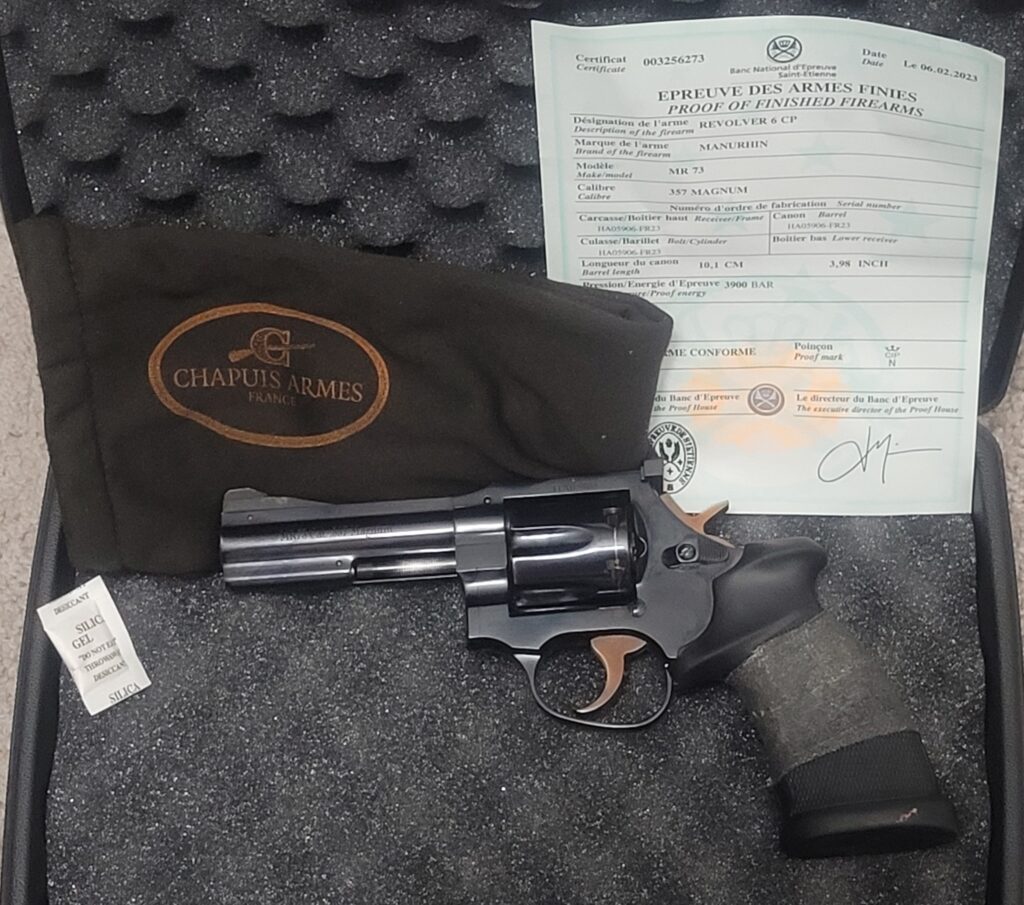
Small batches of imports from other countries only increased the demand among us RevolverGuys. And finally, in 2021, Beretta announced they would be bringing in MR 73s. Only a short time out of Uncle Sam’s Misguided Children, working at a gun store full time while going to college, I had to wait a couple years before my workplace caught up with orders and let me buy one. I was infatuated–a modern Direct-Action team that still slammed serious rounds through a wheel gun. I had to have one, so I put it on layaway for quite a while, bought it, and started shooting and doing more research.
But I ran into a problem when researching the MR 73, even after they started hitting the States: there were no good reviews out there. Oh, there was plenty of history and overviews, but as a hard-core shooter, I wanted to know if this legendary revolver could be run the way Americans shoot revolvers, in training classes, fast double action shooting, shooting matches, etc. Finally, RevolverGuy Caleb Giddings (Pre Taurus days) put out a good review . . . and broke one at about 1,300 rounds (and around 5,000 trigger presses). However, that was just a sample size of one–rumors were already circulating that Beretta was working with the French producers with little things about the gun. I decided I’d just have to find out for myself if the MR73 lived up to its reputation, if it was worth the asking price, and write the review I couldn’t find then.
So that’s what you’re going to get here, not a gunsmith’s overview or history book, but a RevolverGuy’s review of the Manurhin MR73. I’ve had mine for about two years and put about 2,500 rounds through it, so let’s see what we got.
Overview
As said, if you want a detailed history of the MR73, there are lots of articles you can consult. But suffice to say this is a meticulously well-built gun, about the size of a Smith K frame (more on that later), six shot, .357, designed to live through the stringent firing schedule of French GIGN operators, who reportedly shoot tens of thousands of rounds through them every year.
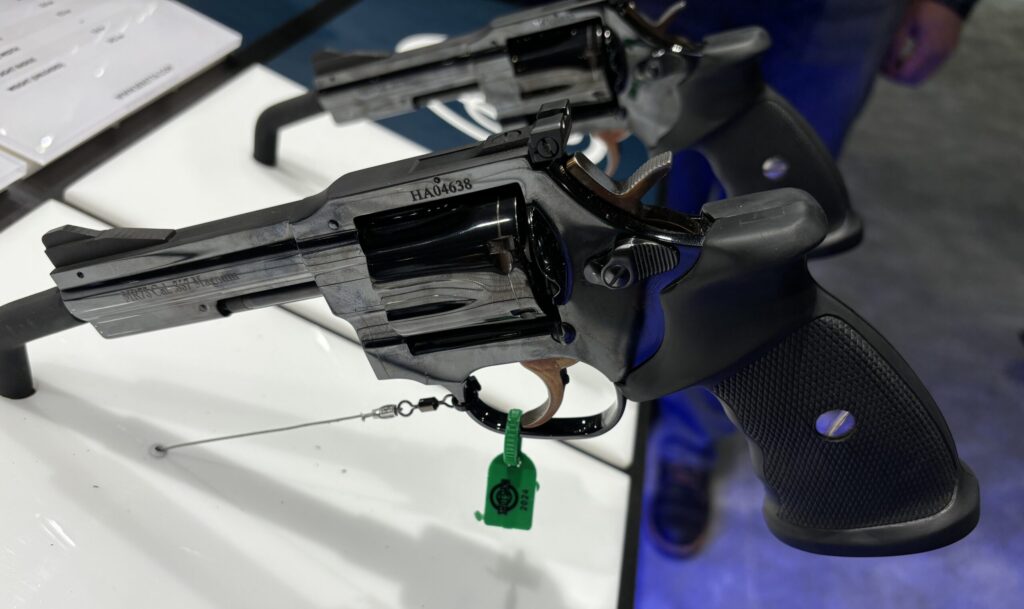
The MR73 is essentially hand made, and it shows. Mine is the 4-inch model, with 5 inches being the other common length Beretta has imported–although they recently announced they were bringing in some other barrel lengths. It has a blued finish, ramped front sight, adjustable rear, the famous Trausch-style grips, and operates externally like a Smith and Wesson K frame. It ships in a hard case with a manual and lock, and hits the streets at about $3,500 bucks, give or take.
Fit and Finish
The gun came as perfect as I’ve ever seen. Right out the box it locked up tight, was in time, and had no visible marks anywhere. The bluing is absolutely gorgeous–probably some of the nicest bluing you can get on a factory gun today. It’s pretty like a prewar Smith, that dark, inky blue that you think you can swim in. Only custom guns and the old USFA revolvers even come close to the finish.
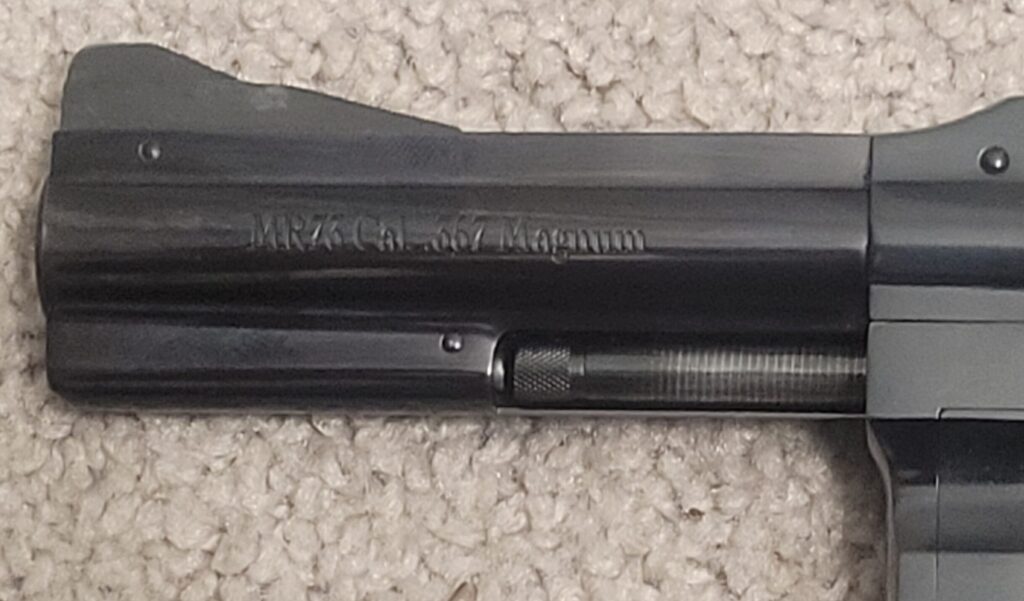
Between the full underlug, the svelte lines, the plated hammer/trigger, and that gorgeous bluing, this is a notably pretty gun–except for those ugly rubber grips, but we’ll get back to those.
Trigger and action
As mentioned, I am not a gun plumber, so I apologize if some of the technical terms aren’t perfect. The MR 73 has a unique trigger action, wherein the return is actually on bearings in the action. It has separate screws that control the mainspring and the trigger return. I’ve read reports online where people say the action is completely adjustable without affecting mainspring strength. I can’t speak to how technically correct they may be, but I can tell you for a fact that if you loosen that mainspring screw, just a like a Smith, you will start to get light strikes, depending on your ammo.
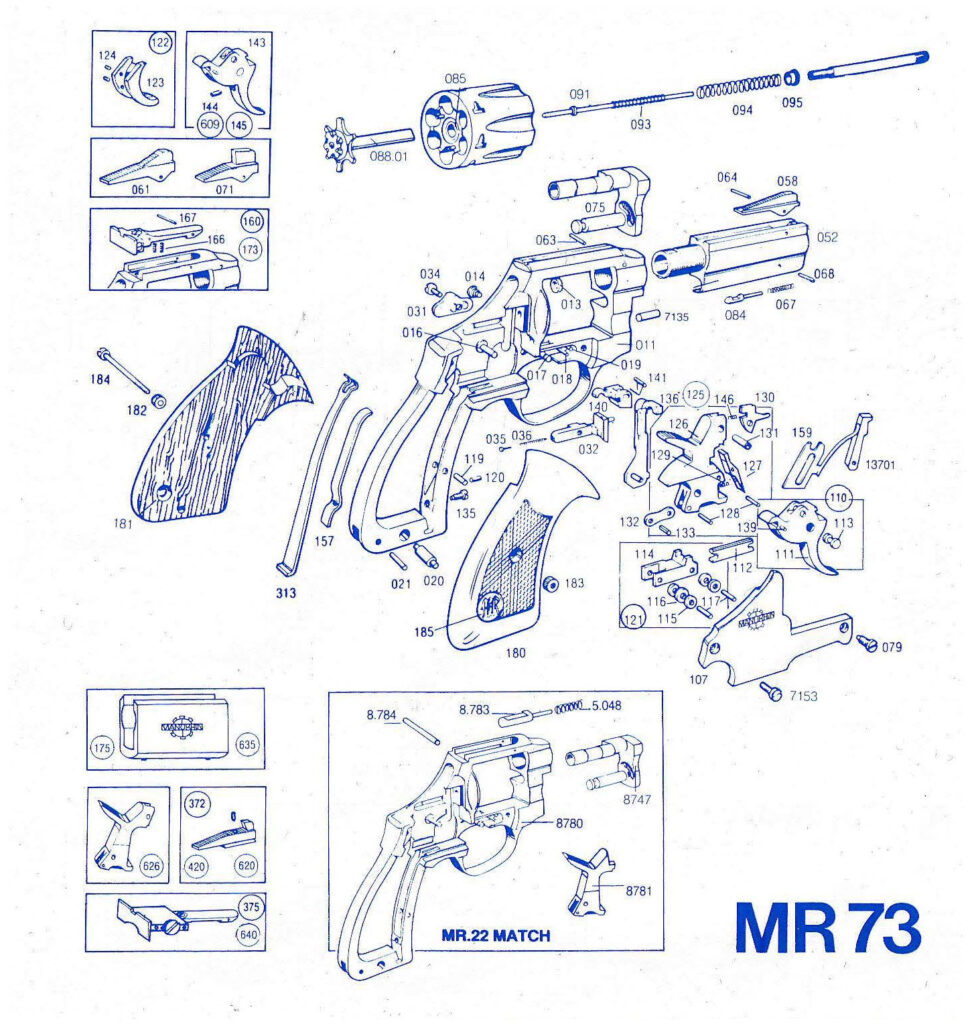
My gun came with a gorgeous eight-pound double action trigger that promptly became an even lighter trigger after about a thousand rounds. Then I started getting some light strikes. After letting a buddy (Hey Jim!) get the gun apart for his own learning, I started just treating the gun like a Smith, keeping the mainspring screw snugged down tight. I have had no further problems, and the gun has a nice ten-pound trigger right now. That might sound a little heavy for a fancy custom gun, but it’s a solid ten-pound trigger, smooth, no glitches, no stacking. The return is extremely positive. And the gun has a very quick action, almost like an old Dan Wesson–very little actual hammer movement when cycling. To be clear overall, the trigger is good but not great–if you handle some PPC gun, or even a Smith that has had a good gunsmith inside it, they’re probably better. But the MR73 has a good, durable, fast action that will bust every primer set up properly.
Oh, and the single action breaks at about four pounds crisp, if you’re one of those weirdos that cocks a double action gun.
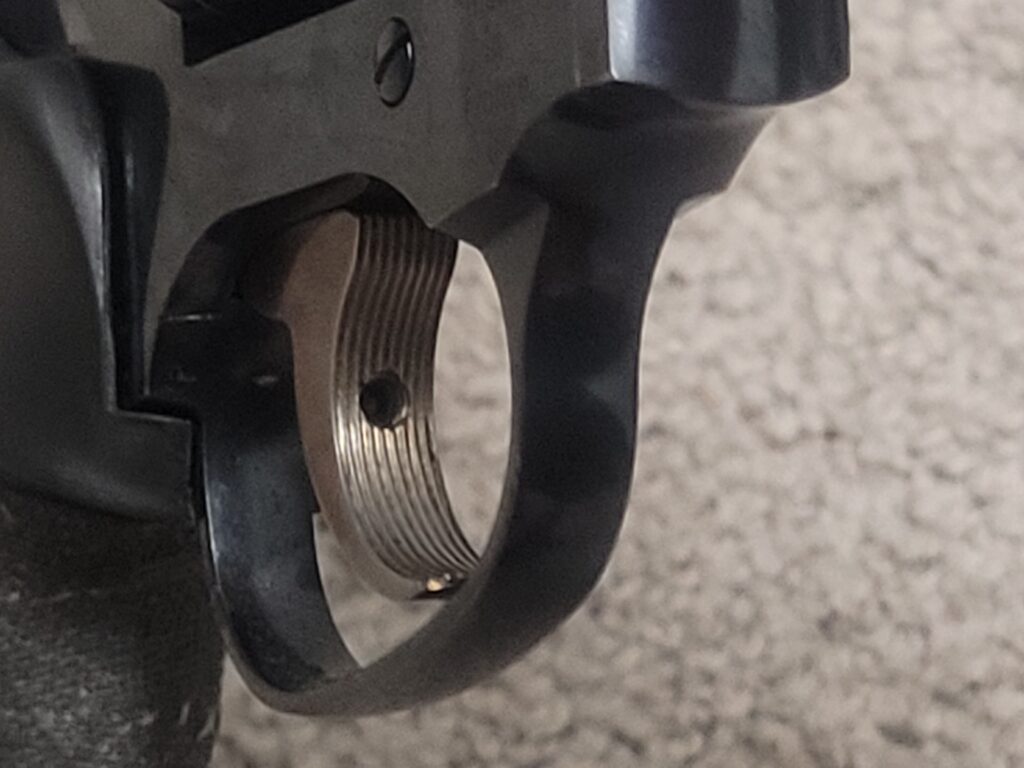
But it’s not perfect. The physical trigger, for reasons known only to those frogs, is a wide-ish serrated trigger. It’s not full target trigger wide, but it’s not thin either. And the serrations are sharp. And that sucks . . . and I wish it was thin and smooth, just like most of you, but it just doesn’t seem to matter. I don’t get any blisters or anything from the MR 73, even during training classes or matches. And at the risk of not sounding braggadocious, I think I shoot it pretty well. But it could be better. And a common theme you’ll see as we go through this review is that there is virtually no support for the gun–aftermarket parts, gunsmiths, etc. It’s not as bad as you think, for reasons we’ll get into later, but owning a MR73 is not like owning a Smith or Ruger, you can’t just order up a part or swap something you don’t like.
Sights and Grips
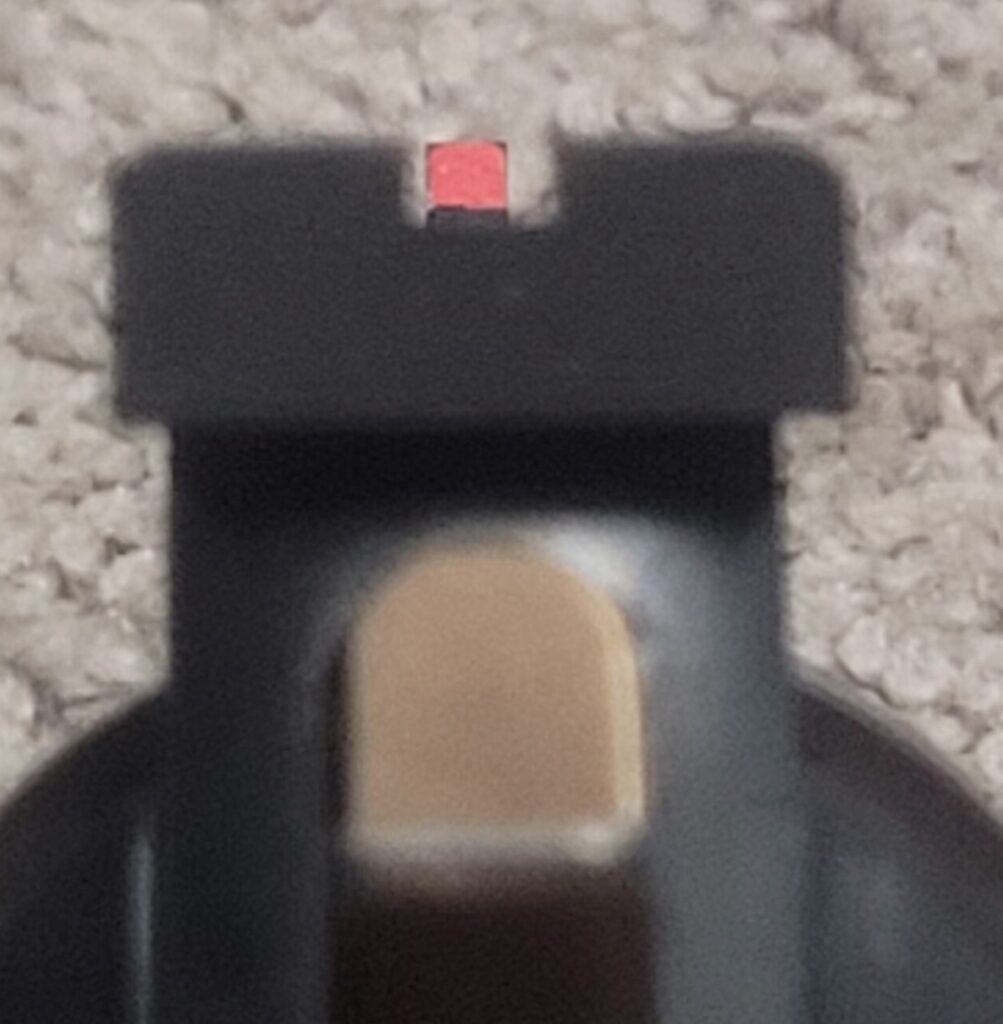
There’s not much to say about the sights–standard adjustable sights, blacked out rear, ramp black front sight. I painted my front with model airplane paint. The sights have never come out of adjustment, and clicks are positive and repeatable. There are no options I’m aware of for aftermarket sights.
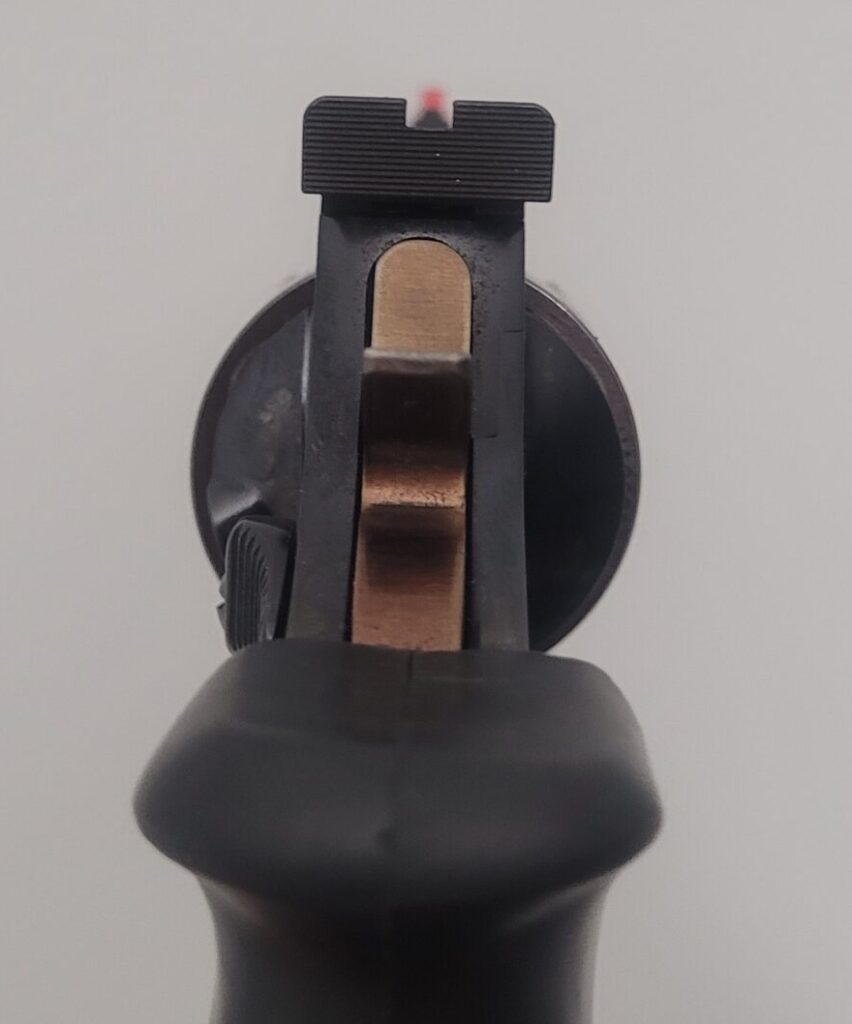
Now, about those Trausch grips, named after the designer (they’re called grips in the manual, so I’m calling them grips here–you may start a stocks vs grips war in the comments if you wish). When I first saw the gun I hated them–this gorgeous, clean gun, with those ugly humpback rubber things attached to the back like a tumor. Then I shot the gun. Then I shot it a lot. And I stopped complaining.
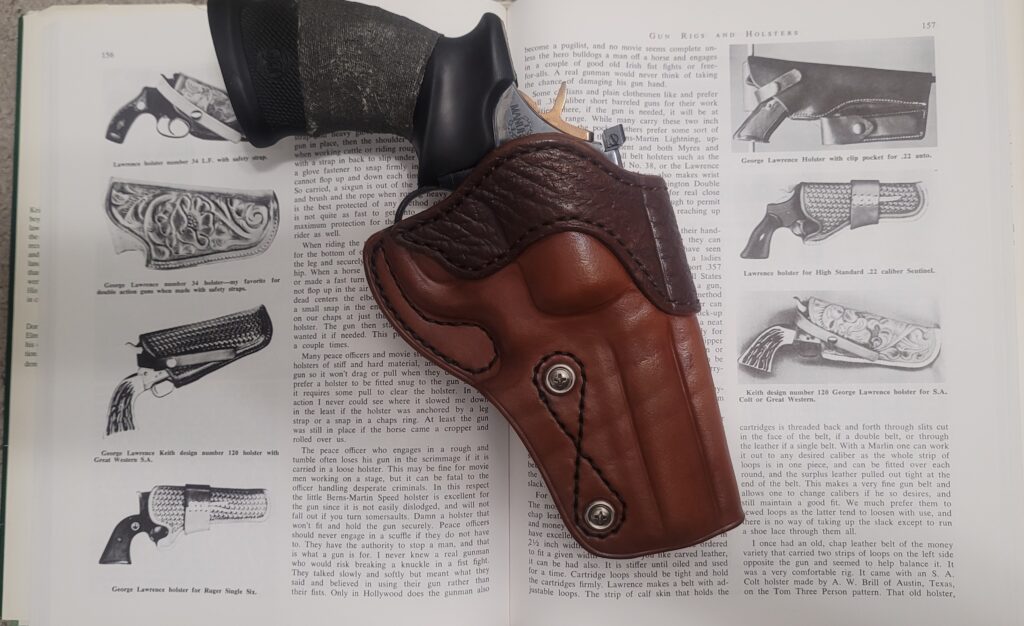
These are easily the best grips I’ve ever used on a revolver. The hump back lets you go down on the gun like the beavertail on an auto, and your hand sits very high, almost in line with the bore. This helps give the gun it’s incredible shooting characteristics; recoil in a straight line, with noticeably less muzzle rise. Shooting the gun side by side with a Smith Model 13, even with big cushy Pachmayrs on it, was no comparison. They don’t turn the gun into a .22 or anything, but Mr. Trausch did a darn good job on these things. The large competition grips from Hogue that you see at ICORE or USPSA have a similar profile, but they’re huge and don’t have the cushion the rubber does.
Now, the Trauschs are bulky as well–these are not great concealment grips, although I have worn the gun concealed under a coat. But for shooting, they’re about perfect, to the point I wish someone made an equivalent for other revolvers. If you do want more concealable grips, Nill Grips does make wood grips that are handsome, smaller, and give a classier look. Be warned, they’re expensive. And they are the only aftermarket option I’m aware of. But I’m so happy with the Trausch grips I honestly don’t care.
Support Gear
This was one of the other big draws of the MR 73 to me. Even though options for parts and such are scarce, the Manhurin has pretty universal compatibility with those oh so important accessories for us RevolverGuys–speedloaders and holsters are the same as for Smith K frames.
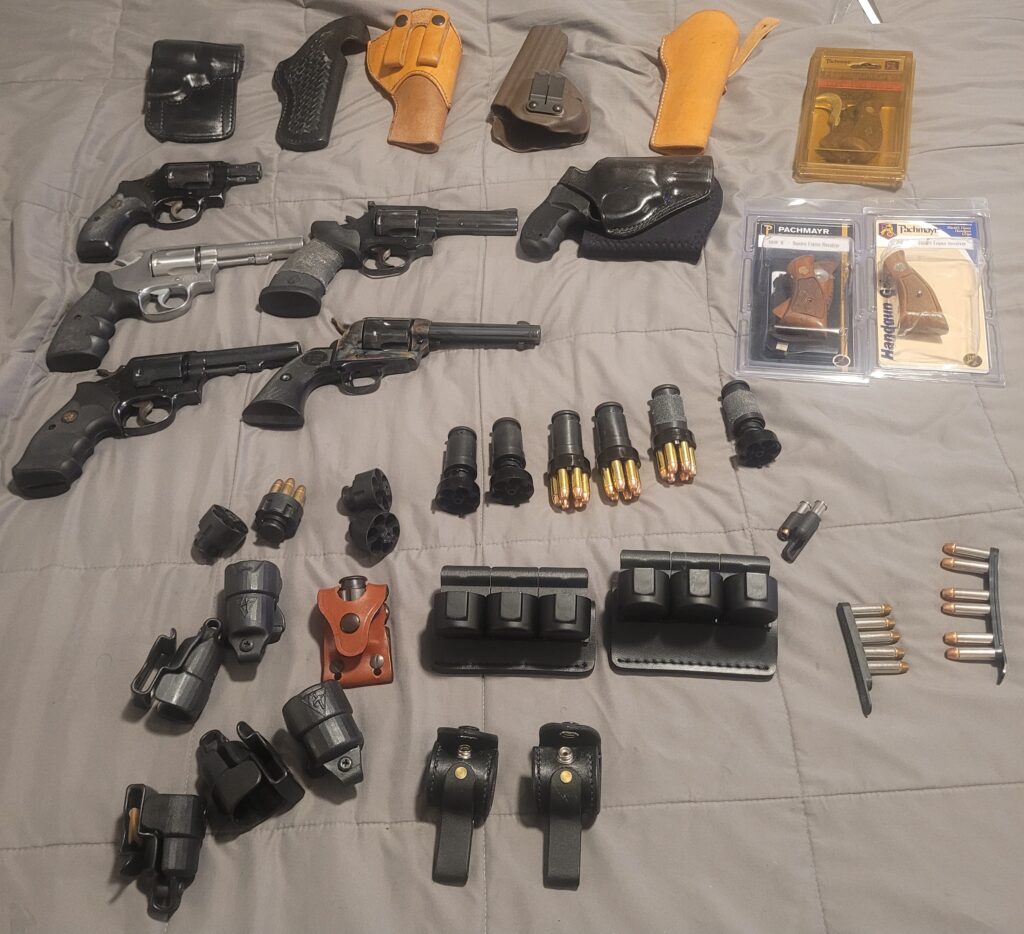
While I can’t promise every holster works, I have used a Palmetto Leather Belt holster, a JM Custom Kydex IWB holster, Safariland 568 OWB holster, and a cheap Don Hume Belt slide successfully with my MR 73. I shot the whole ICORE East Coast Regional with that cheapo Don Hume holster–more on that later.
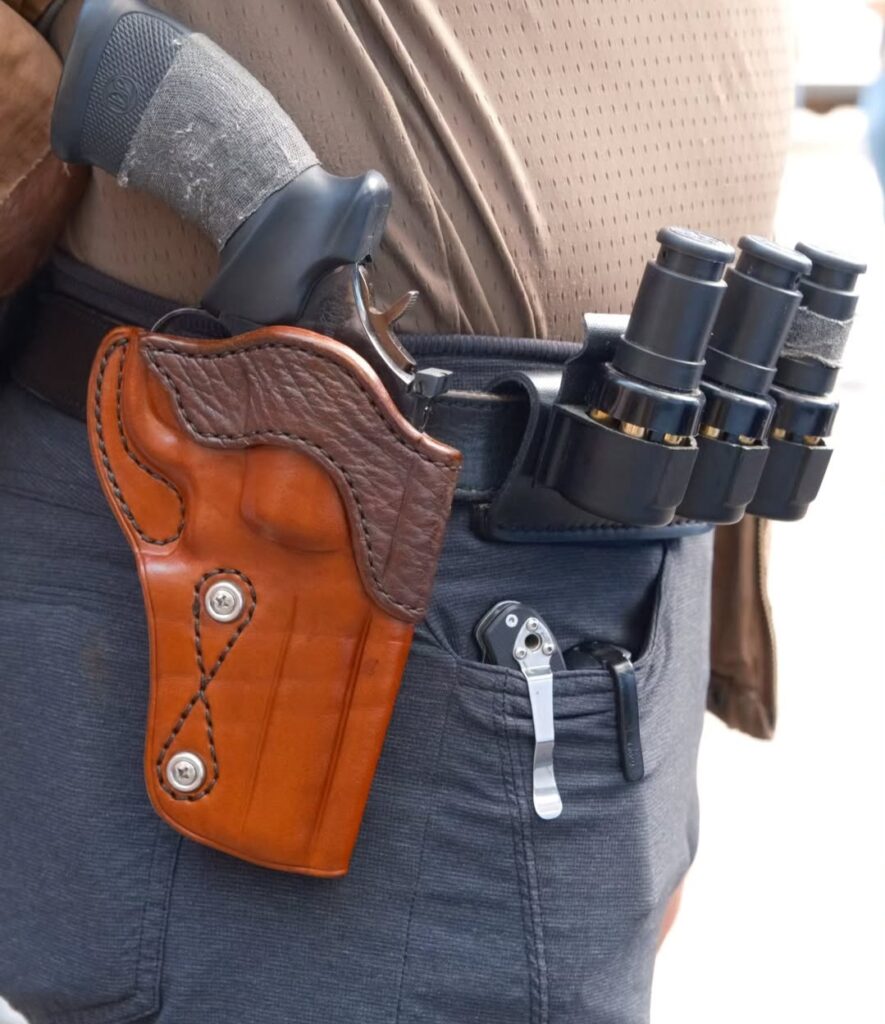
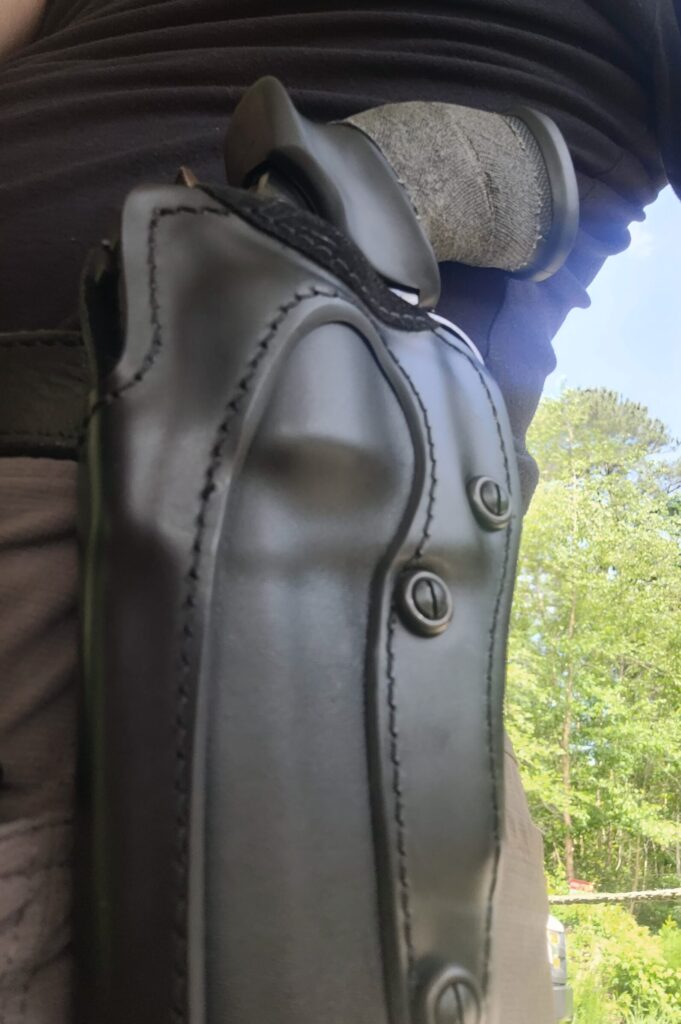
I’ve used some HKS’s and Safariland Comp 2 and 3 loaders without issue. I wish the grips were cut a little deeper back for the loaders, but it hasn’t been a big deal. Being able to use commonly available gear was big reason I like this gun over some other premium revolvers out there. My buddy Eli, for example, has a 9mm Korth that’s a great gun, except only Nighthawk brings in speedloaders, and they are perennially out of stock. Hell, K frames are so universal that there’s more options for my Manurhin than there are for some domestic American guns–tried to find loaders for a Kimber K6s lately? Or a Colt Anaconda?
Mechanical Accuracy
Ludicrous. This is one of the most accurate revolvers I’ve ever shot. This was a long-term review, and I used to have a collection of targets that I kept, but I unfortunately lost them during some move or another. Suffice to say, with loads it likes, the gun will hover right around an inch at 25 yards, shooting real five-shot groups. (People that shoot three-round groups for accuracy at shorter distances, buy their wives’ boyfriend’s breakfast).
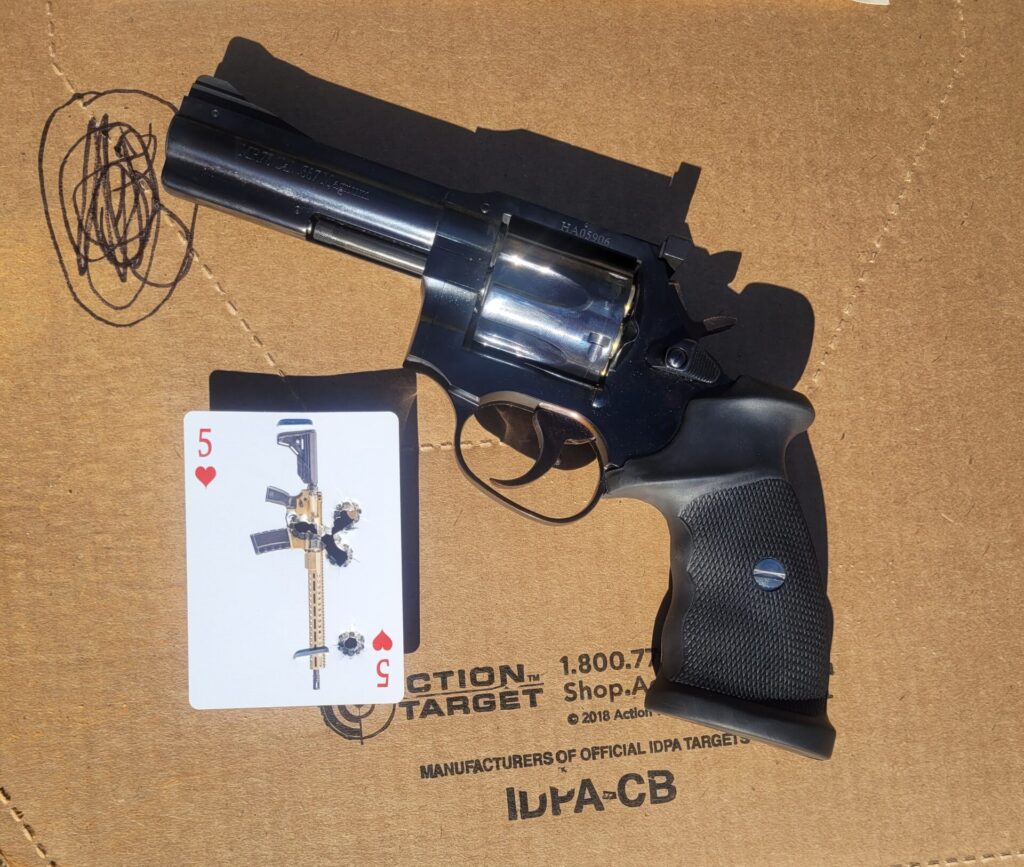
I recall Winchester Super X wadcutters and–of all things–an old box of S&W-branded .357 as being particularly accurate. I can’t recall any loads that wouldn’t stay in the center black of a B8. Even better, the gun doesn’t seem to have lost any accuracy after 2,500 rounds, shooting everything from jacketed ammo to ancient lead loads.
Practical Accuracy
The MR 73 gets high marks in terms of practical accuracy as well. As mentioned, recoil goes straight back, instead of up, and the excellent trigger makes going fast with this gun easy. It’s not as easy to shoot as a six-inch L frame, or some 9mm comped ICORE space gun, but against anything service-sized, it can’t be beat.
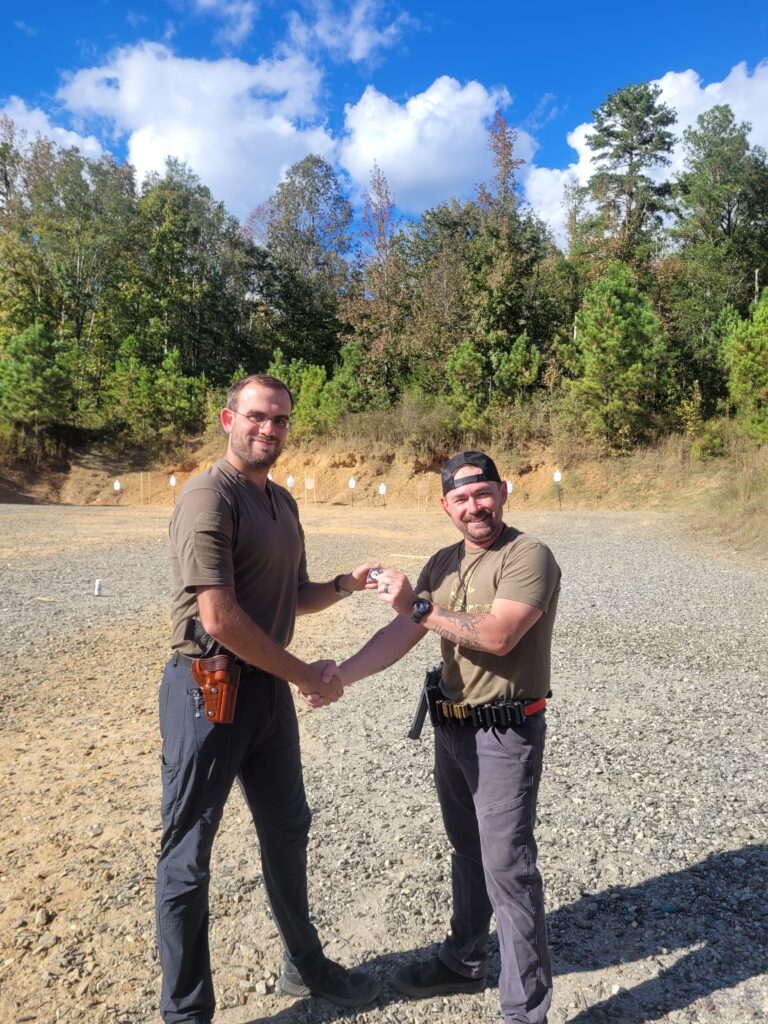
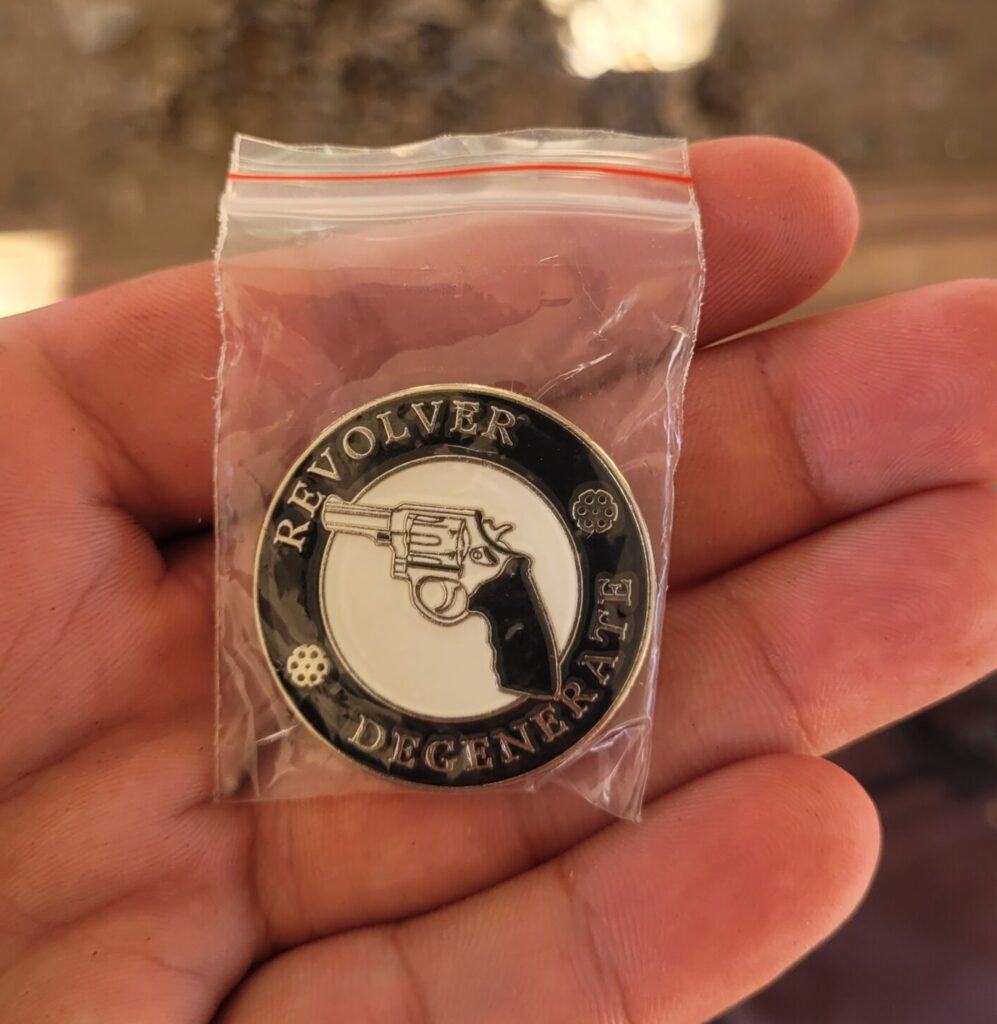
I’ve pulled off stuff with an MR 73 that I couldn’t do with other wheelguns. In Caleb Gidding’s block at Revolver Fest 2025, I drew and hit reduced steel at 25 yards with this gun twice in 2.03 seconds, eventually earning my Revolver Degenerate Pin in the shoot off.
At the ICORE regional, one stage had partials and no shoots out to 35 yards, just pure speed and accuracy shooting. I was the only person in Classic Division that stayed double action for the 20–35-yard shots, and I had no mikes or no-shoots on the stage, while shooting from a $30 Don Hume belt slide, since I’d lost my good Safariland holster. I ended up shooting 4th in Classic Division at that match.
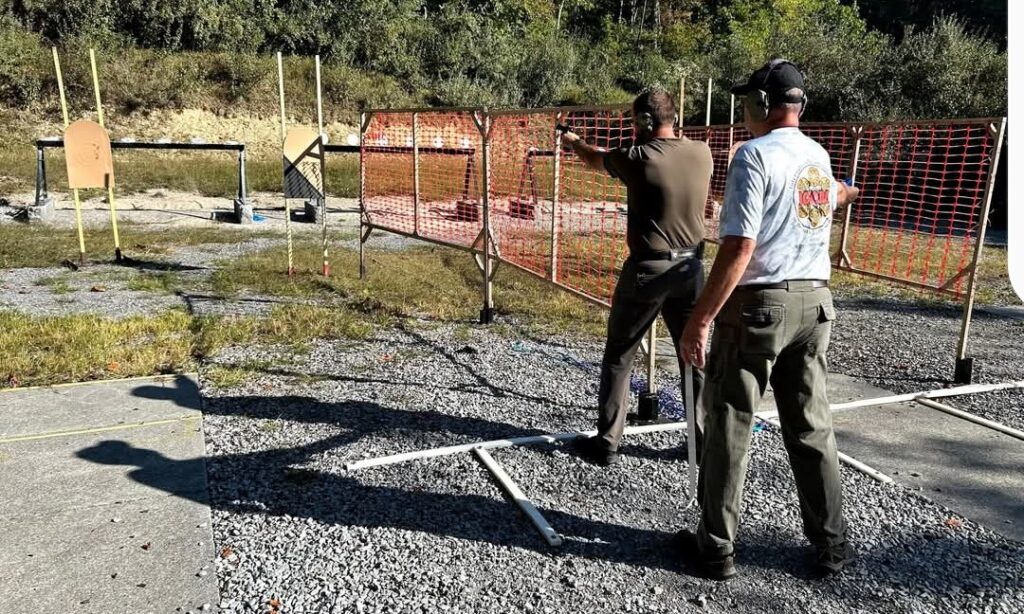
During a walk-back drill in a class, I hit plate rack steel at 50 yards double action. Like I said, it can’t compare to tricked out comps or large heavy-barrel guns, but the Manurhin is nimble in hand, and shoots like a much heavier gun.
Durability/Shooting History
As mentioned, I have about 2,500 rounds through the MR 73. To test its durability, I made sure to put a fair number of Magnums and +Ps through it too–maybe 400 Magnums and about 1,000 +Ps. ICORE shooting requires +P .38, so a good amount of Speer Lawman 158 gr +P was fired through this gun, plus an ammo can full of old .38 +P loads that I got in a left-handed horse trade. To be honest, I’m a terrible record keeper, and the round count is probably well over 2,500, but I’d rather undersell the round count than overestimate it.
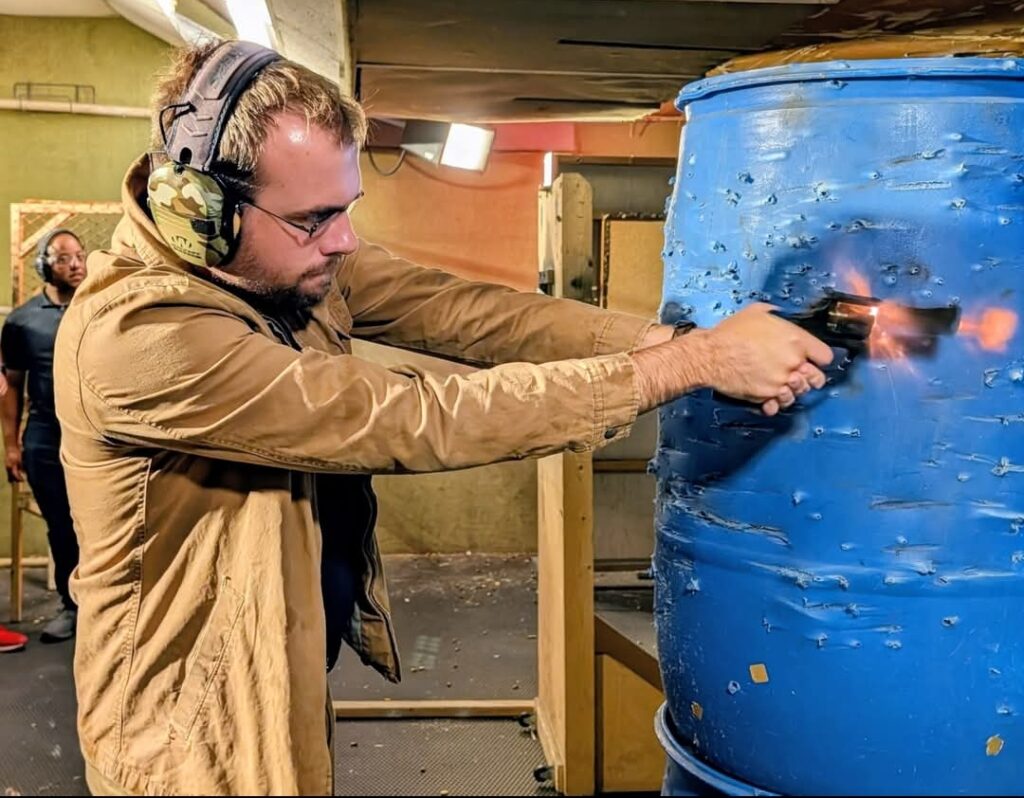
In addition to my own general shooting and practice, the gun went through two local revolver classes run by my buddy Jim Marsal, now of Coastal Plain Shooting Academy (my buddy Eli made this video about the first class—you can skip to about 12:00 for Manurhin stuff), one one-day class and another two-day class.
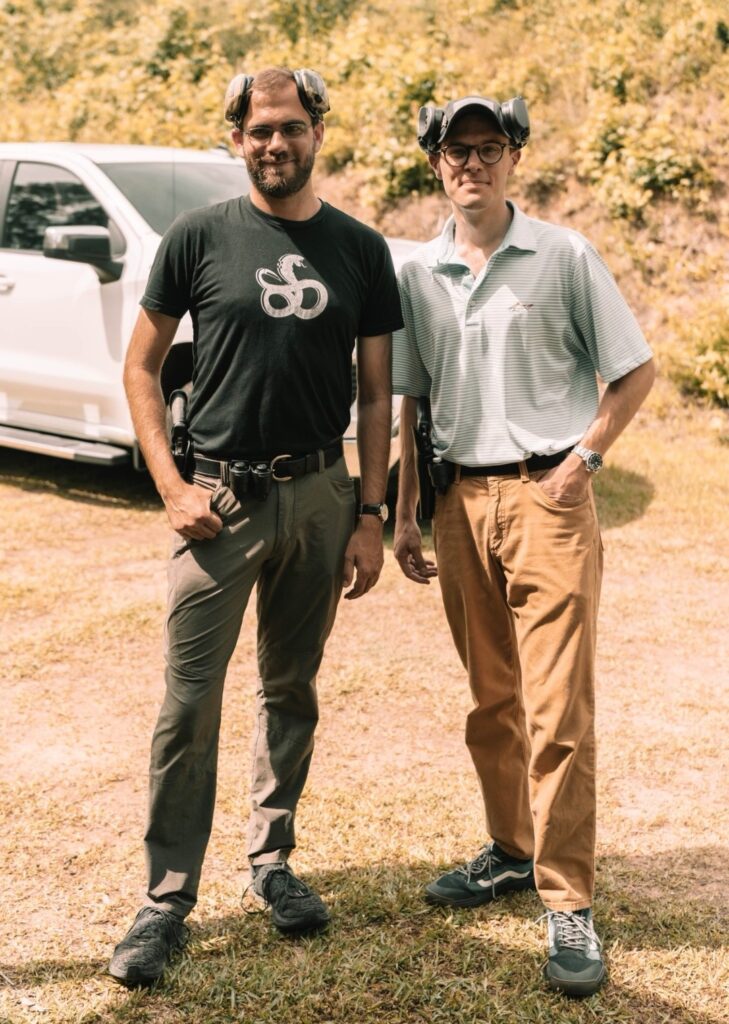
I shot the gun for the entirety of 2025’s Revolver Fest, except for the single action class with Lew Gosnell. I shot the ICORE East Coast regional and about a half-dozen local IDPA matches. And, of course, it got dry fired thousands of times, especially when I was getting ready for ICORE.
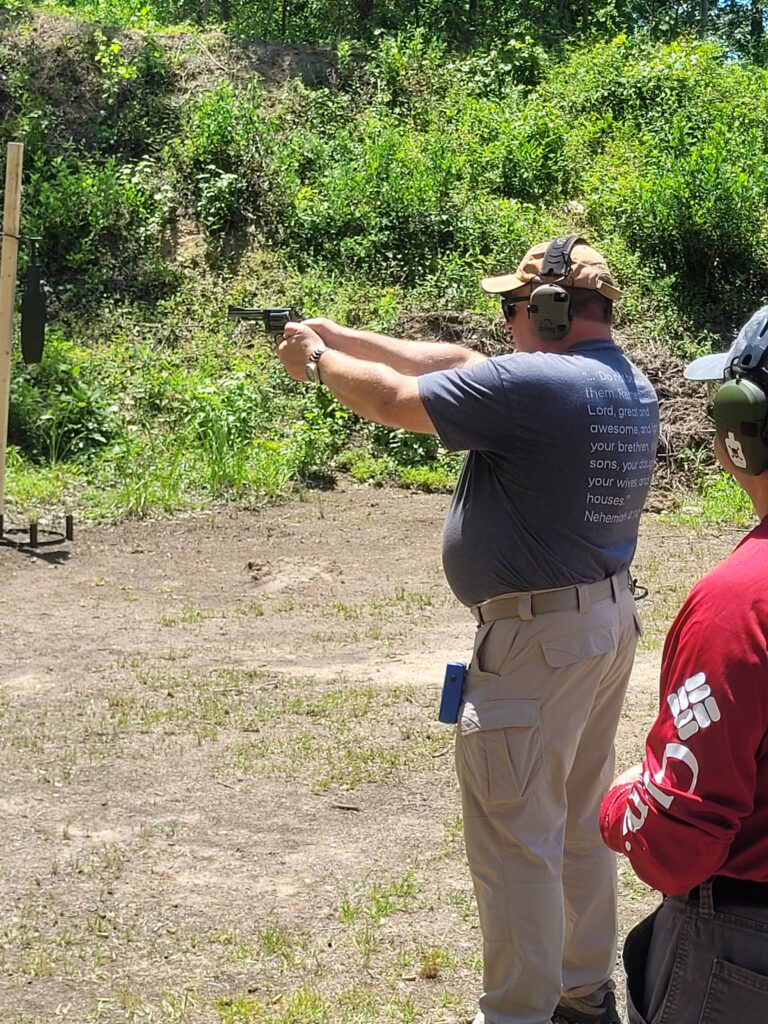
Except for when I started getting light strikes, I never had a problem with the gun that wasn’t my fault. At some point, some gunk bound up the ejector rod and I didn’t stop to clean it right away, which resulted in some of those uglier looking turn lines you see in photos. Cleaning that out quickly resolved the problem. When I started to have regular problems with empties hanging up during ejection, I debated trying to have the chambers honed a little, but I realized I was cleaning the gun wrong, and switched up some of my maintenance practices. After that change, empties came out of the gun with no issues. My advice is to clean the gun and chambers, keep the mainspring screw tight, scrub under the star, and make sure the external screws are snug, just like any revolver. I’m completely satisfied with the gun’s performance.
I recall from Caleb’s write up that he was told the Manurhin wasn’t designed to be shot fast DA a lot. An interview with a GIGN officer bears that out–apparently a lot of the practice is done single action. I know Caleb did a lot of DA shooting with his gun and had some problems with it, but he shot and dry fired his gun more than I have mine (which is part of the reason he’s a better shooter than me). I’m still waiting for mine to break, and until it does, I remain satisfied with how the gun runs.
Should you buy one?
Now, I’ve been raving hard about this thing, but you can’t get around the elephant–the MR 73 is expensive. Like, first car expensive. They seem to hit the streets at about $3,500, and support is lacking. Beretta seems to be under the impression people are just buying these for collectibles, not to shoot, which is a shame. Even counting internet interactions, I’ve only run across a few other Manurhin owners, and maybe half a dozen that have shot over 1,000 rounds, so I can’t say Beretta’s not right.
So, what do you get for 3,500 bucks? The MR 73 doesn’t have the mechanical genius of a Korth or the classic Americana of a used Python or SAA. It’s not a one-off from a shop like Bowen. It’s not out of production or particularly hard to find–my former employer has a five-inch sample sitting in the case right now.
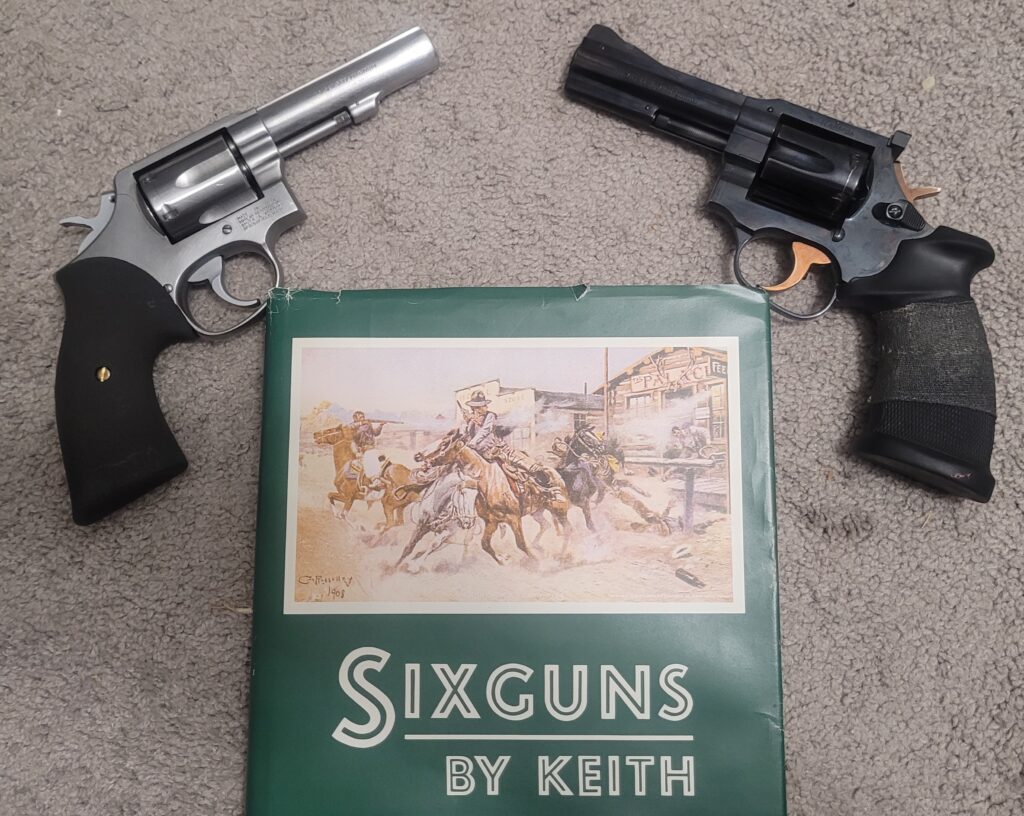
From a practical standpoint, there’s not much that can’t be done with other guns. You can buy a used Model 19 for, highball, 800 bucks. You can send that off to a shop like Laubert’s or Lauck’s, have them build the gun exactly the way you want, sights and action work and everything, have the gun high polish blued, buy a crap ton of ammo and accessories, and STILL probably be under 3,500 bucks. Sub in a GP100 or 686 if you want to slam Magnums through it. I glanced at TK’s website while writing, and you can get a Model 66, with their Ultimate Master Action, chamfering, chamber honing, AND cut for 9mm clips for about $2,400 shipped straight to your FFL.
And, as mentioned, there isn’t a lot of support for the French blaster. K frame compatibility with loaders and holsters helps a lot, but no aftermarket sights and grips, or parts, is a big downer in a gun you want to shoot a lot. Hell, the trigger isn’t even that great. In a few weak moments, I’ve even considered selling mine.
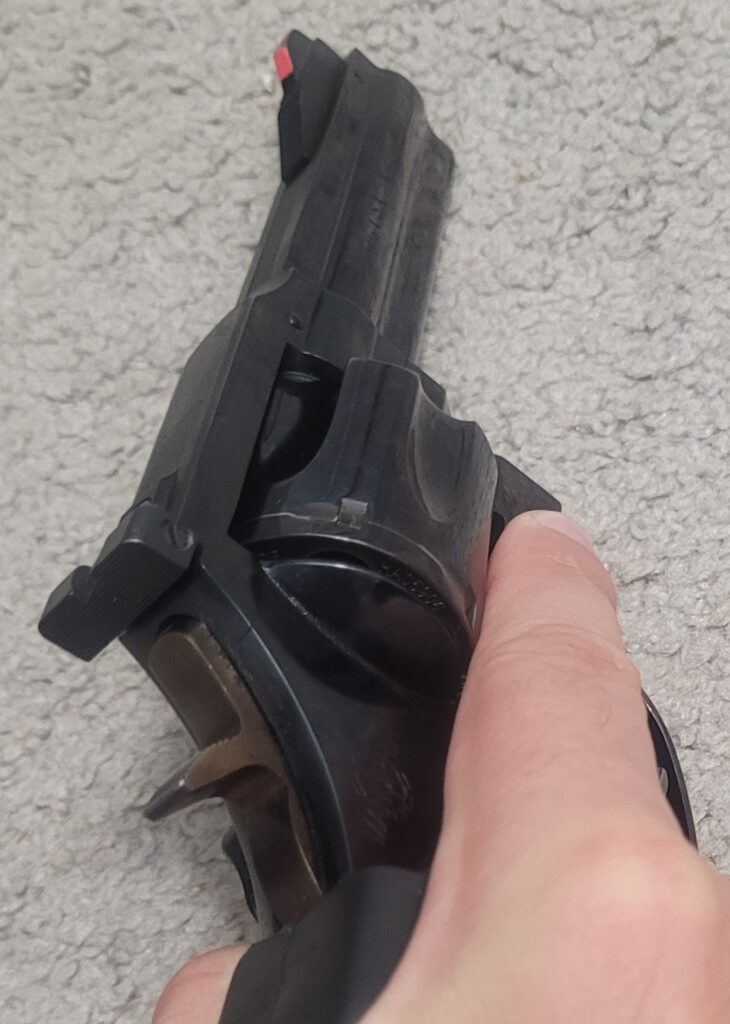
So yeah, it’s not for everyone. But it also does things other guns can’t do. It’s the only K frame sized gun I’m aware of that you can slam unlimited Magnums through- even Ruger’s Security Six would let go eventually (they came out with the bigger GP100 for a reason folks). The excellent Trausch-style grips used to be made for other guns, but apparently aren’t any more, so if you like ‘em you basically must get a Manurhin. The bluing can’t be equaled by any other factory firearm, and the other super premium revolvers, like Korth and Spohr, just seem ugly to my traditionalist eye.
And really, that’s what I love about this gun. It’s what we RevolverGuys have wanted Ruger or Smith to make for years–a classic, blued gun with no MIM, a good trigger and grips, and the ability to be shot for thousands of rounds with no hiccups. It’s stupid-accurate and shoots better than anything in class. I hate that you can’t get parts, but I haven’t broken anything yet. The service history doesn’t hurt things either. Has your Charter Arms bodied any terrorists lately? Didn’t think so. Any Tier One units running around with Colt Pythons? Nope.
I can’t guarantee you’ll get what you pay for with the Manurhin MR 73, because that’s one of those calls you’ll have to make—it’s more about the customer than the gun. Perhaps the best summary I can give is this–maybe YOU shouldn’t buy one, but I’m not selling mine.

Hey Darren, welcome to RG and thank you for the excellent review! Like you, I have always admired the MR73 for its martial heritage and almost legendary build quality. The negatives you brought up regarding parts availability, lack of options, and certainly price are real- but the gun’s positives still seem to outweigh them. I have never had my hands on one, something I hope to remedy. I was glad to see your specimen with a plain black rear sight blade, the white dots on the rear with a plain black front always baffled me! I have Trausch Grips for N frame S&W RB and SBs; I can second your approval on them. Thanks again for the write up, I’m glad yours has lived up to the reputation the MR73 has established for accuracy and fit and finish. I may have to start a MR73 funding bucket…
I’ve seen other MR 73s with those sights in pictures, but every one I’ve actually seen for sale has blacked out sights. My buddy just got a 3 incher, and it’s got blacked out sights. I don’t know what they were thinking with dots only in the rear either, but this is the country that thinks Sartre was genius, so what do you expect.
Yeah, I like the Trausch grips so much I’m keeping an eye on Ebay for Smith ones now.
Nice work son! The first ever centerfire cartridge you ever fired was a light leaded 38 Special out of my S&W Model 60-10 when you were maybe 5-6 yrs old. I guess that set the stage to where you are today!
As for the Manurhin… It is one of the most accurate handgun (striker, DA/SA, revolver, etc) I’ve ever fired. During that one revolver training class you mentioned above with Jim, we all laid our revolvers on the table with a box of your ammo. All 10 shooters took a step to the right and the last guy wrapped around to stand in front of gun #1. We rotated through all 10 guns with all 10 shooters. The targets were all taped up before we started this exercise, so the 60 shot groups for all 10 revolvers could be seen when we completed the full rotation.
All 60 shots out of your MR73 was about a grapefruit sized at 7 or 10 yds for all 10 shooters. That says something.
And the feel of that shorter throw of the DA pull is awesome. Good job millennial! You know Dad had to bust on you a little bit!
Nice work, Dad! You raised a great one, there!
Thank you Sir!
Awesome review. I’m in the camp where this is just not a practical gun for me, but I’m also really glad it exists and that people are getting good use out of theirs.
A little over eleven years ago I was bumming around France by train and noticed quite a few city police carrying what appeared to be Ruger Security Six revolvers. It wasn’t until my return to the States that I learned that those revolvers were Manurhin MR88s, which are basically hybrid Manurhin/Rugers. Apparently most French cops are now equipped with autoloaders.
Indeed they are, with the Sig Pro SP2022, I think.
Navy Arms had some of the surplus MR88s to sell last year. Wish I could have purchased one here, but . . . communists.
Hi,
In fact, French police officers carried the Manurhin F1 Special Police between 1981 and (at leat) 2006. The Manurhin 88 is the “commercial”/”civilian” variant of the Manurhin F1.
French gendarmes (military police) carried the PAMAS G1 (French licensed Beretta 92) between 1987 and 2003/2004.
Since 2002, all French National LE forces (Police, Gendarmerie, Custums and Corrections officers) carry the Sig Sauer Pro 2022 in 9mm Luger.
Special units like the GIGN, the RAID, the GSPR (French Secret Service), domestic intelligence units carry mostly Glock pistols (17, 19 and 26 variants).
Only the Park rangers (Office National des Forêts/ONF) and some municipal polices continue to carry revolvers.
Thanks for clarifying, Pierre.
Maybe I’m the outlier here but I certainly enjoy French cuisine, movies, public transportation, clean historic cities and TV series like “A French Village.” Of course, this could be the influence of my part French ancestry and studying the French language.
You’re welcome Spencer.
Yeah I love my country but the USA seem to be a better democraty, especially in the gun laws/gun rights.
You Americans, must protect your 2nd Amendment, because in France, the project to create 2nd Amendment was cancelled in the 1790’s (French Revolution.
Because it was so obvious for a French citizen to buy a rifle in order to protect the country… no need to vote such a constitutionnal right. And before 1939, every French citizen could legally carry a pistolet for self protection, mostly a .25ACP ou .32ACP pistol (MAB, Unique or FN/Browning).
Since 1995, the French gun law are very strict and harsh, it’s very sad.
They are on autoloaders, and most of them have been for a while- that being said, there’s some pictures of some French police during one of their recent terror attacks that had both a Glock and a revolver on. I think it’s mostly hanging on as a ceremonial/pride of ownership gun, like the 1911 was in some SOCOM units for a while.
Nice writeup.
The trigger face gives me some pause; I sent my 2020 Python to the consignment case because the trigger felt like it belonged on a cheese grater.
It’s annoying, but it really wasn’t a deal breaker for me- that being said, I shoot serrated Glock triggers without a problem either, so I might not be the best judge.
I personally don’t mind a grooved trigger; my Python has one. If I dry fire it repeatedly, my finger does get tired, but the same happens with a smooth trigger far as I can tell. Can’t really say.
As for the Trausch grips, yes, they’re excellent. I bought a French police trade-in S&W Model 10 back in 2018 that came equipped with them, and later bought a second pair off eBay. Only issue I have with the Trausch grips is that they extend the trigger reach far enough that my finger gets worn out. So, I no longer use them.
Also, I’ll have you know that the Colt Python was used by S.T.A.R.S. during the 1998 Racoon City Mansion Incident.
And now the DSO uses some crazy Russian mess! Should’ve stuck to the classics, I say… 😉
Awesome review and great first article on here !
Thank you!
Very cool revolver and great write-up Sir! I too am intrigued with the history of service with that revolver. I don’t mean to be morbid or inappropriate but its a similar curiosity or intrigue with US service revolvers. I have a weakness for 4in K frames that I know were LE trades, imagining what kind if action they saw or badguys that met their demise by the officer carrying it.. I dont know if I would buy one but I wiuld truly love to handle and fire one. Thank you for sharing yours with us.
Welcome aboard, Darren. I’ve only seen one MR73, and it was recently at a LGS. It was ‘used’ and had a $3500.00 price tag on it. I did take a cursory examination of the gun. I went back a few days later and it was gone. Apparently someone had $3500 burning in their wallet.
It’s action is smooth, and it’s in no small part to the rollers used in the rebound slide. The crane lockup is where the strong point seems to be, mechanically speaking. It appears set up to eliminate the usual lack of direct support for the crane to the frame under magnum loads, both laterally, and fore-n-aft. Ruger followed Dan Wesson with securing the crane to the frame using the locking latch on the crane, and thus enabling constant use of full power loads.
Stephanie, your serrated trigger issue can be cured with radius and polishing down the serrations. I’ve done that on every S&W revolver that has come my way. A serrated trigger on a M1911A1 is fine – but not on revolvers (imho).
For those who can afford it, it’s probably a great gun. But I’m a cheap fudd – give me a GP100 (that I’ll slick up) and the rest spent on ammunition . . . sort of like Jeep Wrangler vs Mercedes Gelandewagen.
Yes, you usually have to find a fairly large Beretta dealer, but they are becoming a little more available. Unfortunately, in between when I wrote this and when it published, prices seem to have gone up a little more. When they started bringing the 3-inch guns as of the past couple months, street prices seem to be more like 3700-4200.
And yeah, the price to performance ratio is pretty hard to justify, but I don’t regret buying mine.
In the 80’s our South FL SWAT Association hosted a few member of GIGN Hamburg SEK, Berlin SEK (GSG9 was not able to come play, British SO19/D11 (they kept changing their name) and a British Armed Response Unit. GIGN was the only unit that was allowed to bring their firearms (Dip Pouches?🤷♂️). We did get to shoot the shit out of their Manurhins. They were as amazing as their reputation. Most of our agencies were just switching to semi-autos so our revolver skills were still pretty good. They however, put us to absolute shame with their MP 5 skills. The Brits kinda snickered behind their back about not using semi autos. I guess the Anglo/ French wars truce was a myth.
I did some training with the British Royal Marine SRS, and they had plenty of crap to talk about French culture. Although to be fair, English food might be in the only cuisine in the world worse than French.
We’re gonna have to be careful to preserve what we can of English and French culture here, since the two nations seem to be in a footrace to see who can surrender theirs to the Moors, first.
The Manurhin 73 revolver was one of the favourite handguns of several special forces and special police units from the 1970’s to the 2000’s.
Of course there is the GIGN, but also other units.
The RAID (police counterpart of the GIGN) was issued the Manurhin 73 in 3 and 4 inch barrels.
The duty ammos were JHP bullets : Norma (GIGN), Lapua and Federal Hydra-shok (RAID) and SFM (GIGN and RAID). The SFM ammo is a JSP/SP bullet, 161 grain.
The SDLP and the GSPR, French Secret Service equivalents, and some detective and domestic inttelligence units (Renseignements Generaux) carried the MR 73 revolver in 2.5 and 3 inch barrel.
Some French Special Forces units seem to have been issued with the Manurhin 73 revolver.
For example, the GO (Groupe Operationnel/Operational Detachment) of the 1er RPIMa (Elite Airbone unit) used the Manurhin 73 in the 1970’s, before switching to high capacity autopistols (French made MAB P-15 pistol). The GO of the 1er RPIMa was the equivalent of the CIA’s SPecial Activities Division.
The Manurhin 73 is an excellent revolver but way too expensive for “regular” cops/gendarmes/LEO, who carried .32ACP pistols (MAB D, Unique Rr51 and Browning, FN 10-22) from the 1940’s to the 1980’s, then Manuthin F1 Special Police revolvers until the 2000’s.
The Spanish GEO and the Austrian EKO Cobra police tactical units also choose the MR 73 as one of their issued handguns in the 1990’s/2000’s.
The Manurhin series is no doubt excellent- if/when I can afford one, I would value it more than a vintage Python. It is however not the only good firearm to come out of France. The MAS 36 is also quality!
Oh the MAS is a great rifle! And in typical French fashion, they designed a great bolt action just in time to get overrun and barely issue them during the War. 😉
And I’m with you, I like old Pythons just as much as the next guy that’s seen Magnum Force, but having shot both I’d much rather have the MR 73
Out here in Taxifornia, where Gavin “French Laundry” Newsom holds reign, an MR 73 could only be had via consignment or private party transfer. A real long shot!
Speaking of a long-ish shots, an immaculate Dan Wesson 715 Monson .357 Mag just showed up at the FFL, with 8″ vent and 4″ vent heavy barrels, original tools and paperwork, for a cool grand!
It’s no MR 73 but…!!!
An informed and reasonable review of the 73. I have had mine for about ten years. It is an original Manurhin produced, German market, 4 inch Gendarmerie model. The Sports model have the Patridge front sight and the Gendarmeries have the Baughman front sight. Mine has the original issued wood stocks and there is a reason why the Trausch grips have the high ridge to lock in the web of the hand. If any of you have fired a first generation Ruger Security Six then you’ll understand. The problem with those early Rugers and MR 73s is under recoil, the gun rolls in the hand upward like a Colt SSA. Rapidly firing more the two rounds of anything hotter than standard .38 special forces the web of the hand into the hammer spur. Ouch! Not fun. The Trausch stocks are a necessary item. I spoke with Mike at the last Pat Rogers Revolver Roundup about an article on the MR 73 and I should get off my lazy arse and write it. These revolvers have a fascinating history and the method of their construction is amazing. When the French decided back the 1970s that they needed a revolver for the national police, they took everything they liked about Smiths and Rugers, added their own tricks, and the result was the 73.
Thank you! I read a ton about the MR 73 to get context, but I very intentionally didn’t want to go to deep into the history or mechanical intricacies- the mechanical stuff because I’m about as handy with tools as a bowling ball, and the history stuff because people like yourself and Mike Zeleny know far more about it than I could do justice.
I wanted to mostly provide some context and information on how the MR 73 behaves as a shooter, since when I bought mine I couldn’t find any of that information anywhere online myself.
And yes, having shot a couple Security Sixes, I can see why France put Trausch grips on the MR88s.
Good morning, it seemed strange to me that in a site like revolverguy, the Manhurin mr73 revolver had not yet found the space it deserves. Great review.
Glad you liked it!
Mr Jacques Trausch (1938-2012), who developped this famous rubber grip for MR (but also Ruger SP 101 and S&W K/L frames) was a French police officer. I know that he was a Firearms instructor at the CNT (Centre National de Tir or National Shooting Center), the main shooting center of the French National Police, and a very good shooter. But there are very few intels about Mr Jacques Trausch on the internet, even in french.
Chapuis, which make Manurhin revolvers since 1998, has acquired the molds of the Trausch rubber grips.
Darren, what an outstanding review!
Very well done.
About a year ago I was able to handle a Manurhin at a LGS. They let me dry fire it. My impression was this feels like a well built revolver, fit and finish was excellent. However, I was not very impressed with the trigger at the time. Not bad, just not what I had in mind for $3,000+ revolver. Maybe I’m just used to the feel of my well broken in S&W 686 triggers.
Yep’, that elephant in the room is just too big of a beast for this working man. But, your review makes me think I need one anyway!
Thanks
Haha we’re bad about spending people’s money on RevolverGuy.
Nice write up… however I’ll stick with my custom 686