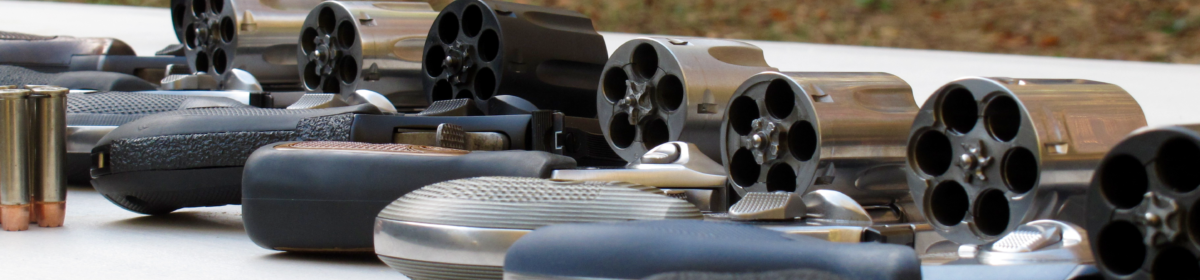
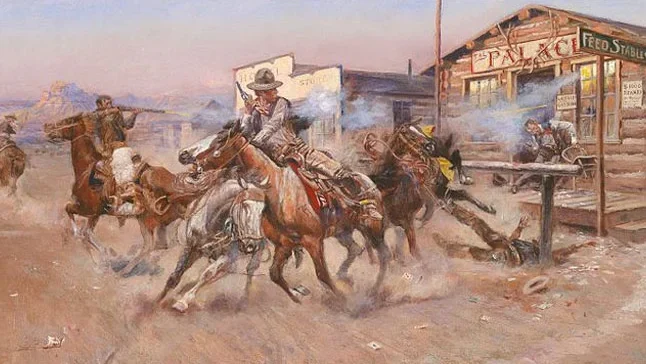
Two schools of historical thought continue to debate the severity of the late 19th century American West violence, particularly after the Civil War. One asserts that the violence was greatly exaggerated and really not that bad. The other claims that brutality in many parts of the vast and underpopulated West, especially in boomtowns, was exceptionally high.1 Given the abundant evidence of misbehavior and mayhem way back when, the latter theory clearly wins the argument in my estimation.
It’s not a surprise that the violence was so bad in the late Wild West. The wide-open cattle and mining towns featured too many gambling dens, saloons, whorehouses and unruly drunken creeps, so there was bound to be a lot of trouble. Exacerbating those matters were: spotty (and sometimes nonexistent) law enforcement; courts that were often corrupt or ineffectual; chaotic feuds 2; crooked political “rings”; cattle barons’ range wars; outlaw gangs; abundant road agents 3; mob violence, vigilantes and regulators, and; a shrinking American frontier that offered fewer and fewer havens for on-the-lam villains.
On the other hand, to improve the odds of personal survival in precarious environments, the sensible option for a lot of Westerners in those bygone times was to get heeled and be ready to defend themselves against sadistic goons. An alternative for some people was to pack a small equalizer to confront those “close encounters of the revolver kind”. 4
Who were these people?
All the same, most 19th century Westerners weren’t pistoleros by circumstance or experience and didn’t have the need or ability to tote large hog-legs for personal protection. Even so, the Western society of that era expected men to defend themselves against nutjobs and violent bullies. Thus, it was common for many Westerners, including some women, to be discreetly armed. Added to this was the dominant Western belief that a man’s personal honor and safety should be backed up by lethal force. 5
Among the first to take advantage of these concealable arms were gunfighters on both sides of the law who wanted compact firepower in addition to their full-sized revolvers made by Colt, Smith & Wesson, Remington and other companies as backup heaters. Moreover, some boomtowns’ politicians forbade carrying firearms, especially open carrying such hardware. Therefore, many folks who worked in higher risk jobs carried small hidden firearms for self-defense. In those bygone days such weapons were known as hideout guns, cutdowns, pocket guns, vest pocket pistols, and bicycle guns. Today, our modern versions are called belly guns, snub-nosed revolvers, snubbies, micro pistols, backup guns and so forth.
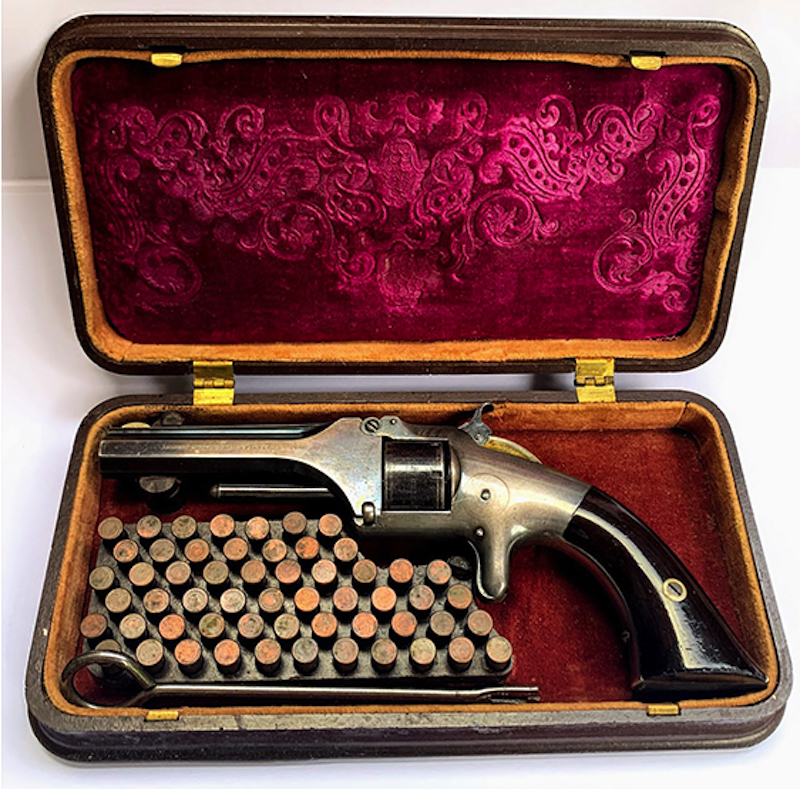
So, a lot of Westerners who worked in mercantile stores, banking, gambling, bar tending, prostitution and stage coach transportation sought small equalizers that could be inconspicuously carried or stashed nearby. Quite a few manufacturers, both domestic and foreign, recognized a lucrative market and produced an assortment of small revolvers, some well-made and others clearly substandard. 6
While there was an abundance of small handguns in the Wild West that were not revolvers–for example, single- double- and four-shot derringers—the main focus of this article is on a few types of small revolvers, which I refer as hideout revolvers, and the rough- and-ready Westerners who carried them.
Off to the Races with Colt
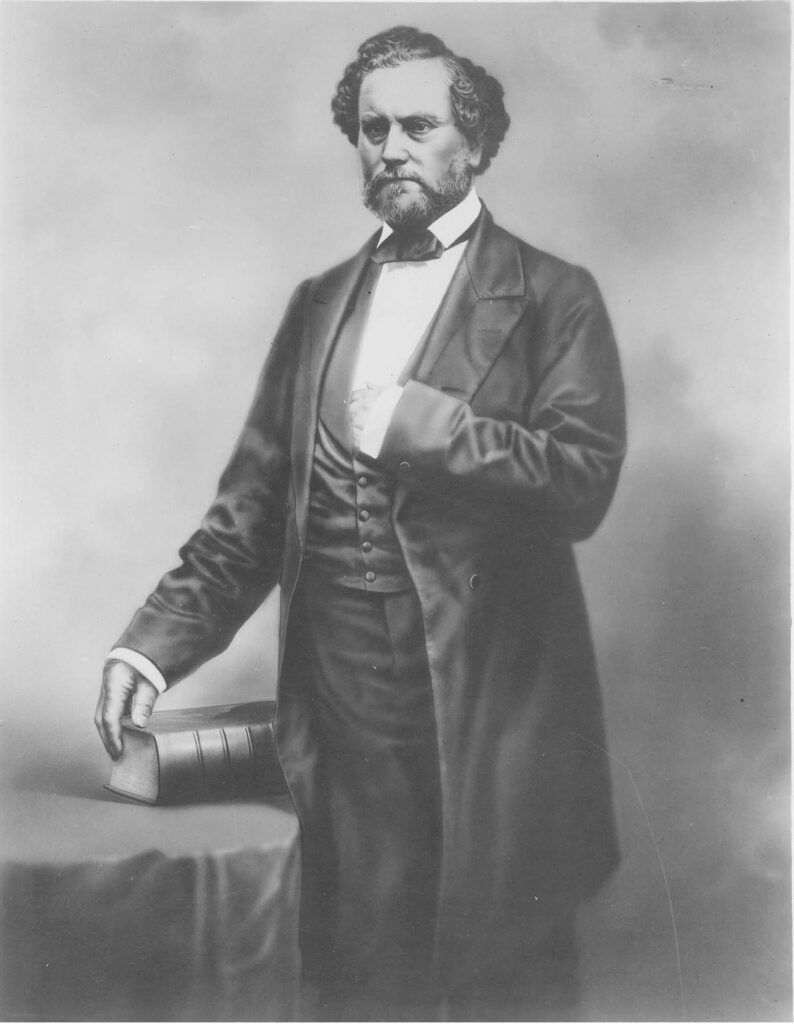
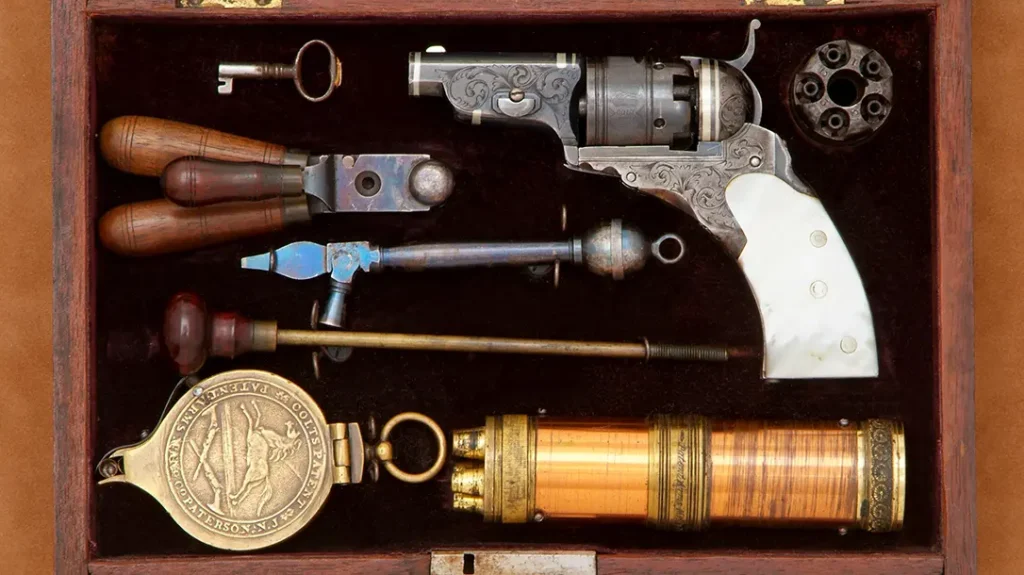
Besides being the inventor of the first practical revolver, Samuel Colt was also an early manufacturer of compact, hideout handguns. Among the first production revolvers made by Colt, starting in 1837, were the five-shot .28 or .31 caliber No. 1 percussion Pocket Models (later dubbed Baby Patersons) in different barrel lengths. An unusual feature, but not invented by Colt, was a trigger that dropped down out of the revolver’s frame when the hammer was pulled back. Although this was not the most robust design, it made the gun even more compact when it wasn’t in action. 7
Some twenty years after Colt’s Paterson debut, Smith and Wesson came out with their Model 1 revolver, the world’s first metallic cartridge arm in .22 caliber. Because of these handguns’ tiny bores, they were no manstoppers but they could fire multiple shots and inflict nasty wounds that might fester and prove to be eventually fatal because of the abysmal sanitation, hygiene and the crude medical care of the era. Presentation of those small handguns may have caused more than a few cowardly rascals to back down for fear of getting shot and the good possibility of lingering deaths due to infection. 8
Shown below is Sam Colt’s personal No. 1, revealing the primordial shape of a modern snubby. As with all Antebellum Colt’s revolvers, reloading the No. 1 was a slow cap-and-ball process, not the considerably faster metallic cartridge designs that became available soon after the Civil War. Still and all, operating these Colts was a technological advancement over one- and two-shot derringers.
Cutdowns
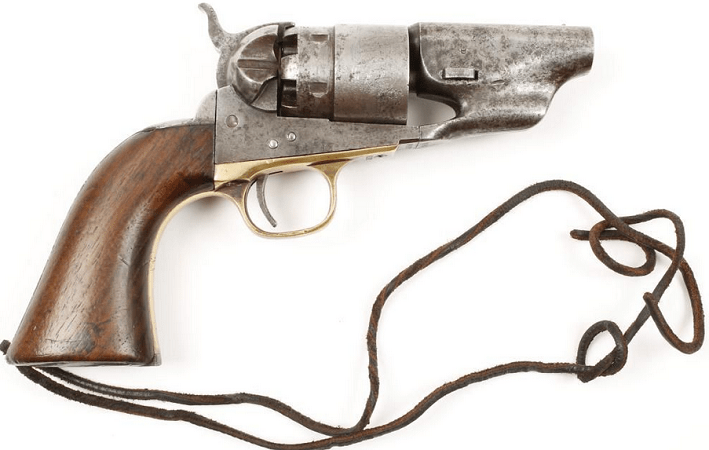
American firearms companies were somewhat slow to offer compact big bore revolvers that fired metallic cartridges, and so that niche was filled by gunsmiths who cut down the barrels of full-size percussion handguns 9 and converted them to self-contained ammunition. These seemed to suit the requirements of customers on both sides of the law who wanted concealable, heavier firepower for close-in work. Let’s consider a few examples and their end users.
Dallas Stoudenmire
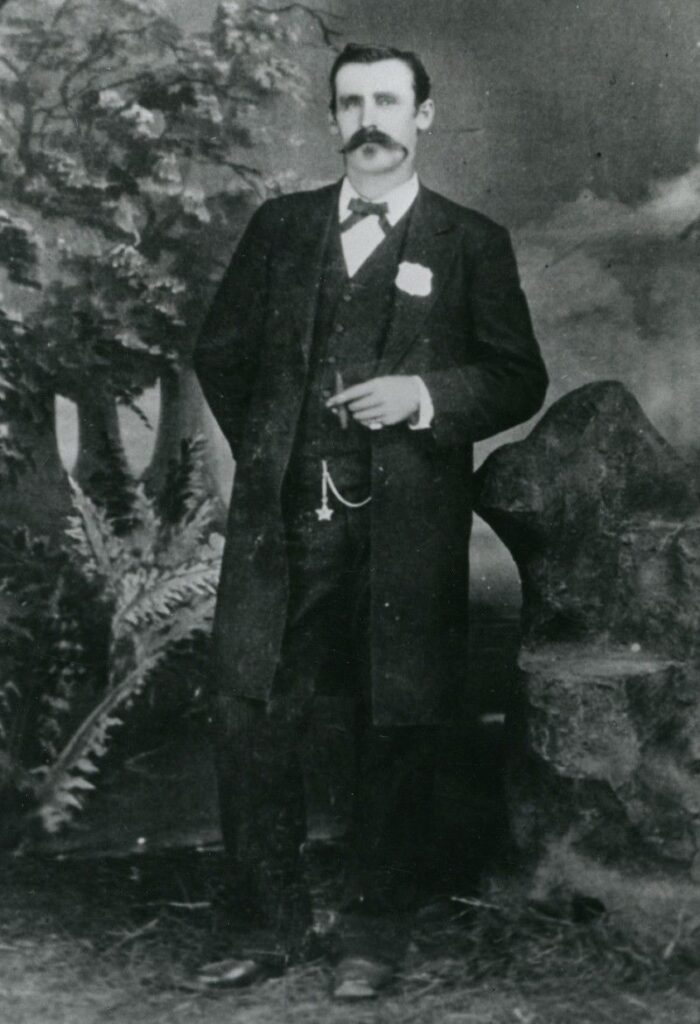
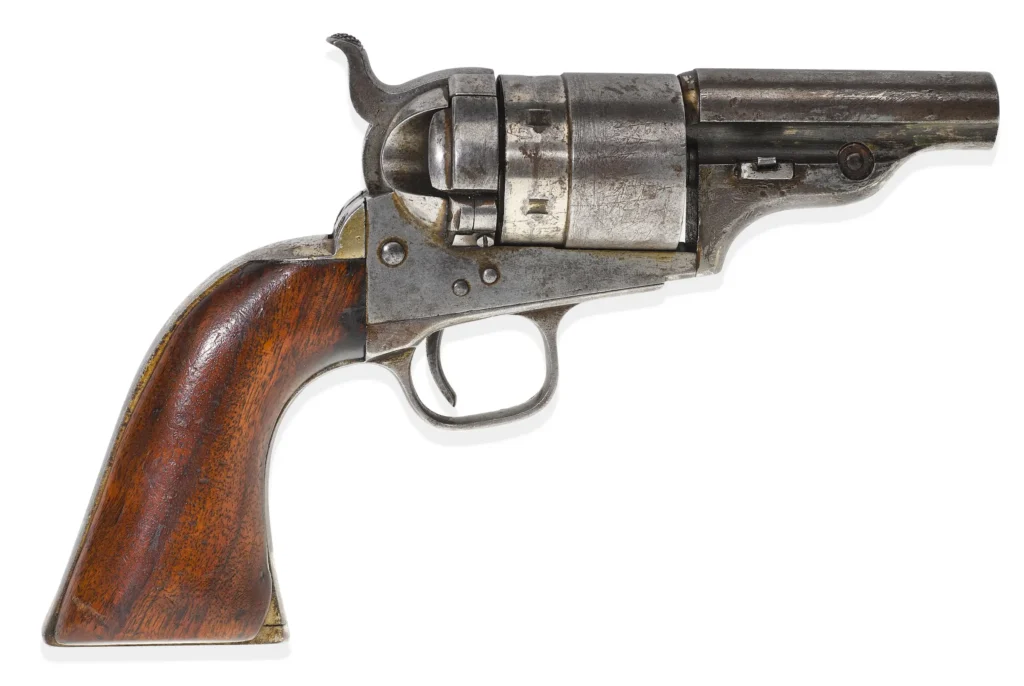
Dallas Stoudenmire, who became marshal of the turbulent border town of El Paso, Texas, carried (in addition to his full-size revolvers) a concealed cutdown .44 cartridge-conversion Model 1860 Colt. He was a feared gunfighter and could shoot equally well with either hand. Playing a starring role in El Paso’s “Four Dead in Five Seconds Gunfight” in 1881, Stoudenmire killed three of the four men, including an innocent bystander. Tragically, pop-skull liquor and a volcanic temper ultimately would prove to be his undoing.
During his short stint as El Paso’s marshal, he may have shot and killed ten men. One of them was a fellow whose wedding tackle Stoudenmire blasted off, adding insult to injury, or in that case death by exsanguination. Predictably, lawlessness in El Paso quickly took a nosedive because no one in his right mind thought it wise to trade shots with the imposing marshal, at least when he was sober. Right after his death in a drunken shootout with George and James Manning in September 1882, his cutdown Colt was found in the dusty street.
Orrin Porter Rockwell
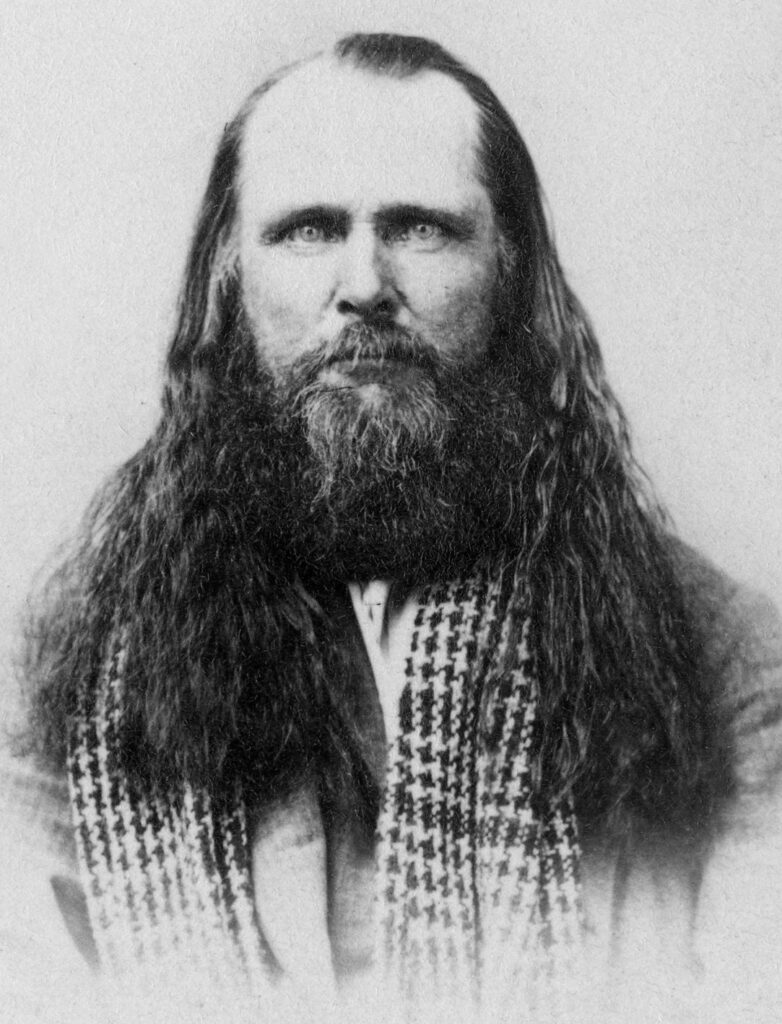
Recognized as Mormon leader Brigham Young’s bodyguard and religious enforcer, Orrin Porter Rockwell 10 was also a tenacious Utah lawman and expert woodsman known as an “Avenging Angel” and “Destroying Angel of Mormondom”. His targets were disreputable Mormons and Gentiles who were considered threats to the church and Mormon community.
Rockwell’s personal history is cloudy, complicated and controversial. His notoriety began when persecuted Mormons migrated west in search of their Zion. At that time, he was suspected of being involved in the attempted assassination of former Missouri governor Lilburn Boggs, who when governor had “evicted Mormons from Missouri by any means possible.” After spending eight months in jail following that attack, Rockwell was released because of lack of evidence. From there he migrated to Illinois where he reunited with Mormon founder Joseph Smith, who was subsequently assassinated. Rockwell was suspected of killing one of the assassins. By 1849 he showed up in Utah and was serving Brigham Young. There were probably many slayings connected to Rockwell but he was never convicted of any. In his own defense, Rockwell once told a group of people, “I never killed anyone who didn’t need killing.” 11
In some circles Orrin Porter Rockwell is considered “colorful” and a loyal and zealous protector of the Church of the Latter-Day Saints, while in others he is regarded as a Mormon hitman. Whatever one’s opinion is of Rockwell, he definitely was a man “with the bark left on.” If Rockwell were on a man’s trail the ending likely would be terminal. He was alleged to have carried two or more cutdown .44 Model 1860 Army Colts.
Bull Dogs that Bit
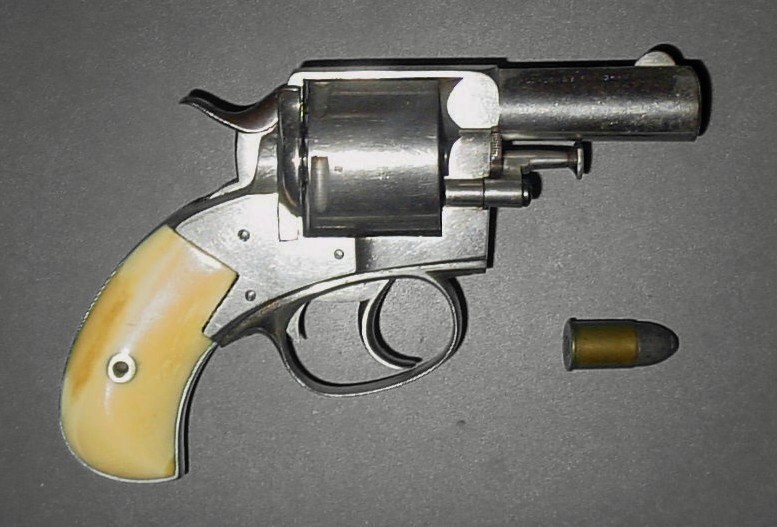
Originally designed and manufactured in Great Britain by Philip Webley and Son in the early 1870s, the short-barreled .450 “British Bull Dog” was soon copied by Belgian and American gun companies like Forehand & Wadsworth, Iver Johnson and Harrington & Richardson. Costing much less than big-bore pieces by Colt, Smith and Wesson, and Remington, standard Bulldogs 12 were well made, durable and very popular in the Old West and where compact, pocket blasters were appreciated. They were also double-action, making them faster to fire than American revolvers, at least until the major U.S. gunmakers started producing double-action handguns.
George Armstrong Custer
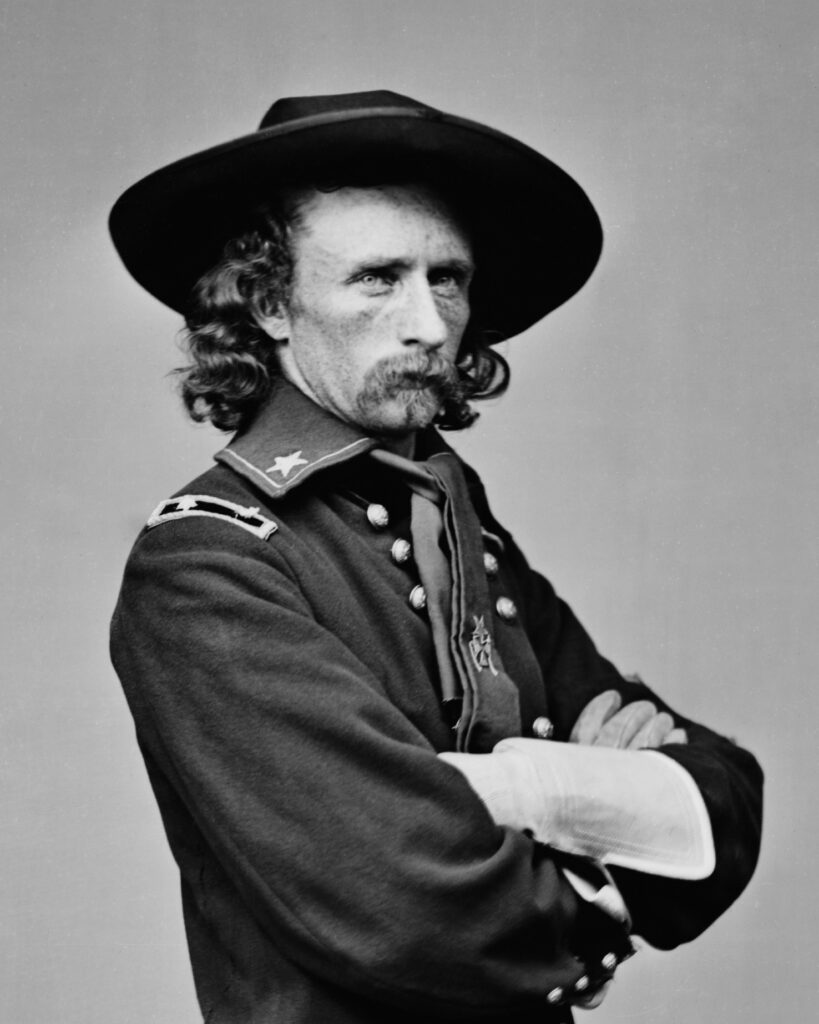
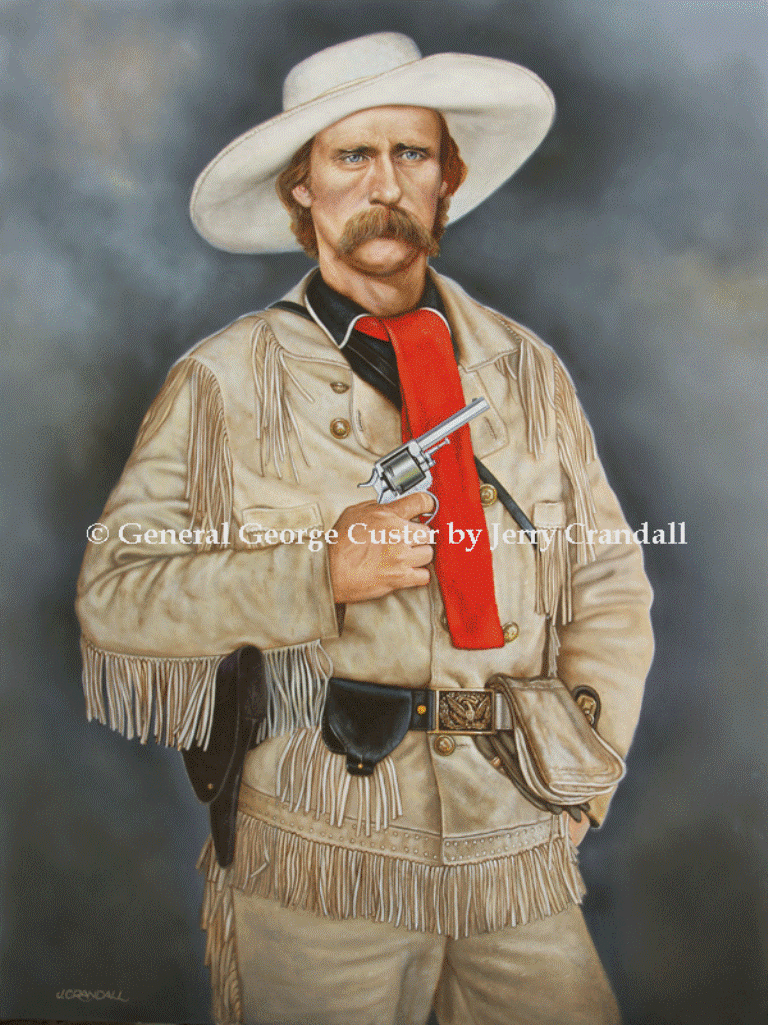
Not all Bulldog revolvers were plain and inexpensive. Bellicose Major General 13 George Custer possessed an extensive collection of firearms and probably would have carried the best available for his military campaigns and hunting excursions. According to 7th Cavalry Lieutenant Edward S. Godfrey, a survivor of the Battle of the Little Bighorn, Custer owned a pair of “Bulldog self-cocking, English, white-handled pistols, with a ring in the butt for a lanyard,” and likely had them with him when he perished with half his troopers in 1876. Those handguns disappeared after the battle, probably taken as souvenirs by an enemy Plains warrior. Previously lauded by newspaper reporters for years for enjoying “Custer’s luck”, his luck definitely ran out early that summer—and so did many of his hapless troopers.
William A. Pinkerton
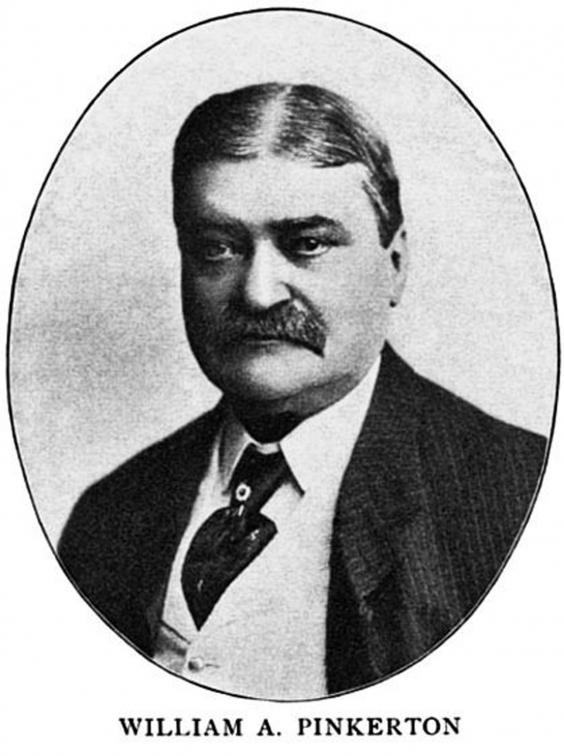
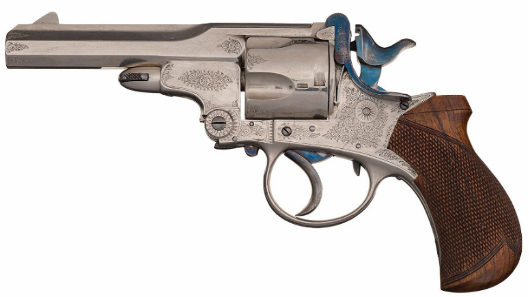
One of the sons of detective agency founder Allan Pinkerton, William A. Pinkerton, owned a Trantor Model 1879 bulldog-style, double-action revolver (either .450 or .455 caliber) custom made for him. After Allan’s death in 1884, his sons Robert and William took over and ran the Pinkerton National Detective Agency. During the Civil War, Allan guarded Abraham Lincoln and assisted his administration with Union military intelligence regarding Confederate troop locations and numbers, but he often grossly overestimated them. Following the war, the Pinkertons segued into investigating train robberies (among their quarries were Jesse James, Butch Cassidy and their fellow robbers), strike breaking and union busting. The agency, which had some serious blemishes, developed new investigative techniques and recordkeeping, and was the forerunner of the modern U.S. Secret Service and Federal Bureau of Investigation.
Charles J. Guiteau
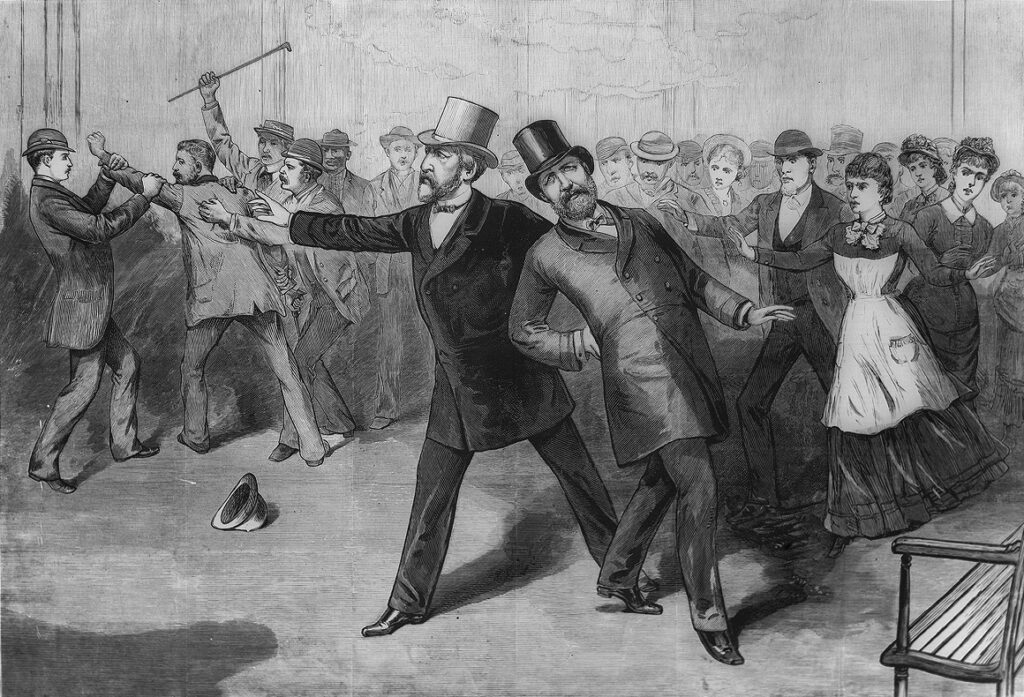
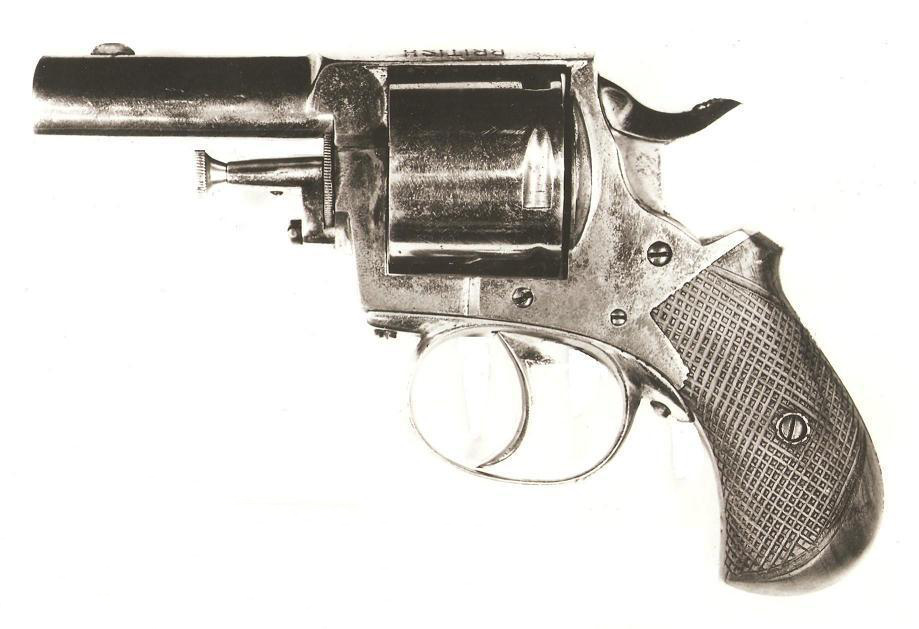
A notorious misuse of a British Webley .442 Bulldog occurred in 1881, though not in the American West, when turned-down Federal office seeker and failed lawyer Charles J. Guiteau shot President James A. Garfield in the lower back with such a revolver. Garfield died more than a month later because of infections from his wound. Some modern physicians argue that Garfield’s wound would be survivable today and his death was “possibly brought on by his doctors’ poking and probing of the wound with unwashed hands and non-sterilized instruments.”
Less than a year later, Guiteau was strung up for the crime. While waiting for the long drop as he stood on the gallows, he woefully recited a poem that he had composed that very morning titled, “I Am Going to the Lordy”. A moment later away he went, but maybe not to where he thought he was going.
Gats for Gamblers and Sporting Women
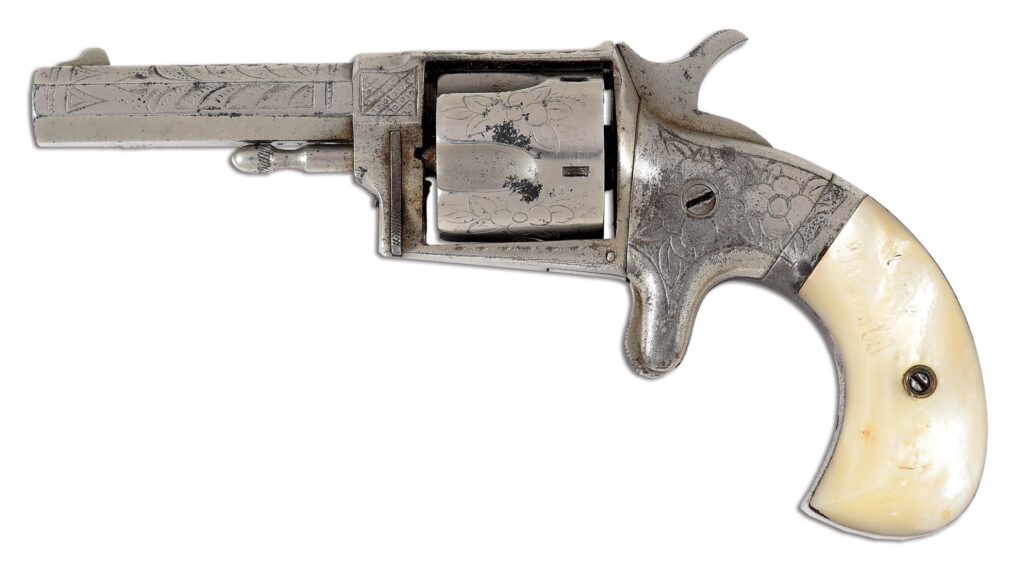
A variety of revolvers, many cheap and not very durable but some were of good quality, were available for those of various means and backgrounds. Gamblers and horizontal workers habitually availed themselves of hideout revolvers and other weapons. Small, fixed spur-trigger revolvers (with no trigger guards) were very popular, with calibers ranging from .22 to .41.
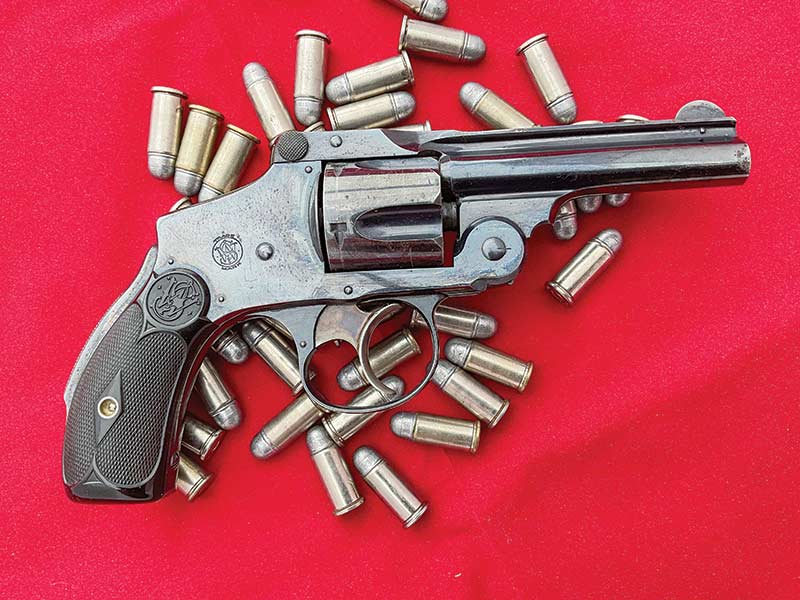
Many companies manufactured those types of handguns, but Hopkins and Allen produced the greatest numbers. The cheapies (many had no manufacturers’ names inscribed on them) went by snappy monikers like Robin Hood, Red Jacket, Paralyzer, Earthquake, Mountain Eagle, Tramp’s Terror and Swamp Angel. For the more discriminating and better fixed buyers, quality small revolvers like Colt’s New Line (there were five frame sizes and caliber from .22 to .41) and “Cloverleaf” designs, and Smith and Wesson’s small top-break “lemon squeezers” in .32 and .38 caliber. By late in the 19th century both companies began making double-action swingout cylinder revolvers.
Professional gamblers did face grave risks from less skilled players who habitually were intoxicated and often became irate when they lost their money and believed they had been cheated. 14 Sometimes those circumstances lead the disgruntled participants to attack the winning gamblers who commonly were armed with hideout guns and edged weapons designed to resolve close-quarters quarrels.
Luke Short
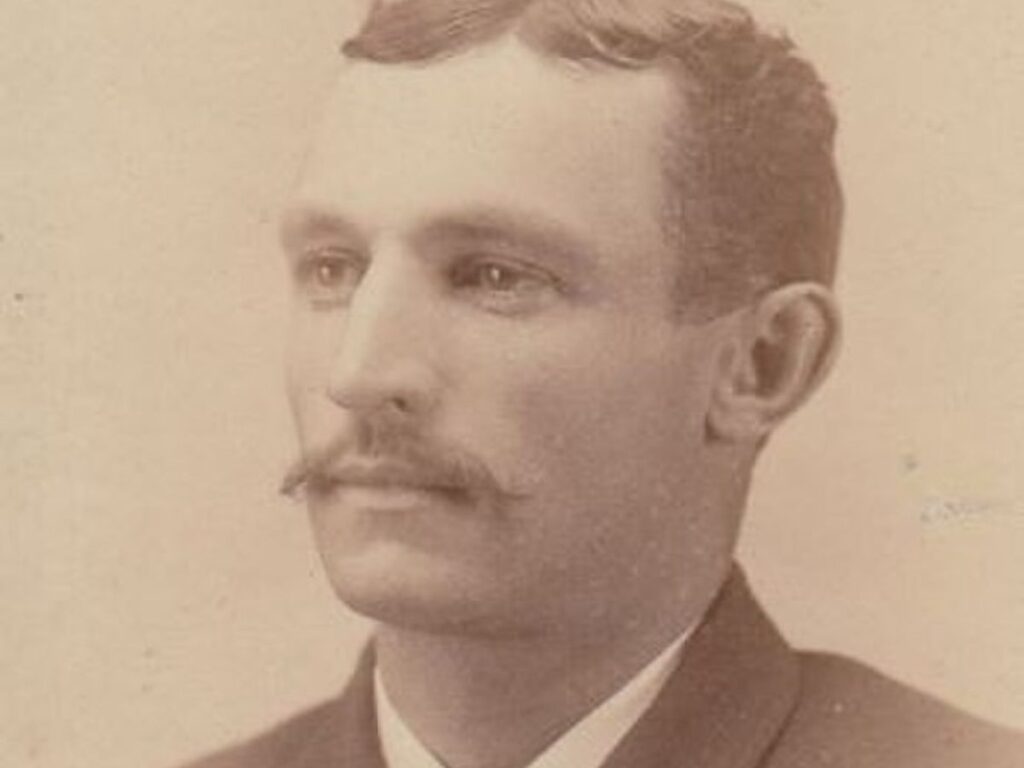
Previously covered in another RevolverGuy article, diminutive gambler Luke Short deserves a second look because of a shooting that occurred about three years before he outgunned Fort Worth’s nasty Jim Courtright in 1884. The prior gunfight happened in Tombstone, Arizona Territory–eight months before the legendary shootout between the Earp/Holliday faction and the members of the Clanton group—right after a faro game in which Short and another gambler named Charlie Storms participated. Bat Masterson was also nearby 15 and witnessed the bullying Storms assault Short, “an insignificant-looking fellow, whom he could slap in the face without expecting a return.”
Masterson tried to break it up but the action continued outside the saloon. Storms, obviously a slow learner, manhandled Short again while pulling a pistol, and the speedier Short jacked his cutdown Colt Peacemaker, pushed it up against Storms’ chest and shot him in the heart. The dying Storms fell to the ground and managed to fire once at Short who perforated Storms twice more and settled the matter. Those tactics were repeated several years later when Luke Short bested Jim Courtright in a gunfight.
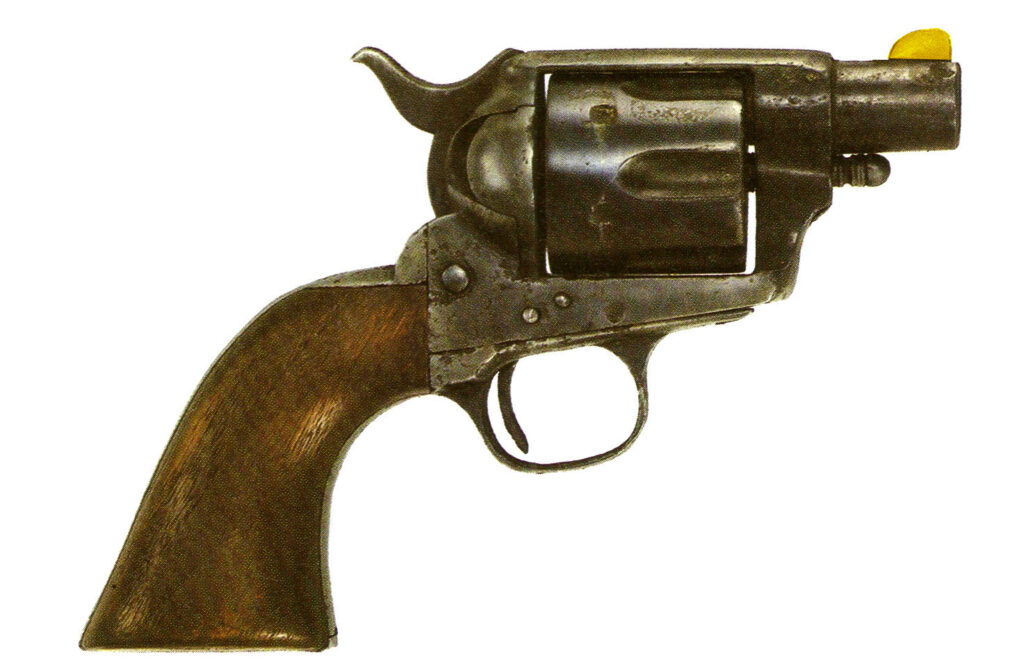
Wild Bill Hickok
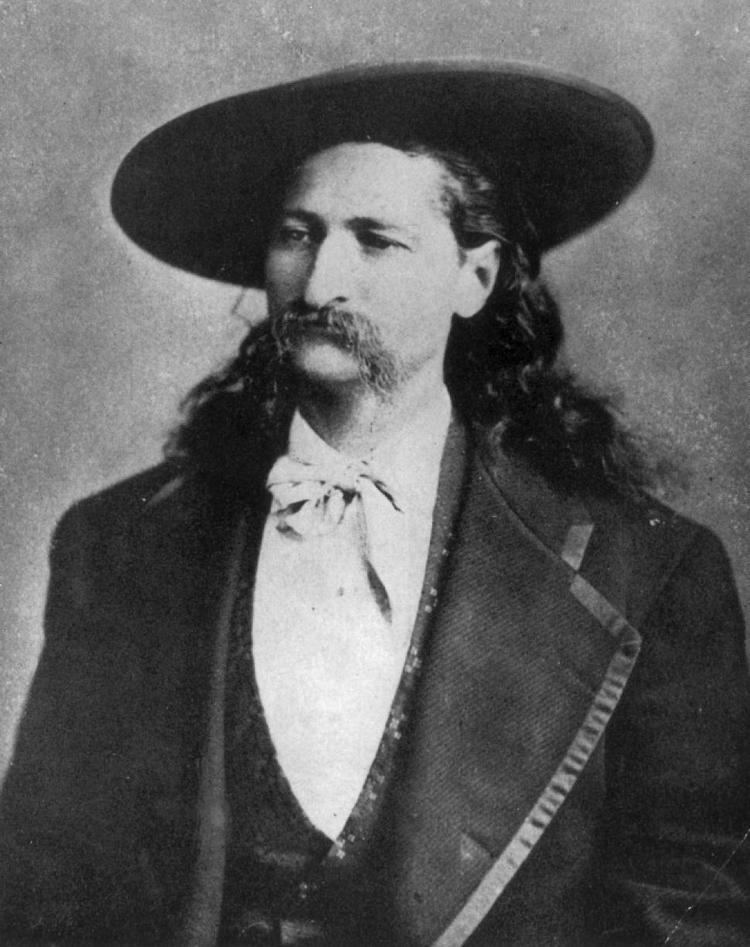
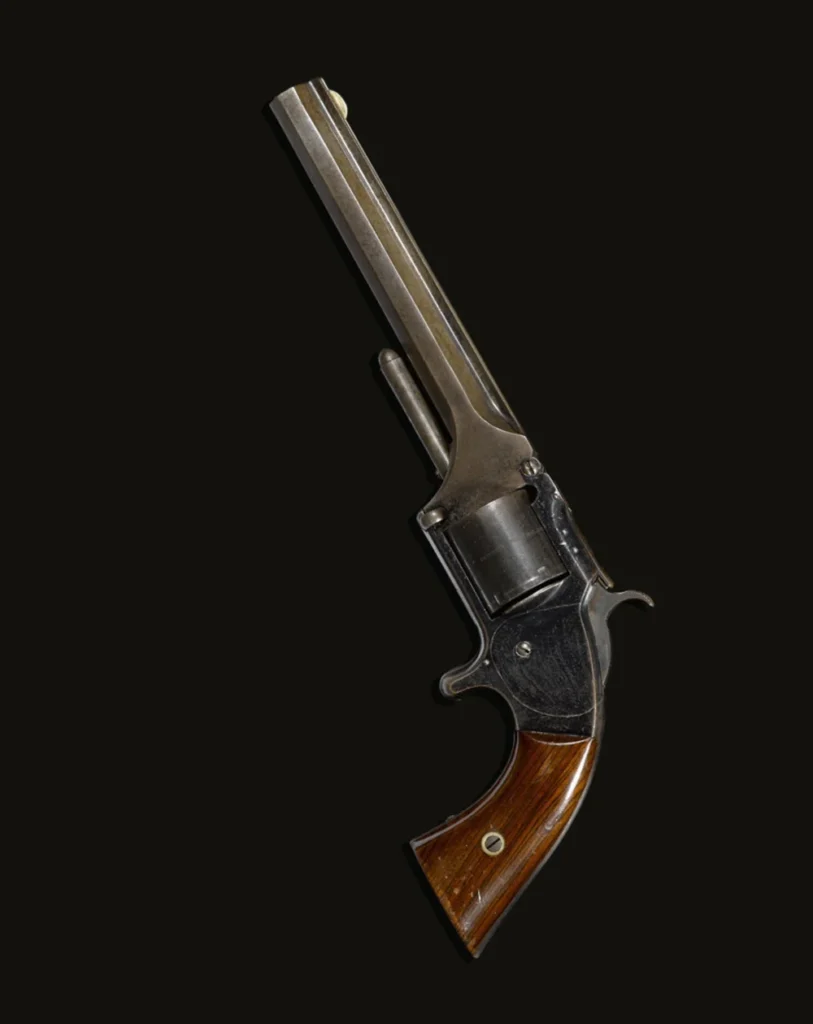
Famous for carrying two .36 Colt Navy revolvers, Wild Bill Hickok packed hideout pieces as well. Unfortunately, none of his handguns helped him when in 1876 he was gambling in Deadwood, Dakota Territory. While seated at the card table, he had a concealed .32 Smith and Wesson Model 2 spur-trigger revolver when craven Jack McCall slinked up from behind and murdered him with a bullet to the head. (More details concerning this incident are mentioned in this article)
Poker Alice
Prostitution has always been a hazardous occupation and in the Old West it was especially so because of then-incurable venereal diseases, alcoholism, drug addiction and suicide. Added to those perils were the mean louts who tried to abuse the ladies. And more than a few vicious fights occurred between competing soiled doves. Faced with such perils, the madams and their prostitutes tended to be pragmatic when it came to evening the odds against their oppressors. Small handguns, especially revolvers, that could be hidden in a bodice, slipped into a garter, or held in a discreet holster were favored, and so were derringers, knives and daggers.
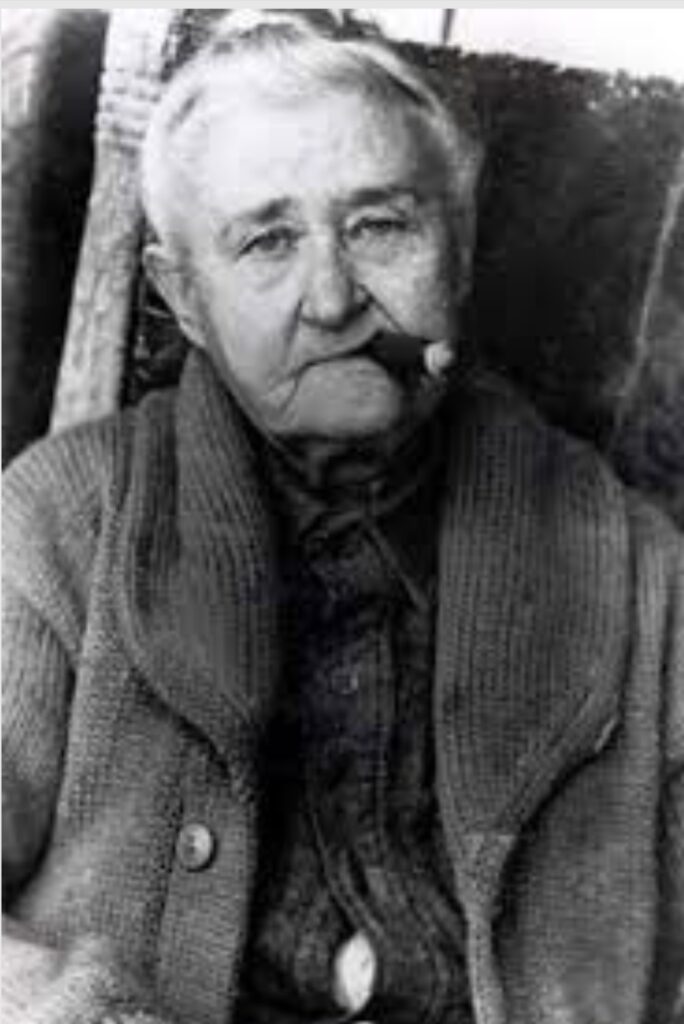
One such woman, who was both a gambler and an owner of a bordello, was Alice Ivers Duffield Tubbs Huckert who went by the handle of Poker Alice. She was born in England and immigrated to Virginia at age 12. Around the late 1860s, she and her family migrated to Leadville, Colorado. Alice married and outlived three husbands but it was when she was still with husband number one that she began playing poker and revealed her talent for the game. She began winning big money and always carried a handgun. And she smoked cigars.
Alice continued to play poker for the rest of the 19th century and purchased a building in South Dakota that she turned into a cathouse. Trouble of the shooting kind began in 1913 when soldiers from nearby Fort Meade took a dislike to Alice and her establishment. Late one night five unruly men from Troop K threw rocks through Alice’s windows and she opened fire in response. Two men were hit; one died immediately and the other barely survived.
The police arrested Alice but the state’s attorney decided that she had legally defended herself and her enterprise, though she and her six prostitutes were convicted of frequenting a house of “ill fame.”’ Two years passed by and once again several misbehaving soldiers were ventilated at Alice’s. Then in 1924, with Prohibition in full swing, Alice’s business was raided by the police and she was “convicted of operating a house of prostitution” and bootlegging. Locals petitioned the state’s governor to pardon the then-elderly Alice, and he did. She had no more run-ins with the law.
Other Options
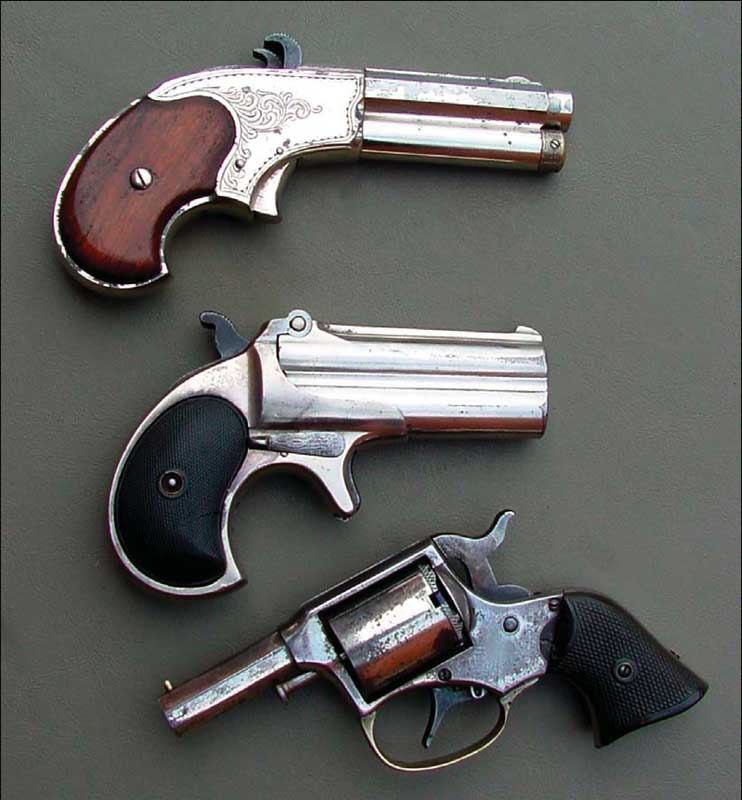
As previously mentioned, a multitude of small handguns of different designs, made by different makers, were available for men and women of any background and means. They must have provided some comfort for the owners, knowing that they had hideout weaponry in case things went sideways rapidly. Here are a few other examples:
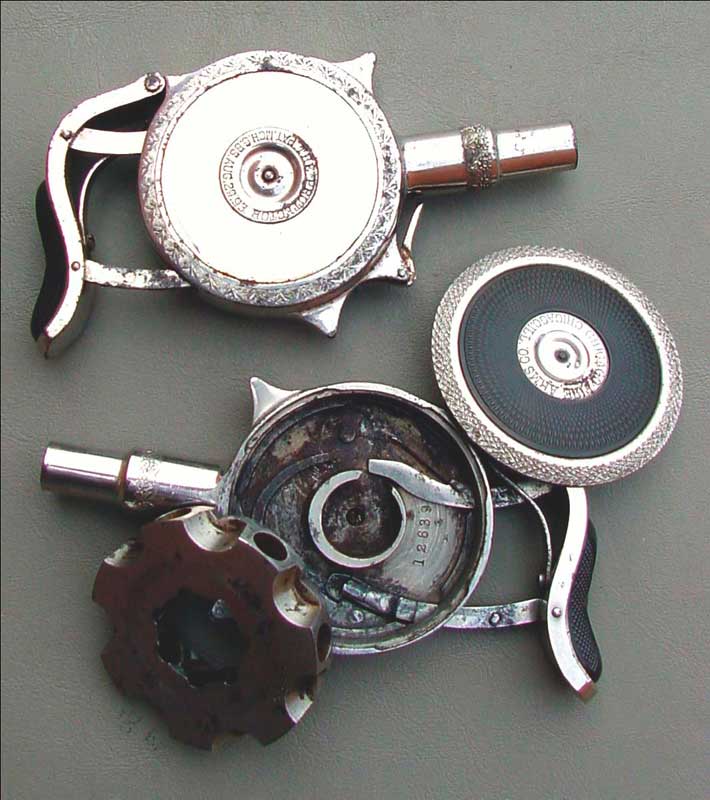
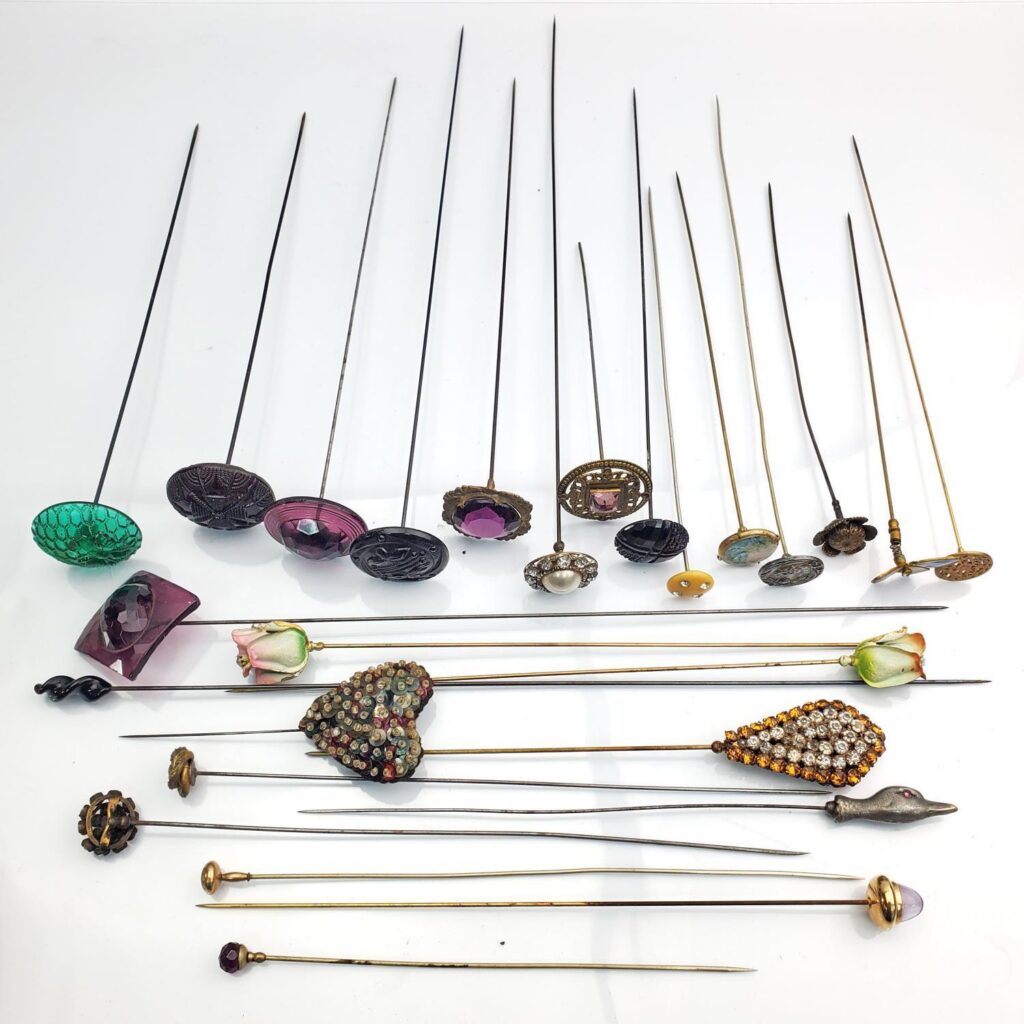
If no firearms were available, or the firearms didn’t take care of the business at hand, ladies could avail themselves of these gadgets to get across their point. More than a few unruly louts felt their sting and decided to move their show down the road.
Compact hideout handguns were, in my opinion, more varied and available during the late nineteenth century American West than any time before or since. They fit a wide range of budgets and needs, and no doubt saved the lives of many folks who were directly threatened by pitiless, vicious cretins. Those types of guns continue in that role today.
La fin.
Endnotes:
1.) In current-day America, 35 murders per 100,000 people is considered extremely high. Yet those figures pale in comparison to homicide rates in the Wild West. Adjusting for population densities, boomtowns Bodie, California, and the five main cattle Kansas cattle towns sported murder tallies that ran from 116 to 317 per 100,000 inhabitants. As bad as these statistics are, in the early 1850s the Pueblo of Los Angeles’s murder rate was 1,250 per 100,000 people. Historian John Bosessenecker believes that was by “far and away the highest homicide rate in American history.” Volunteers formed the Los Angeles Rangers to subdue the criminality.
2.) Post-Civil War Texas was notorious for murderous feuding.
3.) Bandits who robbed stagecoaches and wayfarers.
4.) An observation from late historian and Will Bill Hickok biographer Joseph G. Rosa.
5.) This custom came by way of the Deep South, which had adopted the behavior from Europe. Dueling was predicated upon imagined feudal chivalry and centered on the belief even the slightest insult on a gentleman’s (or someone he cared about, usually a woman’s) honor or reputation, even simple or imagined rudeness, had to be avenged by a formal duel. With few exceptions, a man who ignored a challenge to a duel was labeled a coward (then a terrible insult) and suffered irreparable harm to his position in the community. Lower class men, because they were not considered gentlemen, sometimes engaged in horrific no-holds barred brawls where eyes were gouged out and noses and ears were bit off. By today’s standards, when bravery and honor are sometimes considered quaint, dueling and fight-to-the-death brawling may seem preposterous. But it frequently took place, and was encouraged, especially in the Deep South, Texas and Far West.
6.) Later in the 20th century these poorly made revolvers became known as “Saturday Night Specials.”
7.) Colt’s revolvers with fixed, exposed triggers and trigger guards didn’t appear until production began in 1847 with the gigantic Colt Walker revolvers.
8.) Firearms instructor and self-defense expert Greg Ellifrtiz refers to these as “psychological stops.”
9.) The Colt Model 1860 .44 Army was a popular choice back in the day.
10.) Usually referred to as Porter Rockwell in histories.
11.) “Shootist” Clay Allison supposedly once made the same statement, and allegedly so did gunslinger John Wesley Hardin. Both men may have been psychopaths. Maybe Rockwell was one, too.
12.) Spelled “Bulldog” in the U.S.
13.) Major General was his Army brevet rank near the end of the Civil War. After the war, he was commissioned as a lieutenant colonel in the regular Army.
14.) There was a lot of cheating, too, but not all gamblers did it. The renowned Will & Finck company in San Francisco produced a “gambler’s kit” that contained daggers, derringer, and a “metal playing card case with a card deck, four playing card-themed wooden boxes with markers, dice, poker chips, and two rare ‘wizard sleeve’ cheating devices for concealed card switching.” https://live.treasuretroveauctions.com/online-auctions/treasure-trove/rare-19th-century-will-finck-gamblers-kit-with-derringer-daggers-cheating-devices-and-accessories-8680396.
15.) Many well-known Westerners—particularly lawmen, gamblers and outlaws—were quite itinerant because they were on the scout for opportunities or were sent packing; they showed up in many places all over the West and ran into each other a lot.
Sources:
Alexander, Dave, “Porter Rockwell—Destroying Angel of Mormondom”, https://www.legendsofamerica.com/porterrockwell/, updated November 2025.
Bell, Horace, Reminiscences of a Ranger: Early Times in Southern California, University of Oklahoma Press, Norman, university of Oklahoma Press, with an introduction by John Boessenecker, first published in 1881, republished in 1999.
Boessenecker, John, Gold Dust and Gunsmoke: Tales of Gold Rush Outlaws, Gunfighters, Lawmen, and Vigilantes, published by Wiley in 1999.
Burrough, Bryan, The Gunfighters: How Texas Made the West Wild, Penguin Press, New York, NY, c. 2025.
Garbers, Alan, “Pocket Pistols of the Old West: More Popular Than the Peacemaker?”, Guns Magazine, https://gunsmagazine.com/DISCOVER/POCKET-PISTOLS-OF-THE-OLD-WEST/, 2023.
Gardner, Mark Lee, Brothers of the Gun: Wyatt Earp, Doc Holliday, and a Reckoning in Tombstone, Penguin Random House, 2025.
Garrett, Tracy, “Custer’s British Bulldogs”. Petticoats & Pistols, https://petticoatsandpistols.com/2010/10/14/custer%E2%80%99s-british-bulldogs/, October 14, 2010.
Guns Staff, “The Destroying Angel—Orrin Porter Rockwell: God and Guns Combine in a Strange Man”, Guns Magazine, https://gunsmagazine.com/wheelgun-wednesday/the-destroying-angel/, March 1973.
Hardin, Jesse L., “Hideouts & Sneaky Guns: Concealed Carry in The Old West”, GunBlast, https://www.gunblast.com/JessHardin_Hideouts.htm, undated.
Olsson, Tore C., “The Pinkertons in Myth and History”, The History Reader, https://www.thehistoryreader.com/historical-figures/the-pinkertons-in-myth-and-history/, undated.
Schindler, Harold, “History of Porter Rockwell, Utah, Online Utah, https://www.onlineutah.com/historyrockwell.shtml, undated.
Silva, Lee, A. “The Spur Trigger Guns of the Bordellos Were Handy Self-Protection Weapons”, Historynet, https://historynet.com/SPUR-TRIGGER-GUNS-BORDELLOS-HANDY-SELF-PROTECTION-WEAPONS/, October 5, 2017.
Sonnichsen, John, I’ll Die Before I’ll Run: The Story of the Great Feuds of Texas, The Devon-Adair Company, 1962.
Wikipedia, “Charles J. Guiteau”, https://en.wikipedia.org/wiki/Charles_J._Guiteau, undated.
lead image:
“Smoke of a .45,” by Charles Marion Russell, https://www.eharrisgallery.com/10-most-famous-cowboy-paintings/.

Very interesting article. I thought I knew a lot about those times, but I’d never heard of Poker Alice or Orrin Rockwell, and I learned new things about a few of the others.
As far as the murder rates go, Mark Twain, in “Roughing It,” his book about his adventures in the Nevada Territory during and after the Civil War, wrote, “The first twenty-six graves in Virginia City were occupied by murdered men.” Money, alcohol, and testosterone can be a bad combo.
The “Saturday Night Special” name was originally applied to cheap, pot-metal revolvers, but in the late 60s it was applied to any short-barreled revolver; Detective Specials, for example, were commonly called SNS in the press. The original draft of GCA 68 banned all revolvers with barrels under 4 inches, till smarter heads prevailed. The “SNS” hysteria was responsible for the “box size” import restrictions of GCA 68 (handguns had to be at least 6 inches long and 4 inches tall), which resulted in the banning of the PPK for import and the development of the PPK/S. Bad times for the Bill of Rights.
Law enforcement didn’t exactly cover itself with glory in the Old West. I read of a sheriff (can’t remember his name) who moonlighted as a road agent; his commission from the President naming him as a U.S. Marshal arrived while he was standing on the scaffold waiting to be hanged for murder. Needless to say, the President had to make another selection.
These stories of the Old West are always entertaining, and it will be a long time before anyone runs out of them. Thanks again.
One doesn’t have to dig very far below the surface of the Wild West to realize how brutal it was in many regions, Old 1811. More than a couple law dogs formed gangs, moonlighted as stage coach robbers and murdered people in the process. One such fellow was Henry Plummer who served as the sheriff of Bannack, then Idaho Territory (later Montana) in the 1860s. When some of the locals finally got wind of Henry’s extracurricular activities they formed a vigilance committee, arrested and summarily hanged him and at least 20 of his associates, including his two deputies.
Pioche, NV claims 72 buried in Boot Hill before the first death from natural causes.
Pioche is one of many 19th-century Far West mining towns that had serious outbreaks of violence in their infancies, Richard, though truthfully until your comment I had never heard of the place.
So many mining towns were boom-and-bust affairs because when the ore played out after a few years they withered, died and became ghost towns. Thanks for the tip about Pioche, Nevada.
Clay . . . stunning dive into the realm of deep concealment ‘pocket guns’. Necessity being the mother of invention was obviously intent on creating hide-out guns as well as primary conventional sidearms of the 19th Century. Good guys as well as bad guys – sometimes indistinguishable – sought the same solutions to the same needs. Times change, but those needs do not. A full sized holster gun is wonderful until you need something small and deeply concealable. With the pictures you provided, I took my daily carry M37-2 J-frame S&W out and held them up to my screen, “See, these were your great-great grandparents.”
It is also interesting to note that the 19th Century saw probably the most radical advancement in firearms and ammunition of any era both in the US and in Europe. In rifles we went from the flint lock black powder muzzle loader firing lead balls to bolt action Mausers using smokeless powder cartridges with full metal jacket bullets. In handguns it went from flint lock black powder muzzle loaders to the semi-automatic magazine fed pistol. ( C93 Borchardt and C96 Mauser )
The 19th Century was a mad scramble for the latest technological development where each invention was almost obsolete in the face of time. Yet despite all of that, the wheels of the gun kept going ’round ‘n ’round . . . from the Patterson Colt to today’s choices in both single and double action revolvers. Given the development of powerful hunting rounds that revolvers easily digest, but dismantle autoloaders, not to mention the compact power to weight ratio of today’s super alloys in frames, I would suggest that the revolver will be with us for quite some time after our demise.
I’m with you, S. Bond, about the incredible advancements in firearms technology during the 19th century, which also include the world’s “first fully automatic machine gun” designed by Hiram Maxim in 1884. Even today’s rotary guns and cannons have their roots in the 19th century with the hand-cranked Gatling guns that first appeared in 1861.
I really enjoyed your article Sir! Thank you for sharing it with us. Its easy to picture Peacemakers and full size “hog legs” when one thinks of the Wild West. Similar to modern times, smaller guns that were easier to conceal were probably more desireable by a larger population of folks.
Thanks, Mark. If I were living in the 19th century American West there are two revolvers I’d want to have: a .45 top-break Smith & Wesson Model 3, and a Webley & Scott .44 Bull Dog.
Nice work, Mr. Spencer.
There is another resource that provides strong support for the premise of your article. The late Mike Beliveau has a very informative video on his duelist1954 YouTube channel titled “Everyday Carry in Post Civil War America.” In it he documents that 19th century sales for all Colt, Remington, S&W, Merwin Hulbert full-size, centerfire belt guns _combined_ are positively swamped by the several millions of pocket revolvers and derringers sold in the same interval.
Appreciate the additional information, Michael. There was such a market for small handguns not only in the Wild West but in many parts of the United States, especially in big cities where violent crime was high and law enforcement was iffy. Most people didn’t earn much in those days and couldn’t afford first-rate firearms from the companies you mentioned. Others weren’t willing to lay out the big bucks to buy a Colt or Smith & Wesson et al. and purchased lesser quality guns. Of the latter, as you noted, there were a plethora of choices.
An ancestor of mine taught at Yale University during the second half of the 1800s. I have his .32 rimfire Whitney Arms spur trigger revolver; on the backstrap it’s noted to have been gifted to him by his “scholars” in 1872. Apparently either his colleagues or students thought it was a practical gift.
Clay, I’m just coming home from the S&W Collectors Association symposium, where there were plenty of Number 1, Number 1-1/2, and Number 2 revolvers in evidence. They were certainly a popular option back then, despite the small caliber. Some things are as true today as they were a century-and-a-half ago: Nobody wants to leak!
I agree, Mike. Additionally, back in the 19th century medical care was so crude that even a small-caliber bullet wound often would lead to an amputation of a limb or fatal infection, and so most people tried to avoid getting shot. Following the assassination attempt on President Garfield, he finally succumbed to the bad medical care of the era.
My great (to the 4th) Uncle Thomas N Way died at the Battle of the Little Big Horn. He fought in the Civil War and was wounded and captured at Chicamauga. He escaped and continued fighting. After the war he joined the 7th Cavalry under Custer. He is buried in the mass grave at the Last Stand Hill.
I wonder if he had a revolver like these in his last moments…
You’re the first person I’ve encountered whose ancestor died in that battle, Jim. Unfortunately, a small hideout revolver wouldn’t have helped a 7th Cavalry trooper survive at the Little Bighorn, though it might have in small skirmishes.
If you’re ever in the area of Buffalo, Wyoming, you can view some of the Battle of the Little Bighorn artifacts in the local museum. Most were donated by the families of the Plains tribes warriors involved in the fight.
Excellent article and great historical content. One of the side matches in cowboy action shooting is called pocket pistols. These are frequently in .32 and .38 S&W calibers. Mostly what I have seen are break top revolvers in a 5 shot configuration. Over the years, I have picked up a Forehand and Wadsworth and an Iver Johnson, both in shooting condition. One can learn to squeeze off all five shots in about a second’s time. These little guns, or pocket pistols, were and certainly in their modern iterations today quite valuable little pieces to have on one’s person. They are certainly accurate enough at card table or bad breath distance.
I didn’t know that pocket pistol matches are modern cowboy action events, Dan. If I were alive during the Wild West I’d certainly carry a small hideout gun, though in a large-bore caliber.
Thanks, Spencer, for the excellent historic read. A lot of research went into this tour of personalities, a few of which I had no prior knowledge. I enjoyed it! History teaches us that a pocket gun hidden on your person is much better than a more capable hog leg hanging on the saddle horn- that fact remains.
I’m with you about the value of pocket guns, Kevin. There is an almost endless number of histories that I’m discovering for the first time and catch my attention. Others I knew something about but when credible new stories pop up about certain time periods, people and events that I focus on that’s when it’s enjoyable for me.
In a recent posting on his website, Massad Ayoob recommended Tom Clavin’s “Vengeance: The Last Stands of Custer, Crazy Horse, and Sitting Bull” (c. 2026). After reading that excellent history of the Battle of the Little Bighorn, I eagerly devoured Clavin’s “The Last Outlaws: The Desperate Final Days of the Dalton Gang” (c. 2023). Since then I’ve ordered from my library the author’s “Bandit Heaven: The Hole-in-the-Wall Gangs and the Final Chapter of the Wild West” (c. 2024). Clavin has written many books about the Wild West, WWII, baseball, the war in Vietnam and more.
Excellent article! It brought to mind some of my home state of Florida’s earlier days.
I had a relative who had a sad history. She had two sons, one died in the Civil War, and the other was murdered by a fellow who owed him money when he tried to collect.
The other was a conversation I heard between my Dad and his brother, who was a policeman. A politician, who was not popular in the state who was known to be armed was murdered one night, apparently with witnesses. The humorous telling went;” Somebody asked him if he had a match, and when his hand was away from his gun, they shot him!”
We are not so many generations removed from a violent history.
You are correct that we are not very removed from our notable history of violence, Carl.
Not wishing to beat a dead horse again but I live in Portland, Oregon, where knifings and shootings in the downtown area are almost daily events. It’s like the Wild West.