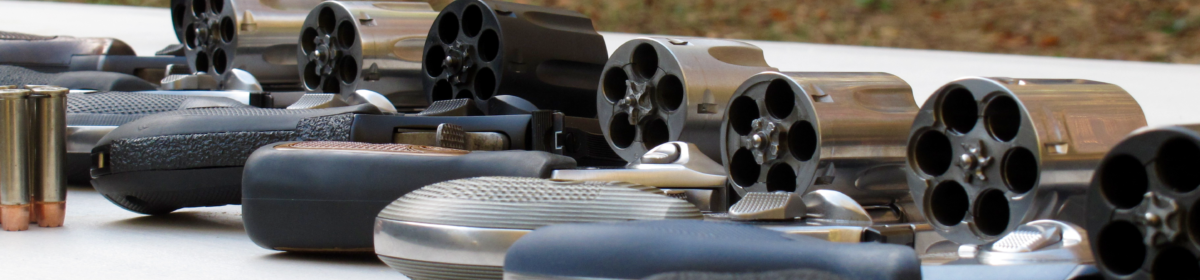
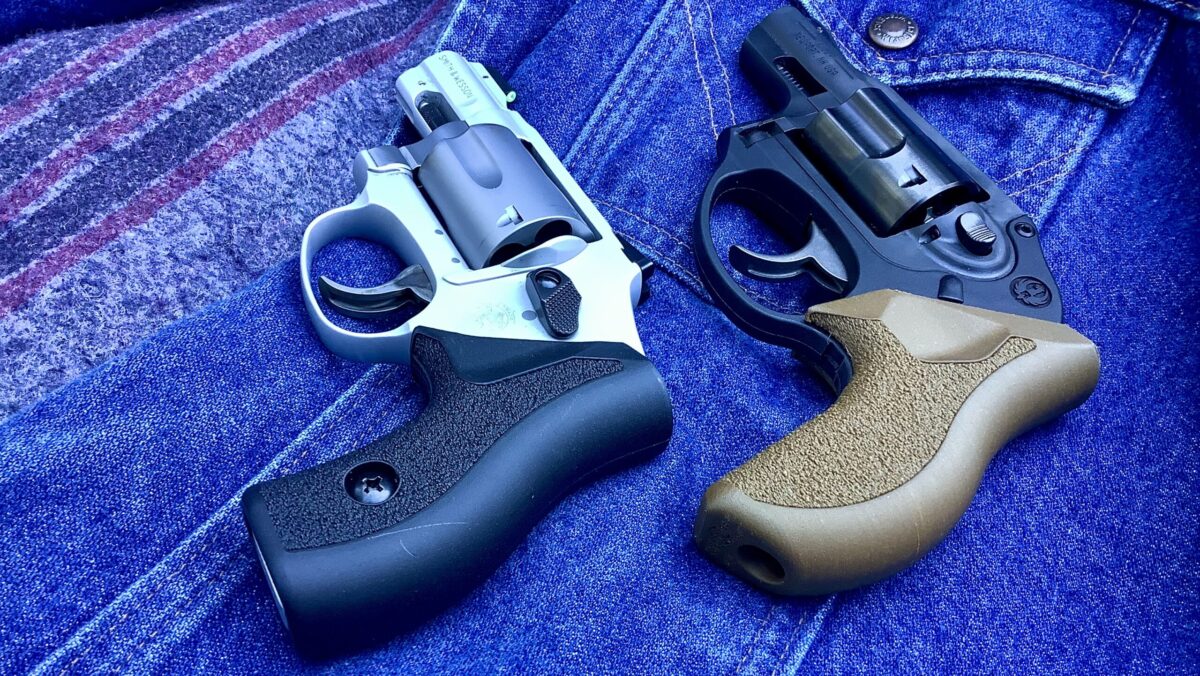
Last year, one of our readers mentioned a new grip company in the Comments to one of our RevolverGuy articles, and I was curious because I hadn’t heard of them before. When I looked at the RevolGrips website to check their products out, I quickly became intrigued with the design, and knew we’d have to take a deeper look at this new company and their interesting new grips.
I reached out to RevolGrips and was soon in communication with Jay Farnlacher, the designer and maker of the new grips. Jay sent me a package of samples right away, and patiently waited for me while I was busy putting out other fires. Fortunately, things are getting back to normal around here, and I finally had time to work with the new RevolGrips, which were worth the wait.
ABOUT JAY
It’s possible some of you know Jay by name, but even if you don’t, I’m pretty sure you’ve heard of the company that got him started in the gun business.
Back in 2006, Jay and a buddy were visiting a local gun show and discovered a guy who was making kydex knife sheaths and accessories. Having previously searched, unsuccessfully, for a good holster for his Glock 34 pistol, Jay talked the vendor into making him one, even though the vendor said he “didn’t want to be in the holster business.”
That holster got Jay started, but soon he was thinking about ways he could improve it. One thing led to another, and soon he was attending the gun show with a toaster oven and all the supplies necessary to build custom holsters on site. He ran that kydex-bending business with the help of two partners for several years, and in 2010 the group started to book production time on the machines of a local injection molding business, to make holsters via that process.
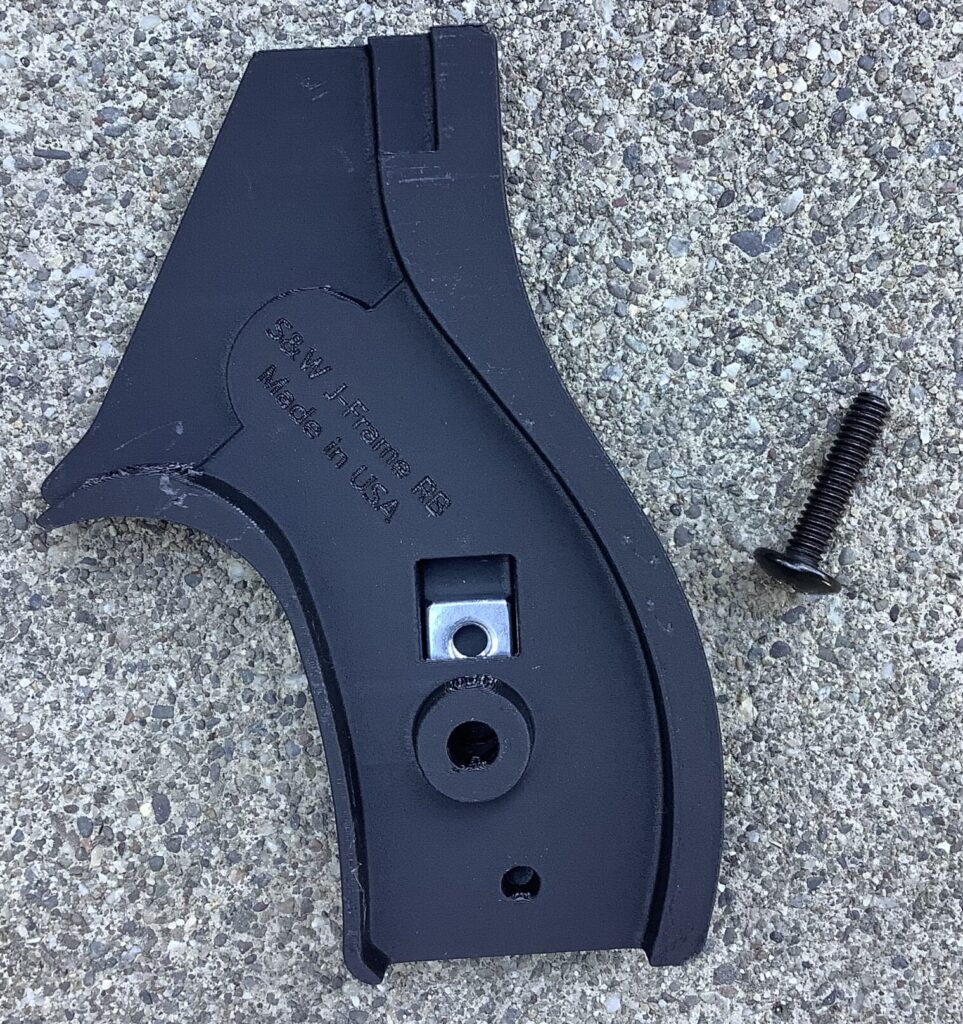
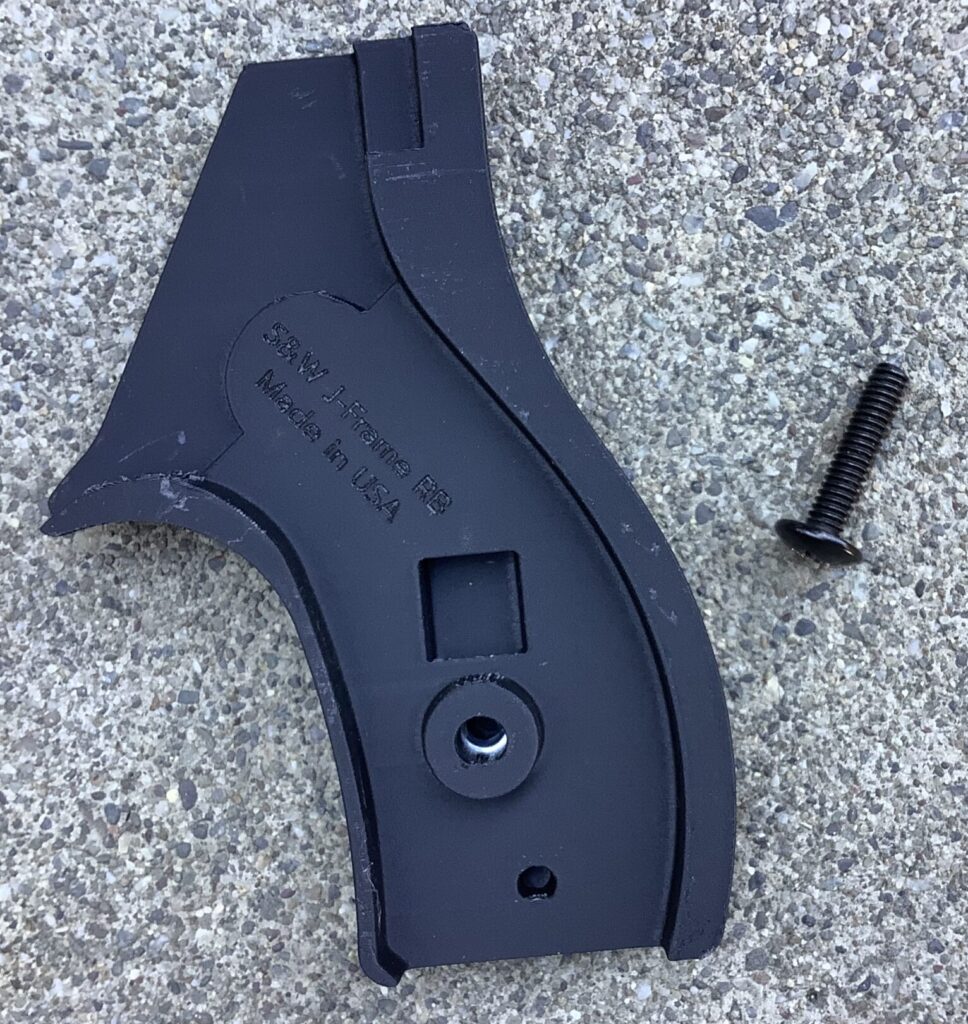
The little gun show startup quickly became a holster maker that made a big splash in the concealed carry market, as Raven Concealment Systems. Jay’s original IWB/OWB convertible pancake design, known as the Phantom, was soon joined by a host of other designs, to include the minimalist Vanguard, and versatile, IWB Eidolon.
Jay created these designs using skills he mostly taught himself, to include learning how to use computer aided design (CAD) software. He wasn’t a trained engineer, but sought help when it was needed, and quickly learned how to design and produce products through injection molding, always working to improve his skills and knowledge.
By the spring of 2024, he was ready for a new challenge, and struck out on his own to pursue other design and manufacturing projects. In a familiar pattern, one of those projects sprang from Jay’s own frustrated search for a shooting product that would meet his needs.
REVOLGRIPS
As a revolver shooter, Jay had been looking for a grip that would replicate the trim feel of the S&W Magna grips for the J-frame, but offer him better control and comfort. The general trend in grip design, however, focused on filling the “sinus” area behind the trigger guard, instead of leaving it open, as on the Magnas and older “Service” grips that preceded them.
With necessity once again being the mother of invention, Jay decided to use his CAD and manufacturing experience to create a grip design of his own, and launched a new company, RevolGrips, in June 2025.
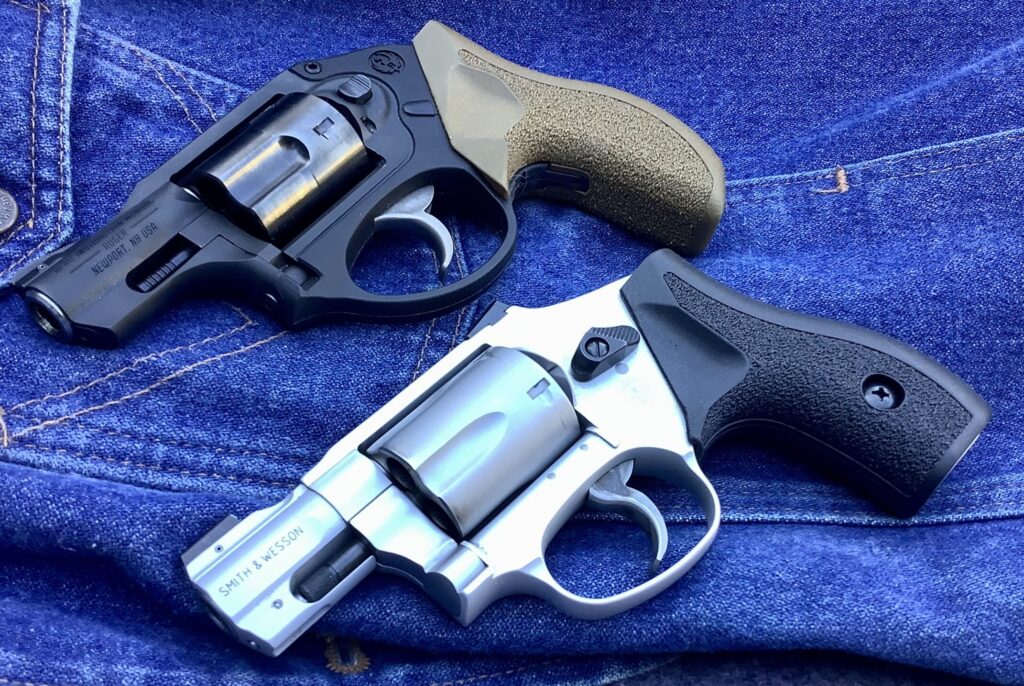
The RevolGrip design concept quickly took shape, based on Jay’s desires for an improved revolver grip. The central idea would be to design a grip that followed the profile of the frame’s front strap, and added extra material on the back strap, to improve fit, feel and function. “I liked the way the old [Magna] grips felt in my hand,” he said, “but wanted to add some more ‘meat’ on the back to make them shoot better.”
SINUS PROBLEMS
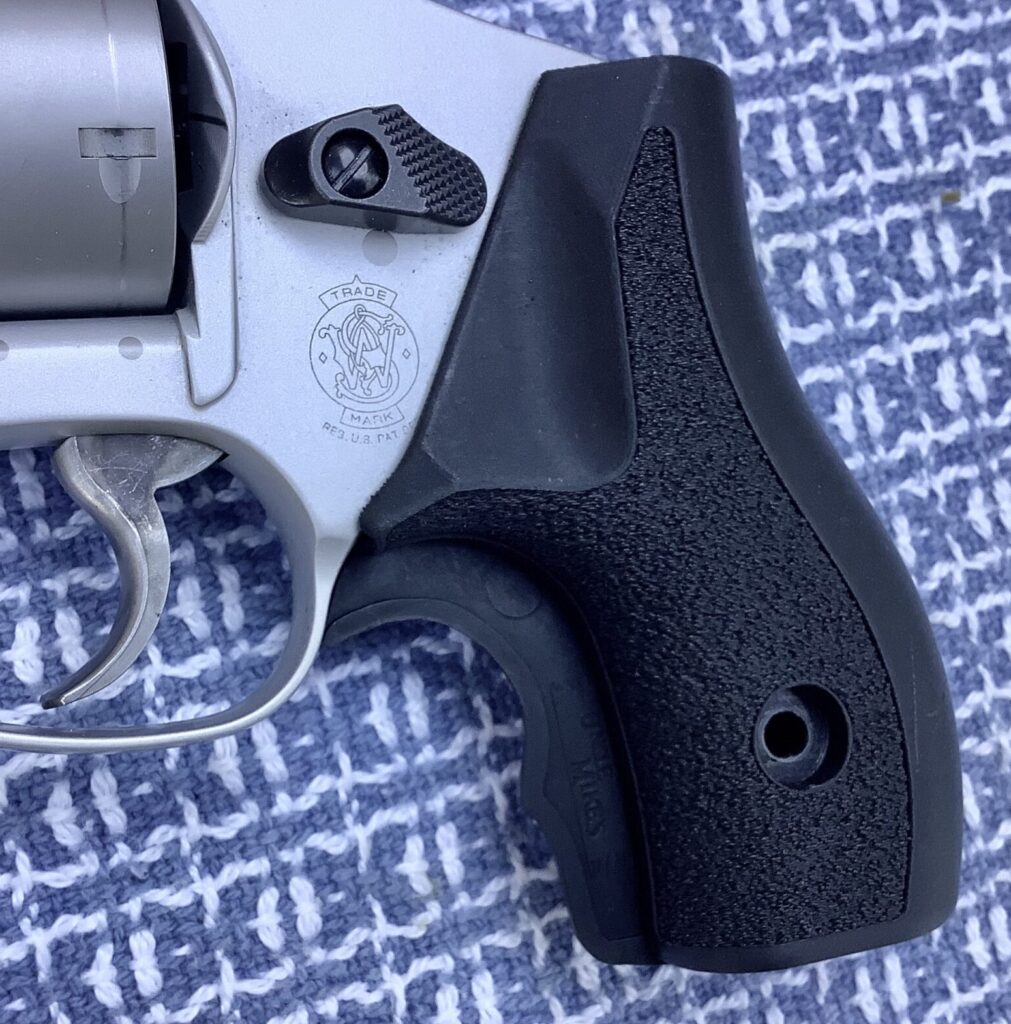
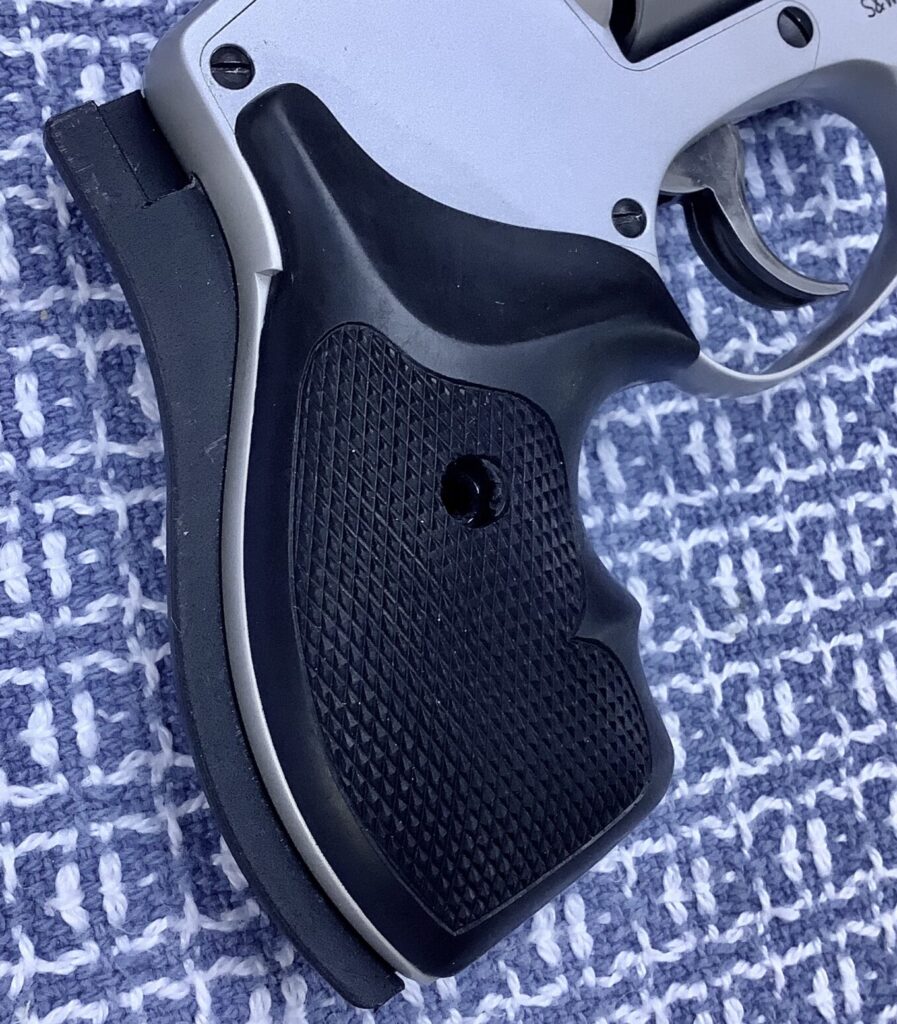
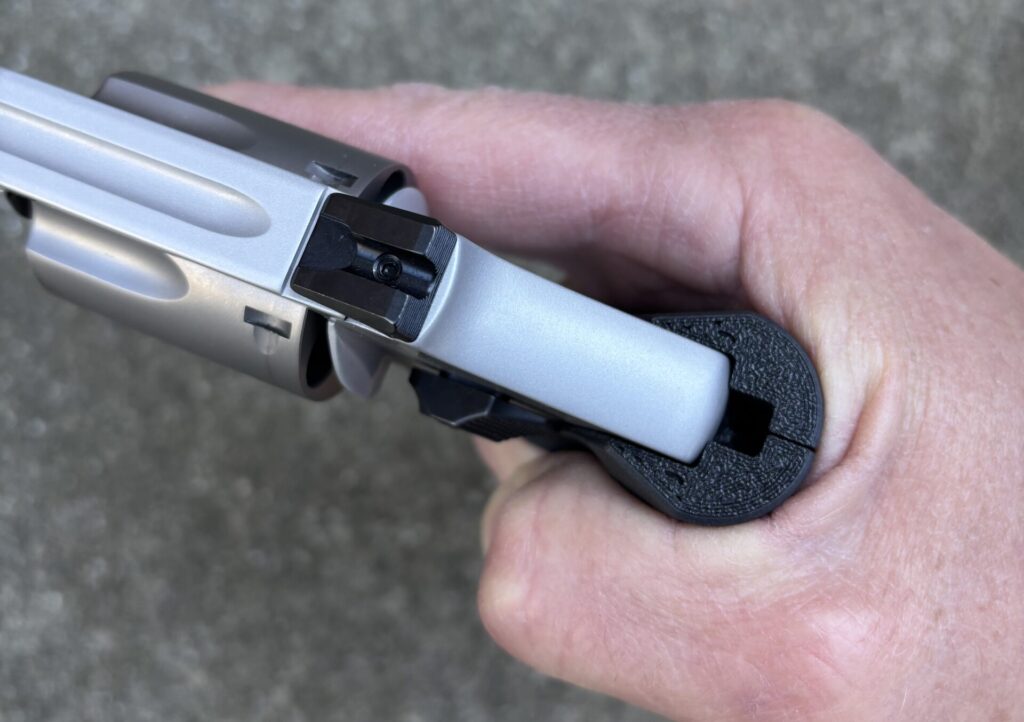
The RevolGrip does just that, with a design that closely follows the frame in the front, and adds a thick layer of material in the back, particularly in the area where the web of the shooter’s hand rides just behind and below the frame’s recoil shoulder.
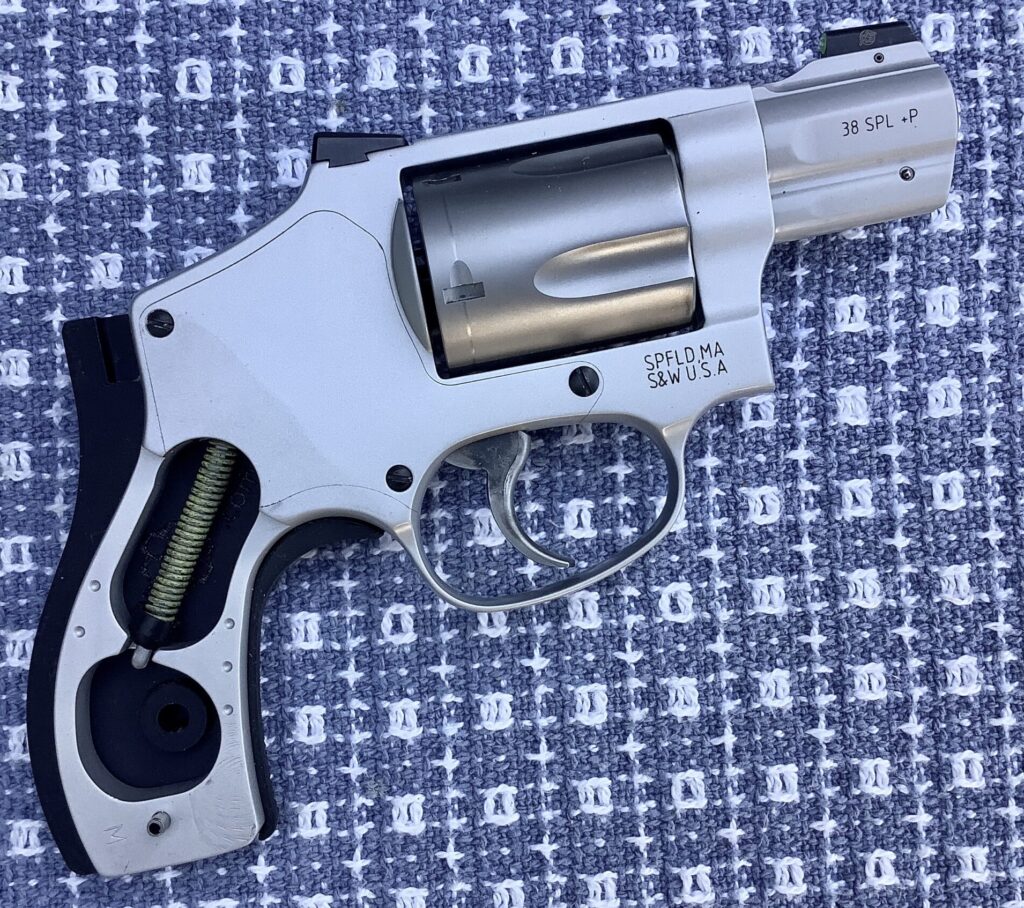
The sinus behind the trigger guard is notably unfilled, in a departure from the trend that first began in the interwar period, when target grip designers like Walter Roper and Charles Wendell Jr. (Kearsarge Woodcrafters) added a “shelf” behind the guard that would rest on the top of the middle finger.1 Jay prefers this feel, and feels it offers several compelling advantages for a shooter. First, the hand doesn’t get displaced further down the grip, leaving the pinky finger inadequate space to get a solid purchase. Second, with the gun sitting deeper in the hand, the bore axis of the gun is lowered, which reduces muzzle flip and improves the natural pointing qualities of the gun.
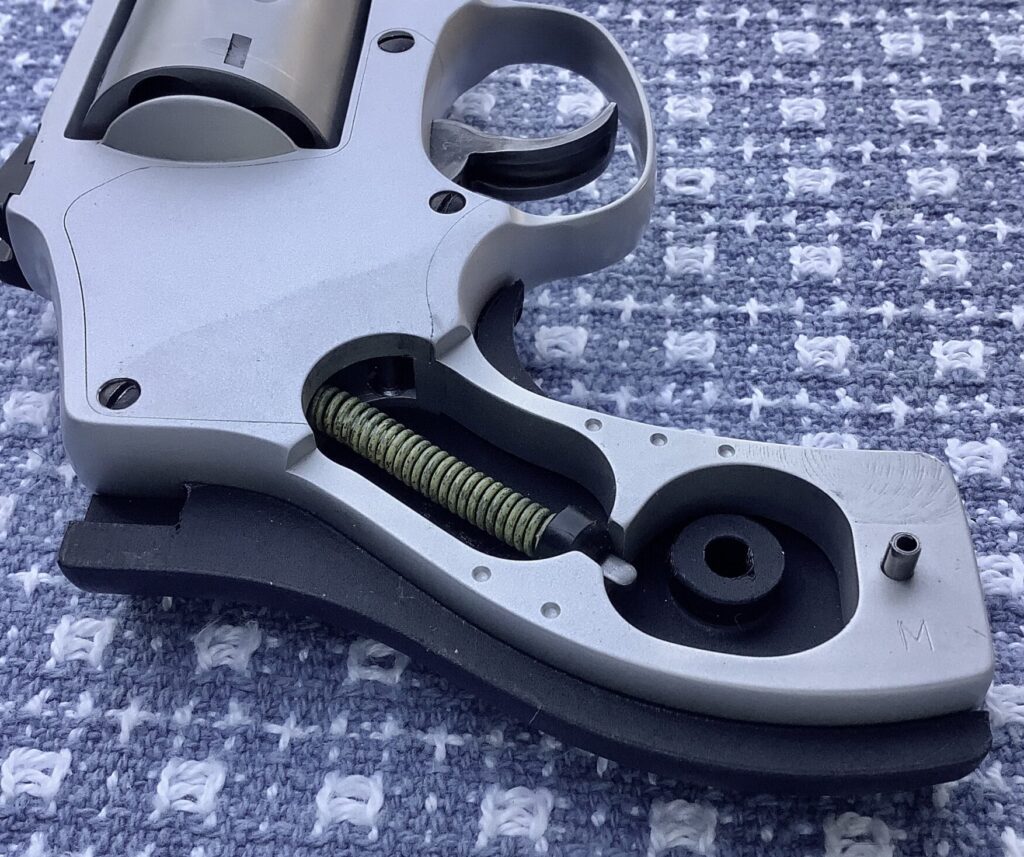
Jay also notes that filling the sinus area results in a grip that has more “meat” on the front strap, which forces grip makers to leave the back strap open so the grip isn’t too long, from front to back, for most hands. The exposed back strap offers less protection for the shooter’s hand, which feels the gun’s recoil across a smaller area, increasing discomfort.
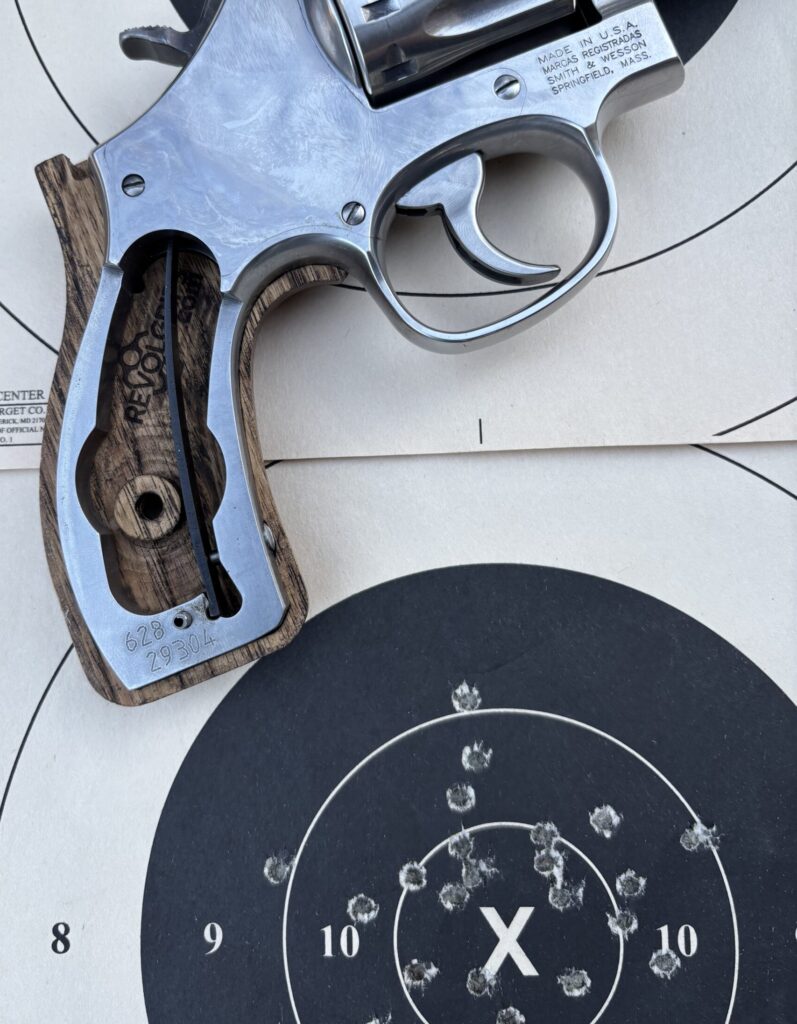
So, Jay’s design goes the other direction, leaving the sinus unfilled and sinking the gun deeper into the shooter’s hand, where all fingers can get a purchase without having to significantly increase the length of the grip beyond the bottom of the frame. This lowered profile helps to reduce muzzle flip and aid control of the gun in recoil.
JAY’S BACKSIDE
Jay’s RevolGrip design also covers the back strap with extra material, which results in several significant changes. First, the raised surface helps to increase trigger reach, which improves the fit of the gun for many shooters, especially when a small-framed gun is fired by a shooter with average-to-large hands. That combination often results in having “too much finger” inside the trigger guard, as a result of the short reach, but Jay’s grip neatly addresses this.
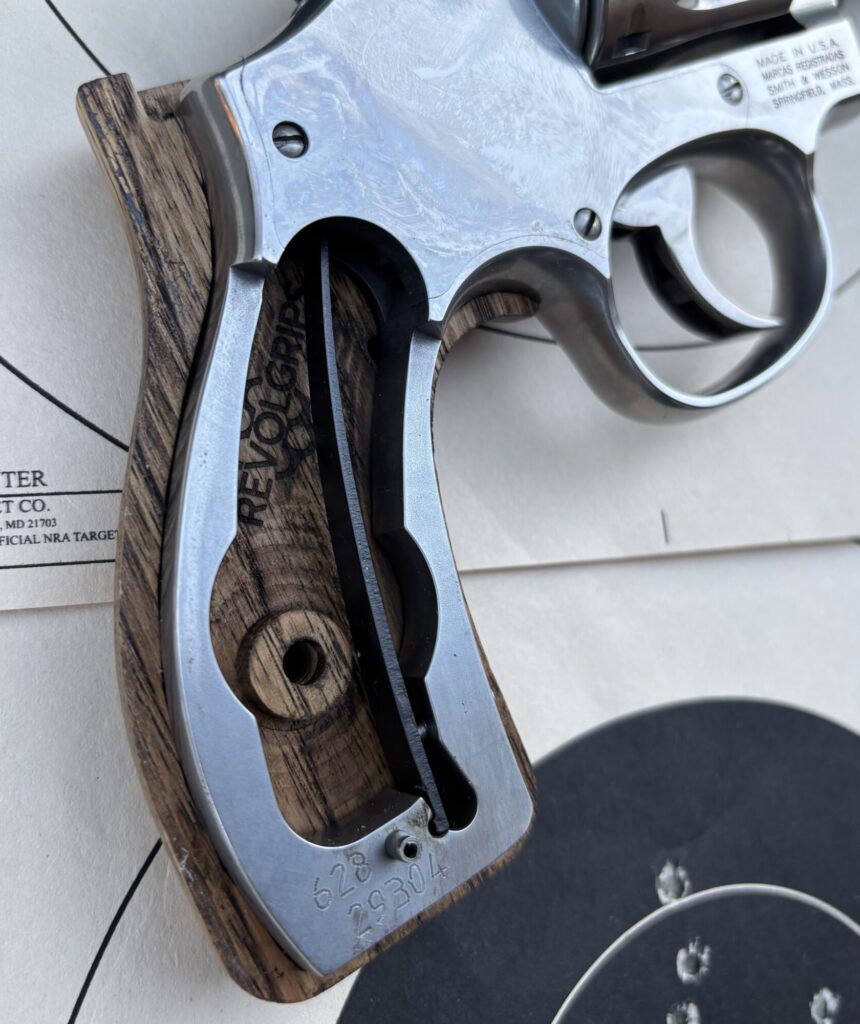
Jay also made his grip wider than many designs, across the backstrap, to increase the surface area that’s in contact with the palm and the web of the hand. This wider surface, with its smoothly-rounded edges, helps to distribute recoil force across a wider area, resulting in a decrease in felt recoil.
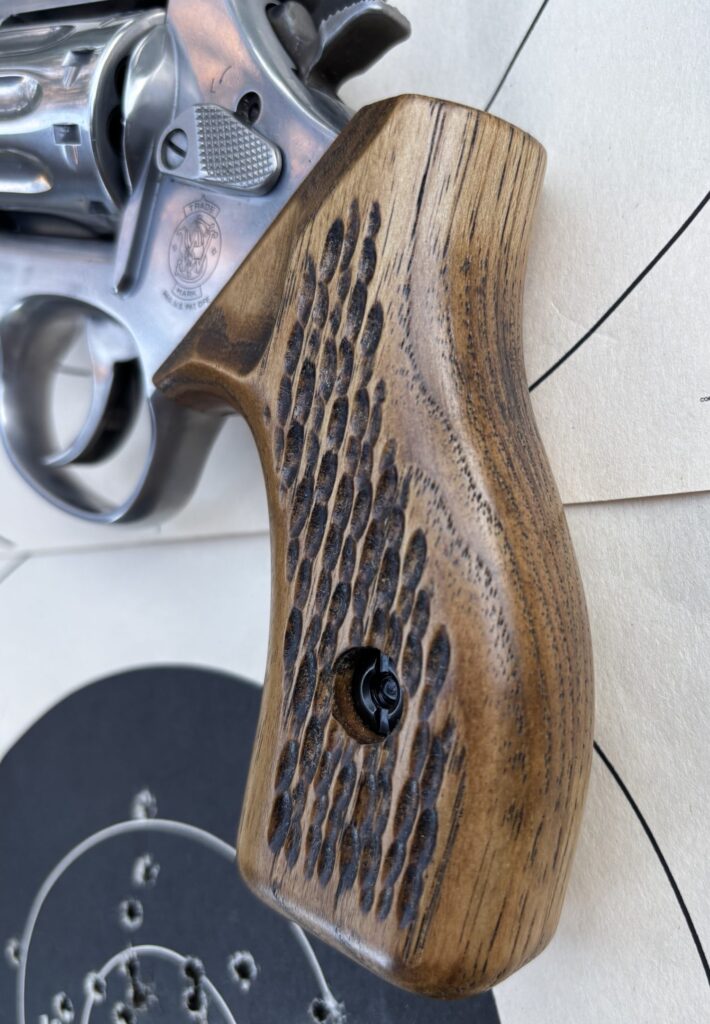
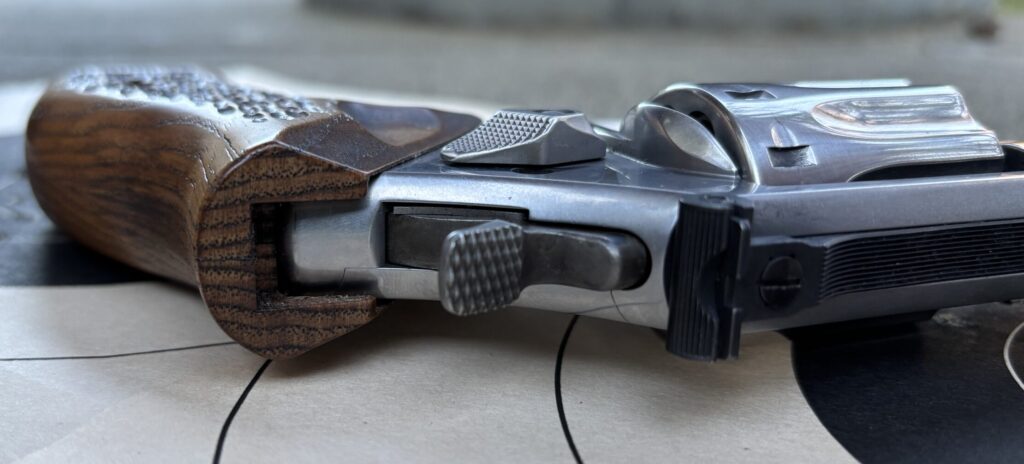
The area up near the recoil shoulder has a significant addition of grip material, to “pull” the web of the hand further aft and change the overall grip angle. The thicker recoil shoulder on Jay’s grips helps to increase trigger reach, and position the hand at an angle that’s more “1911” than “Glock,” to put it in autopistol terms. This thickened web has a slot built into it that allows free movement of external hammers on guns like the classic Chief’s Special.
OPTIONS
The RevolGrip design is offered in two basic styles, in several colors, with a variety of stippling patterns, for the most popular small frame, medium frame, and medium-large frame revolvers.
Jay offers some wood-based grips in his catalog, as well as polymer grips. The polymer RevolGrips are 3D-printed from PLA+, which Al Gore’s internet tells me is a thermoplastic derived from natural sources (often corn or sugarcane), that’s supplemented with additives that give it greater tensile strength, ductility, heat resistance, and impact resistance than the more commonly-used (in 3D printing) PLA material. An added benefit of PLA+ over regular PLA is that it’s less porous on the surface, which gives products printed from PLA+ a smoother and more aesthetically pleasing surface finish—a quality that’s important in a revolver grip that has to look as good as it performs.
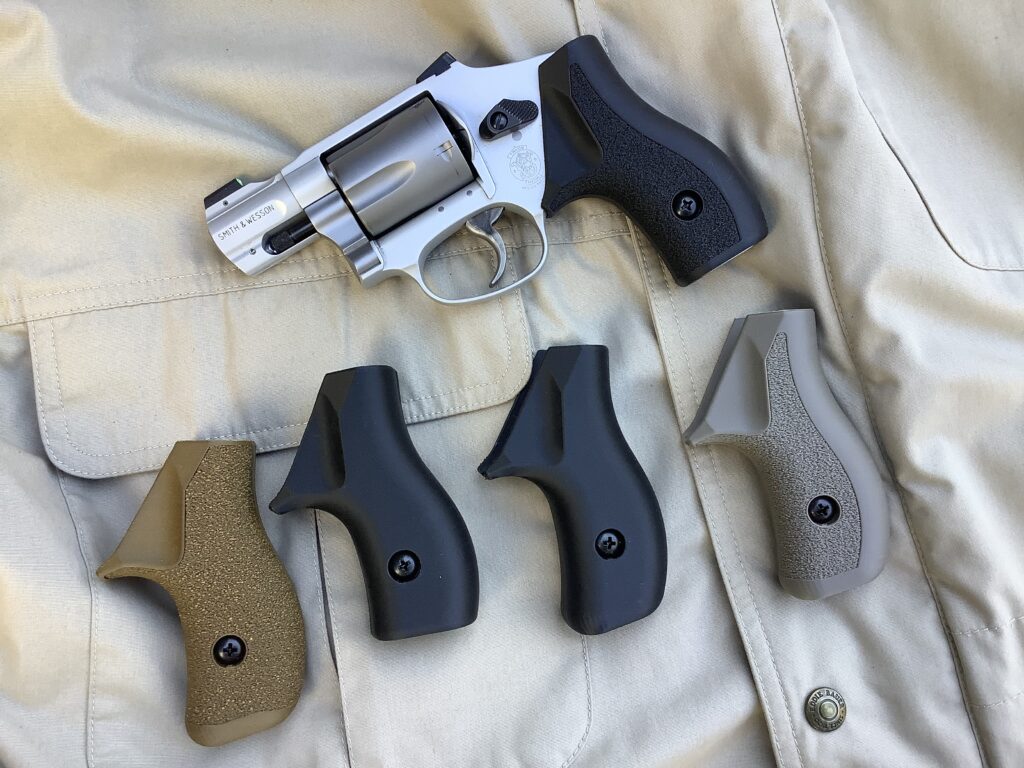
The smallest of the grips is the C2 (“Classic Contour”) Boot Grip, with grip panels that don’t extend beyond the bottom of the grip frame. Even though the grips are abbreviated in length, the open sinus allows enough space for a “two-and-a-half-finger” grip, with the pinky getting a pretty good purchase on the grip frame. Shooters with smaller hands and fingers might even get a full three-finger grip on the C2 Boot Grip.
The larger of the two grips is the C2 EDC (“Every Day Carry”) Grip, which offers a slight extension at the toe of the grip to afford a full purchase for the pinky finger. While the grip has a longer length down the front strap, the measurement at the heel is the same as the C2 Boot Grip’s, which keeps the length to a minimum in this critical area, to minimize printing under clothing.
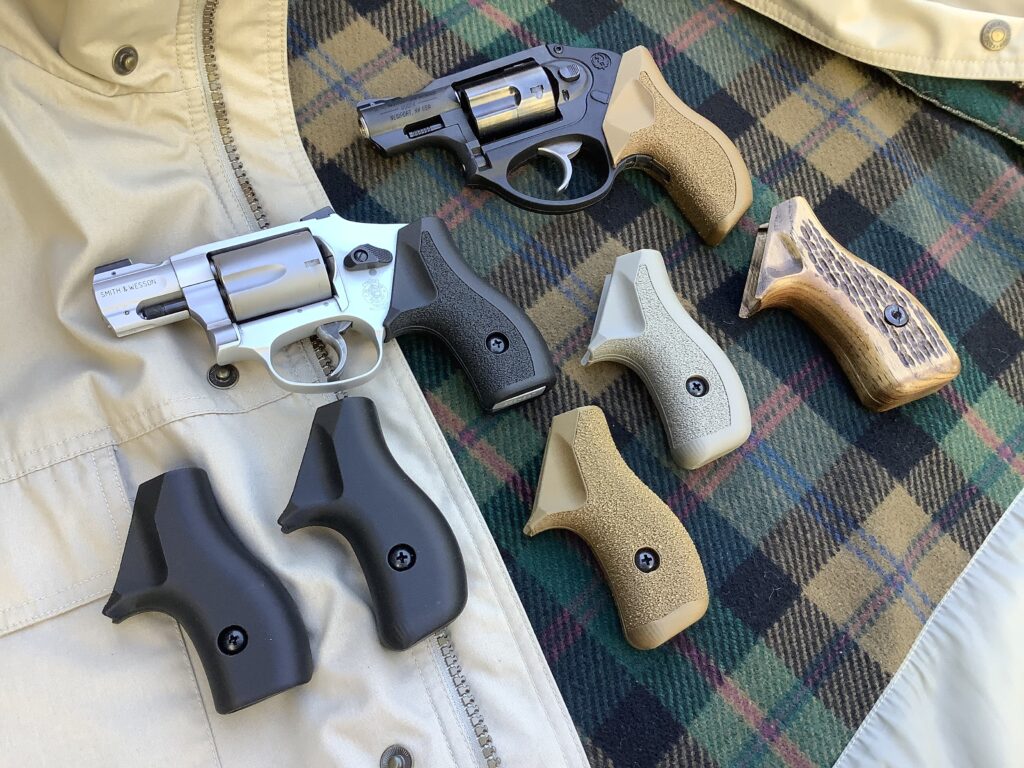
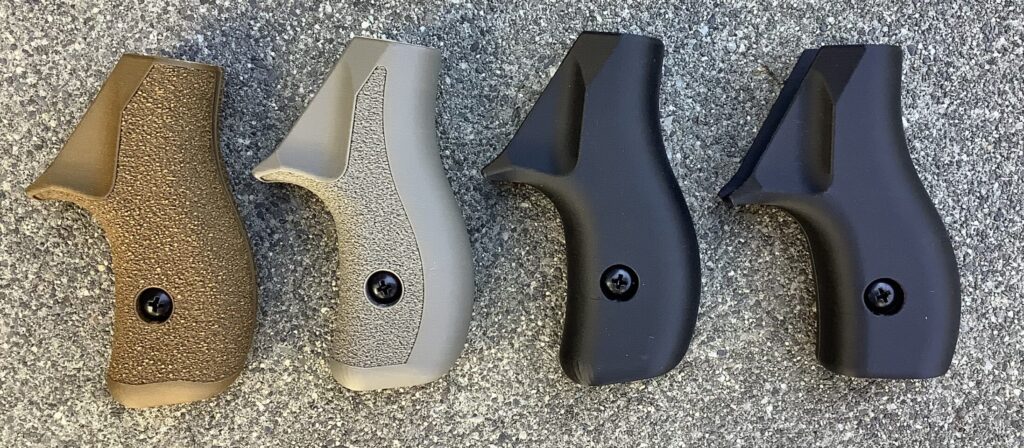
Either grip design is available with no added texture (“Smooth,” although there’s still a faint texture that results from the 3D printing process), a “Full Stipple” texture (equivalent to 60 grit sandpaper, according to Jay) that covers the entirety of the grip’s circumference, or a “Front Strap Stipple” that covers the front strap and sides with the same 60 grit texture, but leaves the back strap and bottom edge smooth.
Polymer color choices include black, clay (a medium gray), and wood (what all the tacticool guys would call “Flat Dark Earth”).
FIRST IMPRESSIONS
I mounted a set of the polymer C2 Boot Grips with the front strap stipple to a brand-new Model 642 UC, and a set of the hardwood C2 EDC Grips to a 4” Model 617, to give them a workout on the range.
Right away, I was struck with how different the guns felt in my hand with the RevolGrips installed. On the J-frame, the lack of sinus fill and front strap coverage made the grips feel a little “skimpy” at first, like a bare pair of Magnas usually feels to me, but the trigger reach was undeniably improved compared to any open back strap design.
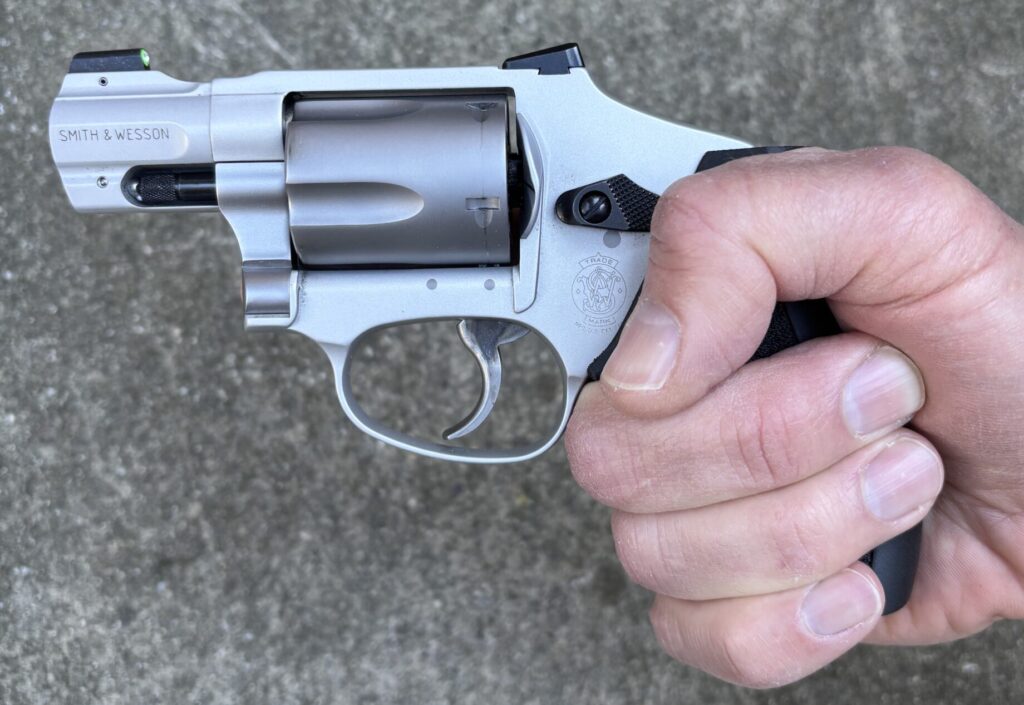
I was surprised to get some pinky purchase on the short J-frame, because I’m used to just having to curl it underneath the bottom of the frame. I couldn’t get a full three-finger grip, but came awfully close, even with my relatively large hands—enough so, that I did a “double take” to ensure I hadn’t put the longer EDC grips on the gun, by mistake. Nope, it was the boots. I’ll be darned.
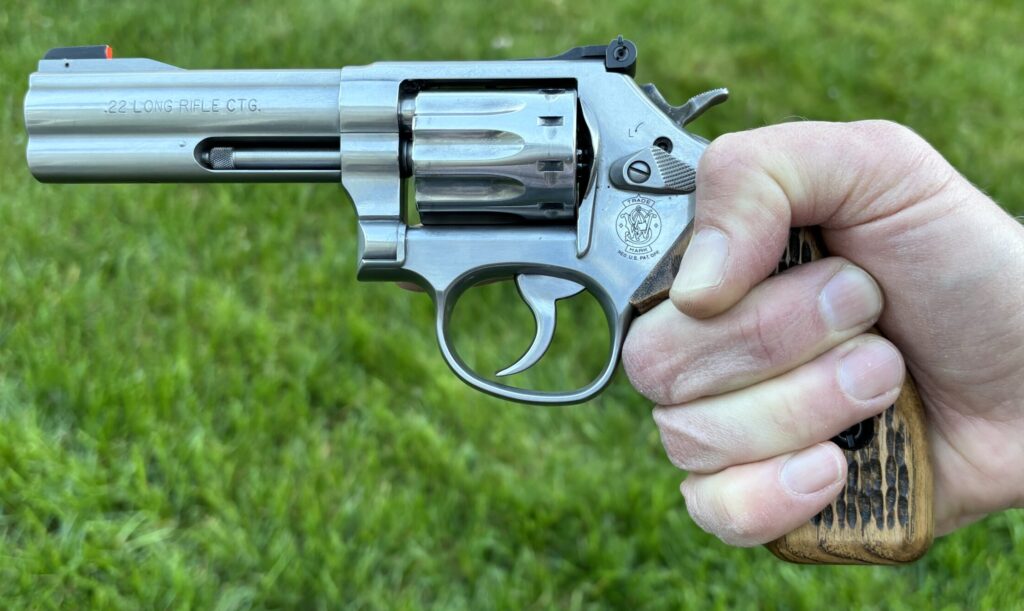
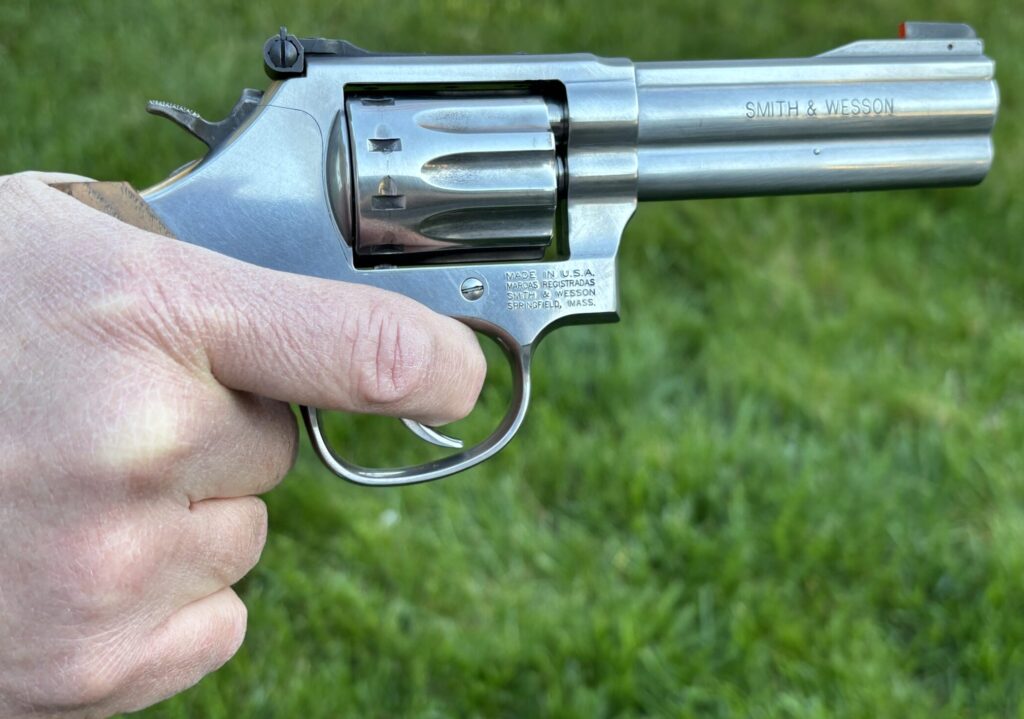
The K-frame grips had a little more to them, courtesy of the increased depth of the frame, and felt closer to the grips that I’d normally put on a medium size gun. The lowered bore axis seemed more noticeable with the K-frame than the smaller J-frame, as did the more neutral grip angle. Of note, the RevolGrips all have a clearance cut for external hammers to move back and forth without interruption, and they worked great with my Model 617.
TEXTURE, recoil CONTROL
I made several trips to the range with the new grips installed, and proceeded to wear myself out in short order. In no particular order, here’s some of my impressions . . .
The front strap stipple on the J-frame boots was comfortable, providing good traction under recoil. If I had to draw a comparison to other guns you might know, I’d say the texture felt like that on the side panels of the H&K USP-Compact that I was formerly issued, which I always thought was “just right”—not as smooth as the side panels on a 3rd Generation Glock, but not as rough as the later RTF4 on the Glock Gen 4 / 5 guns.
I thought it was super. The texture was just enough to aid control, without feeling like I’d pocketed a wad of sandpaper when I carried the gun in my pocket. I appreciated the smooth surface on the back strap when I carried the gun in the Appendix position for a little bit, as it allowed my shirt to glide over the surface without catching and printing. I think the smooth back strap was also a bonus in pocket carry.
I didn’t mind the texture directly against my skin, but if you’re more sensitive, the smooth grip would be the way to go. There’s actually sufficient texture on the “smooth” grips to prevent them from feeling slippery, courtesy of the way the 3D printer layers the material during manufacture.
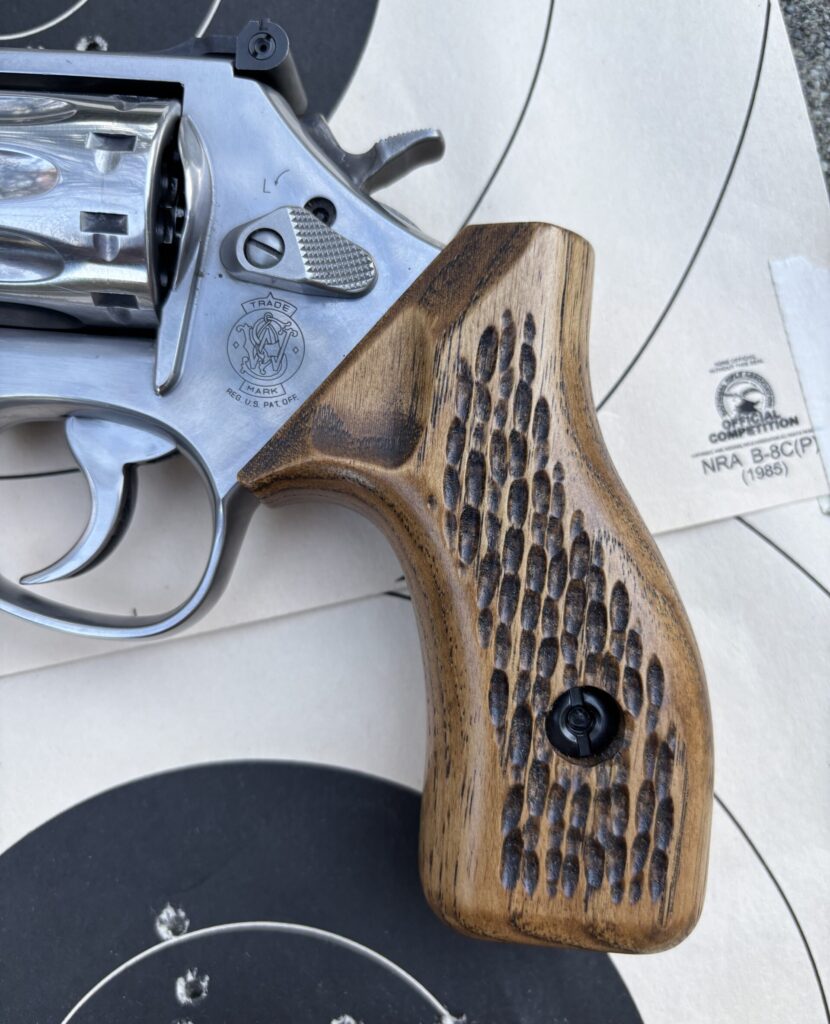
The “worm wood” texture on the hardwood K-frame grips didn’t make much difference in shooting the heavy rimfire one way or another, but did give the grips a unique appearance. I suspect they provide a little more grip than the “diamond” texture grips, because the texture panel on those is smaller—a reduced field on the sides, with a wide, untextured border around it.
FEEL, performance
The mild-shooting rimfire K-frame didn’t give me much chance to assess the ability of the grips to reduce muzzle flip. The aluminum J-frame might have, but I honestly didn’t notice a significant difference between the RevolGrip and a control gun I was shooting alongside it (a plain S&W 642 with the company’s new closed back, rubber boot grip design). Truthfully, I don’t shoot aluminum J-frames all that much, as I greatly prefer the steel frame versions. As a result, the most significant difference I noticed was the increased felt recoil of the lighter guns, not any difference between them.
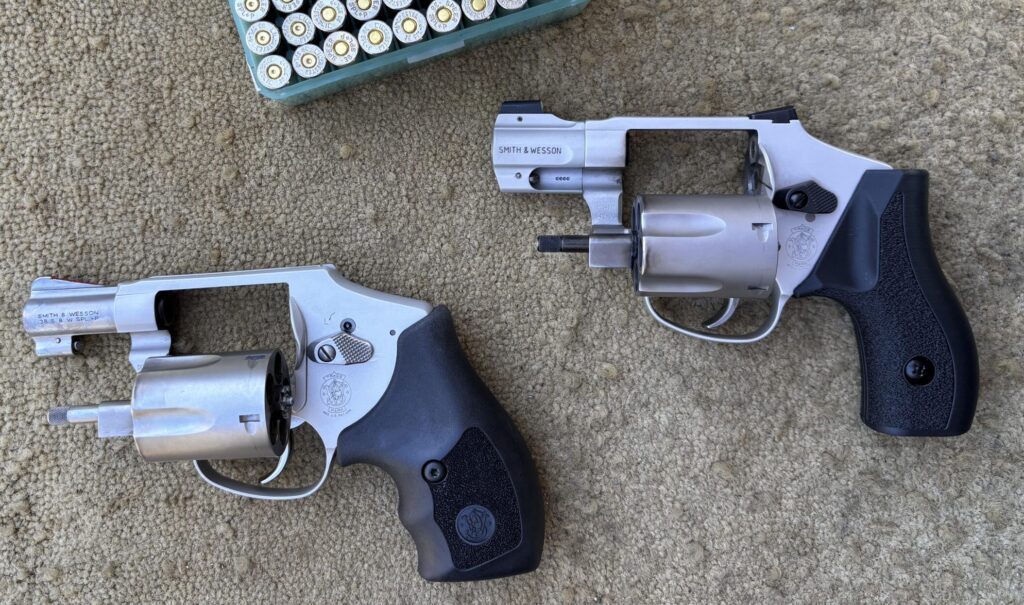
I did notice the increased finger purchase on the RevolGrip and the change in grip angle. The best way I can describe it is like shooting a 1911 instead of a Glock, but the effect is actually less pronounced than that. The guns point naturally with the RevolGrips installed, and the grip angle feels good.
Because the RevolGrip design is different than what I’ve become accustomed to, it did feel a little foreign in my hands, particularly during that first session. My brain kept telling me there wasn’t enough to hang onto, because the grip wasn’t as long, front-to-back, as the S&W boot grips on the control gun were (or my preferred Crimson Trace LG-405s). My brain wasn’t imagining things, either—my rough measurements tell me the RevolGrip is anywhere from 17% to 24% shorter, front-to-back, than the boot grips on the other gun, and about 10% thinner, side-to-side. 2
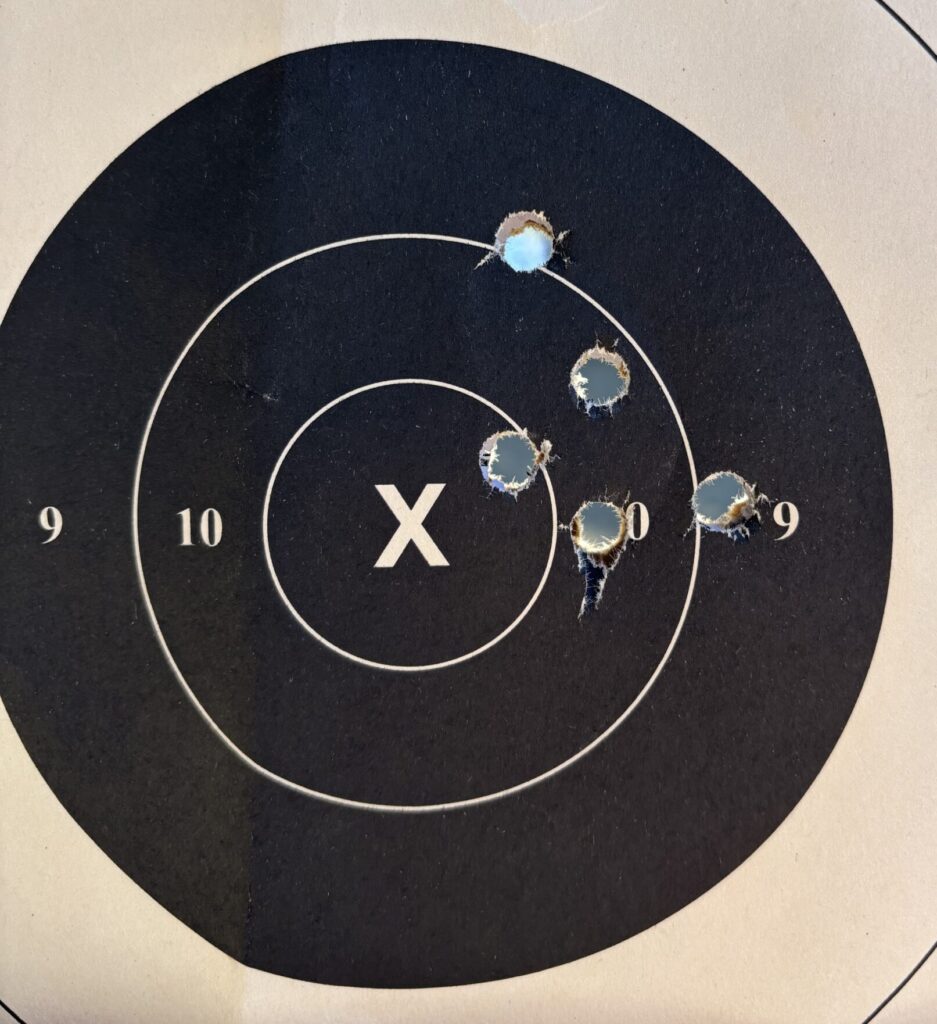
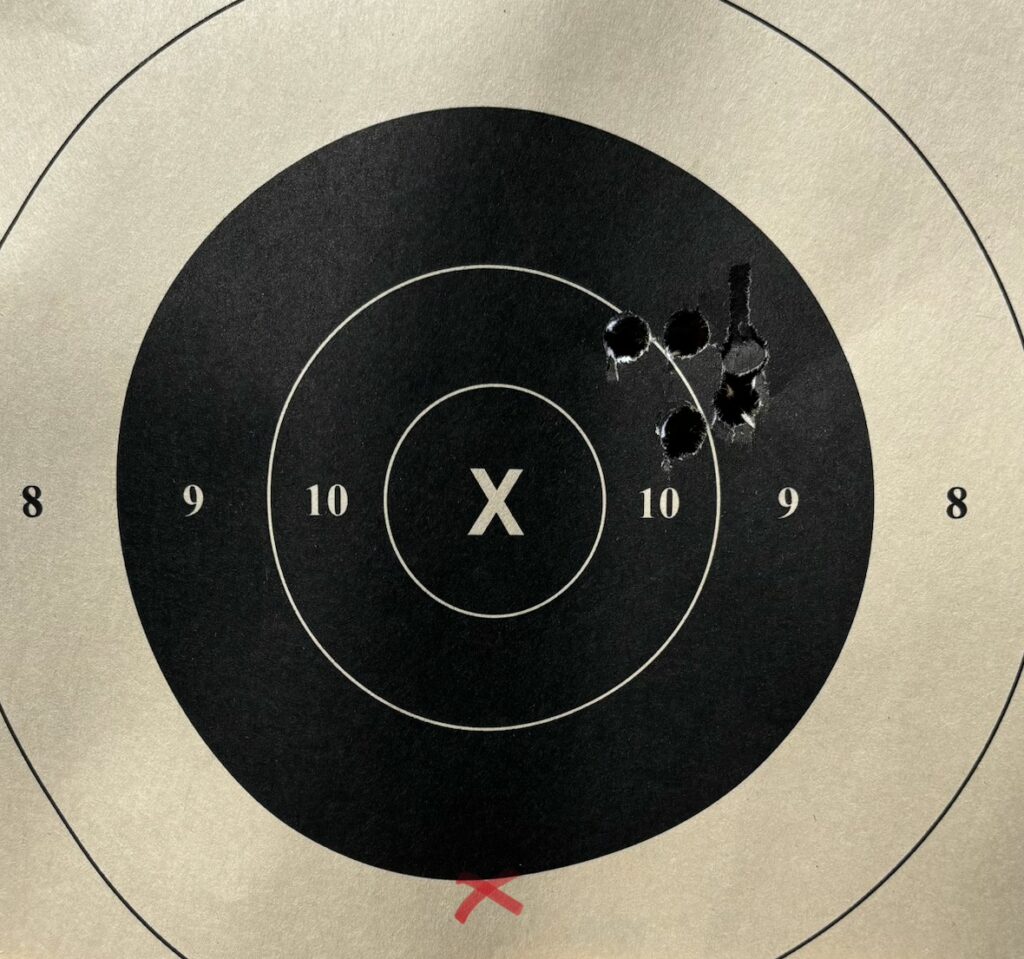
The funny thing though, is it didn’t make a difference in the shooting. The longer, fatter boot grips on the control gun felt more familiar to my hand, but they didn’t give me better scores. I was shooting similar groups with both guns, despite the handicap of the poorly regulated sights on the 642 UC (a whole other story, that I’ll bore you with later). If anything, the sight issues on the UC prevented the RevolGrips from really strutting their stuff, in comparison to the more familiar-feeling S&W boots.
How ‘bout dem apples?
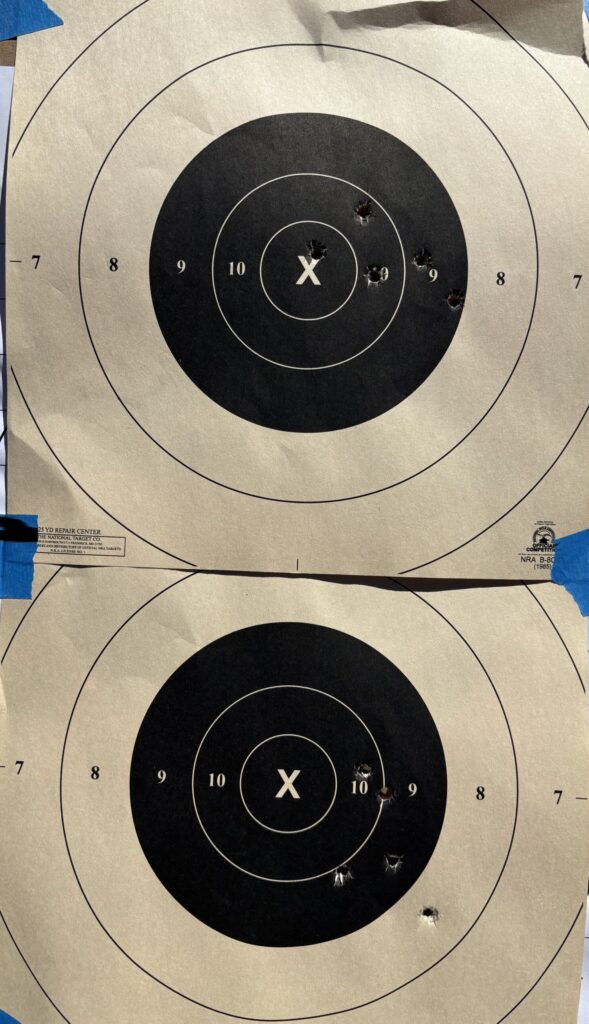
The RevolGrip on the K-frame allowed me to do good work with the gun, placing my finger in the right spot on the trigger face, even as the grip left me feeling like I wanted a little more to hang onto. The 10-ring of the B-8 wasn’t a safe place to be as I sent the affordable, milk box Winchester 555s ten yards downrange in double action at the end of the session, after the J-frames had worn me out.
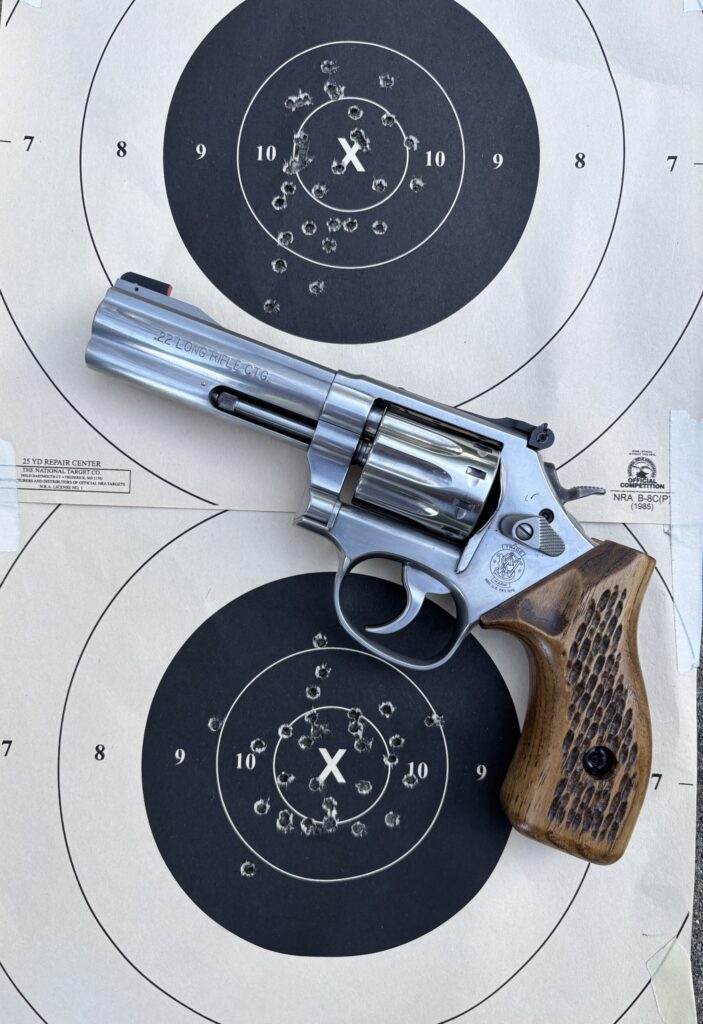
There’s probably a bunch of our readers who could cut my K-frame group sizes by half at that distance, and I could too, not long ago, but that was pretty good shooting for where I’m at right now. I was very happy with how the RevolGrips shot for me. When I fired the same gun with the rubber Hogues that it normally wears, a few weeks later, the groups looked the same, so the unfamiliar RevolGrips certainly weren’t a handicap, even if they felt different.
MAMA BEAR
Interestingly, when I talked to Jay about that feeling that the grips had less “meat” than I wanted, he said he’d actually made the first prototypes a little larger, but felt it was a good idea to reduce the girth a bit for the average hand. That’s probably a really good move on his part, because my hand is a bit larger than average, with long fingers (I wear a Size 12 nomex flying glove), and if I was 100% happy with the feel, they’d probably be too long / fat for most customers.
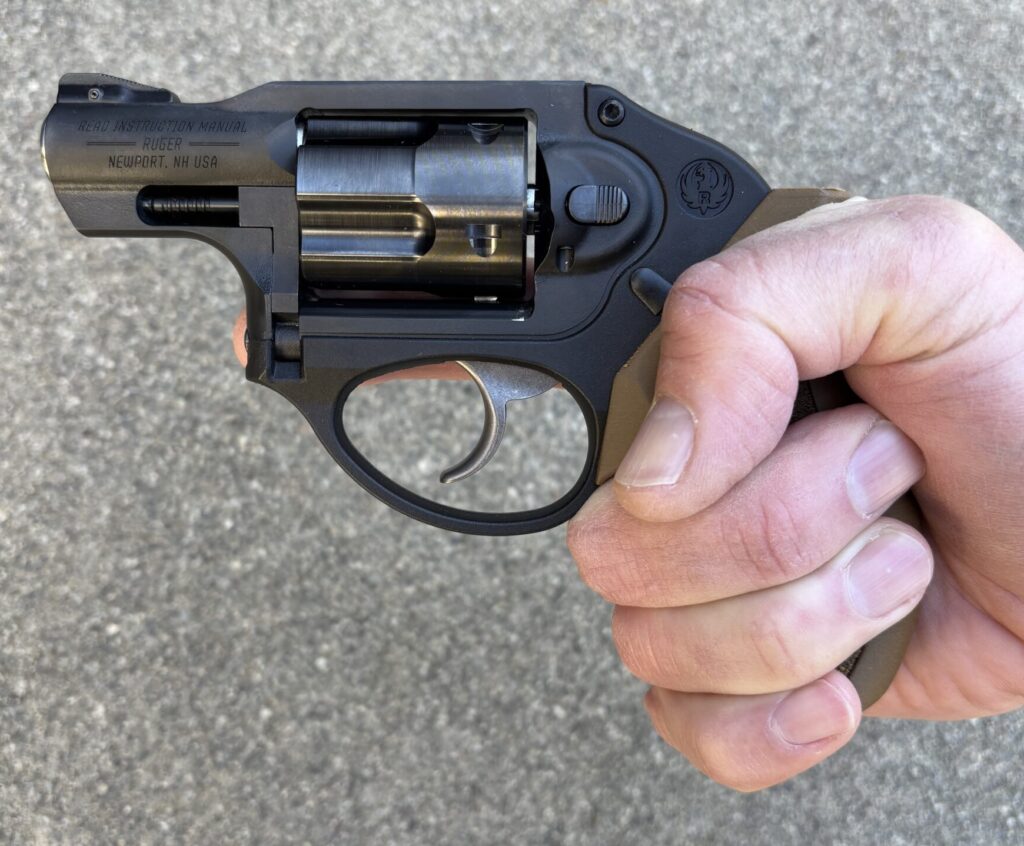
I think he’s found the happy medium, with a grip that’s got enough to hang onto for the biggest hands, without making them too big for smaller ones. As I mentioned, even though my hand wanted a little more to hang onto, it didn’t change the performance one bit—I shot those grips as well as the ones I was more familiar and comfortable with, and I have no doubt I’d become even more skilled with them as I continued to work with them.
I’d say that’s a mission accomplished.
SPEEDLOADER RELIEF
The one area that I’d have a small gripe about is the speedloader clearance on the left grip panel. I could feed an HKS 36 speedloader into the cylinder easy enough, but after I released the payload and tried to withdraw the loader, it would hang up a little bit on the aft edge of the speedloader cut.
Jay explains this is an artifact of the wood grip, which needs to have a little more material in that area for structural integrity. The polymer grips don’t need it, but the wood ones do.
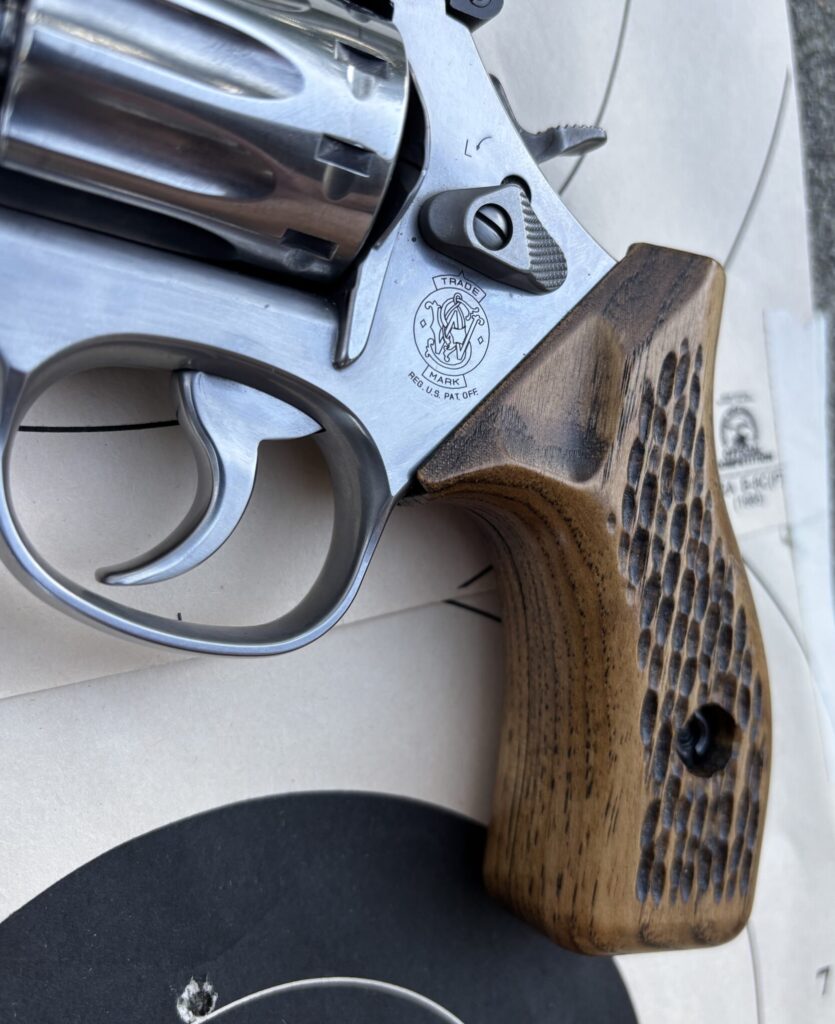
Fortunately, this is easily fixed with a little sandpaper. You wouldn’t need to remove much material, you’d just need to break the rear edge a little bit to allow the loader body to clear it. I’m used to performing this chore on all my other grips, and the RevolGrip is actually better than most anyhow, right out of the box. Just a small tweak is all they need.
Since I’m complaining about the loader relief, I should probably remember to praise Jay for using a Phillips screw to secure the grips to the gun. Hallelujah! I get a little tired of searching for weird Torx bits and Allen wrenches just to remove my grips for cleaning, and appreciate the simplicity of using a “normal” screwdriver.
NEW TRICKS
The RevolGrip design might look a little radical to eyes that have become accustomed to the status quo, but I think they’re a great product. They fit the guns well, are made of quality materials, and offer several unique features that you won’t find in competing designs.
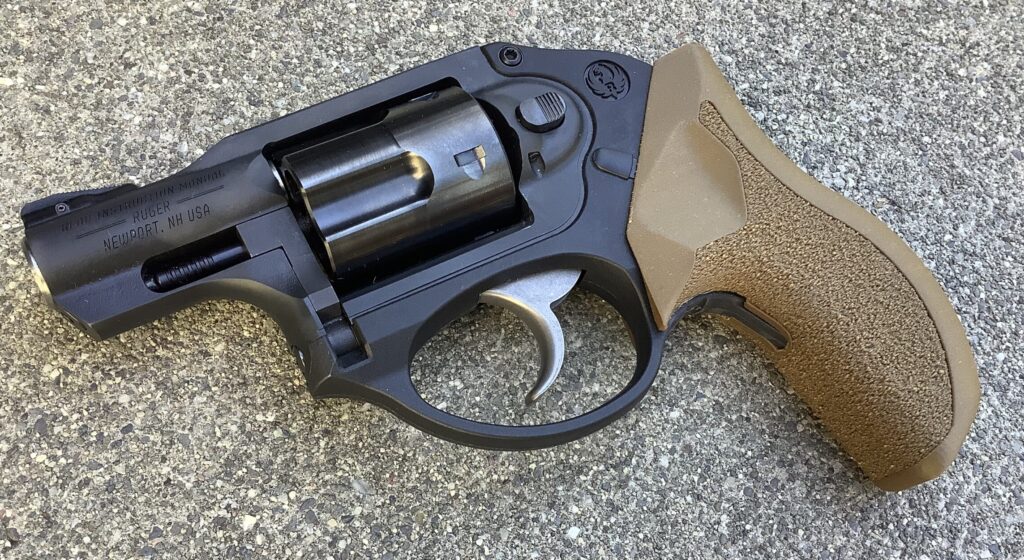
The PLA+ polymer used in the RevolGrips is much lighter and more durable than materials like G10. If you’ve got an Airweight that you want to keep light, I can’t think of a better material for the job. It’s tough, light, and shrugs off the wear and tear that an everyday carry gun endures.
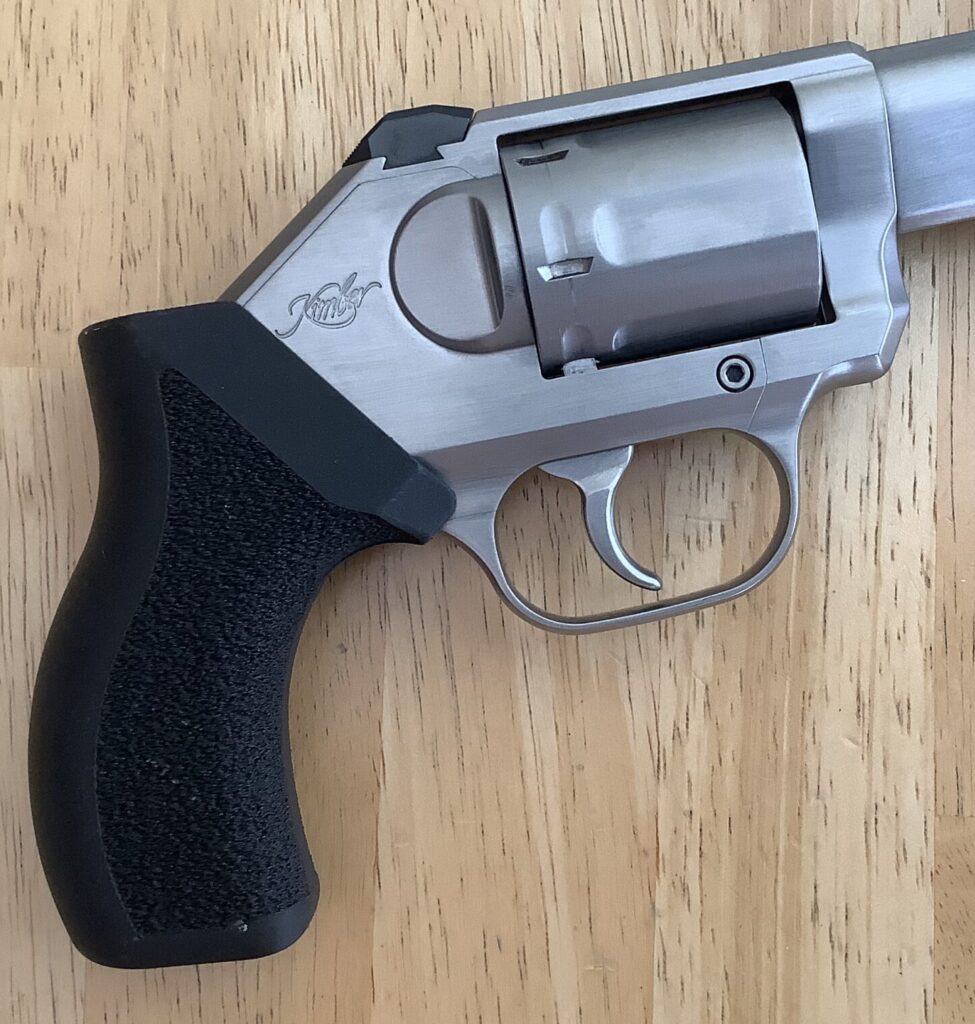
They’re super affordable, too. Priced less than $40 for the polymer ones, the RevolGrips are probably the least expensive grips being made to this level of quality. I’d encourage you to check them out at the RevolGrips website—they’re definitely worth a try, and you just might find your new favorite grip.
*****
ENDNOTES
1.) The original design intent of this shelf was threefold: To create a broader surface to comfortably bear the weight of the gun (remember, most revolver shooting was being done with a single hand, in this era), and; To keep the trigger finger free of the frame, so it would only contact the trigger as it moved (and not exert force on the frame that could push the gun off target), and; To change the angle of the trigger finger, so the trigger could be pulled straight to the rear, more easily.
The grip adapters that became popular in this era, which allowed shooters to “convert” their service-style grips to something more useful, accomplished many of the same objectives. The “target grips” added several other benefits, though, to include a wider bearing surface for the web of the hand (to distribute recoil forces), a longer grip (to make up for the way the shelf displaced the shooter’s hand further down the grip), palm swells and thumb rests that improved feel and control, and a flare at the heel and toe that helped to anchor the gun in the hand.
In later years, when powerful Magnum chamberings became popular, the shelf built into the target-style grips also helped to minimize the painful battering that the middle finger could receive from the rear of the trigger guard, when the sinus area was unfilled.
No less an authority than Elmer Keith declared the target-style grip, “the best possible choice for fast double action shooting.” (Sixguns, p. 140)
2.) To put some rough numbers to it, the RevolGrip measures (approximately) as follows:
Toe to Heel: 1.40”
Front strap to peak of the back strap curve: 1.50”
Sinus to Web (middle finger, to web of hand): 1.46″
Side-to-side at widest point of palm swell: 1.08”
As a comparison, here’s how the new S&W Boot Grips, that I used as a control, measure:
Toe to Heel: 1.64” (+17% larger)
Front strap to peak of the back strap curve: 1.86” (+24% larger)
Sinus to Web (middle finger, to web of hand): 1.80” (+23% larger)
Side-to-side at widest point of palm swell: 1.19” (+10% larger)
As an additional comparison, here’s how my favored Crimson Trace LG-405s measure:
Toe to Heel: 1.57” (+12% larger)
Front strap to peak of the back strap curve: 1.77” (+18% larger)
Sinus to Web (middle finger, to web of hand): 1.80” (+23% larger)
Side-to-side at widest point of palm swell: 1.03” (-5% smaller)

Well they look neat. My concern is how would they treat me with actual recoil? I’m not shooting mild wadcutters for qualification and carry, and without the trigger guard sinus filled are they going to chew up my knuckle? If 158 RNL and 135 GD +P are comfortable then I’d say the price is right…
Not in my experience, buddy. I experienced no issues with that, shooting standard pressure 130s and 147s that approached the mild Gold Dot’s level of recoil. With the sinus unfilled, your knuckles are a long way from the back of the guard, and the front strap area is wide enough to distribute the recoil well on your fingers. I felt no discomfort shooting these, I just didn’t like the Airweight’s recoil compared to my normal steel gun.
Adding more “meat” to a revolver’s back strap, particularly a hump to the recoil shoulder, sounds like a winning idea. Although I’m not real fond of plastic, these RevolGrips look fine to me.
One might think the use of plastic would result in harsh recoil, compared to soft rubber, but the wide backstrap on these did a nice job of alleviating that. I was surprised by how soft the hard material shot. Lightweight, inexpensive, durable and comfortable–lots of advantages, there.
My quick peek at RevolGrip’s website shows they also offer hickory grips for S&W round butt J,K & L frame revolvers. Hickory is a really dense, tough wood and a very durable wood in my experience.
First time I’ve heard of this company. These grips sound very similar in concept to the Recoil Rider grips, which are also made of 3d printed material. I have a few of their grips, one set for my Ruger LCR and another for my 3″ Diamondback SDR. Would like to see a review of them and how they compare to the Revolgrips.
Bobster, it looks like the Recoil Riders fill the sinus area, which makes them different from these Revolgrips. I actually reached out to them a while back and we never connected, due to opposing schedules. I’ll try again soon, after I finish some other RG obligations, and will do a comparison for you.
Thank you, Mike. Would definitely like to see your impressions on the RR grips. They just came out with grips for the Ruger SP101 and are working on grips for K/L frame S&Ws.
While these do like a little abnormal, I think this is a solid design. They look enough like the old Trausch grips (as you pointed out in the last caption), and it has me curious about a rubber version. I’m guessing there is more overhead in that idea, but still might be neat to see.
A mold for rubber grips would cost tens of thousands of dollars to create, so I wouldn’t hold my breath for that, buddy.
Okay, this is spooky. On Thursday and Friday I modified two pair of these grips to better suit my needs–for a square butt K and a Taurus 942. And here you are today. Need to sweep the premises for bugs.
1. These remind me a lot of the Herrett Shooting Ace designs for small framed revolvers. I had them on my BUG Cobras and 642, shortened a bit for ease of draw from pockets and vest. The Aces left the front strap uncovered, and I often installed a Pachmayr adapter to get the big knuckle of my middle finger down and away from the trigger guard.
2. My hands are big–but not huge. So I don’t need the very top of the recoil shoulder, and have modified the RevolGrips by cutting that shoulder down. I need that additional trigger reach and the additional thickness at the recoil shoulder and it’s much appreciated.
3. PLA+ is easy to shape and sand, but be aware that there are voids in the material, not only in the meat of the recoil shoulder but very near the surface of the lower edge of the grips. AcraGlas or some other filler may work, but not sure I’ll bother. The material seems to have “memory,” so clamping the grip halves onto the frame helps reduce the gap between the halves. There are undoubtedly variations in the thickness of K frame grips, and the smooth backstrap of a Model 10 may be more easily fitted than, say, a Target Masterpiece.
4. Druthers: hate to say it, but I need more material in the sinus area, too. Alternatively, it may be that removal of all the material in the sinus will allow my knuckle more clearance from the trigger guard. I wish there was the option for an “extended boot,” with a little material covering the bottom of the grip, rounded to reduce printing.
I have a set of the round-butt grips, thus far unaltered, on a custom 4″ M13. I’m thinking these may work well on a Airweight M12, appropriately shimmed for the narrower frame…
Bottom line: Affordable, easy to work, features not readily available elsewhere. Will probably fit people with normal-sized hands and undeformed knuckles just fine. Worth trying.
I too thought of the Herrett Ace.
(Autocorrect changed Herrett to Hegseth. I almost didn’t catch it.)
My first reaction was to remind myself “Pretty Is As Pretty Does,” but I sat with my aesthetic dissonance for a bit and I’m willing to embrace function over form, at least this time.
Just ordered a set to try on my 12-2 four-inch, which I find a little snappy with the skinnier frame, factory magnas, and a BK adapter. Since the wraparound RevolGrip covers the front and back straps I’m guessing shimming the gap will only be needed for cosmetic reasons. We’ll see.
I’ll be interested to hear the results, Michael. I’m going to guess that the skinny frame will need shimming for stability, more than for cosmetic reasons. Hope you can make it work!
Hi Lobo, MANY thanks for sharing your experience with these!
And no, I have no listening bugs installed. 😁
Yes, the Herrett Ace grips covered the backstrap like these, but the effect near the recoil shoulder is much more dramatic on these Revolgrips. Sounds like you were able to reduce that area on yours, to better suit your hand, which is great.
Thanks for the heads up about the voids. When I hit a bubble on some G10s that I’d been sanding, I filled it with a dab of JB Weld, and it worked great–even matched the gray G10 color!
Also appreciate the tip about reducing the gap by clamping it for a bit. I’ve noticed that gap on the grips I tested. I think it comes from a combo of the material’s “spring” and the grip screw being located low on the grip, where it can’t exert as much closing force near the shoulder. It was purely cosmetic, and didn’t irritate my hand, so I ignored the cosmetic effect. If clamping them for a while gives the grips a new “memory,” that’s super, and I’ll give it a try.
The “extended boot” that you asked for–you mean you want it longer in both the front and the back, right? Not just longer in the front, as on the EDC style?
Yes. Maybe 3/16″ of an inch, covering the bottom of the frame, and smoothly rounded fore and aft as well as on the sides.
10-4
Do the wood grips make it hard to thumb cock the piece?
Great design, but I still prefer my Ergo grip on my no dash model 60.
Keep up the great work.
Rick
I didn’t have a problem doing that, Rick. Thanks!
The company making the original grips on the S&W UC reported problems with 3D printing caused them to change to a different process.
I don’t recall the details – if they were given. Perhaps different material, different printer or problems solved by this company.
I think I know what you mean, but want to clarify . . .
VZ Grips made the original grips for the UC-series and they work in G10, which is a different material and process, entirely. Essentially, blocks of the laminate G10 material get machined to create the grip.
Ryan Hamre makes the AFR grip for the later Lipsey’s UC-Ti versions, but that was not the original UC grip. Ryan now uses a manufacturing process called Selective Laser Sintering, which is an additive manufacturing process (“3D printing”) that uses a laser to selectively heat the stock material. It’s a different process than the more common Fused Deposition Modeling process that most think of when they say, “3D printing”. I think Ryan started with FDM, then later changed to the SLS process, which uses different stock.
Both SLS and FDM have their advantages and disadvantages. Either is suitable for making gun grips, depending on the qualities you’re seeking, and the manufacturing demand.
Just ordered a set for my 642. Will speed loaders work with these?
I addressed that in the article, William. Perhaps you overlooked it?
My HKS-36 loader would mate to the cylinder OK, but had some interference when it came time to remove it. You’ll need to do a little sanding to make the HKS work interference-free on the J-frames.
Another brand of loader, like the very trim 5-Star, might work just fine without correction.
Thank you for highlighting these grips, Mike. Thank you also for sending me a set of the EDC J frame grips to play around with. I have not had the opportunity to do any live fire with them, but I really like the way they feel. I have done several runs with various speedloaders, using Speer 135 +P GDHP SB as a control round. The Jet Loader and Speed Beez worked without a hitch every time. I had better luck with these grips and the HKS-36 than Mike did- they ran pretty clean for me. Safariland Comp Ones were a little problematic; they usually hung up at removal as Mike described with the HKS. I would have to sand just a little for these to be 100% with Safariland loaders. Excellent grips, I’m pleased to see that they are available for Taurus small frames and S&W K frames.
Thanks for the helpful speedloader info, buddy. I didn’t get around to trying anything other than the HKS.
Fascinating! I really enjoy it when a product comes out that is genuinely “new.” Innovative concepts like these grips are rare in the firearms realm. And they do look like a shark’s dorsal fin !
Update–tried the 942 grip on my carry 856, using HKS D, HKS 10 and Safariland Comp II speedloaders.
If you do your part, and don’t try to reef the loader out of the cylinder before the rounds have cleared, they work fine. You can’t toss them in from a foot away, but I noted no interference.
The 856 is Colt D sized, though, and I don’t have a set of J RevolGrips to test on the smaller guns.
Good feedback, thank you Sir!
Bought a set for my CharterArms .32 Off Duty Hammerless. Not a good fit but interesting feel. Haven’t used them at the range yet but I will. Good concept and probably a bad fit because grips were designed for the exposed hammer gun.
Yes, those frames are different, so the grips won’t be a match.
Color me intrigued. I think they’re ugly, but I need grips for a Taurus 856, which isn’t particularly aesthetic to begin with. I just placed an order for a set of boots after reading this. Thank you for the review! I’m looking forward to reading about the Recoil Rider grips in the future. Like other readers, I have also been curious about those.
Clever design, innovative manufacturing. Tried a set on my 12-2 but the reinforcing boss inside the stock panels didn’t clear the hammer spring. No trouble fitting them to a more recent 19-7. A return and refund has been arranged. BTW, These K-frame stocks increase the trigger reach to that of an N-frame with a covered back strap. Not for everyone, I guess.
Just ordered my second set.
Not for barbecue guns but I ordered a smooth, “wood” color grip for a 3″ S&W Model 60. There is a gap of a few thousandths of an inch between the two panels but not enough to feel it.
The J-frame gun felt pretty much like a K-frame gun in dry fire and I finally got out to the forest today to confirm that it feels about the same in live fire.
The “wood” color doesn’t look as nice as I thought that it would on a stainless-steel gun so I chose black for an additional 3″ Model 60.
Ordered one for my K6xs as soon as they became available, thanks to this article! It definitely takes some getting used to, and for my small hands the trigger reach is almost TOO long (still not sure if I’m gonna sand it down some yet or not), but I’m liking it so far!