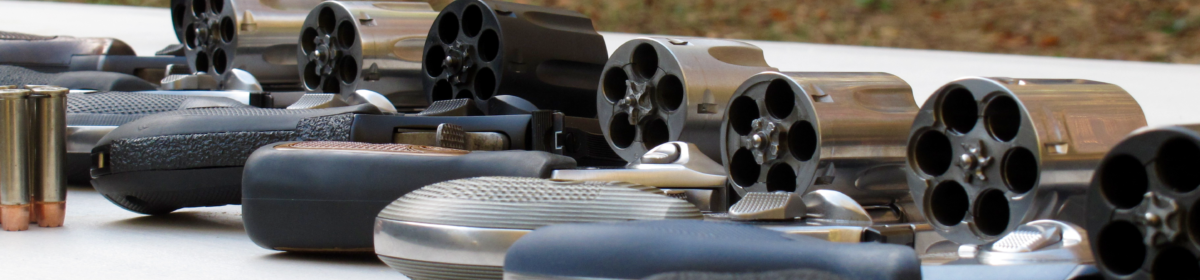
The original Colt Kodiak was an Anaconda-sized revolver chambered in .44 Magnum. It was produced in 1993, in limited numbers, and featured a nonfluted cylinder and a Mag-Na-Ported barrel. About 2,000 were manufactured, most sporting six-inch barrels. Far fewer were made with four-inch barrels. Colt’s new Kodiak is a faithful reproduction of the original.
DETAILS
Colt sent us one of the first new Kodiaks in late 2024 to review, and I have spent a lot of time with it since. As they have done with all their new revolvers, Colt beefed up the frame and improved and simplified the action on the Kodiak. The gun was constructed of 410-series forged stainless steel. The barrel underlug and unfluted cylinder, combined with the stouter frame, made the Kodiak a heavyweight revolver. Empty, the 4.25” barreled variant weighed an ounce over three pounds.
The Kodiak looks like a scaled up, ported, 2020 Python. The barrel wore the familiar vented rib up top, and the recessed rifling at the muzzle. Instead of Mag-Na-Porting, the new version used three small circular ports on either side of the front sight at 10 and 2 o’clock. The red ramp front sight was standard Colt, secured with a set screw and easily swapped to suit user preference.
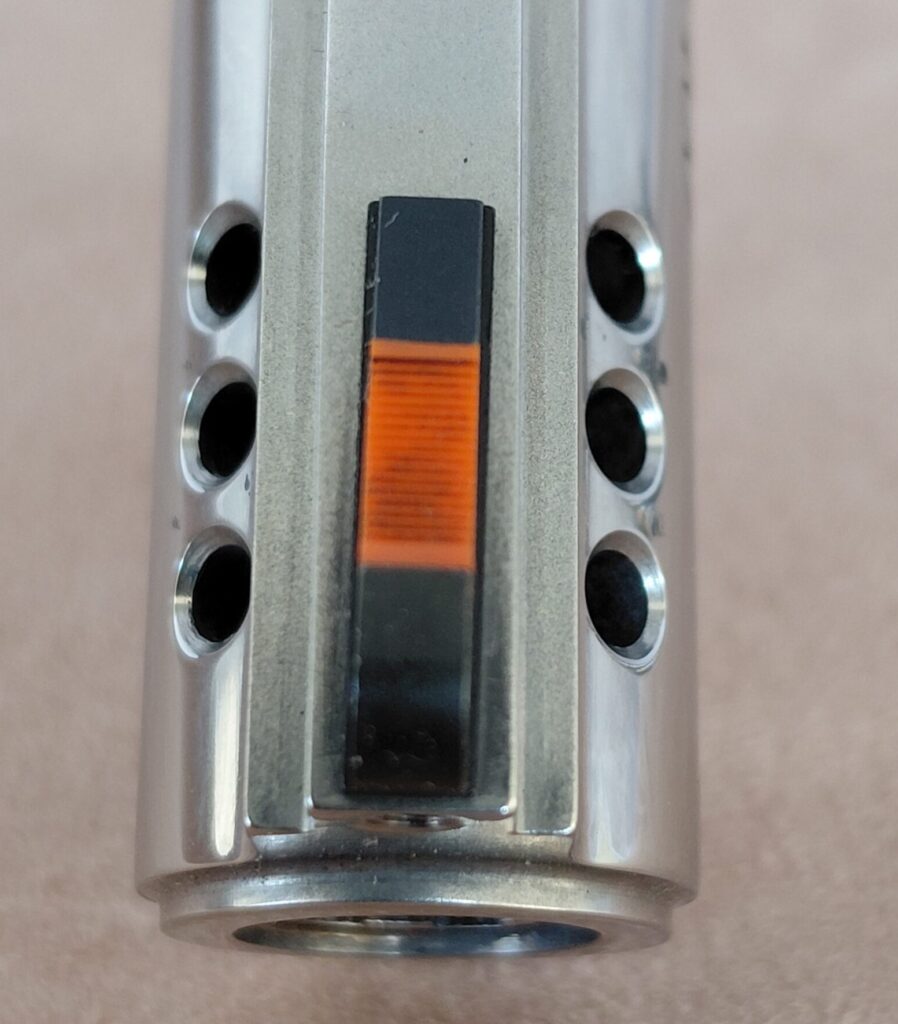
The rear sight was the new Colt adjustable unit with a plain black blade. The area between the sights was bead blasted to cut glare, the remainder of the gun was polished to a respectable sheen.
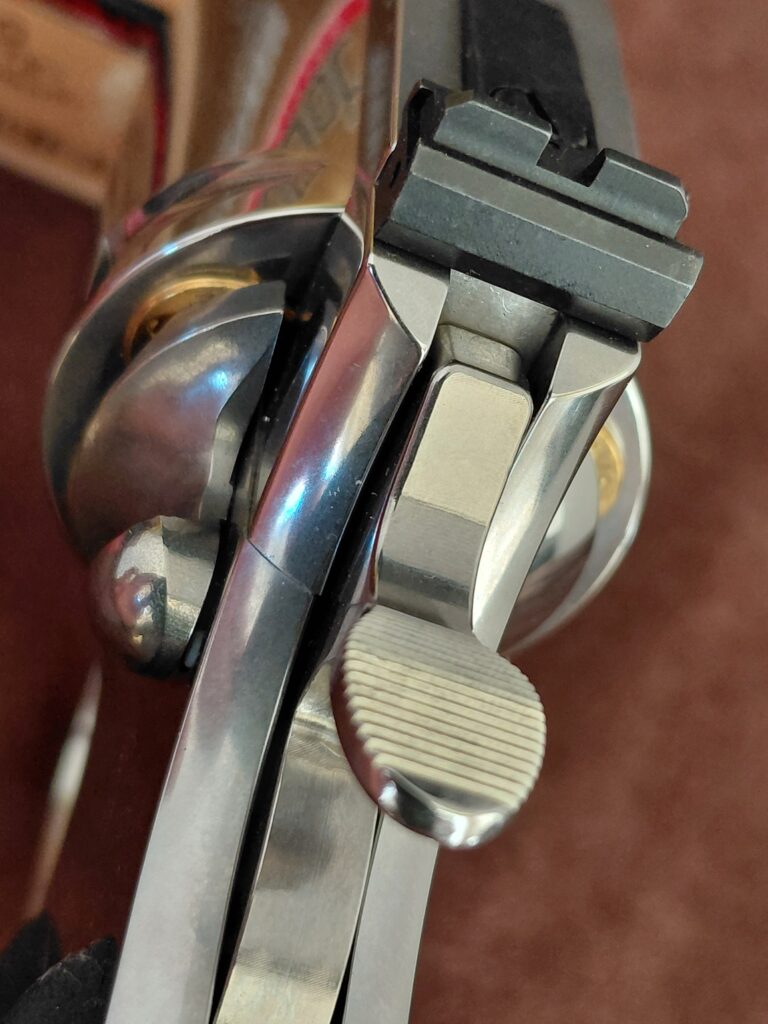
The trigger was grooved and the hammer was serrated. The front of the Kodiak cylinder had a pleasingly generous radius instead of a sharp corner. The cylinder was a big, heavy chunk of steel that measured 1.905” long. That might seem like unnecessary weight and length, until it’s not. The length gives a lot of fudge room if recoil inertia causes heavy bullets to jump crimp.
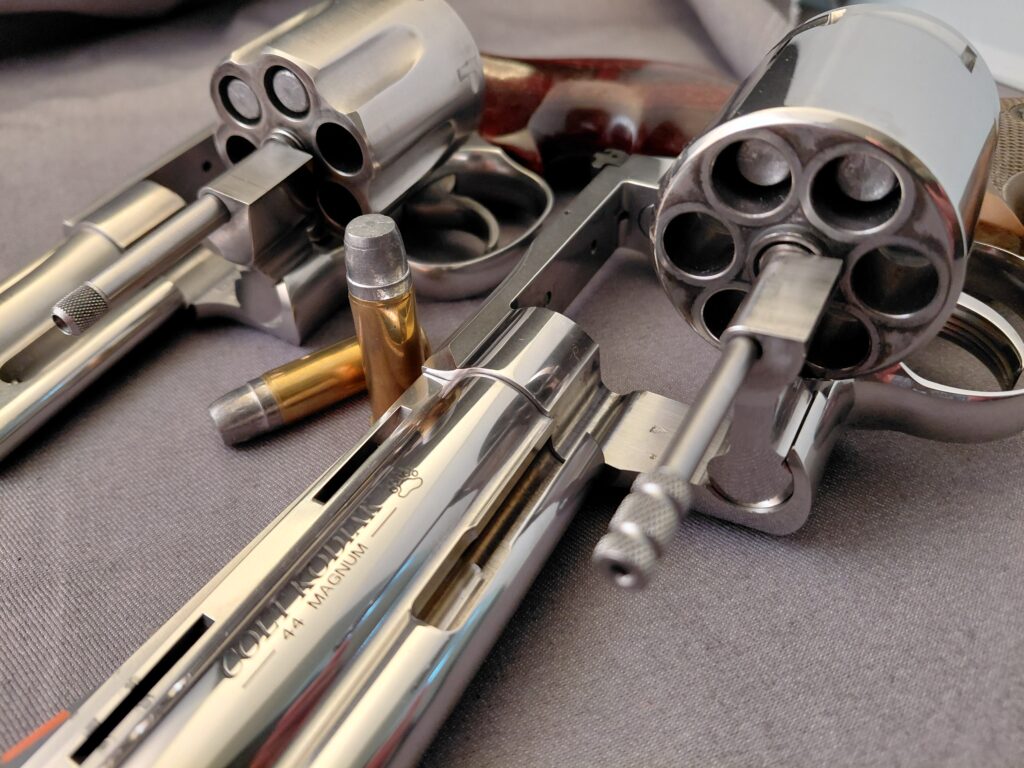
The .44 Magnum cartridge has a maximum overall length of 1.590”. Many of the heavy hard cast bullets that have become popular for hunting and dangerous critter defense crowd that limit closely. My 1994 Mountain Gun’s cylinder measures 1.705” long. There is precious little space between the front of a Keith bullet or Long Flat Nose projectile and the front of the S&W chamber. It’s much more likely that a bullet jumping crimp would lock up the cylinder on an N-frame S&W than this new Colt. The mass of the Kodiak, along with the porting, also works to minimize bullets jumping crimp.
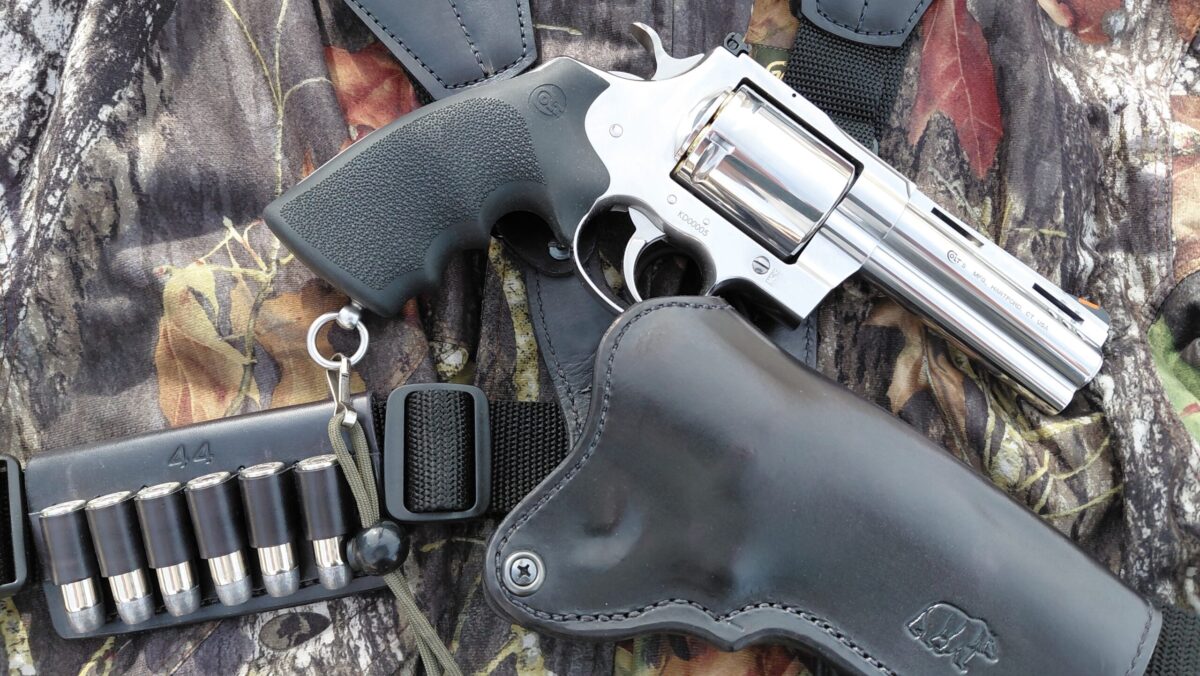
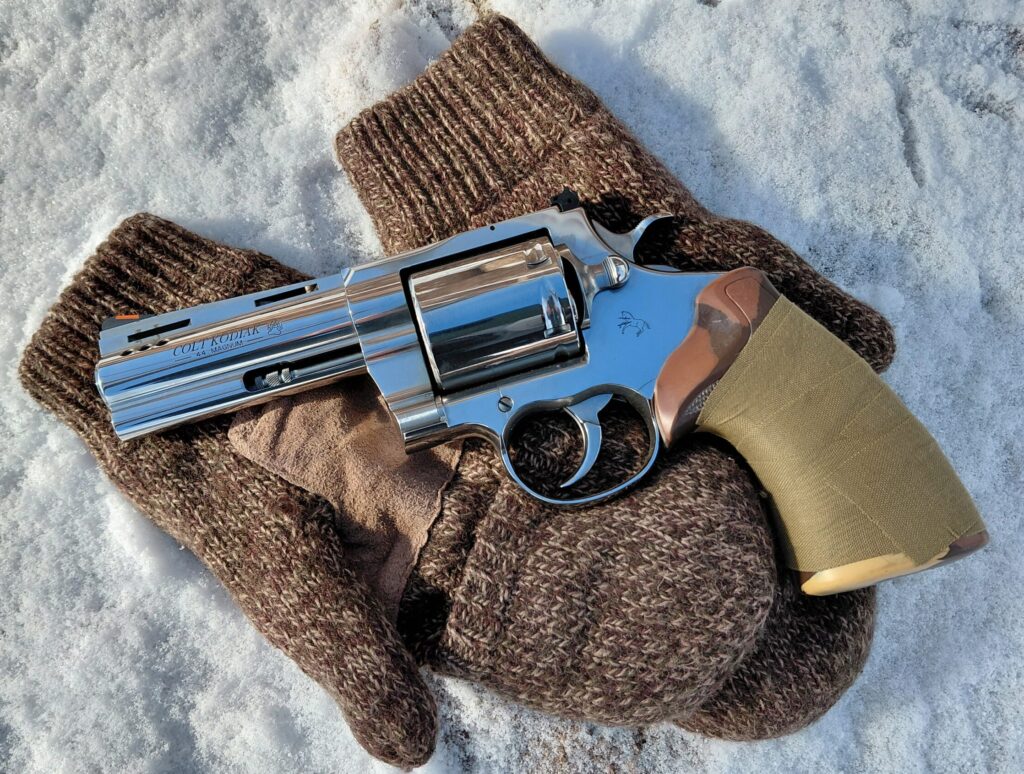
The right side of the frame had the serial number and a barcode laser engraved; Colt’s address was displayed on the barrel. On the left side, the name “Colt Kodiak” and a bear paw print were featured on the barrel, along with “.44 Magnum”. The Rampant Pony adorned the frame below the cylinder release. The gun wore Hogue over-molded rubber grips with an open backstrap and finger grooves. The big gun presented a strikingly handsome appearance. The revolver’s stainless-steel construction and rubber grips make sense on a gun that’s to be used in rough country.
HANDS ON
Handling the Kodiak revealed smooth function and attention to detail in assembly and finishing. The big cylinder opened fluidly when the cylinder release was pulled to the rear. There were no rough edges, blemishes, or burrs to be found. The action was good, typical of the new Colt design. The double action trigger pull averaged 10.2 pounds, the single action broke around 6 pounds. Cylinder lock up was rock solid and the barrel cylinder gap was narrow and uniform around the cylinder’s travel.
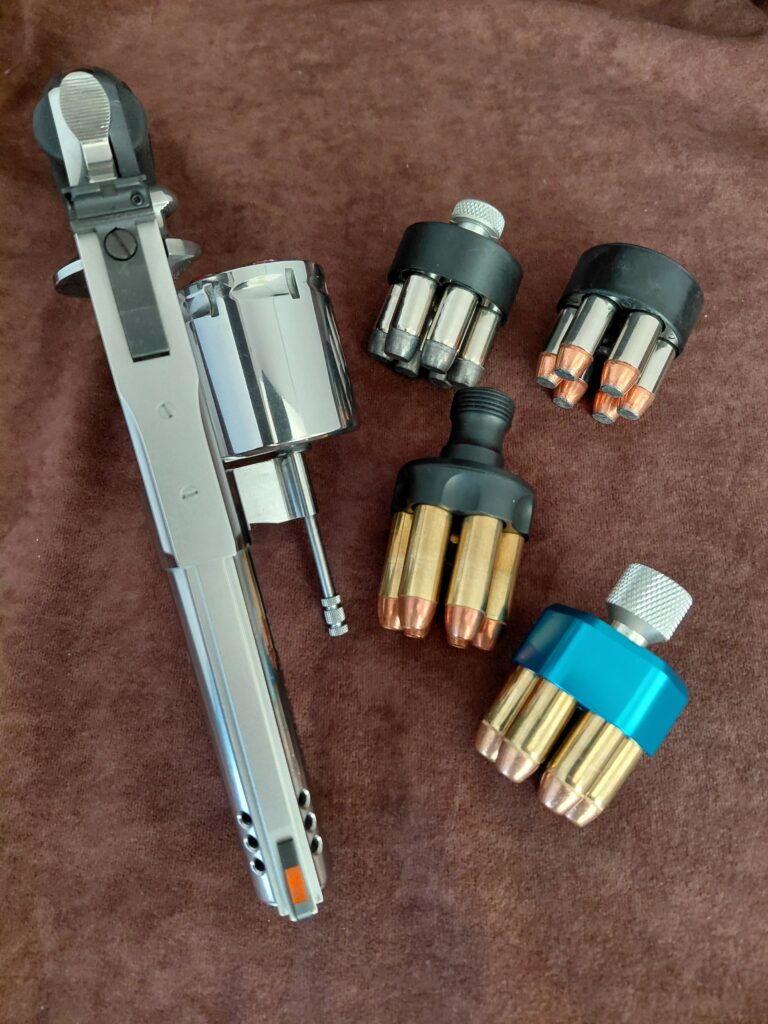
I was pleased to discover that speedloaders for a S&W Model 29 worked well with the Kodiak. I had 4 styles on hand (Safariland, HKS, S/L Variant, and Pachmayr) and they all fit and functioned properly.
LIVE FIRE
The first time I got the Kodiak to the range was in early 2025. I pulled it out of the truck after shooting smaller caliber revolvers for a few hours. I wanted to get the gun roughly zeroed with 240 grain jacketed bullets, so I started with mid-range CCI Blazers. The sights took some adjusting; the Blazers were initially impacting 6 inches high and 2 inches right at 15 yards. The February sun toyed with me; it was low in the sky at my back. I had set up the chronograph at 12 feet to capture velocities, and it was giving crazy readings. Moving it to 18 feet didn’t really help. The sun was also causing a harsh, distracting glare on the frame and hammer that was making the sights difficult to see.
I temporarily gave up on the chronograph and worked on the zero. The Kodiak shot respectably with the Blazers, even with the glare issues. With the zero roughly established, I shot six Speer 200 gr. GDHP’s at 15 yards. The group was awful*, with one hitting off the 8 x 10 paper and two impacting almost sideways (the Kodiak had 1-in-20” six-groove rifling with a left-hand twist, which was an appropriate twist for general .44 Magnum use in revolvers).
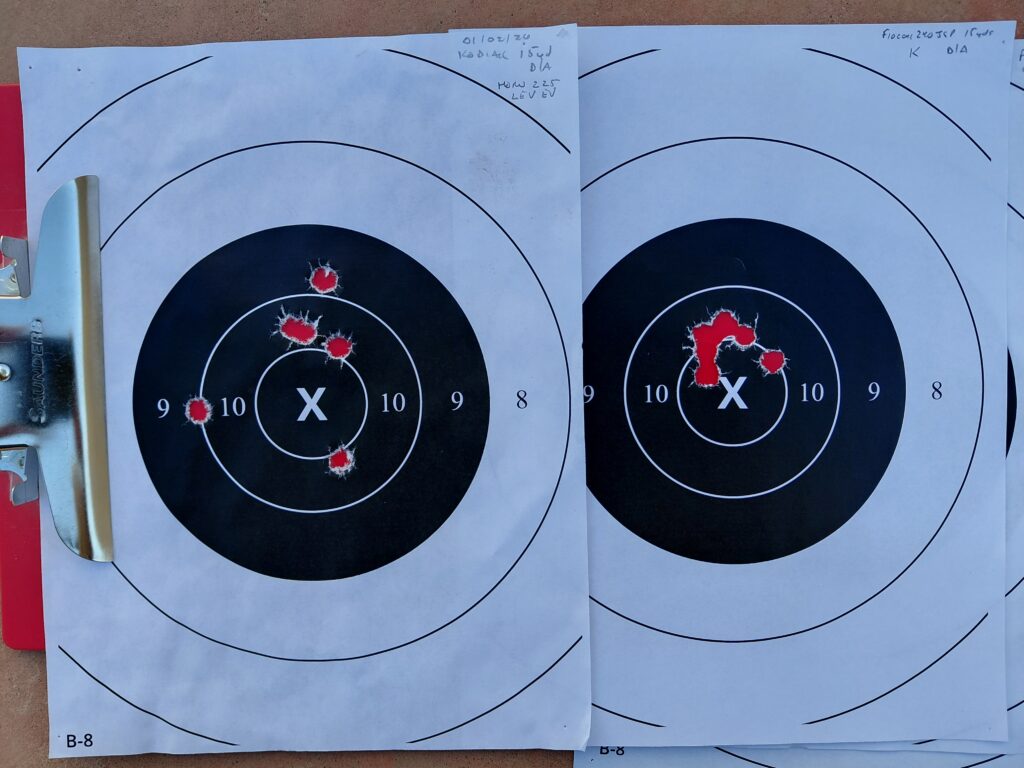
I then fired a cylinder’s worth of Hornady .44 Magnum 225 gr. Lever Evolution flex tips. They were notably spicier than the Blazers (I couldn’t tell you exactly how much, my bloody chronograph continued to misbehave) and I had to hold on tight. The trigger reset seemed a little sluggish, the 5th shot had a noticeable pause before resetting. At that point, I decided it was time to pack up.
SECOND IMPRESSION
The second time shooting the Kodiak went much better. The glare that had plagued me a few weeks prior wasn’t an issue, and establishing a clear sight picture with the Colt sights became possible. The chronograph worked like it was supposed to and showed that the Kodiak’s 4.25” barrel produced impressive velocities. It’s generally accepted that barrel porting robs a little velocity compared to non-ported barrels, all else being the same. If that’s the case, non-ported 4.25” Anacondas must produce blistering velocities! I shot right at a hundred rounds of ammo through the Kodiak, mostly full power stuff (thanks to Paul from Ammo to Go for generously providing some test fodder for the mission).
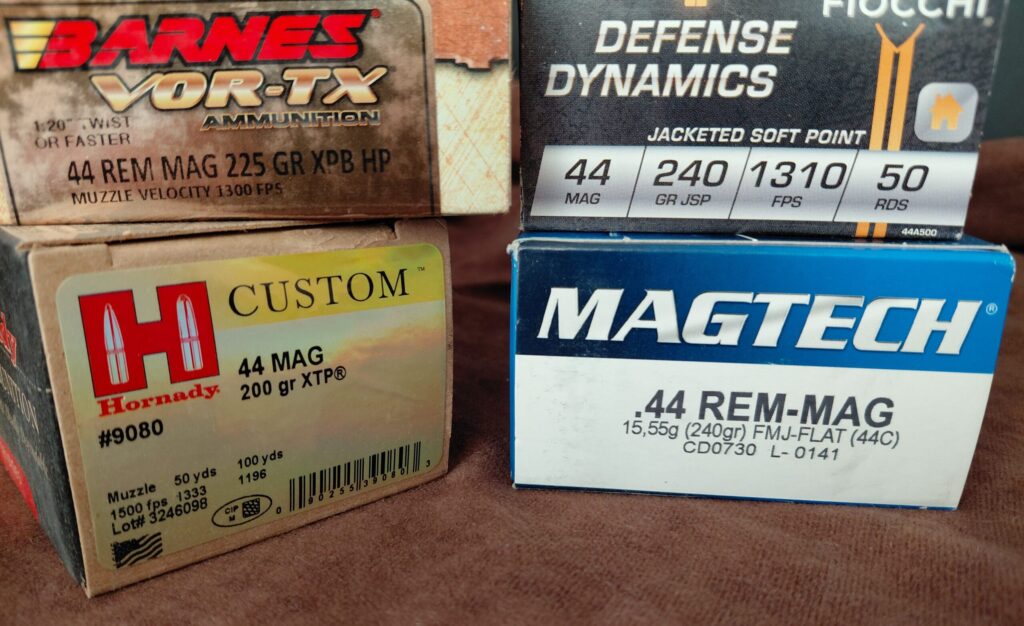
Putting all that ordnance through the Kodiak made me appreciate its weight, the shape of its’ backstrap, and the barrel ports. Those three features contributed to making the recoil of full house .44 Magnum ammunition realistically manageable.
Like other new Colts, the double action on this one was extremely user friendly. Shooting the Kodiak double action, it would place loads it liked into quarter to half dollar sized groups offhand at 15 yards. It would do this repeatedly, and with bullet weights across the spectrum (180-320 gr.) In my experience, the new Colt revolvers deliver fabulous, shootable, D/A triggers. The 200 gr. Gold Dot was to blame for that poor target on day one, not the Kodiak.
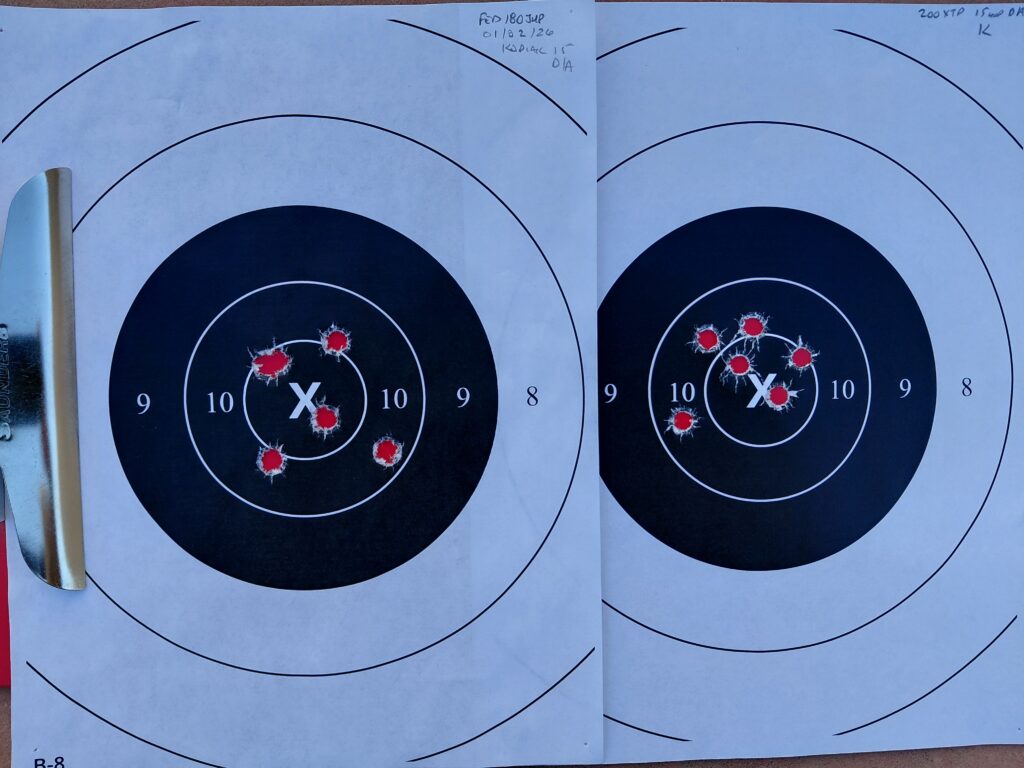
Hornady’s 200 gr. XTP proved that by yielding an outstanding group. I also figured out that I was most likely the culprit for the reset issues I experienced my first time out. I noticed that I was keeping a death grip on the Kodiak as I fired and my trigger finger was sympathetically pinning the trigger to the rear in recoil. When I realized this and made a conscious effort to release the trigger, the issue went away. My subconscious knew that .44 Mag revolvers bite hard; the first dose of full house recoil would demand a physiological response for the remaining five. It took a while to convince myself that this gun was different. I felt like the Kodiak had been redeemed from the impression I formed from its first trip out.
SOME THOUGHTS ABOUT THE .44 REMINGTON MAGNUM CARTRIDGE
Just because a gun is chambered in .44 Magnum doesn’t mean it’s a suitable delivery system for the cartridge. The Model 29 craze inspired by the Dirty Harry films proved that in the 1970’s. Many is the tale of a Model 29 being traded in with 44 rounds left in a box of 50 factory rounds. A Model 29 with factory target grips is just not that much fun to shoot with full house .44 Magnum loads.
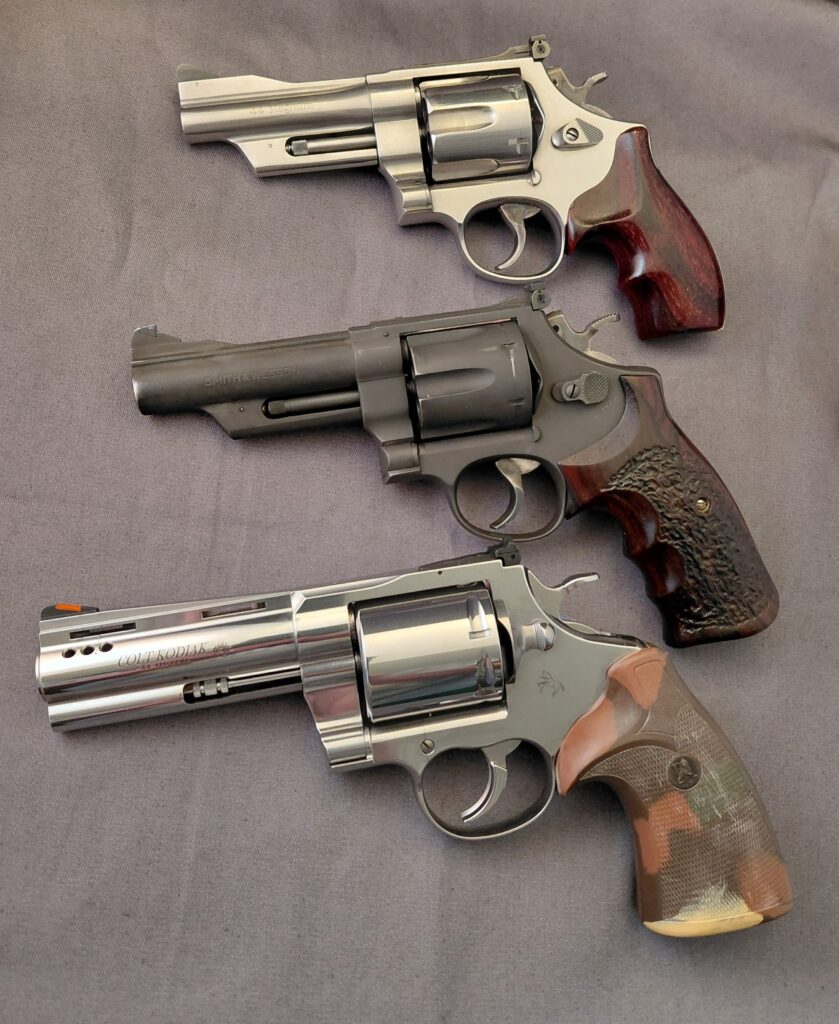
Back in the mid 1990’s, I traded one of my old NMSP heroes, Jim Woods, out of a 4” 29-2 that had been his duty gun. It had also been carried by another NMSP legend, Jack Jones. The .44 kicked too much for Jones, so he sold it to Woods and procured a Model 57 .41 Magnum for duty use. Dwayne Worley crafted some of his amazing stocks for the 29, touched its’ action up and installed Meprolight tritium sights. It seemed fitting to qualify with the .44 and wear it for special occasions to honor those good men.
I had zeroed the gun with the 240 grain CCI Blazer JHP that yielded about 1050 fps from the 4” barrel. It was a good balance between power and controllability in the Magnum. Our policy required two consecutive qualifications on our 60-round day course to carry a personal firearm on duty. I ran out of Blazers with about 18 rounds left in the second try. I filled my speedloaders with Federal 180 gr JHP’s to complete the qualification. The rangemaster, Kim Wallis, was a pilot stationed at headquarters and a righteous dude. He was standing close beside me when I drew and fired the first rounds of the new ammo.
The report was impressive, and you could see the muzzle flash in the broad daylight. As I recovered to the holster, my long suffering rangemaster threw his clipboard into the pea gravel and stalked off, uttering profane epitaths about my .44 Magnum- something about a #$%*!!! Flashbang. The recoil was fast and sharp, the open backstrap of my Model 29 soon removed hide from the web of my hand (it looked like road rash) and recovery was noticeably slower than with the Blazers, I was ready to be done after those 18 rounds.
In my opinion, a max load for a bull barreled Model 29 is a 250-gr. cast bullet at around 1200 fps. The gun can handle that load without undue wear, but it’s still best fired in moderation, with some consideration to the stocks on the gun. Elmer Keith did most of his work with that load and achieved great results without prematurely aging his carry guns. A S&W Model 629 Mountain Gun with its’ tapered barrel and reduced weight is much more enjoyable with a 240-250 grain bullet at 1000-1050 fps.
BUILT STRONG
I shot everything I had through the Kodiak to determine what was suitable for use in the S&W Mountain Gun. The resulting Mountain Gun pile was very small: High Desert’s purpose-built loads, some .44 Specials, and Lost River’s Coated 240 gr. SWC as an absolute max. The Kodiak is a true .44 Magnum and can be treated as such, it will handle any load you care to stuff in it. This one didn’t care what weight bullet it was shooting, either. Subsequent range trips over the course of 2025 showed the Kodiak shot 180’s, 200’s, 270’s and 300’s equally well. At 15 yards, it would send most of those bullets to the 240 gr. zero, too. Unusual, but very cool. That likely wouldn’t hold as the range increased, but it worked at 15 yards.
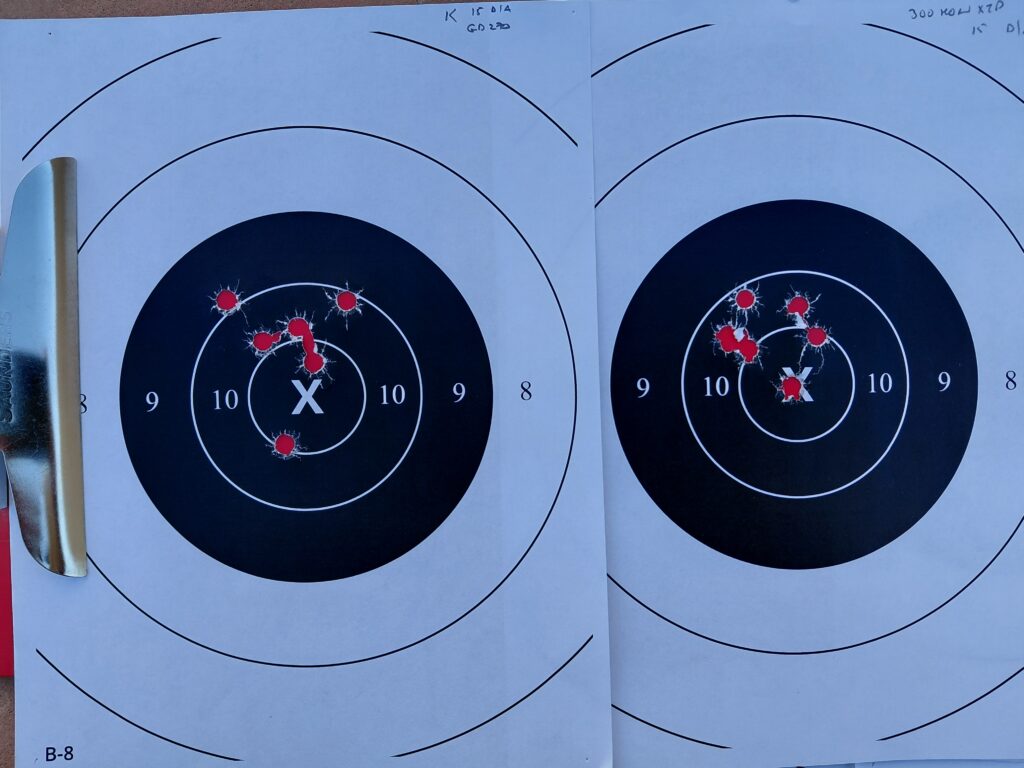
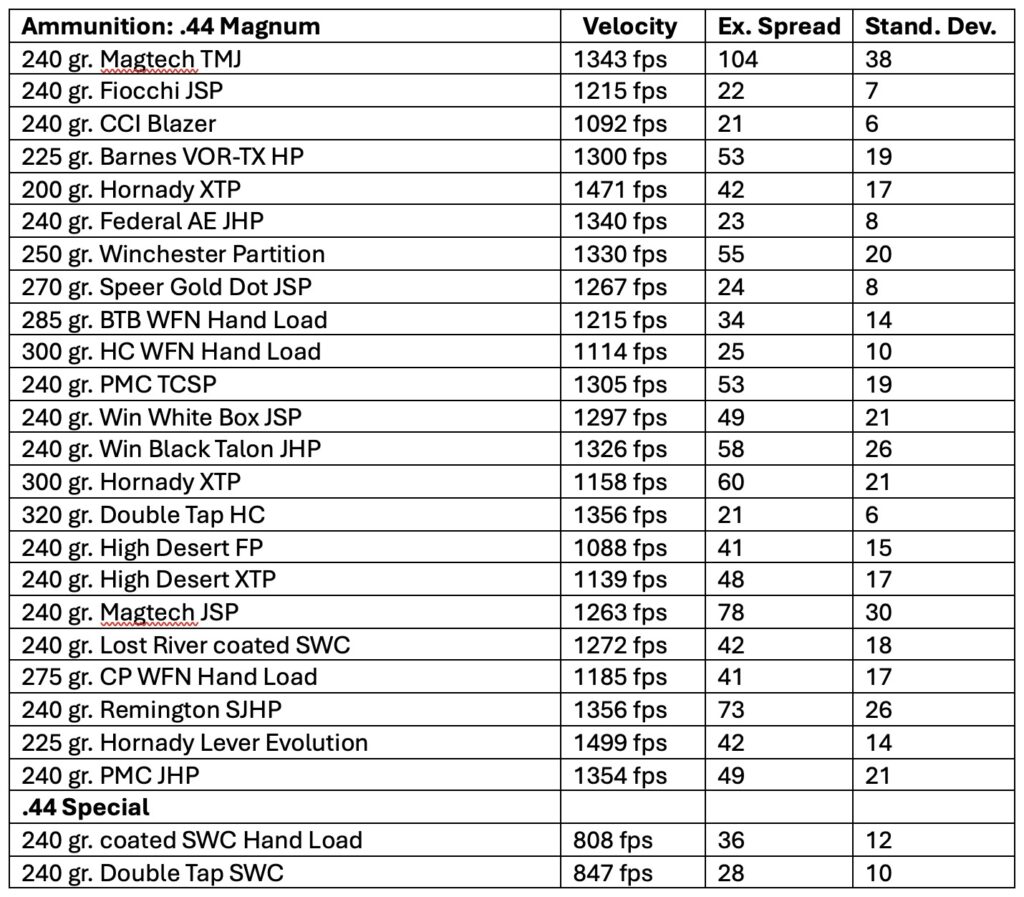
DoubleTap Ammunition was good to send some ammo to assist in testing as well. One of the rounds sent was the 320 gr. Hard Cast Solid. DT loads this heavy for caliber bullet to a claimed 1325 fps from a 7.5” barrel. It ran 1356 fps on average from the Kodiak, with a low extreme spread and single digit standard deviation. It impacted about 2 1/2 “above the 240 gr. zero. Recoil was stout.
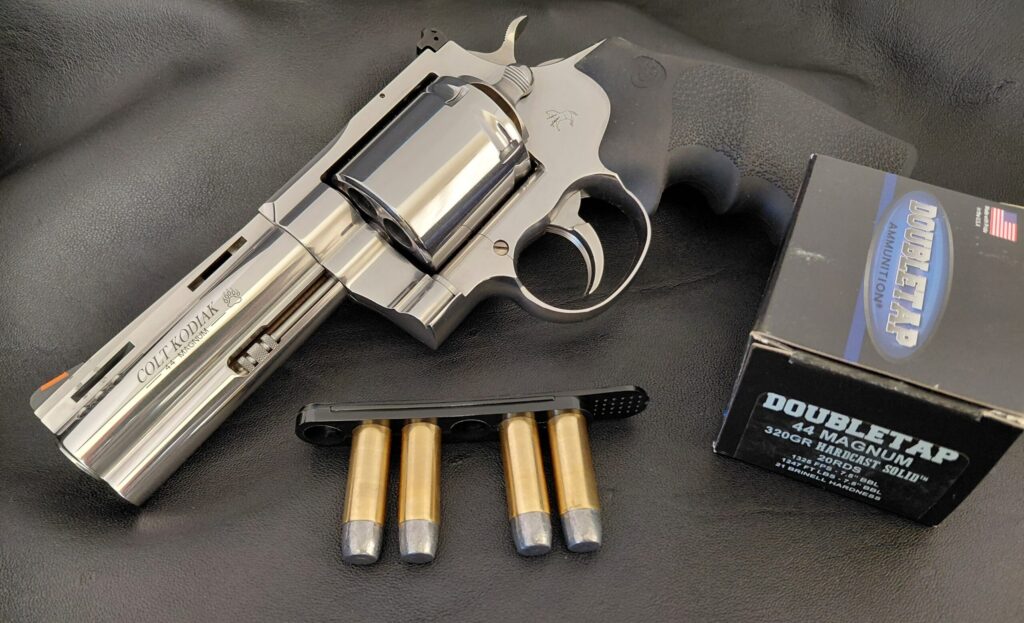
This was one of the few loads that I could feel the blast from the ports. It was like shooting a Barrett .50 with a muzzle brake. Not to throw shade on the 10mm Auto, but this .44 load generates 1,327 ft lbs of energy, with a Taylor Knock Out value of 27.13. A 10mm handload with a 200 gr. HC WFN at 1200 fps from a Ruger GP100 Match Champion yields 640 ft lbs, TKO of 13.71. If you need power, there is no contest.
MORE TRIGGER TIME
On another range trip, I dug out some of those old Federal 180 gr. JHP’s that had traumatized my NMSP rangemaster. They shot well, grouping tightly and close to the zero at 15 yards. They still flashed like a strobe light in the noon day sun and gave a quick recoil signature. Rightfully so, they averaged 1645 fps from the Kodiak. At the end of that trip, it started to rain on me. I decided to send some of those 180’s at a 50-yard target before I left. They grouped well for the conditions, impacting high of my zero.
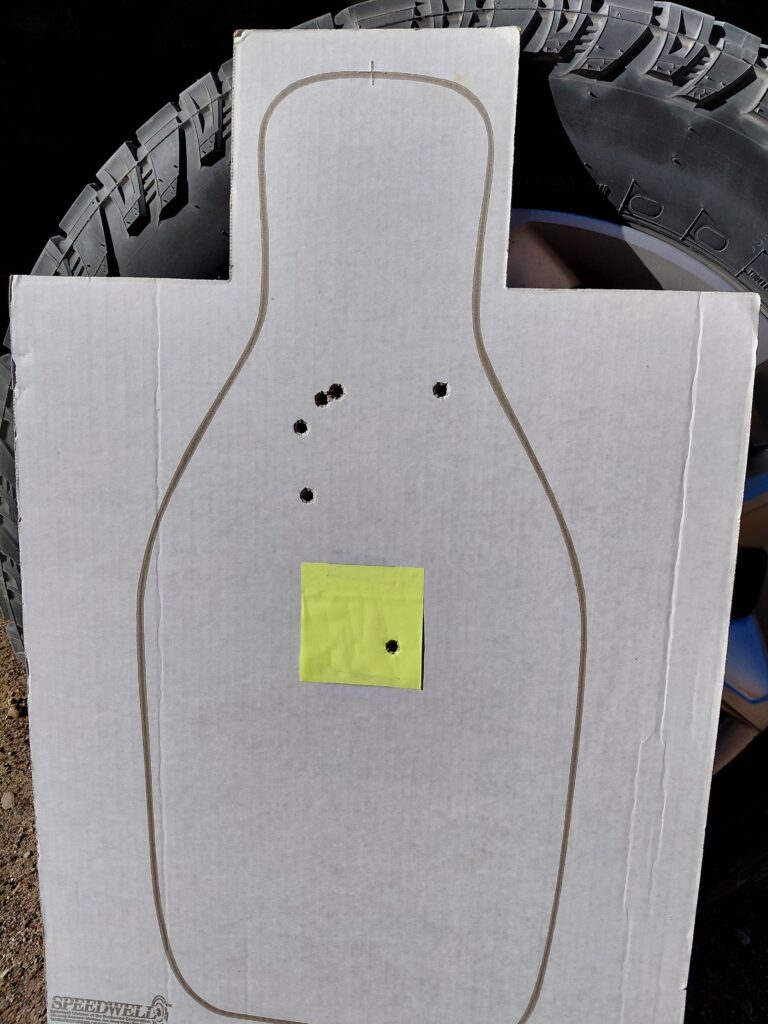
With a little bit of load development and sight tuning, the Kodiak would be a worthy hunting revolver. If I were to deploy it that way, upgrading the iron sights or using an optic would enhance the gun’s capabilities.
Last time out, I shot Claude Warner’s amended Gunfighter Challenge (six rounds at 40 feet, six rounds at 25 feet strong hand only) and Dave Spaulding’s Fade Back Drill (3 rounds from 5, 7, 10, 12, 15, 20, and 25 yards) with a hodge podge of 240 gr. JHP’s and TMJ’s. It passed the GF Challenge and only lost 5 off the 3×5 card on Spaulding’s test. The misses were just off the card. I had 9 rounds of Magnum ammo left, so I shot them at 7 yards to finish. They went into one hole about the size of a nickel.
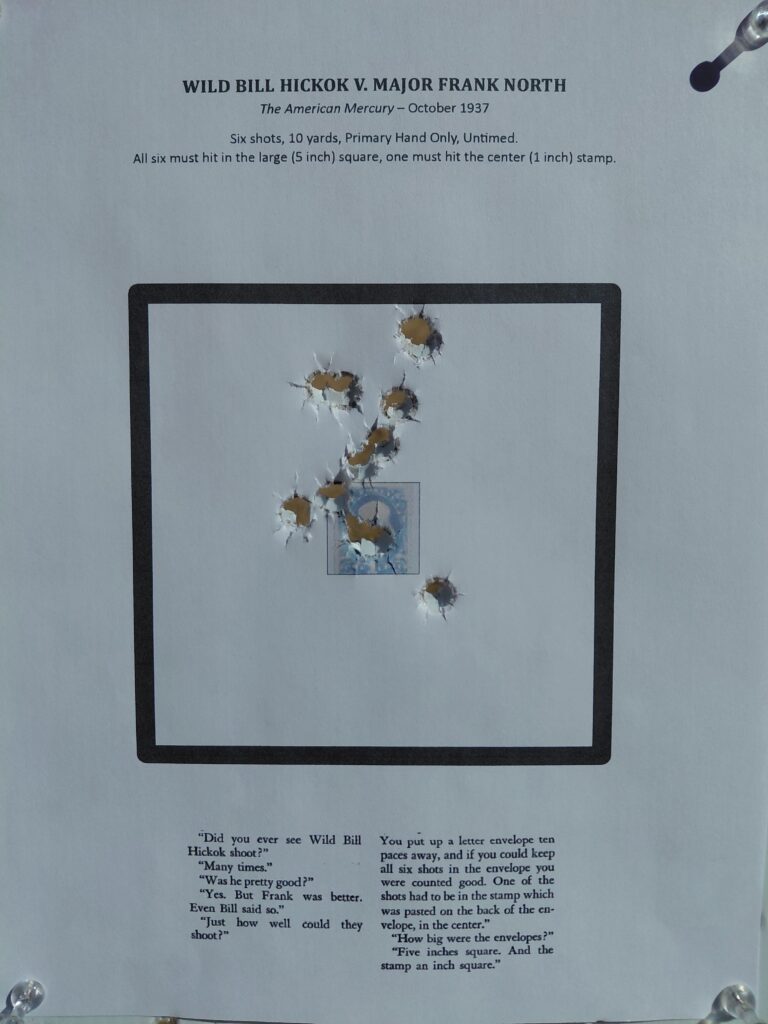
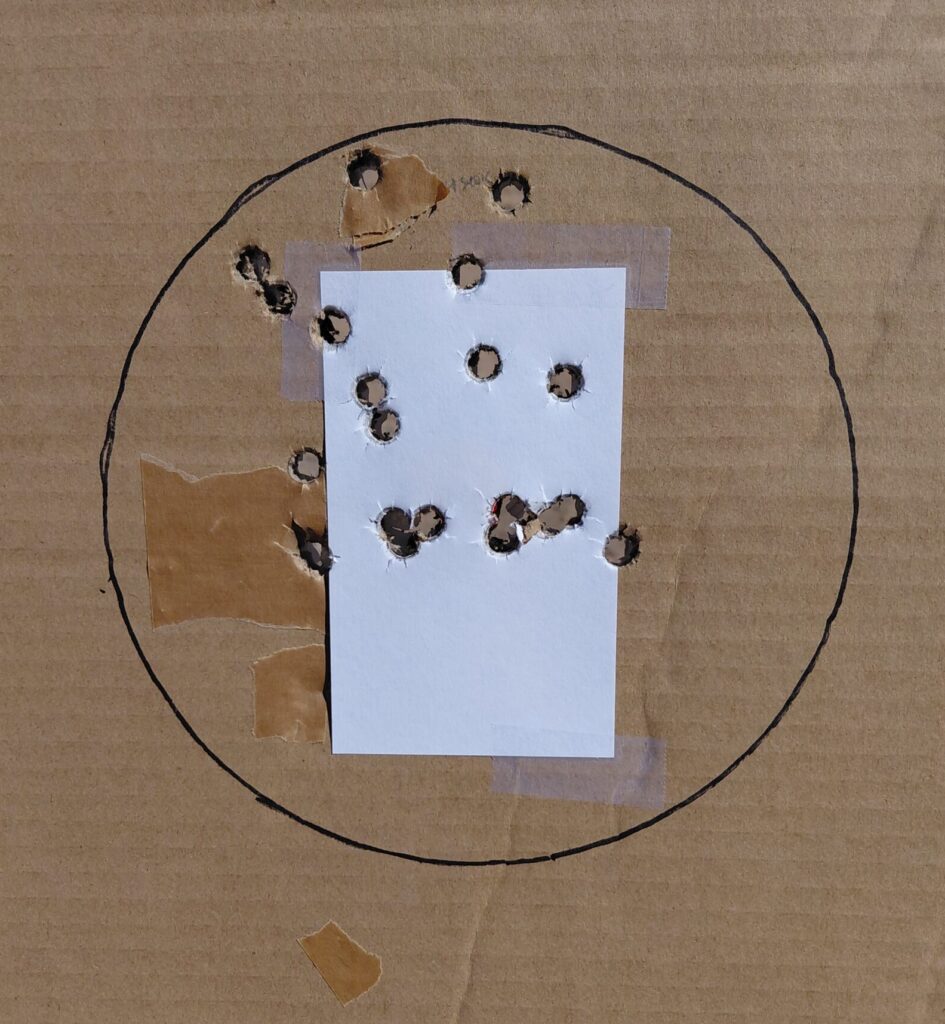
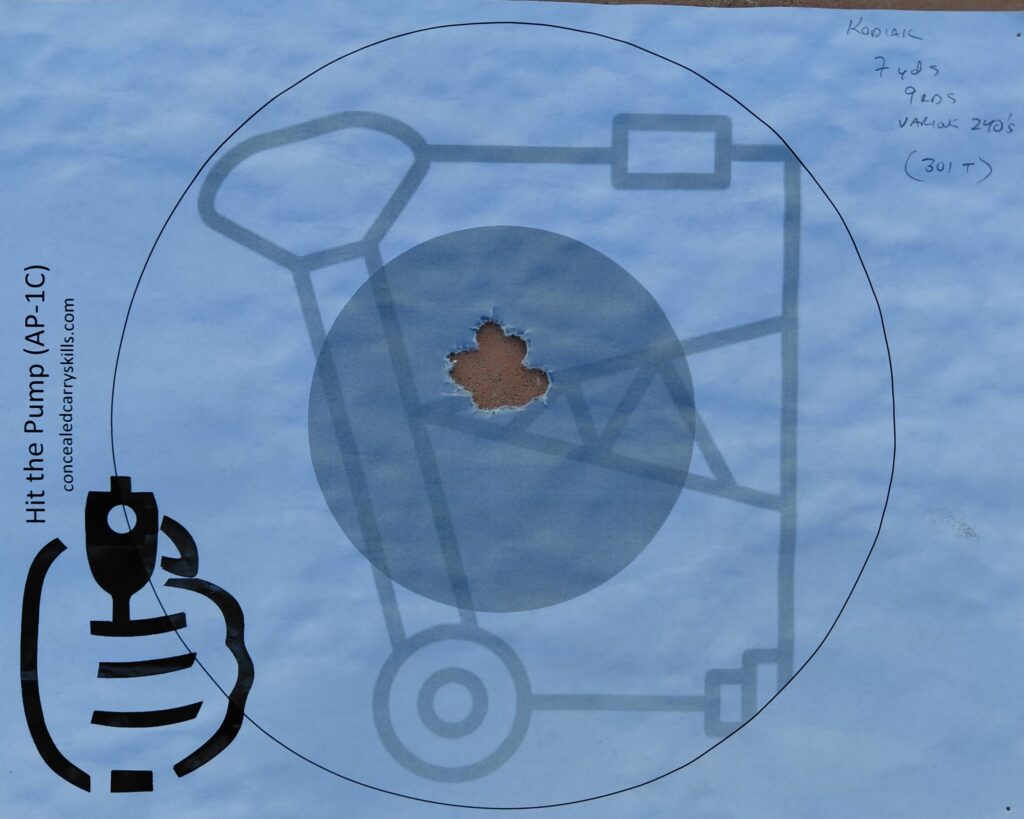
I fired a total of 301 rounds through the Kodiak, with 90% of those being full pressure .44 Magnums. There were no failures to fire. I fired a cylinder full of old (1970’s vintage) Remington 240 gr SJHP’s through it on one trip; 2 empties swelled and refused to exit the cylinder without tapping on the ejector rod with the nylon handle of a screwdriver. That was the only ammo that gave any trouble in the Kodiak. I cleaned it twice during the testing; it washed up like a new gun and was unphased by the gnarly ammo I sent through it. I’m a believer in the improvements that Colt’s engineers have made to the company’s revolvers.
FINAL THOUGHTS
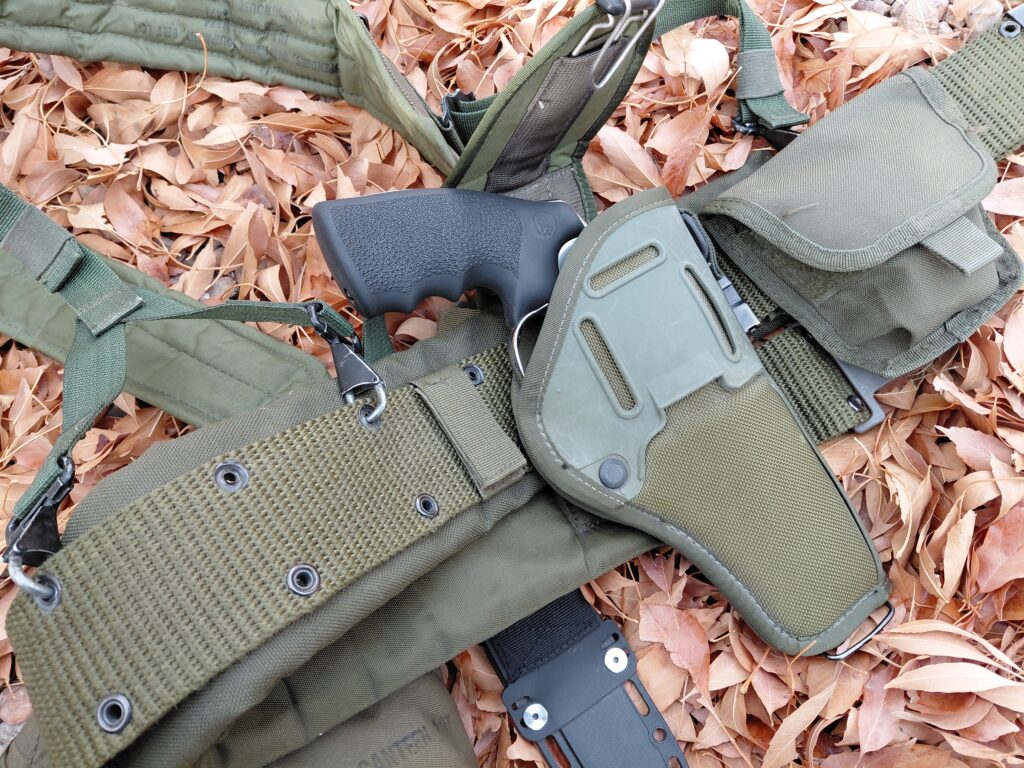
The Kodiak is a big, heck for stout revolver. It is well made and has an outstanding double action trigger. The ports work and help make the Kodiak a legitimate vehicle for any factory .44 Magnum round. While it’s a little heavy for every day carry in a conventional belt holster, it would be very manageable in a chest rig or shoulder holster. The old Bianchi UM84R nylon flap holster just fits; worn on a GI pistol belt with LBE suspenders would allow for comfortable belt carry.
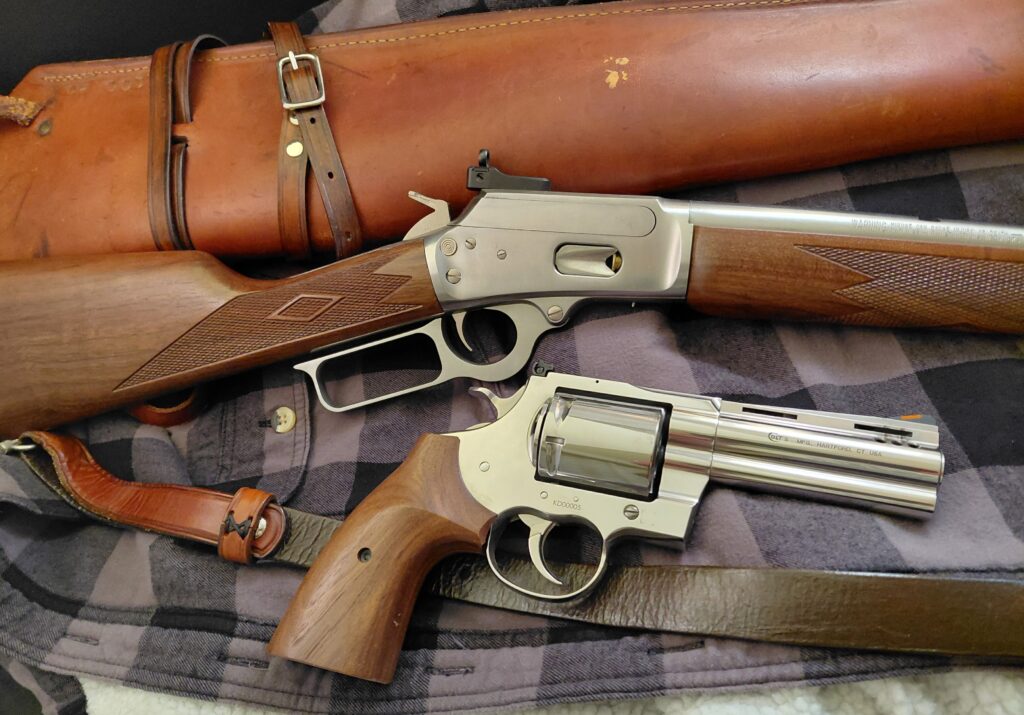
The Kodiak would make a superior companion handgun to a .44 Magnum lever action. Any load chosen for the lever gun would also be Kodiak suitable. If I lived in Alaska, I would install a tritium front sight on the Kodiak, load it with Double Tap 320 gr. HC’s, and carry it in a chest rig everywhere I went. The performance allowed would justify the weight of this gun, you’d be hard pressed to do better.
*****
* I recalled my friend Mark had accuracy issues handloading the 200 gr. GDHP for a 4” 629; he suspected the bullet and throat dimensions weren’t meshing well in his older S&W. I can report that factory ammo with that bullet was incompatible with this Colt specimen as well.

That first pic of the front sight: it looks like they put it on crooked.
John, John, John.
3,000+ words, all those great photos, and a lot of hard work, and the only thing you have to say is the sight is crooked?
C’mon, now. You can do better than that.
Hey John, looking at that photo, it does appear that way. It didn’t appear so when shooting it and it never bothered me. With the user friendly system Colt uses on their front sights, it would be easy to remove it and remedy.
That Colt Kodiak is such a massive brute that it just might challenge the double-action Ruger Redhawk for bull strength and durability. It’s also a very handsome beast–I wish it were mine.
Hey Spencer,
I agree with you on the build strength of this gun. The Redhawk is an awesome gun, but the Kodiak handles recoil better and has a superior double action trigger pull. A Redhawk can get there with the right stocks and some TLC from someone who knows how to tune Ruger actions, but the Kodiak comes that way out of the box. I’m impressed with it.
Very good write-up Sir!! I have always had a curiosity about a .44 mg. Being a Smith guy, I always figured if I really needed one, I would find a M29. The few times I took the opportunity to fire .44mg in other platforms resulted in aching wrists so I convinced myself I didn’t need more then a .357. That Colt is a very handsome gun and I imagine it would handle better then some others I have tried. Thank you again for the time and effort to bring us this article!
Thank you, Mark! I’m glad you found it fit to read. A Model 29 Smith is sufficient for launching the bullets required for dangerous beasts that inhabit the same country I do. If I were venturing north of southern Colorado, though, the Kodiak would give me a warm fuzzy. It’s a really nice and capable revolver when you need full value .44 Mag power.
I agree that the front site looks off. I bet it got banged along the way and just needs to removed and reinstalled.
Love the article, I wish I wasn’t so S&W trained. The cylinder release on my Python doesn’t feel right, but the Ruger Redhawk is better.
Dig the GI pistol belt, I bought the marine corps sub belt for similar duty. Need to figure out how to get a Simply Rugged holster on there…
Thank you, Jiminky! I think you’re right about that sight, I should have removed and replaced it before I photographed it. It looked true while shooting it, and I didn’t notice. I’m a long time S&W shooter too, so I was surprised how quickly the Colt’s “wrong direction” cylinder release became natural in use. I have used that GI LBE and Bianchi holster for several decades of trudging the hills while hunting with satisfaction. I’ll bet Rob Leahy would craft you one with bigger loops to fit that pistol belt…
Nice review, Kevin. If I didn’t already have a 4.25″ Anaconda, I’d likely have grabbed a Kodiak instead when they were released, though I have zero complaints with the Anaconda – it has a really nice, smooth, crisp trigger and just as you observed with the Kodiak, it is built to handle anything you want to put through it. I have also been very impressed with the inherent accuracy of every one of the new Colts that I own. Colt is, once again, making some of the best production revolvers available right now. No contest, imo, when choosing between an Anaconda/Kodiak vs. a current production M29.
Thank you, Hammer! You are well heeled with that Anaconda. The ports on the Kodiak make it a little easier to shoot, but both are up to the task. Based on the new Colts that I have handled and shot (a Python, Viper, and the Kodiak) I agree with your praise of their new revolvers.
Kevin, great insight into the Kodiak. Darn fine looking gun. Colt is letting you keep the gun, I hope (at a substantially discounted price). Neither the Anaconda or Kodiak have shown up at LGS around metro Atlanta. The nearest bears to us are about an hour north in the mountains, and they’re small enough for .357 Buffalo Bore loads.
The very few redesigned Colt snake guns I’ve handled, mainly Pythons and Cobras, all seem to have tight and very smooth lockworks. Their fit and finish appear much better than what’s coming out of Maryville, TN. The redesigned mainspring introduced on the new Python is a giant leap forward in taking the horrible stacking out of the trigger press.
The build on the Kodiak looks like it could, as Spencer noted, challenge the Ruger Redhawk for the strength and durability award. Despite Colt having a robust cylinder locking bolt at the rear, I’m surprised they would not have added a ball detent lock on the crane to supplement the bolt and cylinder stop – but what do I know. Either way, I suspect that Kodiak would join the Redhawk in digesting loads that would send a S&W N frame asking for time out.
Colt was smart in making the cylinder overall length longer than the 629. This is a plus in reducing the chance of a dislodging bullet locking up the cylinder. It’s also great for hand loaders who like big heavy slugs going downrange, or some of the bus-stopping loads from Buffalo Bore. Hopefully their QC can maintain proper cylinder throat dimensions for consistent accuracy.
Given the recoil the .44 Mag generates, I wouldn’t be too terribly worried about your shooting group sizes. The recoil pulse is disruptive anyway you look at it. At my age, I’d be happy with minute-of-backstop.
Although I never had the occasion, or desire, to get hooked on the .44 bandwagon, one still has to respect it for its ability downrange. As for me, at my age, I’ll stay with my .357 Magnums.
Thank you very much, S. Bond. Your observations on the lockwork and fit and finish are spot on. The engineering facelift that Colt performed was a righteous one. It would be interesting to endurance test one to see how needed that ball detent truly is. I put 300 rounds of full house stuff through this one and it was unphased. absolutely no lateral play in the cylinder, similar to the Python I put more .357’s through. My gut tells me that Colt made it to stand up to many seasons of heavy use. As you mentioned, it’s a welcome decision to make the cylinder that long. The Kodiak was made to take advantage of the .44 Magnums power, not just occasionally, but regularly. If you need that kind of power, this gun is worthy!
What’s the story with those camo patterned Pachmayr grips you have on the Kodiak in some of the photos?
Hey Jeb, those are new old stock made for an original Python back in the early 1990’s. I scored them from Numrich Arms when I wrote up the new Python and they fit. The Kodiak has the same size grip frame as the new Python and most grips made for it (or old Pythons) will fit the big guns. Numrich might still have some of them lying around.
It would be an interesting torture test between the Kodiak and Redhawk to learn which one would outlast the other, but it’d be an experience that probably would bankrupt or cripple me.
Yet there’s only a little more than a $300 MSRP price difference between the two revolvers, and when adding the cost of additional gunsmithing to get the Redhawk ‘s action comparable to the Kodiak’s, the latter might be the less expensive deal. Not surprisingly, I’d be pleased to have either one–in fact, both!
Spencer, that would be interesting. Even if my hands were up to it, I’m not sure a home equity loan would cover the amount of ammo you’d have to procure to shoot either of those heavyweights to failure! I was thinking the same thing on the cost when you compared the two earlier. They would be neck and neck after you got the Ruger jazzed up a little. I think it comes down to whether you’re sporting a Rampant Pony tattoo or flaming Phoenix ink!
Great article Kevin and even better shooting I saw my old 29 that had been parkerized I carried that gun for 5 years and the blue was severely worn the parkerized finish had been offered for free so I accepted but in five years I had fired approximately 8K rnds of full power loads and triple that of the Skeeter lead bullet loads so 30 thousands rnds before redoing the finish I began to carry a new 629 when you traded me out of it I think it is broken in now enjoy
Much obliged, Jim. I knew it had fired many, many cast bullets in the time you carried it. You achieved an incredibly high level of sixgun skill with that Model 29, I suspect it was a rare day that it stayed in the holster for an entire shift. I’m grateful to you for breaking it in so well! That gun has accompanied me on many a journey, on and off pavement. It allowed me to sleep well on many nights when my roof was canvas or thin nylon instead of shingles. I know the readers of this site appreciate that some guns mean a lot because of whom they were owned by, or who has worked on them. That Model 29 is such a gun and I’m proud to own it. My son will have a solid understanding of that gun’s history when it is passed on to him…
Kevin,
Outstanding write up on the Colt Kodiak!
I had the privilege of trying out Colt’s Anaconda and Kodiak, both sporting 6″ barrels, at RevolverFest this past October.
Although I’ve been carrying revolvers on a daily basis for over four decades, that was my first and only time firing a .44 Magnum.
I had no idea what I was missing!
I was especially taken by the looks and handling of the Kodiak and I’m still considering making that investment.
May I ask what brand of holster or chest rig with the cartridge loops is featured in the first of your detailed photographs caught?
I always look forward to reading your reviews. Thanks again!
Hey Opa, thank you very much! I’m glad you found it fit to read. That is very cool that you got to shoot them both at RevolverFest. These big Colts let you get more trigger time per session than a lot of lighter .44 Mag guns. That chest rig was made for D and L Sports. I think they are still available on Dave’s website. It rides a little lower on the body than others that I’ve tried. It’s a very comfortable and secure rig- well-made like everything from D and L.
Thank you for the wonderful review and the great stories. It’s always a pleasure to come to revolverguy.com
You are surely welcome, Bob. Thank you for reading them!
I didn’t notice the front sight at first, but I did notice that in the next photo, the rear sight seems to be cranked kind of far to the left.
You did a good job comparing the Kodiak to the 29/629, but how does it compare to the Anaconda? Looking at the photos on Colt’s website, the Anaconda seems to have the same longer cylinder and so on. Is the Kodiak just a ported Anaconda with an unfluted cylinder, or does it have other bells and whistles that I’m too dumb to notice?
I actually have no dog in this fight; I don’t, and probably never will, own a .44 Magnum, but a lot of your readers do, and they might be interested in the differences between the two snakes and whether the differences are worth the money.
Again, a very good article. Just because I’m personally not interested in the Kodiak, that doesn’t mean I don’t enjoy reading about it. Competition and choice are always good.
Old 1811, the rear sight is adjusted a bit to the port side. I had to put some windage on it early in the test, and that’s where it stayed. I own revolvers from several manufacturers that the rear sight blades sit off of center- left or right. I wasn’t bothered by the amount I had to dial it to center groups for me. I am not sure if the front sight being a little misaligned contributed or not. I don’t recall ever thumb-cocking the Kodiak to single action in live fire either. I think you are correct on the differences between the Kodiak and the Anaconda: porting, unfluted cylinder and resulting minor additional weight, and badging. I am a fan of the porting! Glad you enjoyed the article!
Great write up! Loved the camouflage Pachs that appeared sporadically
Thank you, Darren! I bought those for a new Python, bonus that they fit the Kodiak. I rationalized it with the thought process that I couldn’t have a large black jellybean looking object protruding from my OD green Bianchi flap holster- betraying my otherwise invisible self in the woods. 😁
Great article! Thanks for the detail and the pictures. Colt is making some fantastic shooters these days. Had I not already purchased a 6 inch Anaconda I would have certainly gone for the Kodiak. I like the idea of the ports, but oh well. My Anaconda is stupid accurate with Hornady 200 grain XTPs but I figure with a gun of this size, the smallest bullet I should be running through it is more like 300 gr so my next range day is gonna be working the aftermarket sites I put on it, adjusting them to heavier bullets. And I swear the double action is so good I do not use single action… no need to. Maybe if I was taking a 50 yard shot. This Anaconda impressed me enough I wound up with a Python and a King Cobra. Nothing disappointing about any of these shooters. I don’t see the Anaconda getting much carry time ever, but it sure is fun at the range. Now all I need is a blued 45 Colt 4 inch Anaconda and my Colt world will be complete.
Thank you, Dan! So, you could trade the 6″ Anaconda for a 6″ Kodiak and get the 4″ .45 Colt Anaconda to replace the missing Anaconda… This Kodiak shoots Hornady XTP’s really well, too- 200 and 300 grain versions. I have no doubt your Anaconda is a ringer, too. Our experiences with new Colts have been very similar, Sir. I was reflecting on shooting this one, and I did shoot it single action once. It was a cylinder full at 50 yards. Both the groups I shot double action at 50 on other occasions were tighter than the single action one. I completely concur on the double action being good enough that S/A is not required. Keep them coming, Colt!
On the topic of .44 Mags, while I was doing paperwork yesterday on a new 5″ 629 Classic the shop owner shared a real jaw-dropper: on Monday, one of his occasional customers brought in a 7.5″ New Model Super Blackhawk with two (!) nearly full-length cracks in its barrel. As described to me, these cracks were at about 10 and 3 o’clock and ran straight back from the muzzle. No barrel bulging was noted, and the shooter was luckily uninjured in the event, only stunned…man, I guess so!!!
The SBH’s owner is known to be both a handloader and a goofball, so operator error can by no means be discounted.
Wow… if that was due to overpressure handloads, I shudder to think how much of an overload it would take to do that to a Super Blackhawk barrel. You would have to really put some effort into that one!!! Glad he wasn’t hurt.
Glad to hear you liked the Kodiak. I’ve become a fan of Colt revolvers.
Thanks, Axel. I have likewise become a fan. Im hoping they will release an aluminum framed version of the new Cobra. If they do, I’m going to have to question some of my life choices!
Kevin, as much as I absolutely love all these new Colt revolvers I wish they’d take a breather and slow down on their new releases so I can get caught up on not being gunbroke. Lol. Threads on some of these new Anacondas and Kodiaks I read on other gunboards are tantalizing and really make me want to get in the truck and head to the local Scheels. Doggone gunporn!
Gunbroke? I like it, Dan! When Colt releases a lightweight Cobra (preferably with a matte finish, bobbed hammer and tritium front sight) I will be gunbroke again, too!
Ditto.
In that case, Dan. I wouldn’t recommend going to the Colt site right now – they just dropped a few new models….