One of the hallmarks of our writing here at RevolverGuy is our focus on the people and the stories behind the products that we enjoy so much. A straight product review is much easier to write, but not nearly as interesting or educational, I think. I’m always interested to learn more about the engineers, artisans, and craftsmen who design, build and refine the guns, holsters, ammo, and other tools of the trade, and the creative journey they take from idea to product.
With that in mind, I was happy to spend some time with some gunleather from respected maker Mitch Rosen, and to get the opportunity to talk with him about the arc of his career, his thoughts on holsters, and his latest design, the CCQ IWB Holster.
FROM TRADER TO MAKER
Mitch’s story begins with a familiar tune, sung by a consumer who wasn’t satisfied with what the market had to offer, and wanted something better to use.
In the mid-1980s, Mitch was a stockbroker who was just getting into shooting, after a bit of a delayed start. He was traveling to southern New Jersey to shoot in an IPSC league down there, and going through the process of learning and discovery as he figured out the gear he needed to compete. He started his shooting with an inexpensive nylon holster and moved on to “a low-end holster from a big-name company,” but was still looking for something better. Following the lead of his fellow competitors, he sent a big check to a custom maker and waited months for the product to arrive. “When it finally came, I was underwhelmed,” he said. “It wasn’t very impressive, considering the expense and the wait, and I thought, there must be a better solution.”
Mitch had prior experiencing in manufacturing soft goods, from the time he worked for his father in the 1960s, making inexpensive ladies’ handbags. The material he worked with was vinyl, not leather, but he learned about pattern making, cutting, sewing, and the business of manufacturing—skills that would get him off to a good start as an aspiring holster maker.
A call to a leather company resulted in a sales call to his brokerage firm (which was a first for the salesman), and a supply of materials was soon on the way. He acquired the necessary tools, including a harness stitcher that was rented from a gent in Florida, and in 1991, he was off to the races.
INFORMED DESIGNS
Mitch admits his first holsters weren’t all that impressive, but his talent for design was informed by his first-hand experience of carrying and shooting guns, and he quickly learned the trade. His holster making skills quickly matured alongside his growing shooting experience, each helping the other advance.
Mitch trained with many of the leading trainers and schools throughout the 80s and 90s, including Gunsite, John Farnam, Lethal Force Institute, Ray Chapman, and Clint Smith. In the early 90s he worked as a police officer for about a year, then took a part-time job as a Sheriff’s deputy, working for 13 of his 19 years at that agency as a firearms instructor. His training and experience gave him a deep understanding of the qualities required of good gunleather.
From the start, Mitch was determined to build a superior product. As in any marketplace, there’s a wide range of features, quality levels and price points in gun leather, and Mitch deliberately aimed for the users at the far end of the scale. “Most people who buy a holster for a gun don’t wind up actually using it much,” he says. “It sits on a shelf with the gun for most of its life, and they don’t make a habit of routinely wearing it—maybe, on occasion, but not every day.”
This was not the consumer that Mitch was targeting with his products. He wanted to build hard use holsters for serious users—the people who actually carried their guns, and needed their gear to perform. He knew what they needed, and he wanted to build it for them.
GROWTH
His holsters gained attention from the right people, and his business grew as word spread about his work. I remember reading all about his holsters in the 90s, as my favorite gun writers and trainers praised his work, and it seemed like he cemented his position in the top tier of makers very quickly. Today, Mitch is particularly proud that he’s retained many of his customers from those early years. “I still have customers from the early 90s who have stayed loyal to me after all this time, and I appreciate them,” he told me.
By the 2000s, Mitch was looking to expand his product line to compete at a lower price point, but he didn’t want to sacrifice quality or function. His “extraordinary gunleather” motto was more than a marketing gimmick, it was part of his ethos, so he was deliberate about the new products that he wanted to add to the catalog.
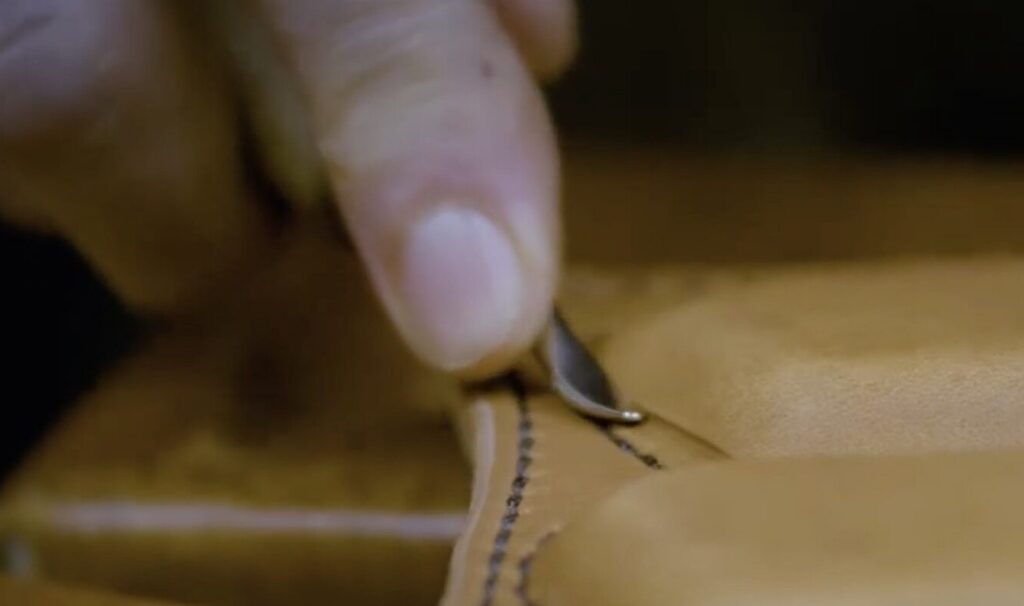
His new products became his “Express Line,” and differed from his “Full Detail Line” in subtle ways that might escape the notice of most consumers. Mitch continued to use the same quality leather in both lines, and built them to the same standards of fit and function, but was able to reduce production costs through manufacturing efficiencies. The Express Line would eliminate a long menu of options and standardize on a fixed set of features. It would also drop some custom touches and handwork that were more artistic than functional.
In example, while Mitch builds holsters in his Full Detail Line with a variety of belt slot widths (from 1.25” to 1.75”, in 0.25” increments), the Express Line holsters are all built with 1.5” belt slots. The Express Line holsters are likewise offered in a smaller number of color options, and don’t feature some of the detailed boning that’s standard on the Full Detail rigs.
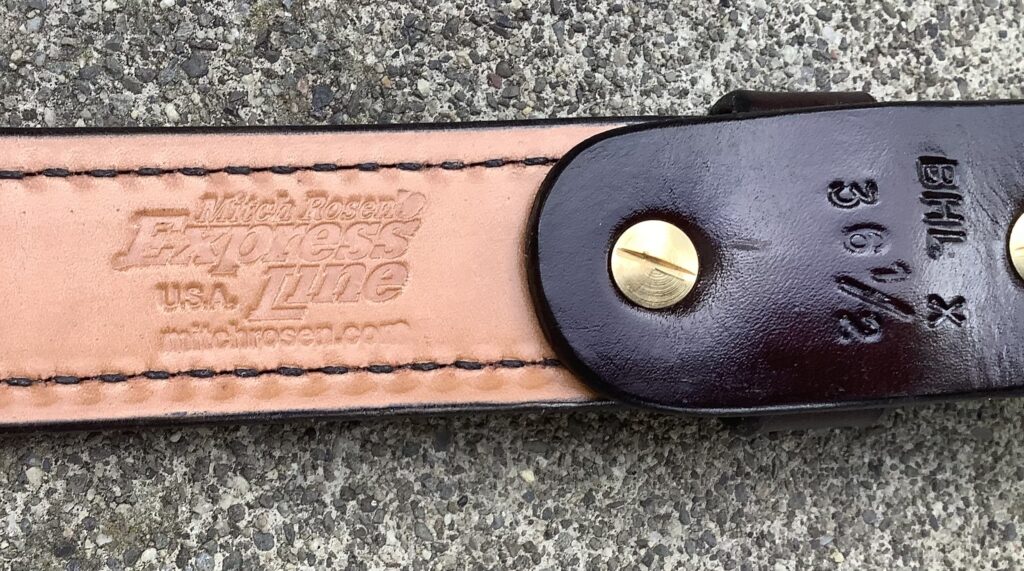
In a similar vein, his Express Line gun belts are made of the same materials as his Full Detail gun belts, but they’re cut straight, instead of on a curve, and are offered in a single 1.5” belt width. There are fewer color options available, and you won’t find any options to taper the ends of the belt, as you will in the Full Detail line.
None of these changes affect the quality, function or fit of the products, they just allow him to produce them more efficiently and offer them at a reduced price point. As a result, the Express Line products have been very popular with performance-oriented consumers.
ALL YOU NEED, NOTHING MORE
A new customer to Mitch Rosen Extraordinary Gunleather might be surprised at the size of the catalog, which is quite conservative compared to some other makers–certainly, to the large production companies, that make a holster in every possible category. This is a function of Mitch’s approach to holster making, which is deeply grounded in his experience of carrying guns daily. “I only build what actually works, the types that can be relied upon,” he says. “I won’t build a holster that I wouldn’t actually carry, myself.”
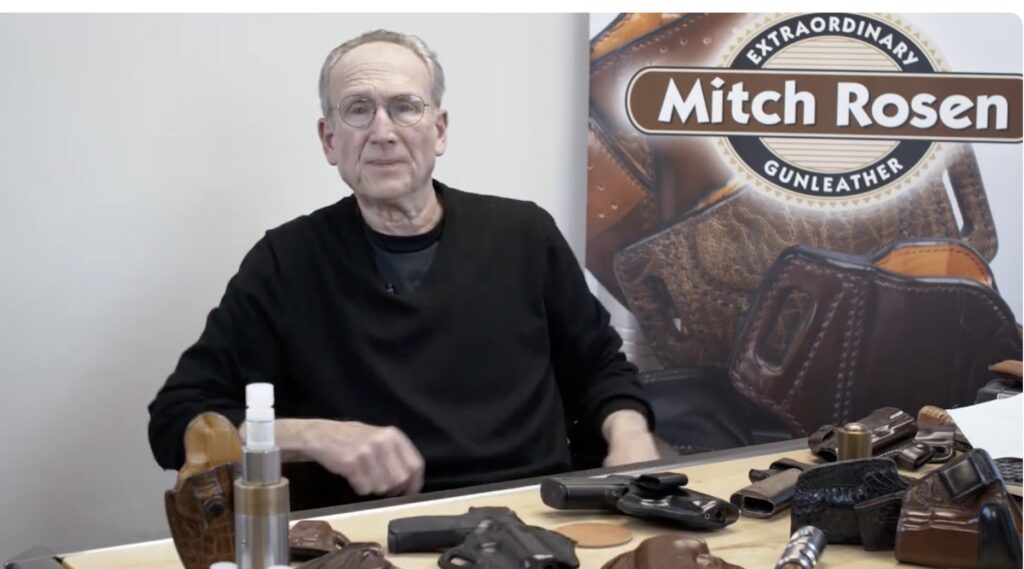
Indeed, that’s part of Mitch’s design process. Any new holster design that he’s working on gets a six-month trial period, where he carries and uses it as much as he can, to detect any deficiencies that need to be corrected. He’ll make the small tweaks necessary to perfect the design and ensure that it will retain and conceal the weapon properly, while preserving quick access to it. If an angle needs to be changed, a ride height adjusted, or an area needs to be relieved, he’ll quickly discover and correct it.
As a result of his careful evaluation process, and his insistence on proven designs, the Rosen catalog is populated with a relatively small number of products. He doesn’t add a new holster every other month to garner attention and chase more customers, he just sticks to making proven designs.
MEET THE CCQ
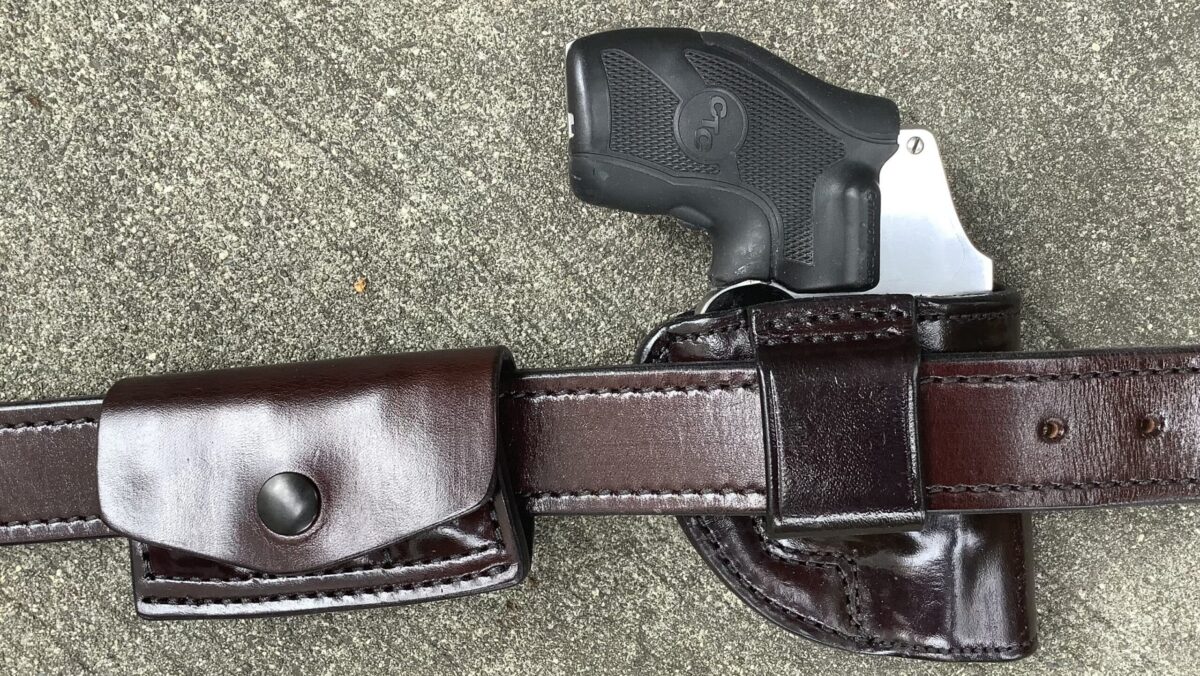
This explanation brings us to the holster under review here, the Express Line CCQ IWB Holster. The CCQ is specifically designed as an Inside-the-Waistband (IWB) holster for revolvers, and is the newest holster in Rosen’s catalog. Knowing how he operates, he obviously felt there was a gap that needed to be filled, and the CCQ seems to do a fine job of it.
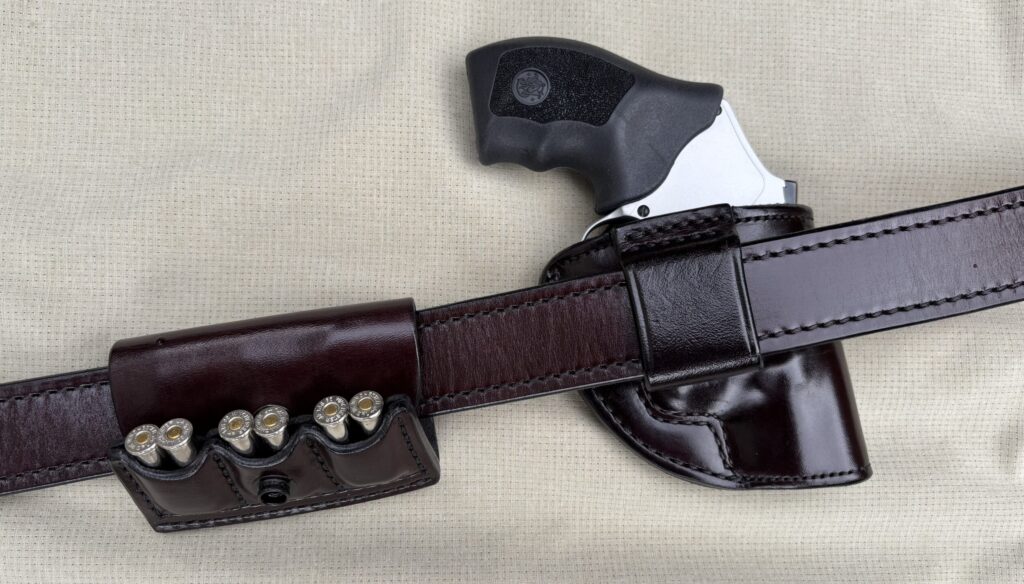
The CCQ is a straight drop holster with a single fixed loop that’s positioned slightly aft of the cylinder. It’s designed to be carried anywhere from strong side, to appendix, to cross draw. Since I favor the appendix position, that’s where my sample has been riding.
The CCQ looks like a simple design, but there’s some important features and qualities that separate it from other lookalike holsters. Let’s take a look at these, as we explore the design.
THE BELT LOOP
One of the first I’ll note is the belt loop’s design and location, because it makes a big difference in how the CCQ rides.
The belt loop is sufficiently wide to stabilize the gun on the belt, and keep it from rotating on the belt. You might think that’s pretty elementary, but I’ve seen a lot of IWB holsters with thin, solo clips or loops with long slots that allow the holster to rock back and forth on the belt because there’s just not enough contact area to prevent it. I must admit that I normally stay away from holsters with a single mount for this very reason, and have always preferred dual straps to keep an IWB holster rock steady, but the Rosen loop does a nice job of keeping things in place, particularly when you pair it with the proper belt (more on that later).
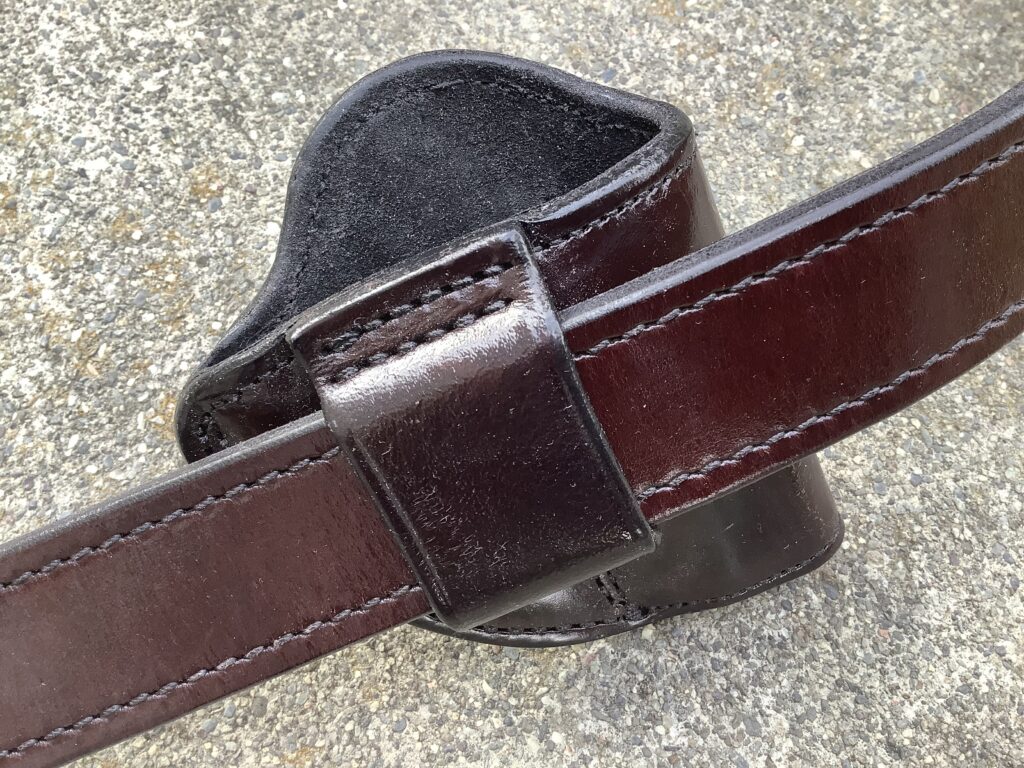
The belt loop on the CCQ is mounted just aft of the peak where the cylinder bulges, and this is another feature that helps the CCQ to ride so well. It’s common to see makers who are more accustomed to building autopistol holsters try to build their revolver holsters the same way, and one of the features that gets fumbled in translation, most frequently, is the location of the belt attachment. Many makers will mount the attachment at top center, as they do in their autopistol holsters. This places the attachment on top of the cylinder, where the holster is already at its widest point, and makes it harder to conceal the holstered gun. It doesn’t matter if you place the belt attachment at the top center on an autopistol holster, because the guns are of a mostly-uniform thickness from top to bottom, but the cylinder bulge on a revolver requires some careful accommodation, and Rosen understands that. As a result, his belt loop rides aft of the cylinder bulge, where it secures the gun to the belt without adding unnecessary thickness to the package.
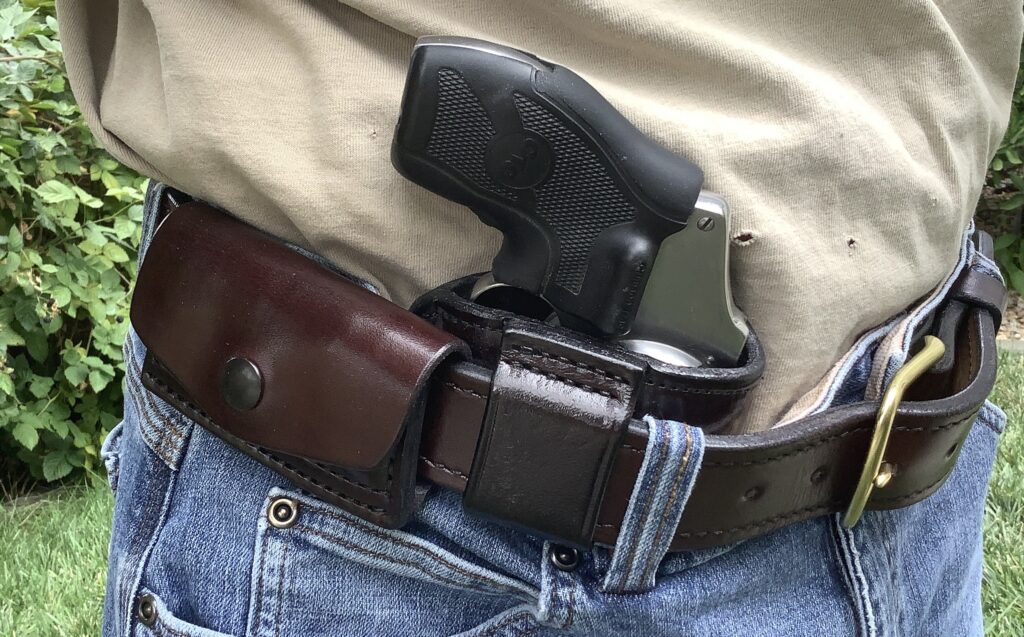
While the CCQ’s belt loop is slightly aft, it’s not mounted too far towards the trailing edge, which is another autopistol habit. In an auto (and particularly a compact version, with an abbreviated slide—the kind that’s most often carried IWB), the weight distribution is unequal, with the grip frame full of cartridges giving the gun an aft center of gravity. Mounting a solo belt loop closer to the trailing edge can place it closer to the center of balance, and help to stabilize the gun, but the same location doesn’t work as well for a revolver, whose cylinder shifts the center of balance forward on the belt. I’ve tried several revolver holsters with solo clips or loops on the trailing edge that don’t stabilize the gun properly, and allow it to rotate forward, moving the grip farther away from your hand, but the CCQ’s belt loop holds everything in the proper orientation, and your gun will always be in the same place when you reach for it.
THE POUCH
The lines of the CCQ’s holster body closely follow the gun, with just enough material below the frame and trigger guard to allow a proper seam allowance to form the pouch and secure the welt. This is a boon to Appendix carriers, because it eliminates binding and interference in the upper hip / inguinal area. Some holster makers will take their strong side IWB holsters, with their relatively wide stabilization skirts, and try to sell them as AIWB holsters, but the extra material makes them inappropriate for the role. In contrast, the CCQ is nice and trim, and creates no interference or discomfort when carried as an AIWB holster.
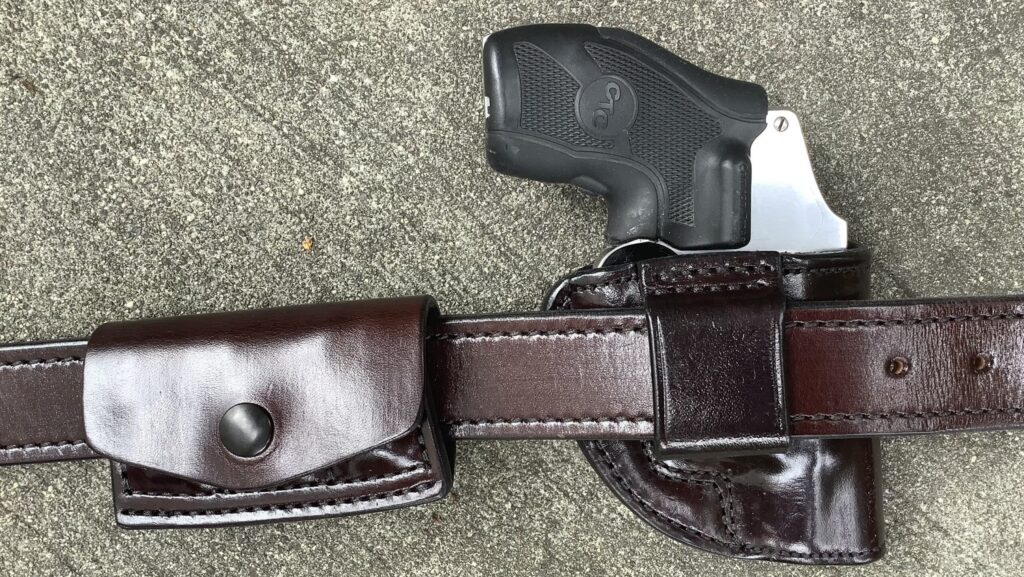
Another area where you won’t get any interference is in the area behind the trigger guard. Here, the mouth of the pouch is fully relieved, to allow you complete access to the sinus and front strap area of the gun’s frame. There’s more than enough clearance to obtain a proper firing grip on the gun while it’s still in the holster, with the CCQ’s profile.
The rear panel of the pouch rises high enough to cover the cylinder release and prevent its checkering and sharp edges from irritating your skin, but is properly relieved to allow your thumb to find its position as part of the firing grip. This is another one of those small details that makes a big difference.
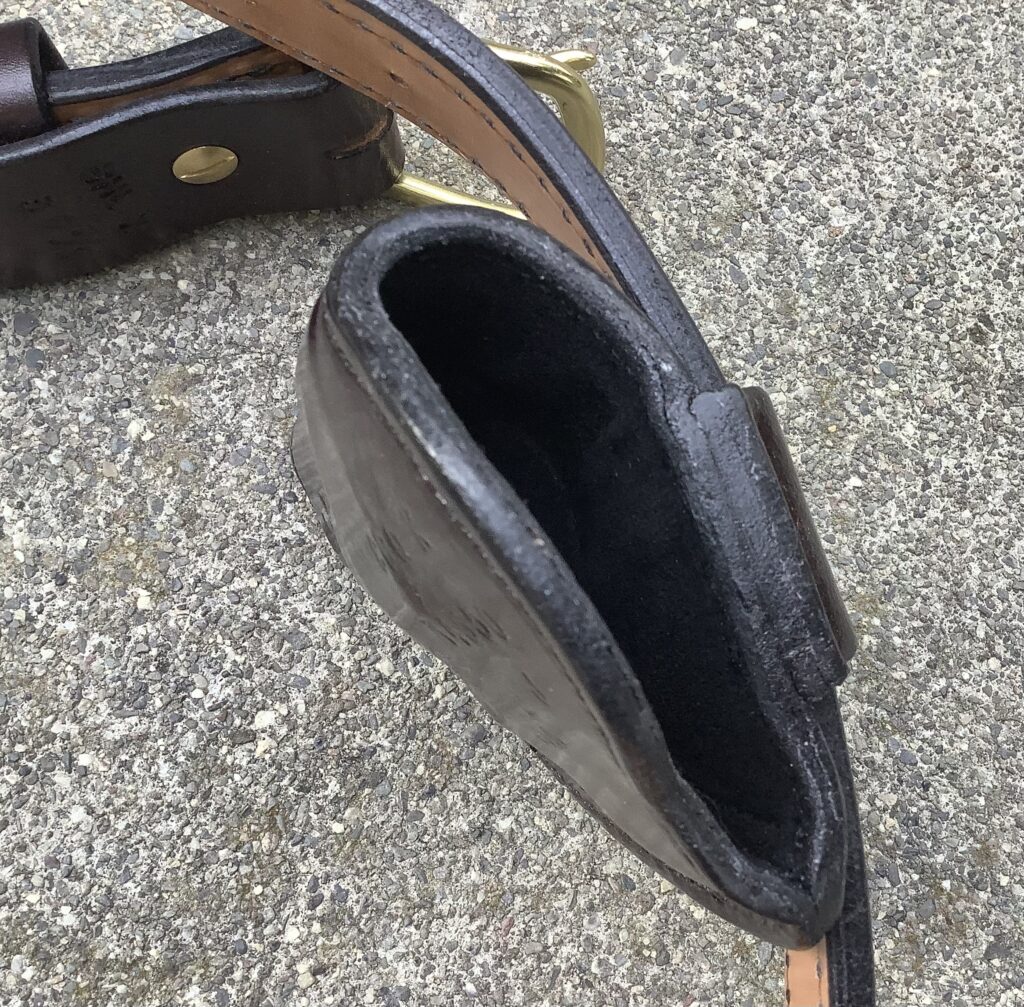
The mouth of the CCQ’s pouch is reinforced so that it won’t collapse when the gun is removed. This detail is often ignored or casually addressed in IWB holsters, and it’s the mark of a serious design. You can’t get your gun back into the holster with a single hand unless the holster mouth stays open to accept it, and a collapsing mouth creates the potential for an inadvertent discharge when the holster’s material bears on the trigger. Furthermore, a collapsing holster encourages the user to hold it open with their support hand while holstering, leading to dangerous Rule 2 violations.
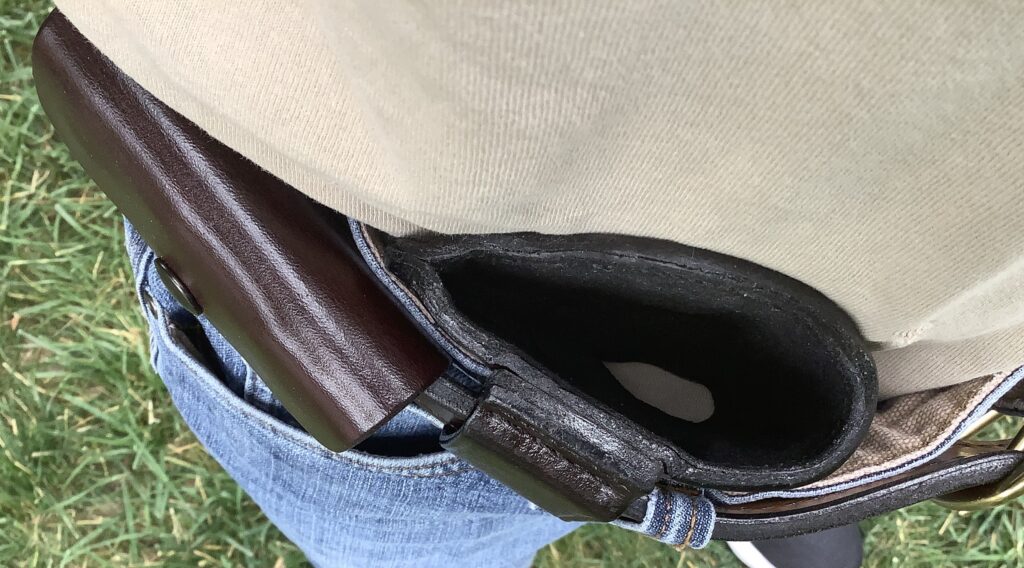
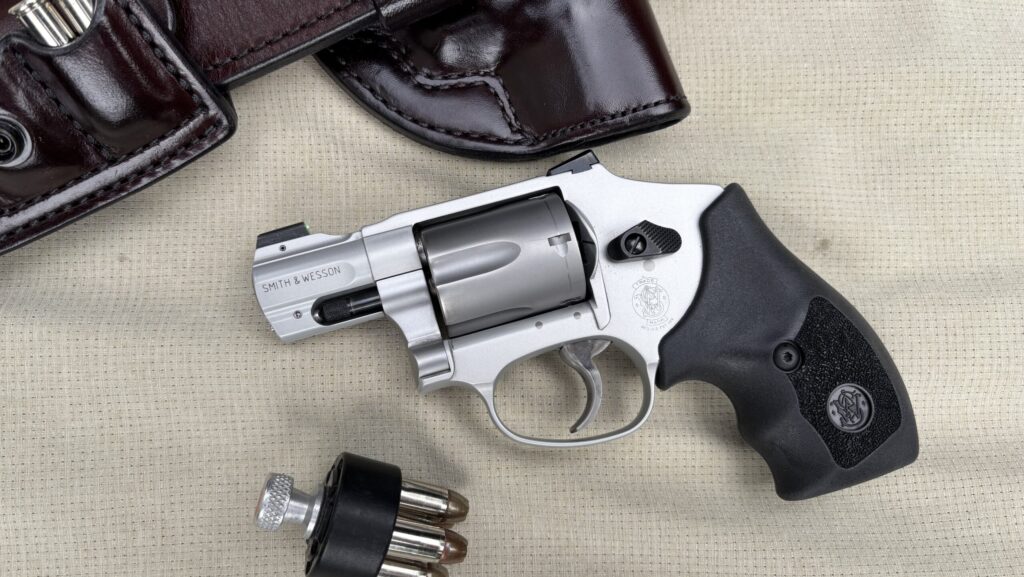
One of the things I was concerned about was whether guns with high profile sights, like the Lipsey’s Exclusive Ultimate Carry revolvers, would fit in the pouch properly. I had no need to be concerned, as Mitch includes a generous sight tunnel in the leading edge of the pouch that will easily allow tall sights like the XS Big Dot to stay clear of the interior.
MATERIALS AND CONSTRUCTION
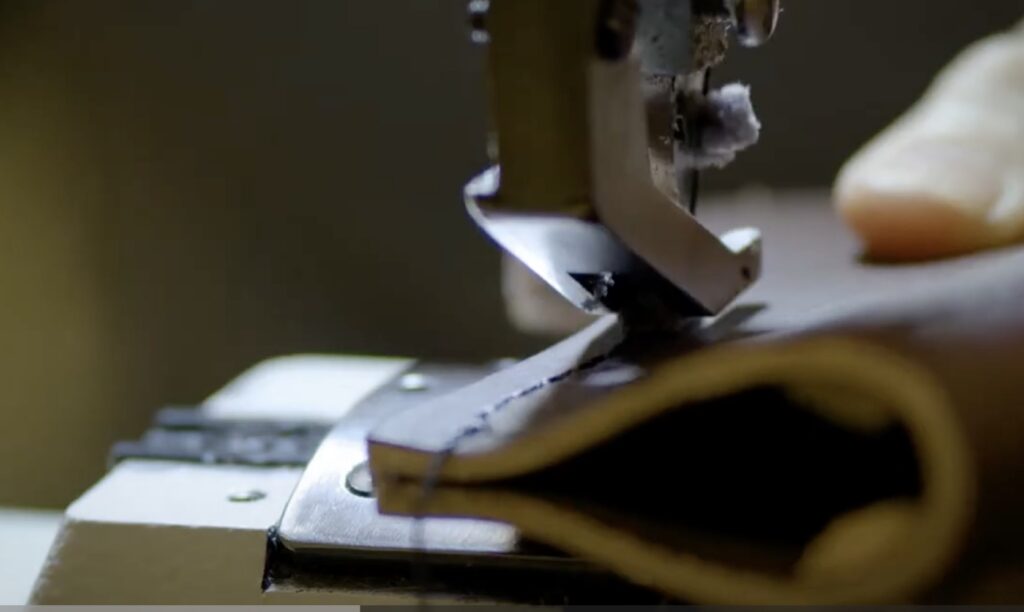
The CCQ is made from the best materials, and the quality is apparent. Rosen uses the most durable cuts of leather (the Bend and the Butt—portions of the hide that are naturally more densely-grained and strong than the areas like the neck, or the back of the shoulder, which are flexed, wrinkled, and broken down by the animal’s movement) in his holsters, and selects heavier weights, as well. Whereas many manufacturers use 6 to 6-1/2 ounce cuts of leather (a measure of thickness, where one square foot of the material weighs that much) to make their rigs, Rosen uses 7-1/2 to 8 ounce cuts for the holster body and loop, making the resulting product more robust. A thinner suede layer of the same leather (the suede side is the inner, or flesh side, of the leather, as opposed to the grain side, which is the outer, or hair side of the leather) is used to line the pouch, but customers can upgrade to a smooth cowhide lining in the Full Detail Line, if they want the inside of the pouch to be as smooth as the outside.
Whereas the Full Detail Line products feature highly detailed molding and boning, the Express Line holsters like my sample CCQ lack some of the finer boning accents (that are more cosmetic than functional). Interestingly, though, Rosen’s version of “plain” is more detailed than some maker’s premium grades, and looks like the custom holster that it is. This appearance is certainly aided by the beautiful Cuban Brown color that the leather on my sample has been finished with—a dark color with some red hues that is quite attractive.
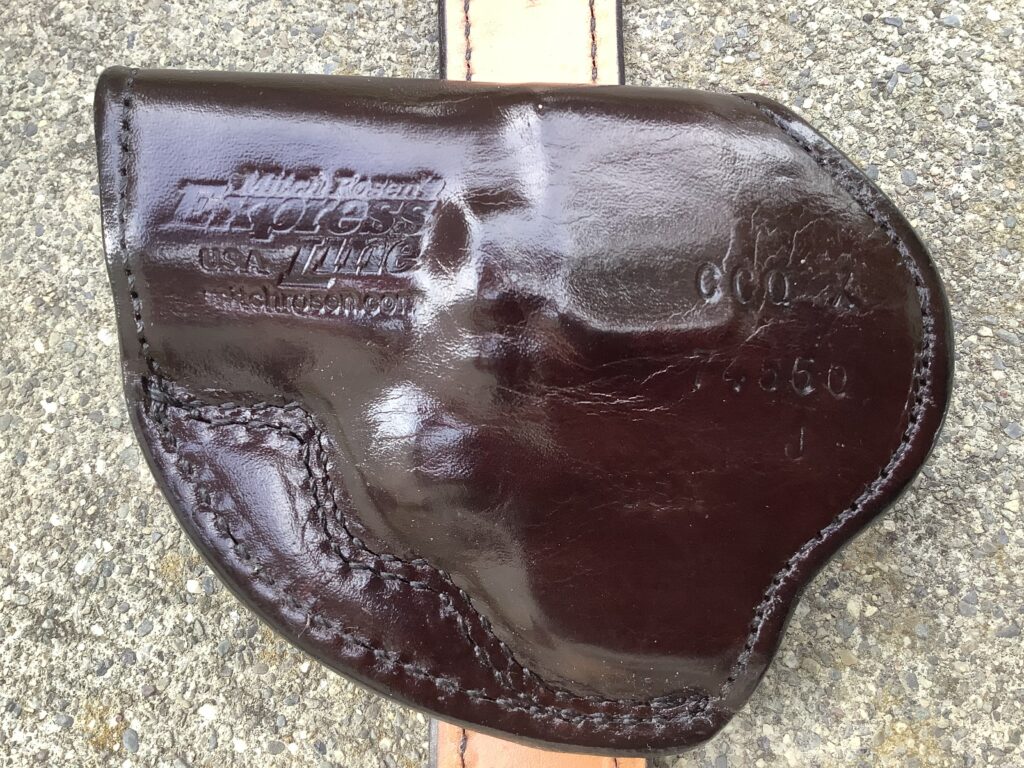
Despite the reduced level of boning, the fit of the holster is exacting, and the retention is just right. Rosen’s holsters, like many from premium makers, are typically built on the tighter side and require a fair amount of break-in, but I was pleased that my CCQ offered a smooth draw from the start with proper retention—he hit the balance just right on this one, and I didn’t need to use his excellent “Leather Lightning” lubricant to avoid dislocating my shoulder as I jerked the stuck gun out of the leather (as an aside, “Leather Lightning” has been a staple in my toolkit for decades, and has made a huge difference in some very tight-fitting holsters—I can’t recommend it highly enough).
THE BELT
The Express Line BHL-EXP belt that I purchased to go with the holster is a good platform for the CCQ to ride on. The belt is 1.5” wide and properly sized for the 1.5” belt loop on the CCQ. It’s cut straight, in a nod to production efficiency and economy that allows it to be priced less than the equivalent Full Detail belt.
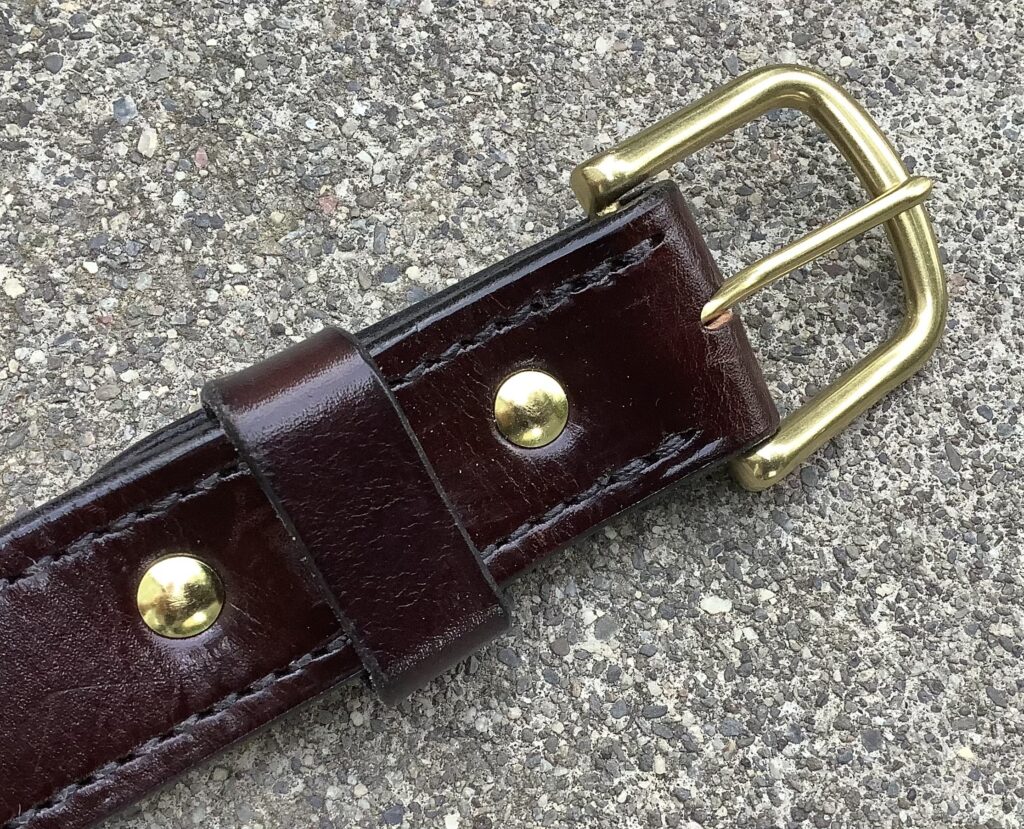
The belt is made of two layers of strapping leather, and it’s VERY sturdy. That’s the good news. The bad news is the break-in period for a thick and rigid belt like this can take a while, and it can be a little tough on bony hips while you’re waiting for it to accept its natural curve and soften in all the right places.
Over the decades, I’ve found that a rigid, sturdy belt like this one is a real plus if you’re carrying heavy guns outside the waistband, as they resist the tipping and sagging tendencies of guns carried in that manner. As a dedicated fan of the Appendix carry method, however, I’ve found that I usually do better with a softer belt made from fabric or thinner leather, and don’t need the “iron ring” feel of a heavy leather belt on my hips to keep my gun in place.
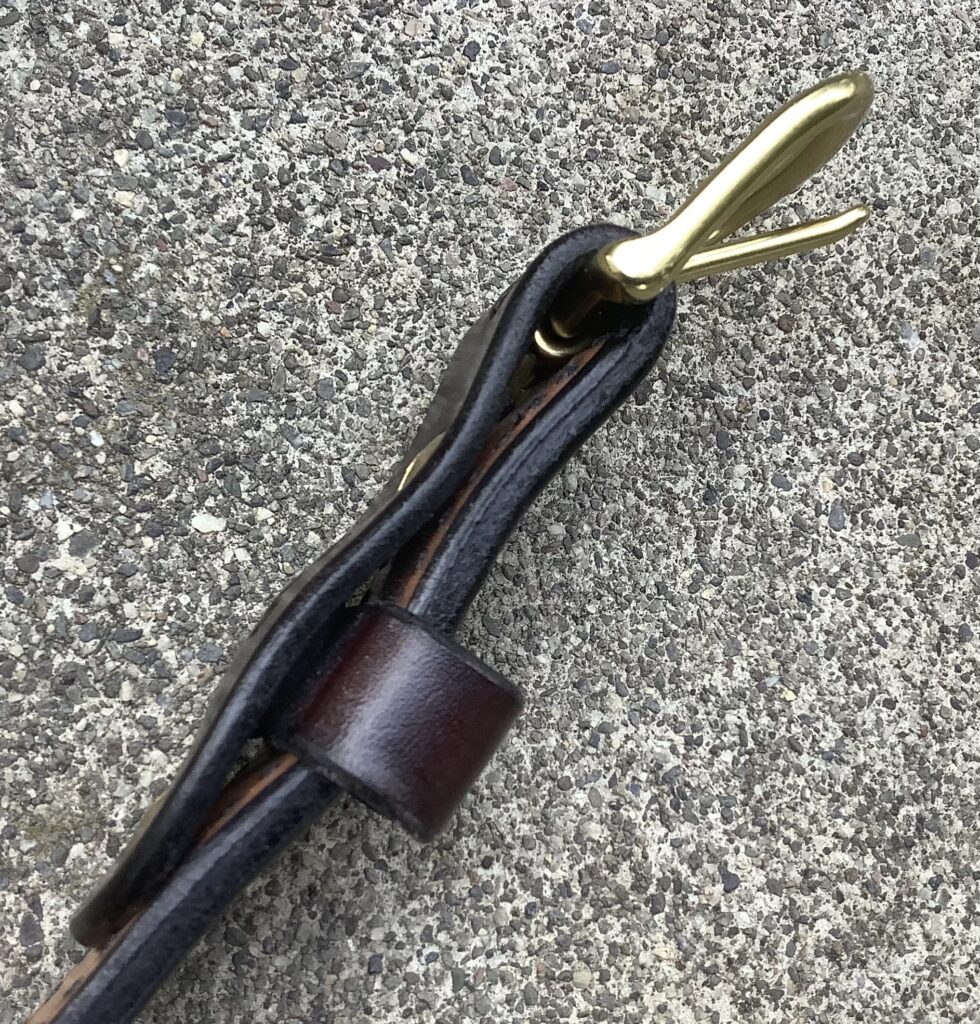
Knowing this, you’ll understand that I found the robust BHL-EXP belt less comfortable than my normal gun belts, but could still wear it all day long without much difficulty. The belt is getting more comfortable as it breaks in, and I know it will last a lifetime of hard service. The perfect fit between the belt and the CCQ’s belt loop keeps the gun rock steady, just as I want it.
AMMO POUCH
Rosen offers a speedloader pouch and a pouch for strip-style loaders in his Full Detail Line, but didn’t make a 2x2x2-style ammo pouch until recently. He was convinced to add the design at the request of his customers, in particular RevolverGuy friend Dean Caputo, who has a long history with Rosen, having been his fellow Gunsite student in the early 90s and a longtime customer.
Rosen’s “Two Squared Plus Two” ammo carrier follows the traditional pattern, with a snapped flap securing the ammo, but the pouch is built to Mitch’s exacting standards, using premium materials. I’ve got similar pouches from several makers, and Mitch’s pouch is the most exquisitely built, and uses the most robust leather, just as you’d expect.
Despite owning several, I have to admit that I’m not particularly well-practiced with the 2x2x2-style pouches, and don’t normally use them for carry. Friends like Dean, who are well-practiced with them, tell me they can load an empty gun from the pouch faster than using a strip-style loader, and almost as fast as a speedloader, but I’m not proficient to that level.
The 2x2x2-style pouch offers several advantages to the RevolverGuy. It carries flatter than the great majority of speedloader cases, and generally offers better retention than them. It protects the ammunition from damage and corrosion much better than a strip-style loader carried loose in a pocket. Additionally, it offers the shooter a capability to top off their gun with a partial reload, if required.
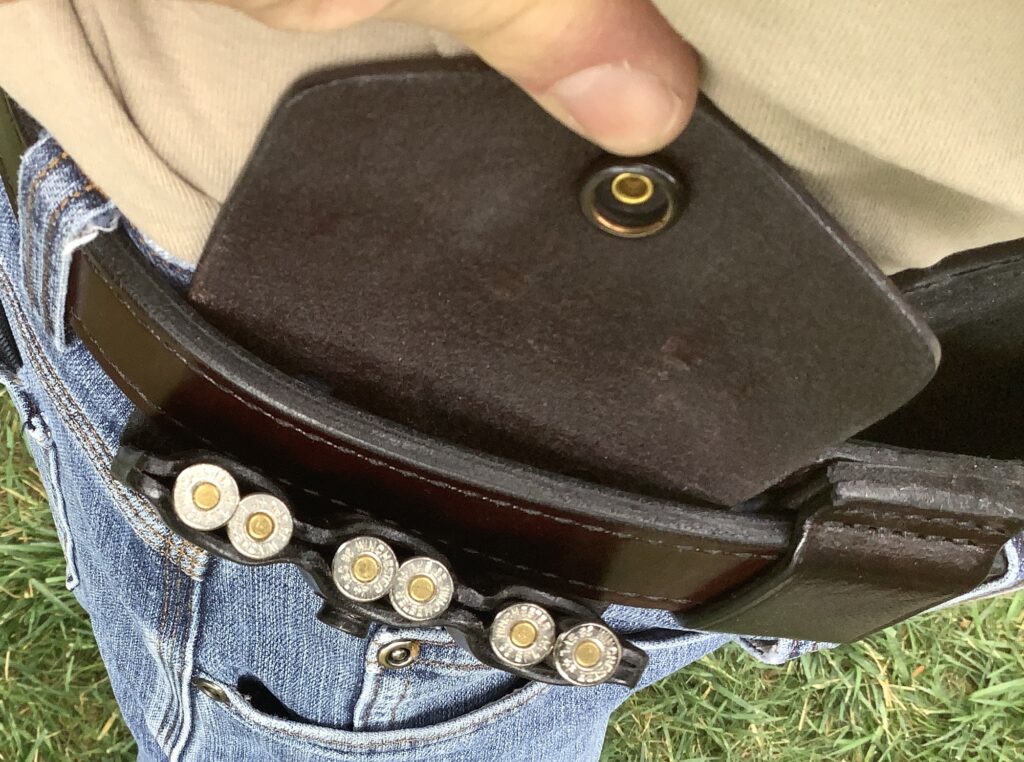
As an Appendix carrier though, I’ve never favored them. The best place to carry the 2x2x2 pouch is somewhere between the buckle and the hip on the strong side, but that’s the area where I carry my gun, and with a 32” waist (not braggin’, just sayin’) I just don’t have the real estate to fit the pouch in there. On the exceptional occasions when I carry a revolver on the hip, I’m more prone to place a speedloader case between 12 and 3 than a 2x2x2 pouch, but sometimes use the latter.
So, while I recognize the utility of the 2x2x2-style, I’m not flush with user experience. Despite this, I endeavored to put the Rosen Two Squared Plus Two into service with the CCQ and found I could tuck it behind the gun, between 2 and 3, and not interfere too much with my access to the gun. It actually carried quite comfortably there, and its flat profile concealed well underneath my shirt.
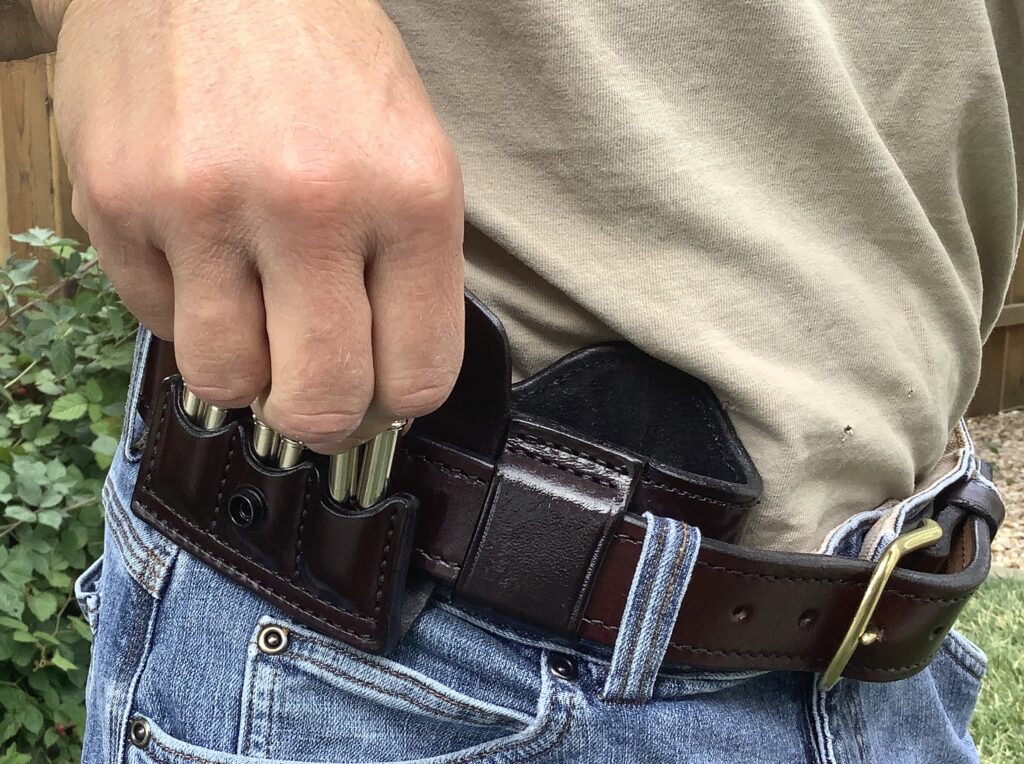
Plucking the rounds from the pouch was complicated a bit by the carry location I chose. The inboard four rounds were pretty easy to get out, but the aft two rounds wanted to fight me, as I tried to draw them out at the forward angle my shoulder naturally wanted to use, instead of the straight vertical draw the pouch required. A right-handed shooter who carries his gun on his hip and the pouch closer to 1 to 2 (or 10 to 11 for a southpaw) will probably have an easier time of it.
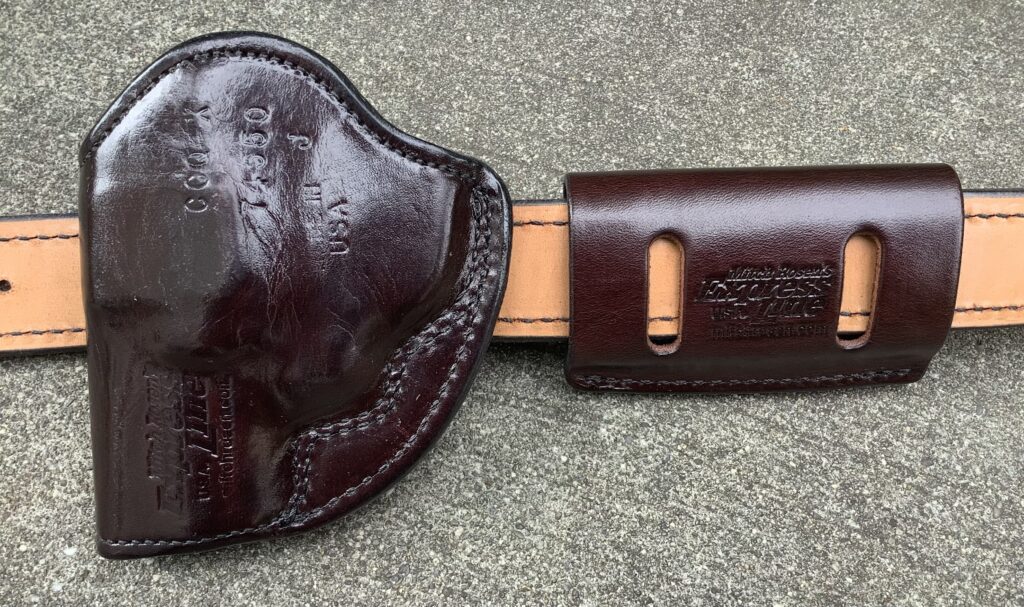
Of note, the back panel of the Two Squared Plus Two is slotted for a narrow, 1.25” dress belt, but the standard protocol for a 1.5” belt like my BHL-EXP is to thread it between the back panel and the forward-tipping ammo loops. Popping the snap and lifting the cover will allow access to the rounds, and the belt’s tension, combined with the cover hooking over the top of the belt, will keep everything in place. The stiff leather used in the Two Squared Plus Two prevents the ammo loops from flopping down and potentially dumping the rounds, as I’ve seen on some designs made with lesser materials.
WORKING WITH THE RIG
I’ve sorta addressed this along the way, but carrying and using the CCQ has been a good experience.
One of the things that concerned me at first was whether the holster would resist the tendency to tip outboard and print through my shirt, because the stubby barrel on the J-frame snub doesn’t offer a lever to resist that. Additionally, some of the tricks that we use on polymer holsters to cant the gun in towards the body (trailing edge “wings” and foam pads at the bottom of the body side of the gun) were absent on this fine leather holster.
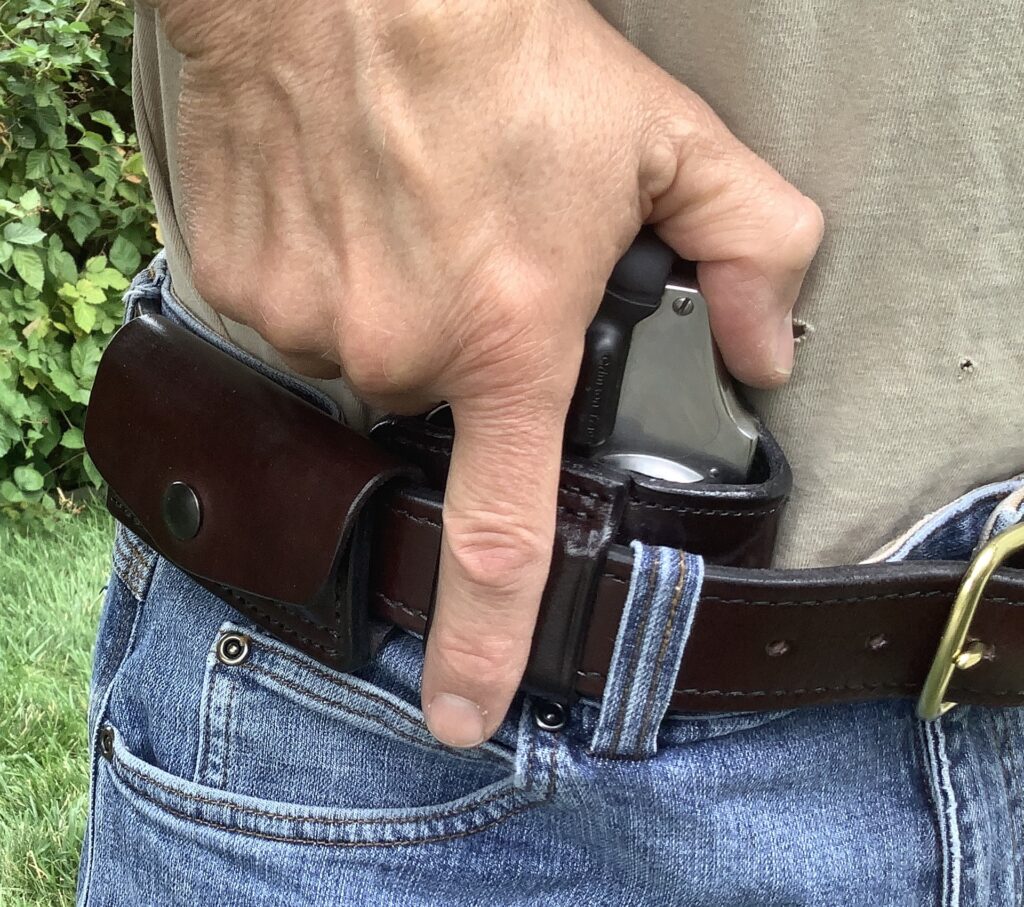
Despite this, I thought the CCQ did an admirable job of hiding the gun and carrying it in comfort. My abdomen naturally pushed the grip outboard a little, but the ride depth on the CCQ was just right to fight this tendency, while preserving access to a full grip.
The gun cleared the CCQ efficiently and went back in smoothly. The straight up and down orientation of the holster did require me to break my wrist a little to establish a firing grip on the gun, but that’s common to most AIWB holsters and I’ve become accustomed to it.
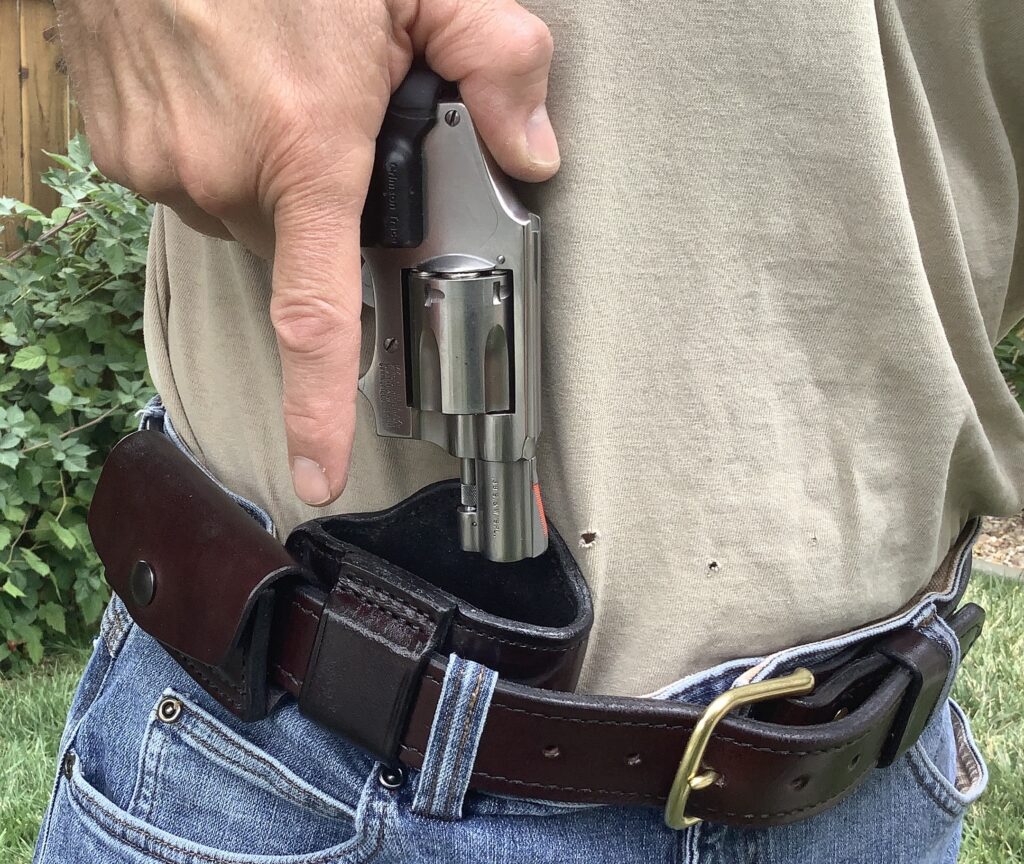
The CCQ carried my gun comfortably and discreetly, and the belt-holster combo kept it in place without any shifting. Drawing and holstering was smooth. What more could I want?
Perhaps the only shame is that I won’t be able to “show off” the handsome rig, because it’s made to be hidden from sight.
CALL MITCH
If you’re looking for a good belt, holster and accessory combo to carry your gun, you won’t go wrong with one of Mitch’s setups. You can get as fancy as you want, with detailed boning, exotic materials, and extra features, or just stick to the Express Line and wind up getting a holster that’s plainer . . . but not plain.
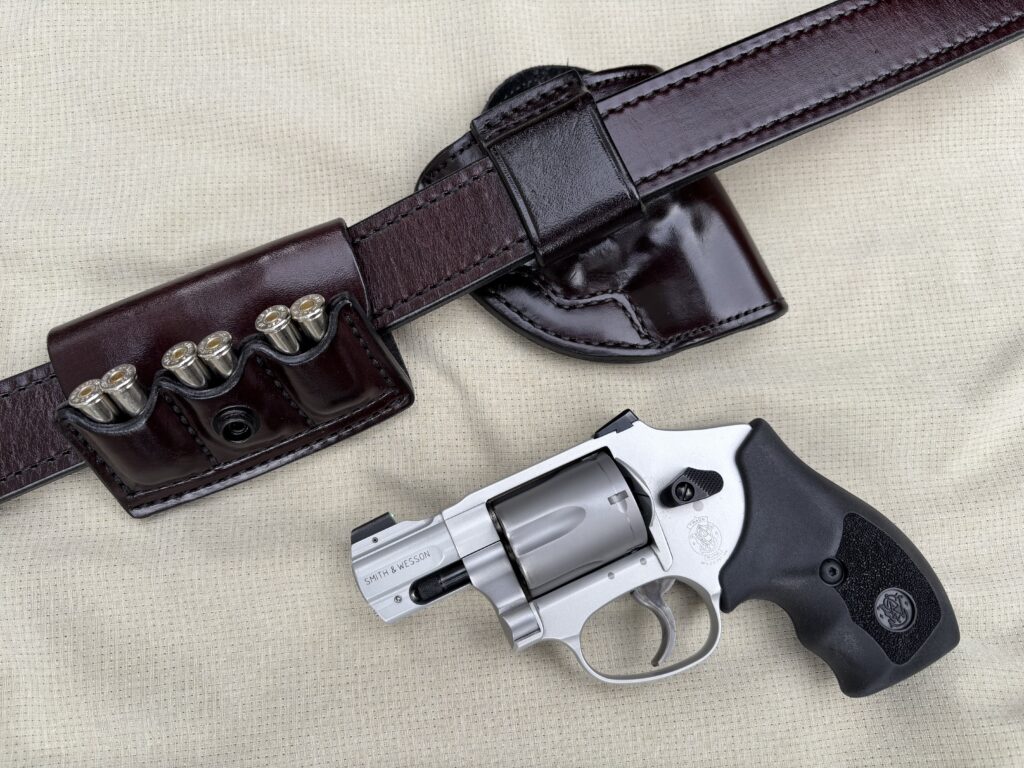
The truth of it is that many makers would be proud to have their premium stuff look and work as good as Mitch’s Express Line of economy holsters, so don’t think you’ll be missing out if you take the more affordable route.
Check out his website today, and be sure to let us know what you think, if you make a purchase.

I have one of his old horsehide holsters for Smith & Wesson 669 fine piece of equipment if I wasn’t 80 years old, I’d buy one of those for my 640 pro thanks Mike great article and if you see Mr. Rosen, tell him I said hello
Thanks Dave!
The good stuff is never cheap but in the long run it usually lasts longer, performs better, and is more satisfying. Mitch Rosen’s leather products appear to be the good stuff.
Indeed, they are!
An extra bit of strength added to the Rosen holster shown in the article is the double stitching on the highest stress point, e.g., on the handgun’s trigger-guard side. Although I own quite a few good quality holsters, not one of them has that feature.
You’ll see some makers put a rivet there, but the stitching is stronger and more classy.
Really great write-up Sir! I definately like that quality leather for revolvers is still a pursuit of such a legendary leather maker. Personally, I can not get used to carrying even a J-frame IWB but i do prefer a 2x2x2 pouch as part of my daily carry rig. Thank you again for bringing us such great info!
Wow, Mike!
I haven’t seen 32 on my jeans since the early 1990s! Since I am blessed with plenty O space on my belt, I appendix between the button and first belt loop, with that same loop splitting my speed loader case, then a 2x2x2 pouch before the second loop. Speed strip case and fixed blade on my weak side. Sometimes I get a wild hair and add a K frame, at which point the 2x2x2 makes its way around to about the five o’clock position. Which is also pretty comfortable but I’ve not tried pulling the rounds out. I have a Chicago road trip coming up pretty soon, so I guess I ought to test that before I need it. Or just give in and carry a bottom feeder…
Well, now you’re just braggin! You got enough room to load like Pancho Villa? I’m envious! 😁
Crossed bandoliers for shotgun only!
Hah!
Years ago I thought Jay-Pee was the only gun leather available in the known world since every officer in my department wore that as our standard equipment. This shows you and everyone else how limited my knowledge of holsters was back in the 1980s. Fortunately, I’ve learned a wee bit since then and have learned to respect and appreciate the work of experts designing life saving equipment.
I purchased a Mitch Rosen Express Line belt (OWB) holster for my Kahr CW45. In fact, this well made, well worn holster is apparently only available from Kahr’s own website.
I’ll definitely keep Mitch Rosen in mind when one of my revolvers requires a new leather holster. Hopefully this semi-auto admission won’t jeopardize my Revolver Guy membership?
I’ve been a fan of the 2x2x2 ammo pouch (Don Hume) for a long time. It works well with my training that constantly stressed, “Look and Load!” Some instructors must have also been 2x2x2 aficionados since I can still recall them barking out loud, “Load Two and Look!” Loading two from the standard dump pouch was damn near impossible and speed loaders were not authorized for the first five years that I spent on patrol. As a matter of fact, I’ve worn my 2x2x2 pouch everyday this week alongside my S&W 642.
Thanks for a great write-up, Mike. Please let Mr. Rosen know that he crafts a high quality product!
Don’t worry pal, we won’t revoke your RevolverGuy Card! I like and carry the bottom-feeders too, and think we all do.
I think going from Jay-Pee to Rosen is kinda like going from a go-kart to a Cadillac. They both have wheels, but . . .
I suspect you can run a 2x pouch faster than I can run a speedloader. I should bring mine to SC in October for you to try!
I believe I typed the second verbal command incorrectly. It should read: “Look ‘n Load Two!” The idea being to observe your opponent (s) and having the ability to fire a partially loaded gun, if needed. We were admonished, “Don’t bury your head in the gun.”
Indeed!
Readers who’d like to see more of Opa’s wisdom on this subject, and the origins of the instruction, are advised to see our story on Scott Gadell:
Lessons From the Murder of Scott Gadell
Hey Mike,
Thank you for recognizing Mitch Rosen and his extraordinary work. He is an OG stud when it comes to holster craft, and as you mentioned, his designs are highly regarded by lots of folks who carry handguns for serious purposes. I confess that I didn’t realize he was making that CQC IWB holster for revolvers, so I’m glad you wrote it up. I carry a 2x2x2 pouch every day as a primary reload source for a six-shot revolver. I will supplement it with a speed strip and a speed loader as clothing choices allow, but I always wear the pouch. Good news that Mr. Rosen is making a pouch, too! I may leave your article lying in the “Christmas present wish list pile” for my wife!
Definitely an OG! 😁