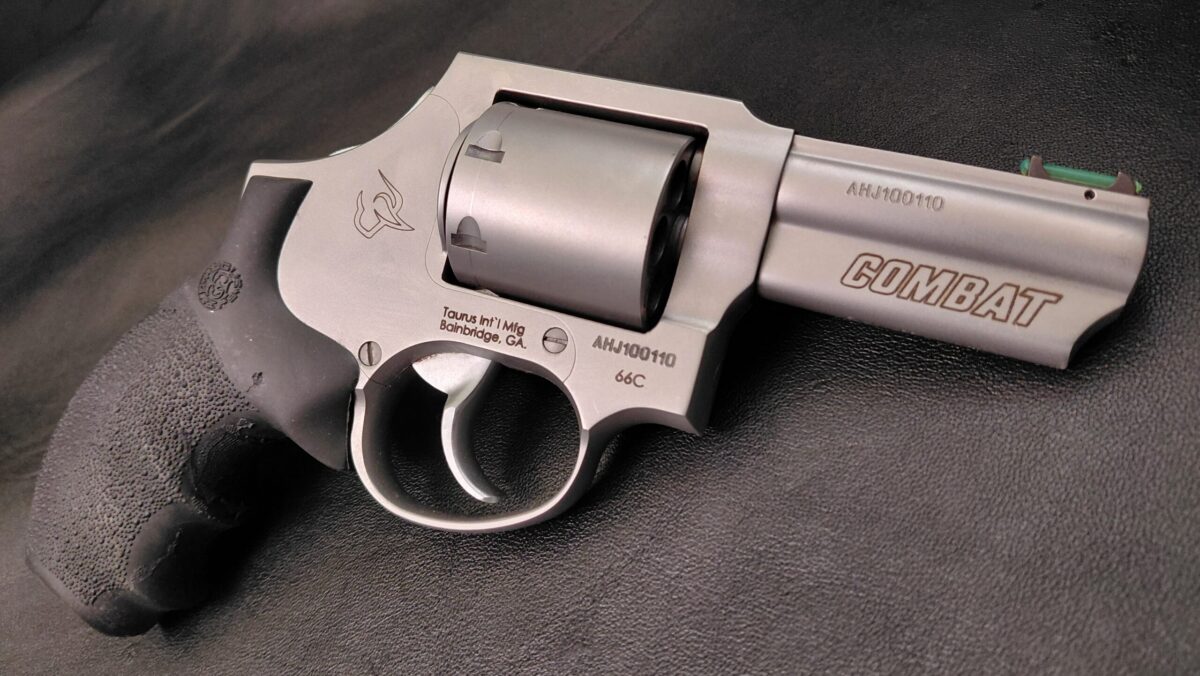
Taurus introduced the 66 Combat in early fall of 2025; we secured a sample for testing after the initial rush subsided around the 2026 New Year.
Features
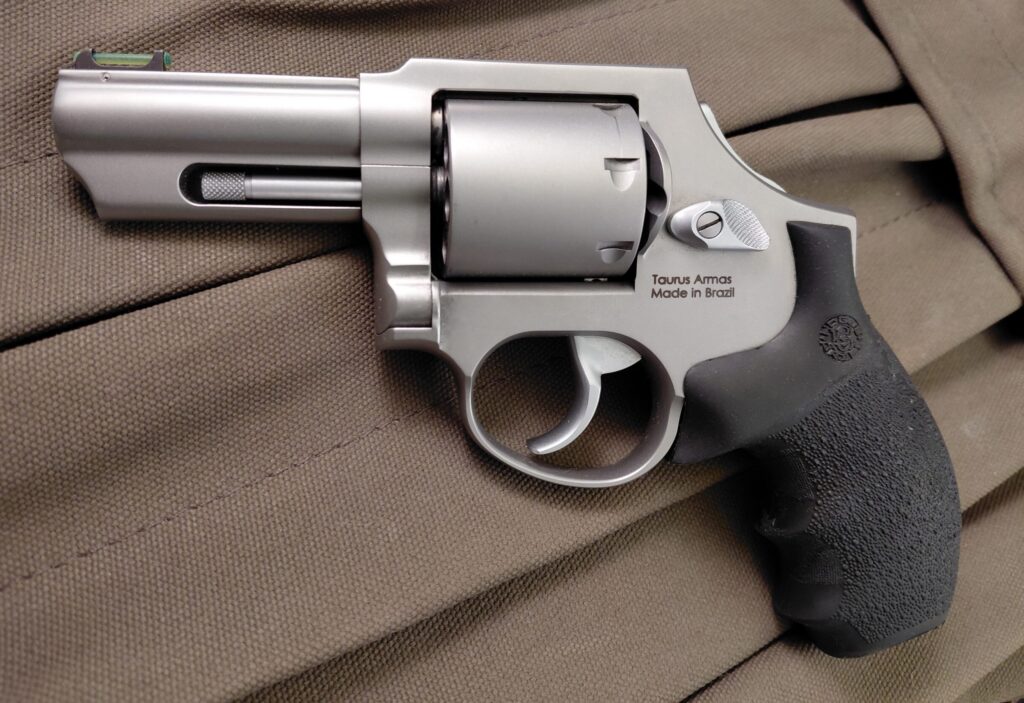
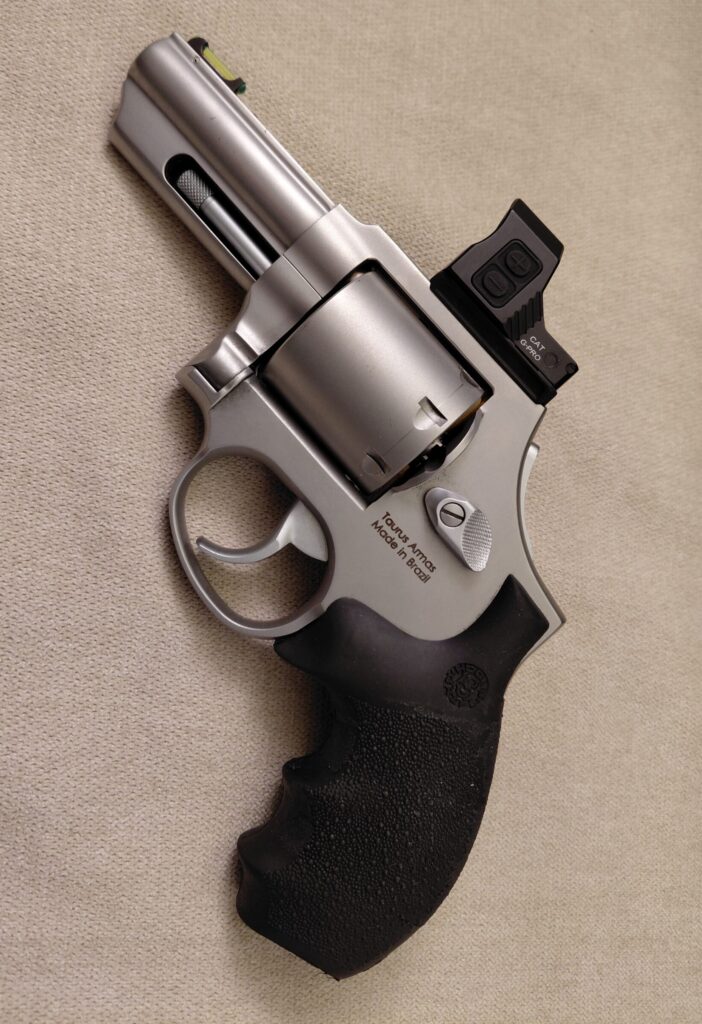
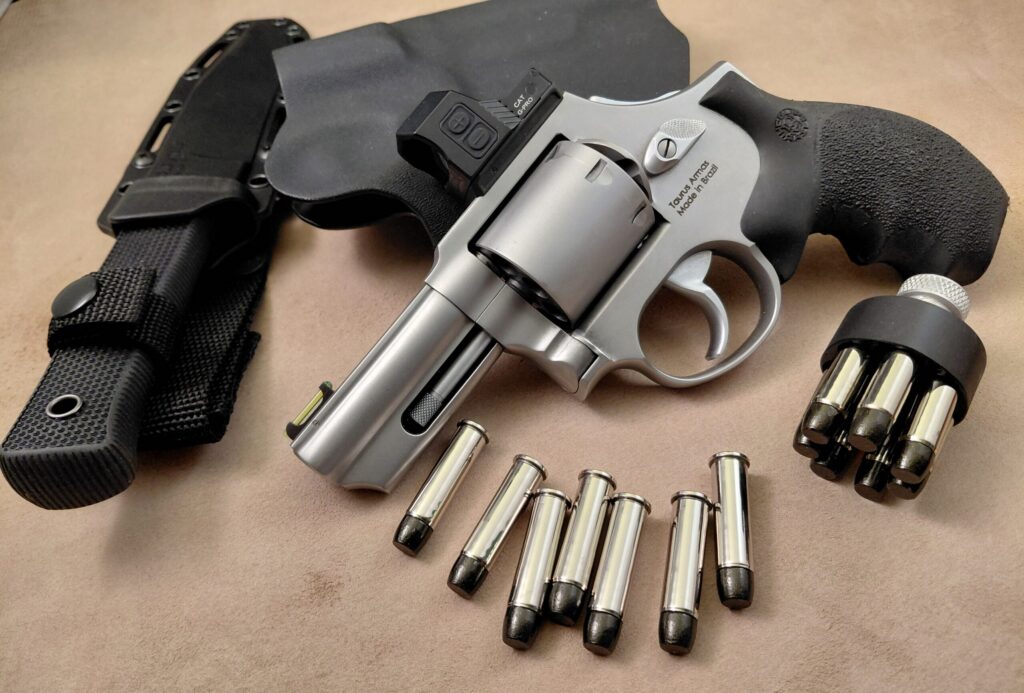
The standard Model 66 is a medium frame, square butt revolver featuring a seven shot cylinder and an adjustable rear sight. It’s available in blue carbon steel or stainless steel with four- and six-inch barrel lengths. The Combat version is distinguished by its fixed rear sight and three-inch barrel.
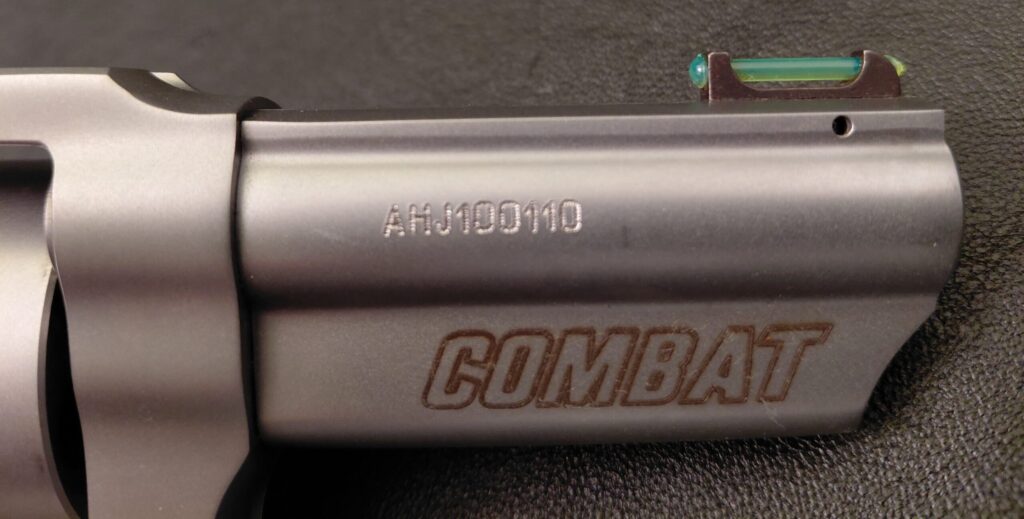
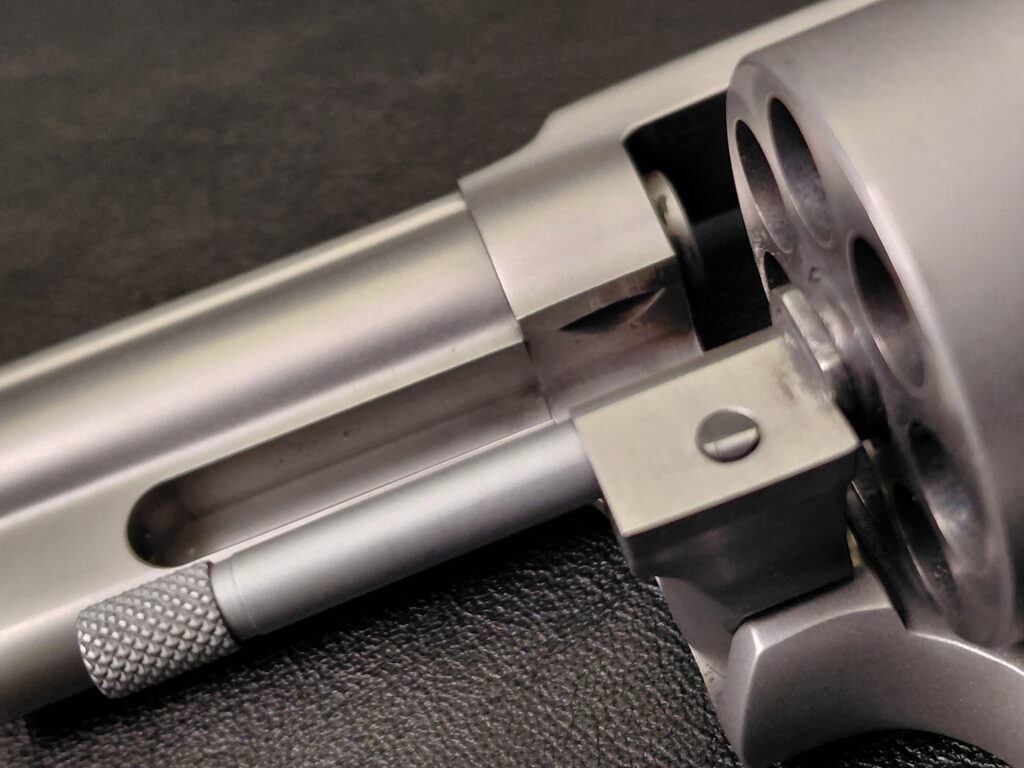
The barrel underlug has a slightly more pronounced “sweep” than longer barreled 66’s (it’s still long enough to allow for a full-length ejector rod). The square topped front sight is pinned in place and fitted with a green fiber optic tube. It’s end user removeable and replaceable.
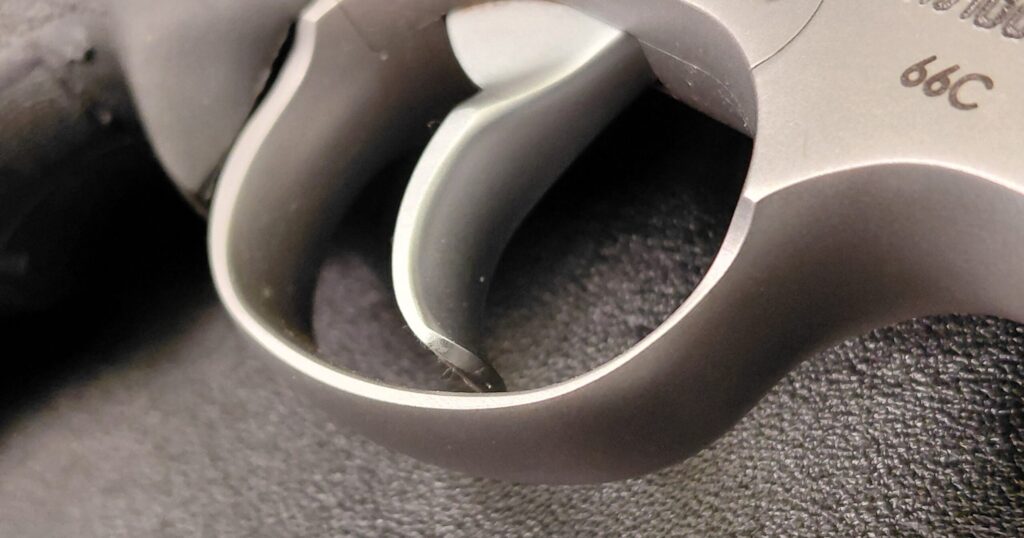
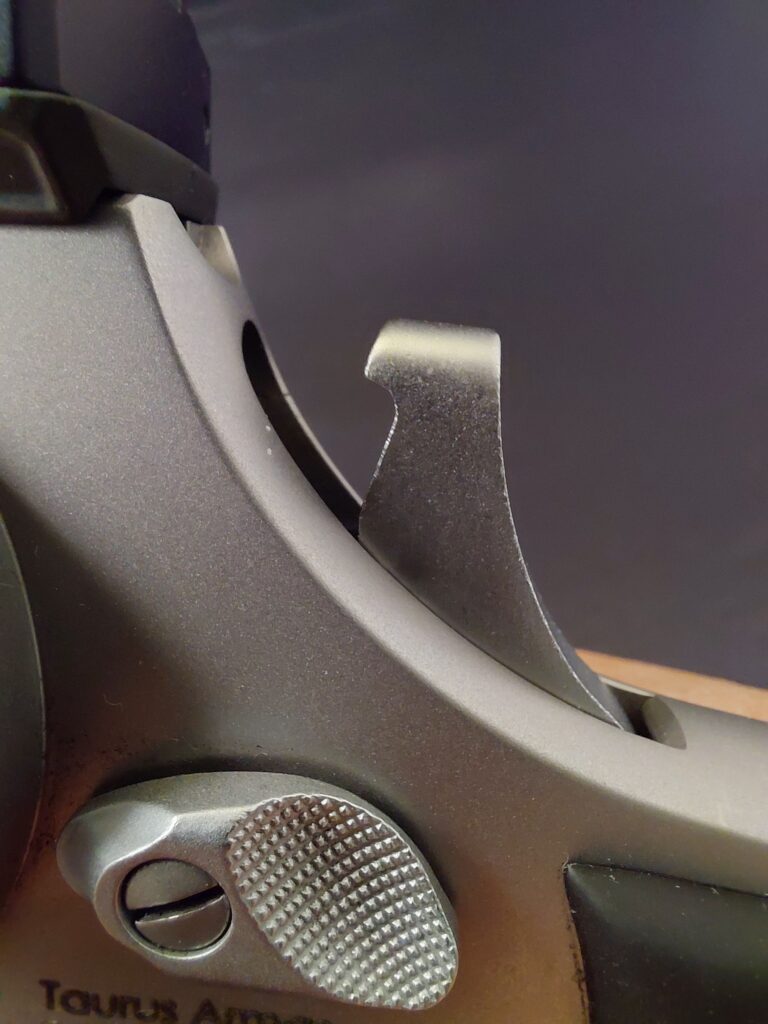
The Trigger is smooth faced and pleasingly shaped, slightly wider (just shy of .400) than the trigger used in small frame Taurus revolvers. The action on the gun is tuned at the factory; the trigger pull consistently measured ten and a half pounds on this sample. The hammer is “bobbed” with the spur removed. When Taurus utilizes this style hammer, it renders the gun incapable of single action fire, or Double Action Only.
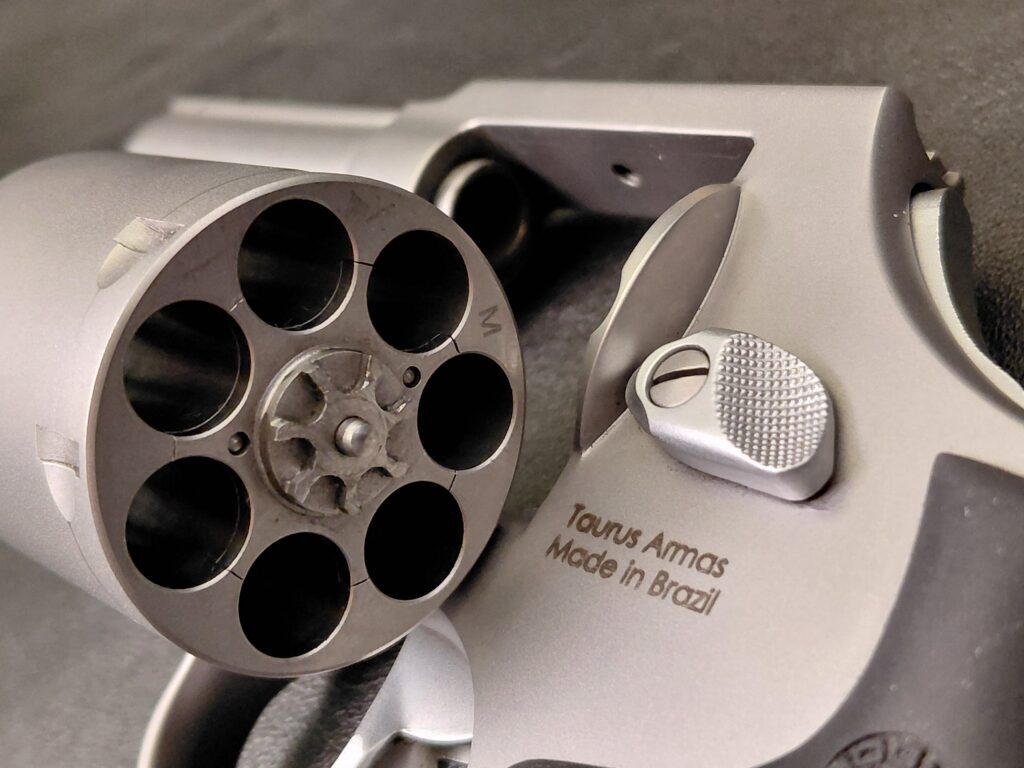
The cylinder is non-fluted- while mostly selected for the aesthetic, it adds a little weight for recoil control. It measures 1.52” wide, slightly less than the width of a S&W 686 Plus L-frame cylinder (1.55”). The chambers are lightly chamfered to assist with reloading. The gun ships with a Hogue Bantam Monogrip that leaves the backstrap exposed and gives finger grooves up front.
The frame, cylinder, and barrel are forged from stainless steel and wear a matte brushed finish. The word “COMBAT” adorns the right side of the barrel shroud in addition to typical Taurus badging. The gun utilizes standard Taurus lock up with a spring loaded “ball” in the yoke that engages a detent cut in the frame and a transfer bar safety. The barrel uses a six groove, right hand rifling twist of 1:16.5”. The gun weighs 36.5 ounces.
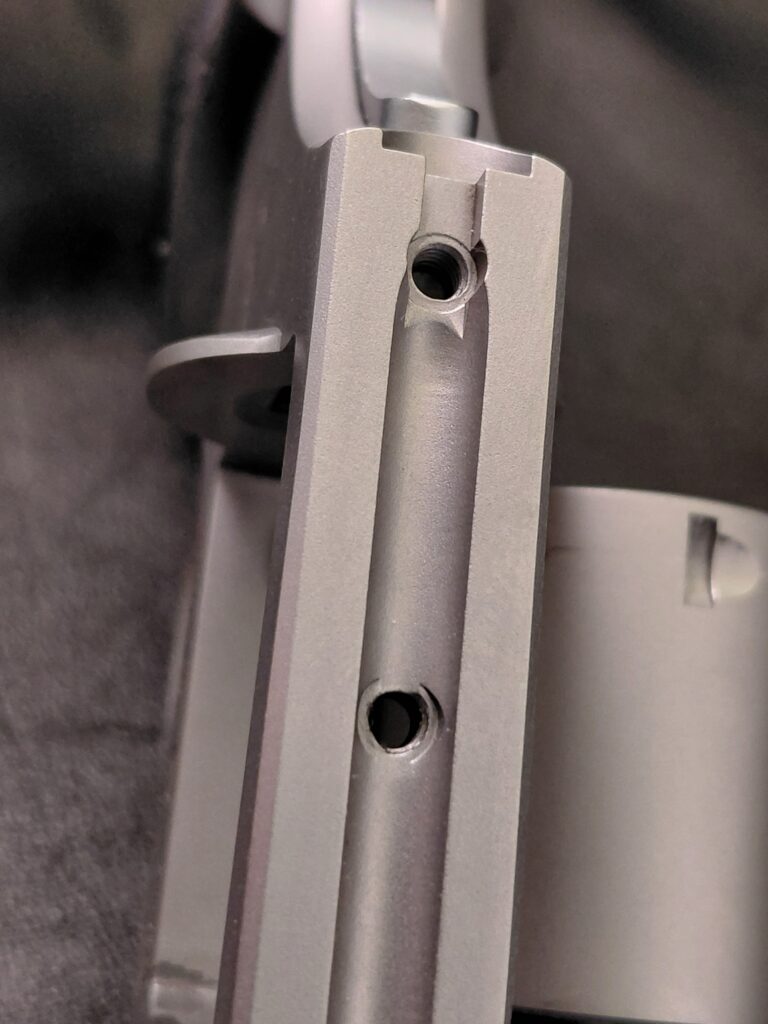
As is becoming more common with Taurus revolvers, the 66 Combat ships with a TORO plate and screws to mount an optic, if desired. The plate uses the Shield RMS-C optic footprint, which is a common size.
Handling Qualities
Messing with the gun reveals typical Taurus blue collar handling qualities. The cylinder release takes a little effort to provide enough forward movement to open the cylinder. The ejector rod travel is a mite scratchy.
The trigger is notably better than a stock Taurus, it’s smooth until the very end of its journey. At that point it feels a bit crunchy, but it’s a very usable trigger. In my experience with Taurus revolvers, the function of the controls improves with normal use and shooting.
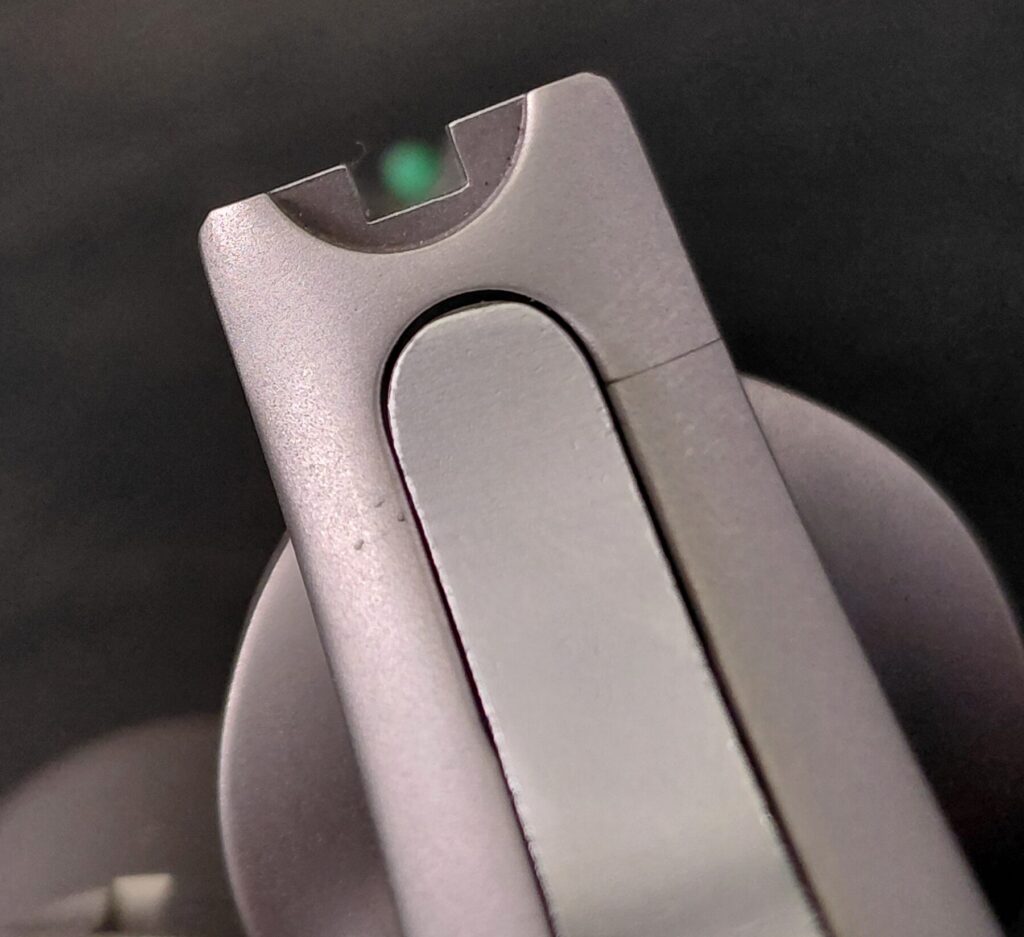
The rear sight notch is deep enough to view the entire front sight face; the fiber optic tube is placed to be fully visible when the sights are properly aligned. Taurus got that right; there are some other revolver makers that could learn from this.
The cylinder has a little more side to side play than I’m accustomed to with new Taurus guns. I picked up a couple of HKS 587 speedloaders locally, they functioned fine with the 66. The loaders from 5 Star and Speed Beez should work at least as well as the HKS, likely better. I’m unaware of any other company manufacturing loaders for seven shot revolvers in this size.
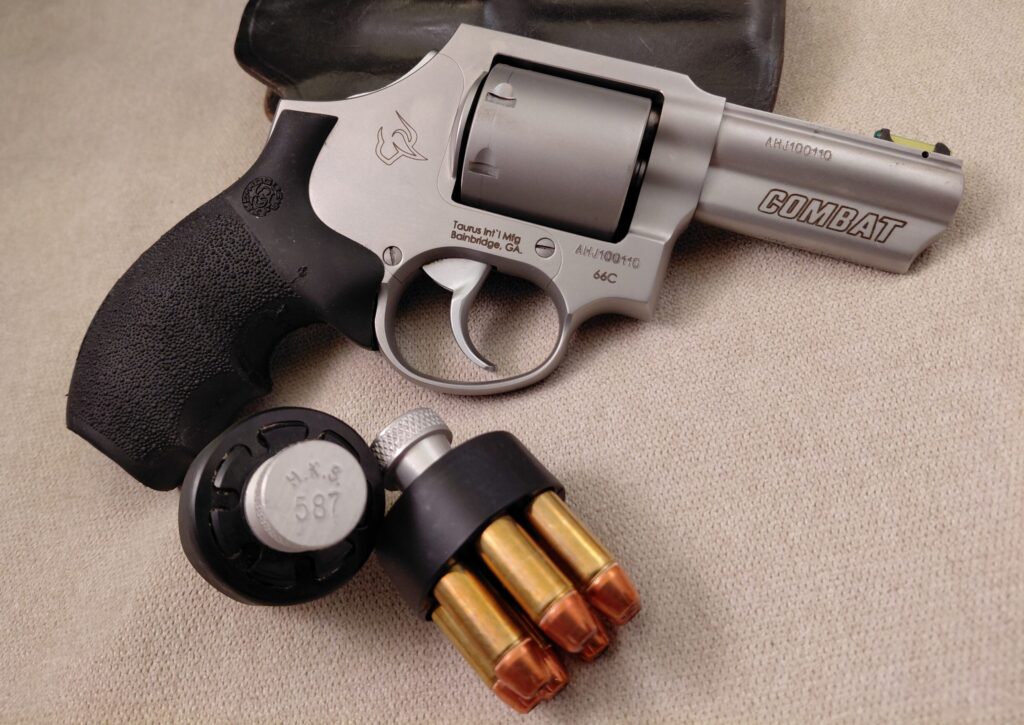
The Hogue Monogrips fit my hand comfortably, filling the sinus behind the trigger guard. The bottom front of the grip extends below the guns frame and allows purchase for my little finger.
Live Fire
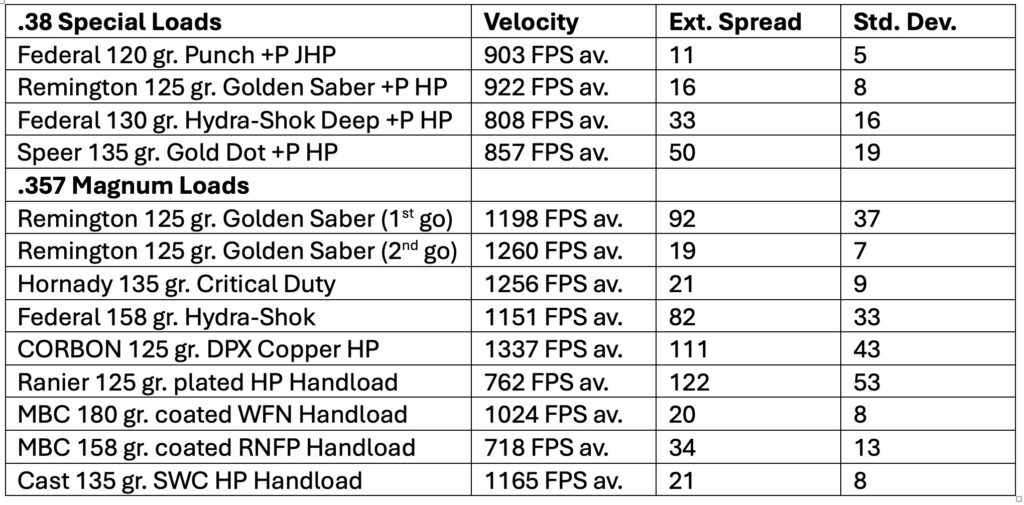
I made it to the range with the 66 Combat in mid-January of 2026. The first rounds fired were Remington 125 grain Golden Saber 357’s. For whatever reason, the Golden Sabers didn’t agree with the Taurus. Three of the five fired were unstable, hitting paper at an angle, with one fully keyholing. The chronograph reflected this, showing velocities that were much more inconsistent than usually seen with this bullet. The crown on the muzzle looked normal and I hadn’t noticed any oddities with the rifling or forcing cone. I made a mental note to shoot this load again after the barrel had been seasoned somewhat.
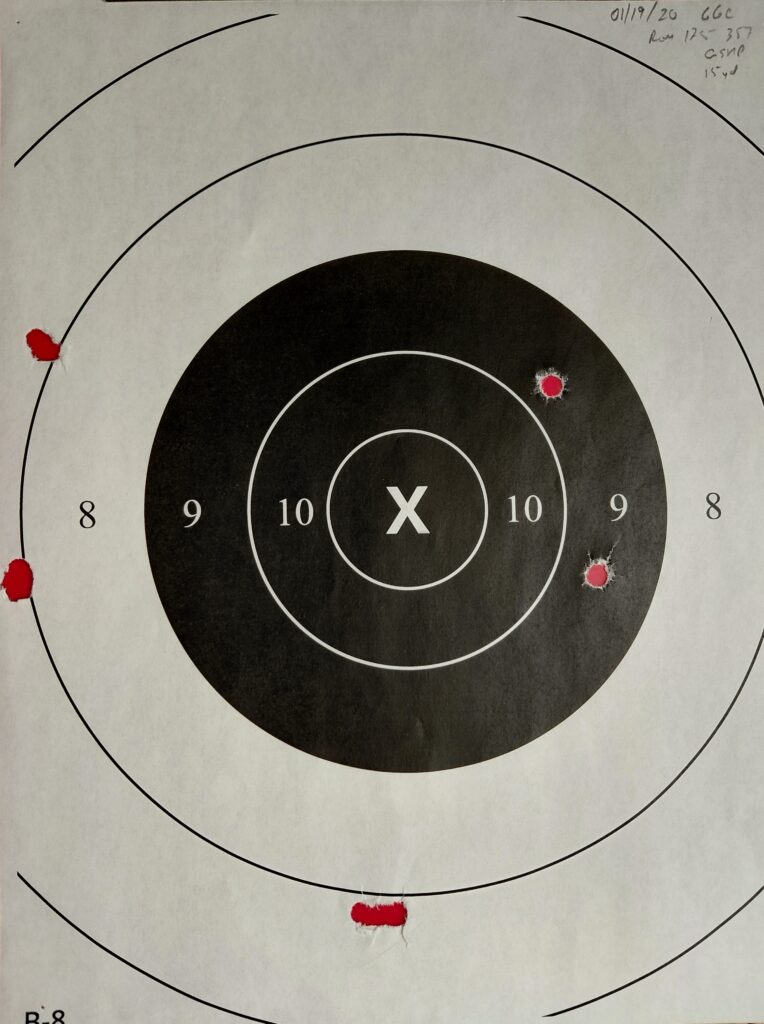
The next group was fired with Hornady 135 gr. Critical Duty Flex Tips– it was much better, though favoring right of the sights. The bullets made round holes and velocities were consistent. This round averaged 1256 fps from the 3” barrel and let you know it was a magnum. Recoil was at the top of the usable spectrum for me.
Next up was Federal’s 158 gr. Hydra Shok. These struck a little high and right from the point of aim. Recoil was stout, but noticeably less than the Hornady Critical Duty.
A trend was developing with the 66. The winter sun was low in the sky at about 4 o’clock behind my sights. Groups were impacting consistently right. As I moved on to slower .38 Special loads, the issue persisted. I fired the .38 +P versions of Remington’s 125 gr. Golden Saber, Federal’s 120 gr. Punch JHP and 130 gr. Hydra Shok Deep, and Speer’s 135 gr. Short Barrel Gold Dot. Bullet impact was close to aim point with these loads from an elevation standpoint at 15 yards. Groups were uniformly printing to the right of point of aim.
Moving up to 5 yards, the 66 kept 3 cylinders of Federal 130 gr. FMJ in a tight group, about 3/4 inch right of point of aim. The lighting was likely playing a factor; I had similar results with another revolver at my range almost exactly a year prior. I may have been staging the trigger in my efforts to shoot tight groups from an unsupported position as well. The gun printed right for me with all the ammo I used that day. In my experience, this isn’t common with Taurus revolvers, and I resolved to try it again on another day.
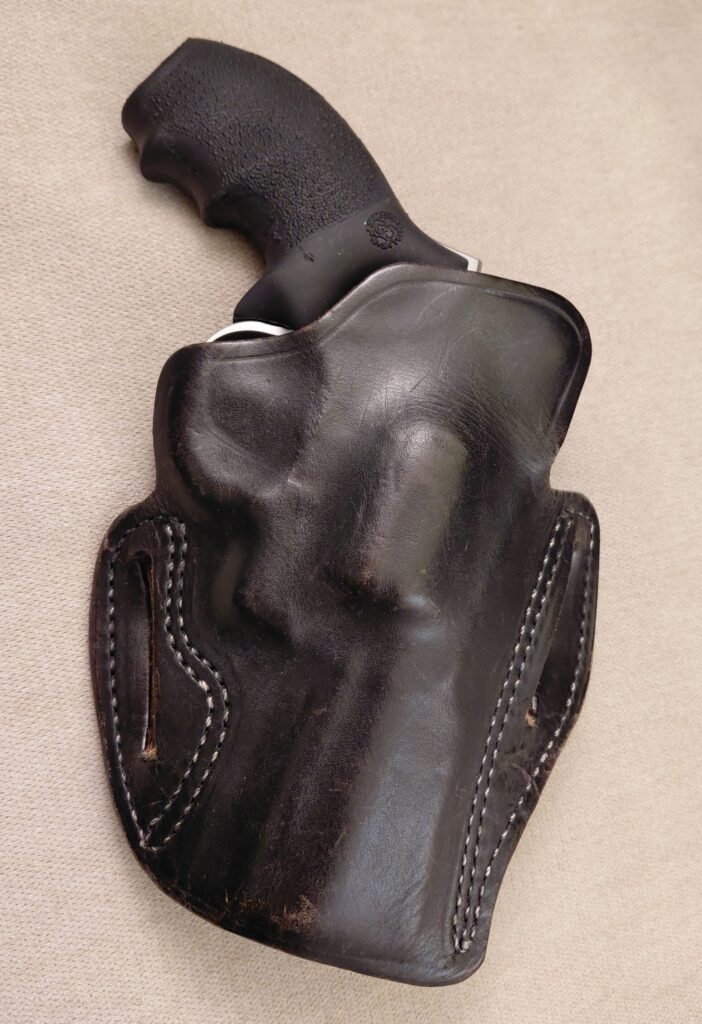
The 66 ejected .357 Magnum empties with a single strike on the ejector rod. Occasionally, a few of the shorter .38 Special would remain in the cylinder partially ejected and had to be swept out by hand. Ignition on primers was 100%. I used an old DeSantis Speed Scabbard for a 3” K frame S&W. That holster is well broken in and it worked great with the 66 Combat. I gave the Taurus an abbreviated cleaning as it had fired 105 rounds on the initial outing.
Optical Illusion?
A friend of mine who does a lot of action pistol shooting had recommended Cyelee Optics. He had used them extensively and trusted them enough to vouch for their reliability despite their affordable retail. I selected a model with a green dot that would work with the RMS-c footprint, used a generous Christmas discount coupon from the company, and ordered it. When the optic arrived, I affixed the TORO optic plate with the included screws lightly coated with blue Loc-Tite. Mounting the Cyelee was straight forward; it was soon secured to the plate and torqued to recommended inch pounds.
Back at the range, I used some .38 +P+ 147 gr. Federal Hydra Shok to get the optic close. Starting at 7 yards, the first round was predictably high and a little right. 5 clicks left and 15 clicks down brought the second round into the X ring. Moving to 15 yards, the third round was 3 inches high. 8 more clicks down. Moving to 20 yards needed 8 more to get the .38’s on target. At 25 yards, I switched to a mild .357 Magnum handload using Hornady’s 158 gr, XTP bullet that mimicked Steve Shields’ “DB” load. That bullet required 10 clicks of left windage and 8 more clicks down to achieve a decent zero. The process took 16 rounds fired to get there- not bad.
Shooting 5 rounds offhand with the XTP handload at 15 yards produced a very satisfactory group at the point of hold with the dot. The 158 gr. XTP running 900-1000 fps from the 66 Combat was very agreeable to shoot; both High Desert’s load and my copycat handload were accurate and controllable. These light .357 loadings outclass .38 Special +P versions of that bullet by a convincing margin. They are imminently more pleasant to shoot than the 135 gr Critical Defense or the 158 gr, Hydra-Shok. The High Desert DB load would be my choice for a “duty” load in this gun.
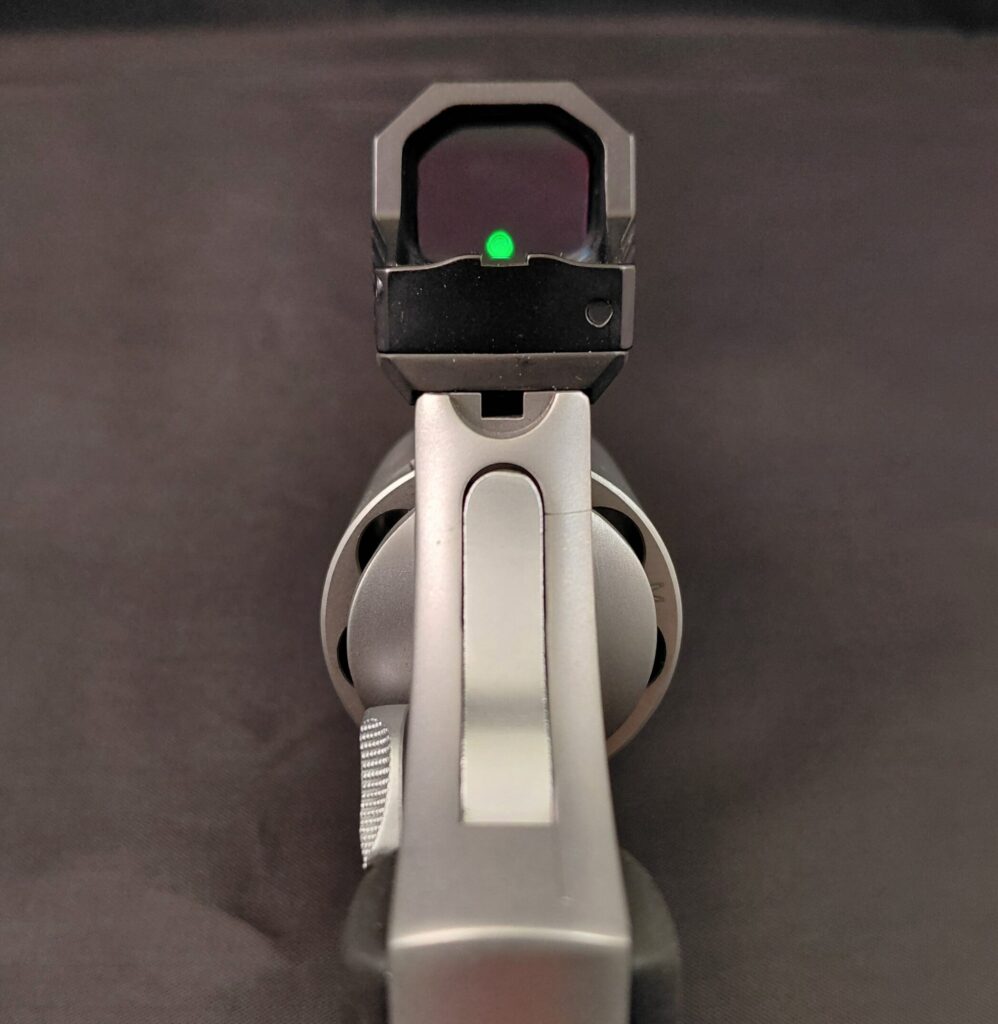
First impressions with the Cyelee on the Taurus were very favorable. I was pleased with the size of the dot and the green color- It didn’t wash out like some red dots are prone to do. The dot appeared in the screen consistently; there was no searching for it if my presentation was solid. I like bigger dots when they are red, the green 3 MOA size struck a good balance for precision at longer range but still being large enough to pick up rapidly. The optic was able to correct the minor windage deviation I experienced with the iron sights the first time out with the 66 Combat.
The range trip was quick (42 rounds) but accomplished the mission of zeroing the optic. I’d fired 147 total rounds through the 66 Combat at that point- 119 .38 Specials, and 28 .357 Magnums.
Round Three
Back home, I loaded up some old Ranier 158 gr. Plated HP’s that I had in quantity. My goal was to provide a practice round equivalent to the 158 XTP load. Loading 5.5 grains of Hodgdon Universal Clays in Federal .357 brass cases with Federal 150 primers would hopefully deliver 850-900 fps from the 66 (High Desert Cartridgeloads a practice 158 TMJ load in addition to the DB load if you don’t handload) and hit close to the XTP’s zero.
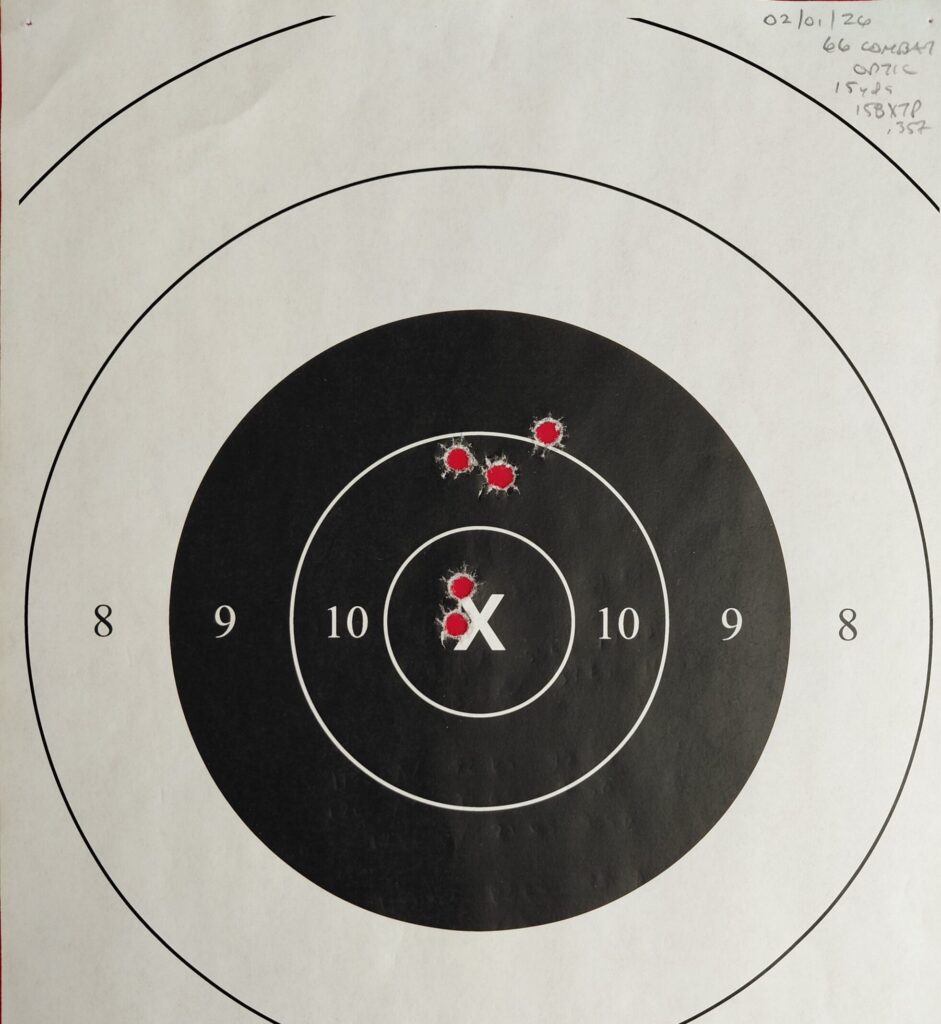
I had the 66 Combat with me on an impromptu range trip with an old friend and his son. They were both accomplished pistol shots and had kept me well out of my comfort zone with a shot timer and some evil pistol drills. At the end of the trip, I pulled the 66 out of the truck and handed it to my buddy. He was no stranger to a revolver, starting his State Police career carrying one. He sent a cylinder’s worth of Federal 147 gr. +P+ Hydra Shok into a tight cluster at seven yards. His son, who was a Deputy Sheriff, fired a similar group with the Taurus.
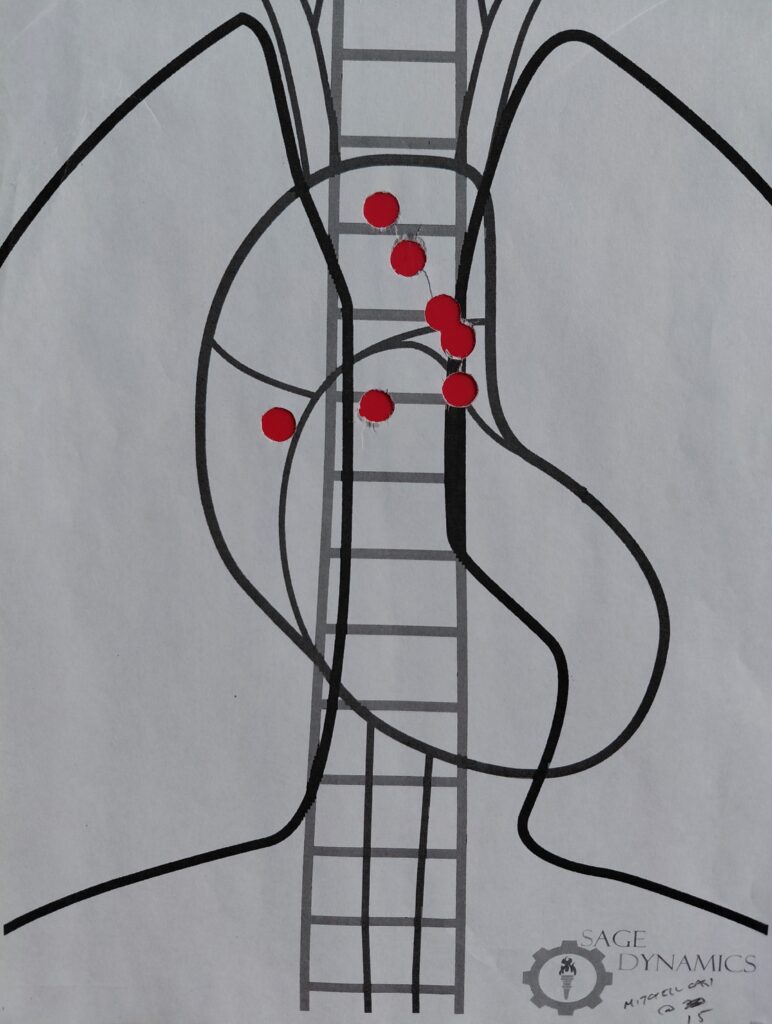
I had enough of the noisy old Federals left to send a cylinder full myself. I rolled the first six as soon as I could locate the Cyelee’s green dot on the head portion of a reduced profile IPSC silhouette. Those six went in a single dime sized hole. I got big headed and tried to stage the trigger for the seventh round, sending it slightly out of the group. My buddies were impressed with the Combat 66. The total round count so far included 145 .38 Specials, and 28 .357 Magnums.
Round Four
A few Saturdays later, I made it back to the range and shot the Ranier 158 handload. It ran slower than expected and wasn’t as consistent as I would’ve liked. The 66 stacked them up nicely anyway.
Next, I fired a 180 gr. Coated WFN handload that works well for NM woods carry. It averaged 1024 fps from the 3” barrel with single digit (8) standard deviation. Impact was a couple of inches high with the optic zeroed for the 158 XTP’s, recoil was mild. A handload using Trail Boss powder and 158 gr. Coated RNFP’s generated 718 fps, also hitting a couple inches above zero. The leisurely speed may have allowed more barrel dwell time than the XTP, resulting in this shift.
I had brought some handloads that used some high antimony content hollow point SWC’s that my buddy Mark had cast several years ago. They weighed about 135 grains as cast. These printed a nice group very close to the XTP zero, averaging 1165 fps with an SD of 8.
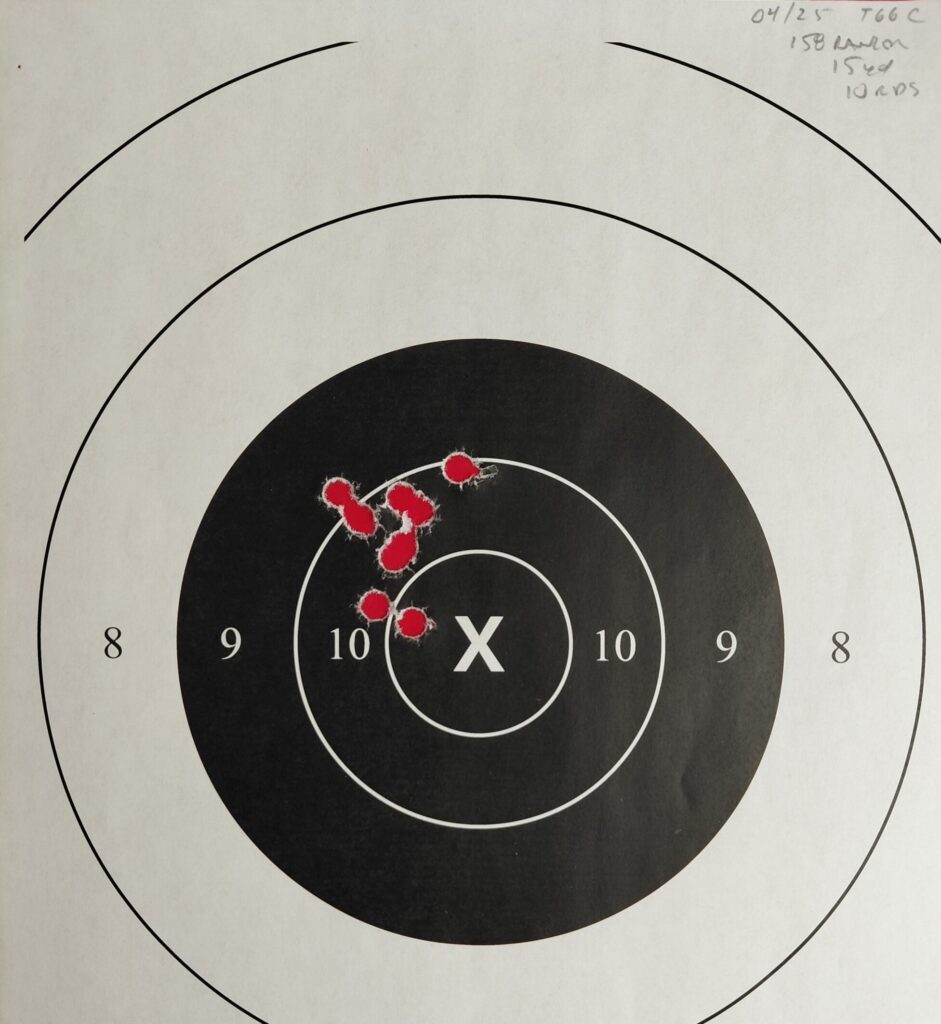
I decided to remove the optic and see if the fixed sights would behave any better in the late spring sunlight. They did. I fired a cylinder of those same cast HP’s at 15 yards. They impacted exactly where the sights were held. Five more from twenty yards showed that the Taurus sights were not to blame for the gun printing right on that first day out.
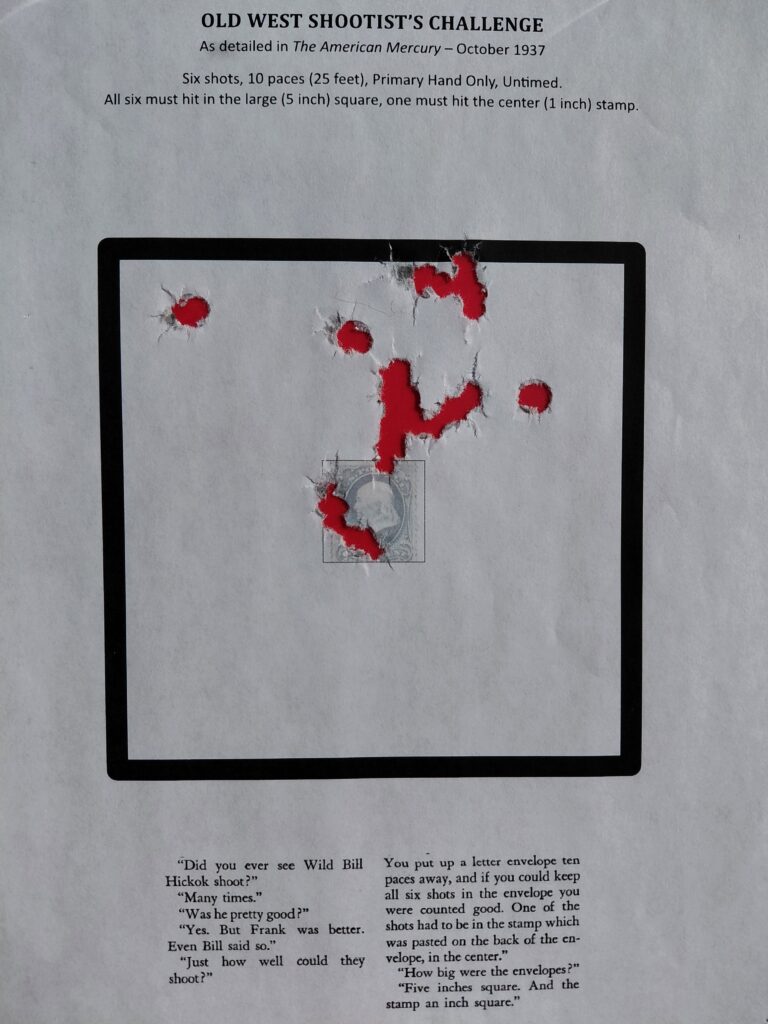
I had some ancient Ultramax remanufactured .38 158 gr. SWC’s on hand, and sending a few downrange confirmed they hit to the sights. I shot the Old West Shootist’s Challenge (six shots fired Strong hand-only at 25 feet, six shots fired two-handed at 40 feet) and the Combat 66 passed nicely. I then shot an “around the world” drill at 5 yards and the Taurus continued to perform. I sent 47 Magnums and 50 Specials downrange that day.
The Final Round
I got the 66 Combat back out to the range on a warm July morning. I ran five of the 125 grain .357 Magnum Golden Sabers through the chronograph screens; I was pleased that the earlier issue with this round had sorted out. The Remington GS bullets shot to point of aim, gave consistent velocities (1260 average, 19 ES and 7 SD) and perfectly round holes in the paper.
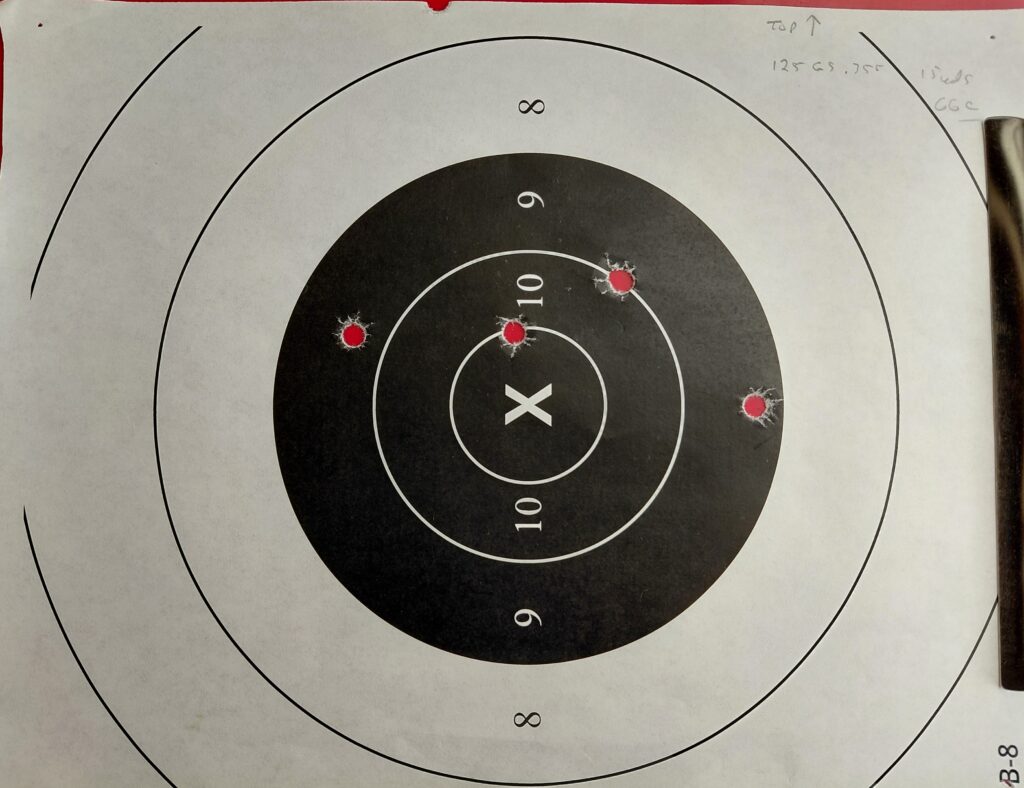
I shot some old Corbon DPX 125 Solid copper HP’s and some Speer 38 +P 135 gr. GDHP’s as well. The DPX round was a little inconsistent regarding velocity, but accuracy was still decent, with reasonable recoil. The .38 +P Gold Dots were a joy to shoot in the steel-framed revolver. Final round count was 285 rounds: 200 .38 Specials and 85 .357 Magnums.
A SOLID PACKAGE
The 66 Combat made a good impression as a very useful and practical mid-size revolver. It lives up to the reputation that Taurus has earned for building dependable and smartly featured revolvers.
It’s no secret that I’m a fan of current Taurus revolvers, and I carry them often. This one required a little break in time, but I’m glad I was patient with it. It carries more like a K frame than an L frame, even though it gives you an extra round. It would make a superlative carry gun if you don’t mind the weight. Seven rounds of mid-range .357 Magnum would likely suffice for most realistic scenarios you can imagine. It can be loaded with sane outdoorsman loads and give dependable service as a woods gun, too.
The ability to easily mount an optic allows a level of flexibility that can’t be matched with fixed sights; the optic makes zeroing precisely for any selected carry load a snap. The 66 Combat retails for about $970.00, with a street price closer to $800.00. It merits a serious look for an all-purpose handgun.
*****

Kevin,
Thank you for a thorough analysis. Chasing a perfect zero with a fixed sight gun can be a challenge. If I didn’t already run a Wiley Clapp GP100 a Taurus 66 would be an attractive choice.
As for other loaders, the SL Variant L-272 works nicely with my seven-shot GP and is compatible with the Taurus 66.
Finally, I’m still on my M12 reintroduction kick, so I can’t help but wonder how much handier a 38 +P 66 Lite would be with aluminum frame…
Be well, Michael
Hey, Michael- no problem. I greatly enjoyed time spent with this gun. Thank you for the heads up on the SL Variant loader. Do you know if the Japanese clone that is being made is available in the L-272 format? You bring up a very good point on the M12 sentiment; an alloy framed .38 +P rated version of this gun would be really, really handy. Take care, Sir!
Kevin
Yes, the L-272 is currently in production. I own two and I’m waiting on two more as I prepare for the Pat Rogers Memorial Revolver Roundup.
Michael
PS Plus One on a run of 617 ULs!
Right on- good to have another loader available that works for the 7 shot guns. I hope the reinforcements arrive in time for the Roundup! We will have to start bugging Caleb G. about those…
Kevin, I have 3, 7 shot Taurus revolvers I have had for years (10 Y maybe?). Two of them are 38Spl/357Mag and one is an alloy frame 38 Spl only. I have pocket carried the SS 357, in a modified DeSantis Nemesis pocket holster, for the past several years. These are K frame size all with 2″ brls. One SS 357, one blue 357 and the alloy frame is SS 38spl. They all have great triggers and are very easy to shoot. I “think” the model # on the 357s is Mdl 617 and the alloy frame is Mdl 847. I have had great service out of all the ones I have.
I purchased a new S W 686 + 7 shot last year and there was a really large difference in the cost of these revolvers. This one is too large for pocket carry, I OWB carry this one. This revolver was $1100.00 after TN Tax and background check added.
The Model 66 Combat looks great to me. Thanks for your evaluation. If I needed another, I would purchase this revolver without hesitation. I like the fact of having 2 extra rounds on board. I will say, “I have grown to I really like Taurus Revolvers.” I do carry one if I am awake and dressed. Ane yes that is even sitting in “Big Red” (my favorite Lazy Boy) in the house. My 7 shooter saved my bacon a few years back. I walked to the Mailbox and afterwards thanked God I had it in my pocket. “ONE NEVER KNOWS” do they?
Thank you for weighing in, pop pop. Like you, I have grown extremely fond of Taurus revolvers, because they work. In my experience, you can get them for less initial investment because some of the polishing needs to be completed post purchase. They break in well with honest use and dry fire and the rough edges smooth out. This 66 Combat offered 100% ignition of everything I put through it and gave no mechanical drama. Your choices of 2″ seven shot Taurus guns that carry like K frames make a whole lot of sense to me. I had forgotten about that alloy framed one they made. A little poking around on the webs showed an 817 UL; 7 shot .38 2″ that weighed in at 21 ounces. You were wise to latch on to one. Maybe we can cajole Taurus into another run of them? A 3″ 817 UL with a bobbed hammer and a big dot tritium front sight for me, please! Again, I commend your judgement for having that handy Taurus on you at all times, one never knows…
Kevin, much appreciated writeup on this particular Taurus. You at least had a good variety of ammo, and multiple range sessions to get a good feel for the gun.
I’ve seen two of these in the wild at LGS, and they seem to balance and feel very good. I’m not sure about the laser etched “Combat” on the underlug, mainly because we have extreme left-wing district attorneys in the metro Atlanta area who would make hay of it. (Also, I’d cry a lot less at having a Taurus in the evidence locker than one of my vintage S&Ws – yes, I’m that cynical.)
My main focus on Taurus revolvers is their quality control and durability. Their product line in the 1990s was in the tank from a smithing point of view. I know they’ve upped their game, and that they are no GP-100 or even Security Six, but I’d want to know how they hold up to any similar S&W or Colt.
The accuracy and consistency issues you presented smell of cylinder throat inconsistency. Any .38 or .357 I acquire gets the forcing cone recut to 11 degrees. It does more than most folks realize to help stabilize a bullet being squished into the bore. If the throats are undersized, it’s a simple matter to use a quality chamber throat reamer to bring them all up to the correct size (.3575″). If oversized, well . . . that presents other issues. Far too often as the cylinder chamber reamers get worn, the throat diameter shrinks creating less than acceptable results. Your experience also highlights my personal preference for adjustable rear sights on .357 guns since I also shoot a lot of .38 Special, and enjoy keeping things relatively close together.
You betcha, S. Bond. I would be fine if the “Combat” branding was left off the gun, too. I have taken to carrying Taurus guns for that exact reason. If My 856UL gets stolen or remanded to an evidence locker, it would be much easier to replace than my born in 1975 Model 12. I picked up that practice when I was flying a lot to watch my daughter play volleyball, I continue it now whenever I can’t secure my defensive weapons as good as I would like. If I have to leave one in my RV, the same logic applies.
I haven’t put a long term round count through any of my Taurus revolvers yet, but they seem to be wearing well. Your practice of recutting the forcing cone is a good one. I have seen firsthand how effective that 11-degree cut is, and I completely agree with you. I was pleased that the 66 Combat self-corrected as it broke in, and some of the issues I experienced were environmental and possibly shooter induced. I didn’t measure the throats, but the Taurus shot the Hornady XTP’s well early on, even when it stunk up the first trip with the Remington Golden Sabers. I very well could have got one that was near the end of the chamber reamer tool life, too.
Yes sir, we are expecting a lot of fixed sights when there is so much potential bullet weight and velocity range with a .357 Magnum revolver. I felt like Taurus did a good job finding the middle with how the sights were regulated. I appreciated the optic on the 66 for the same reason you run adjustable sights on .357 guns. Thank you for your input and stay safe, good man.
I got a 66 Combat a few months ago because I got lucky in a GB auction and won it for under $500.
I put an Osight SE on it; mine has the green dot, multi-reticle (2 MOA dot + 32 MOA circle). I find this style to be my favorite of the optics I’ve experienced so far. I zeroed mine with High Desert 140gr .357 Magnum and Buffalo Bore’s 140gr .357 Magnum “tactical” load. I find that this zero also works with heavier bullets in the 158gr range, .38 or .357; at least at the typical distance I shoot the 66C at the range. 140gr (145gr for Winchester Silvertips) and heavier bullets is my preferred bullet weight range for .357 Magnum. I do not like the 125gr or lighter bullets.
I have not tried shooting it with the iron sights. I had already gotten and installed the optic before I first took it out shooting, and removing the optic is a non-starter since I’d have to re-zero it. My only “criticism” of the optic setup on the 66C, which isn’t really it’s fault, is that the way an optic is mounted on a revolver means you can’t co-witness with your iron sights. If your optic fails, you’re out of luck; and I’m not going to carry around a set of Allen wrenches in case it does.
Compared to my recent issues with my Colt Python (which is now fixed), my 66C has never failed to fire. Were I to carry this revolver, it would be during the colder months, in my favorite cross-draw holster and loaded with High Desert 140gr XTP .357 Magnum (or Buffalo Bore’s 140gr .357 Magnum “tactical” load) with 5 Star’s L7 DC loaders.
Hey Axel, good score on that GB auction! I have no experience with Osight optics, but they look good. Most mounted optics on revolvers do take away open sight use, and I agree that’s a bummer. It’s a good idea to figure out some alternate aiming solutions in the event that the optic fails. While not as precise as a dot or sights, figuring out how to bracket the target with the window to get acceptable short to medium range hits is worth the time and ammo expended to do so. Dave Lauck from D and L Sports makes an optic plate with built in irons that works well, too. Sight radius is short, but the sights work well for an emergency situation.
Thank you for mentioning the High Desert and Buffalo Bore loadings with the 140-grain bullet. Both of these would be really solid choices for defensive use in the 66 or other .357 Magnum revolvers. These loads make more sense than full power loads for defensive use. they provide good terminal results without the recoil, blast and slower follow up shots of the max loaded offerings. An aide to better shot placement, for sure.
The 66 I tested also gave 100% ignition with everything I fired through it. That level of reliability is important. Yes sir, the 66 would be a fine choice for winter carry when you can wear suitable clothing to conceal it well. Cheers!
I appreciate the review. I shot the 66 Combat at Revolverfest last year and really liked it. It’s on wishlist but it’s not a priority because I have a Wiley Clapp I GP100. So far I’ve stayed away from the 7 shot revolvers but the 66 Combat will probably be my first.
Thanks, Mark. I understand the priorities and that WC GP100 is a worthy six shooter. The 66 Combat would be a good starting point if you determine that seven in the cylinder makes you happier.
A number of years ago, Taurus had a deservedly poor reputation for fit and finish and mechanical failures. In fact, I knew several people who had experienced all of those problems with brand new Taurus revolvers. So, back then I believed that Smith and Wesson would always be the much better wheel gun. Not anymore.
If I were in the market today for a new double-action revolver I’d buy a Taurus, and that Model 66 Combat would be a tempting choice. Thanks for putting yours through its paces, Kevin.
Hey Spencer, I think I missed the bad years at Taurus. I had a pretty nice specimen in the mid 1980’s, I didnt shoot another Taurus until 2022 or so. I also held to the belief that S&W was without peer for many, many years.
My experience with several Taurus revolvers recently has been quite positive- I trust the ones I own and carry them frequently. I will buy more. You are sure welcome, thank you for chiming in, Sir!
An aside on the HKS 587 speedloaders. I have a few for my Taurus 692. I have found that rounds will not always drop freely from one of the holes. Best I can tell it’s got to do with the plastic wall between the holes in the loader. Not quite enough room between rounds in the circle, and you can’t just remove the plastic between holes.
The equivalent loaders from 5 Star don’t have this problem.
BTW, have you looked at 5 Star’s new DC series loader? It’s not a “twisty” type release. They use a big flat button on the side to release.
As to the 66 Combat, my 692 is close to that with adjustable sights. I find I use the 9mm cylinder not very much at all.
Thank you for the info on the 587 loaders, Mr. Brigdeland. I dont recall it being much of an issue with the 66 C, but I have seen that with HKS loaders, for sure.
I think 5 Stars have the best record for “lack of fit drama” with any given gun with their aluminum construction. I have been playing around with a couple of the new DC loaders and they work well. They have the same excellent fitment as the twist top loaders and the side release button holds cartridges quite well. My brain keeps thinking they should have some spring help to eject the rounds, but they are still a gravity loader. I think they are an innovative design with much promise.
Yup, you have the adjustable sight version of the 66 Combat with more ammo options if times get tough!
Having some computer problems on my end, Kevin, and thus am not sure if this comment will transmit. However, given a choice today between a new S&W revolver and one from Taurus, I’d take the Taurus, especially one like your Model 66 Combat.
Hey Spencer, hard to argue with you on that. Especially for the difference in retail stickers on similar models from the two makers…
In 1976 I inherited a 4-inch Taurus .38 Special, basically a cheap knockoff of a S&W Model 15. I couldn’t crank the rear sight far enough down to get it to shoot less than a foot high at about 15 yards. Since then I’ve never owned a Taurus, but I’ve seen quite a few that were, well, less than stellar. So I gave up on them a long time ago, and I admit to a strong prejudice against them. I trust your judgment on the new ones, but I just can’t get the bad taste out of my mouth.
But with today’s news that Ruger is discontinuing all its centerfire revolvers, and all its rimfires except the Wrangler line (there goes my Bearcat I’ve lusted after for 50 years), I may be forced to hold my nose and look at the Brazilians.
(I can understand Ruger’s thinking up to a point: after all, tactical plastic 9mms drive the handgun market these days, but I can’t help thinking they’re cutting off their nose to spite their face. They’ve already ceded the medium-frame revolver market to Colt, and now they’re ceding the small-frame and large-frame markets to Colt, S&W, and [shudder!] Taurus, too.)
You mentioned a “disturbance in the force” a few weeks ago. It’s turned out to be more like a seismic event. I hope to learn more about it here in the coming weeks.
1811, I’ll harken back to the tagline from the old automobile commercial:
“This ain’t your daddy’s Taurus.”
While they’re not perfect (nothing is, on this Earth–except The Blues Brothers), the guns being sold by Taurus today are an entirely different breed compared to the old ones, and I’d bet on them over S&W any day of the week.
When they fall short, the company is generally quite good about fixing things–the first time–under warranty. I see little risk in giving them a try, if someone is in the market for a revolver.
Kevin, glad to read that you’re enjoying your Taurus Model 66 Combat. I stopped into my local gun shop last year and made an impulse purchase on a late model 4″ Taurus 627. It was lightly used, wore a new Hogue grip, and an attractive price tag.
Based upon the positive experiences with my 627 I would definitely look at the Model 66 Combat due to its 3″ barrel, bobbed hammer, Hogue grip, semi-chamfered cylinder and of course, the seven round capacity.
Recently at Revolver Fest, I was paired up with a new revolver owner who brought his S&W 642. This class instructor had recommended a mid to full size revolver due to high round count and multiple reloads.
My buddy didn’t own any speed loaders or speed strips. After receiving approval from our trainer, I outfitted him with my Taurus and a pair of HKS 587 speed loaders.
This made his training far more comfortable and perhaps Taurus owes me a commission?
My new friend really enjoyed shooting the larger, higher capacity revolver and is probably looking at a Model 66 Combat for his next gun.
Hey Opa, thank you. It sounds like your experience has been similar to mine with recent Taurus revolvers.
That was good of you to offer up your 627 to salvage that guy’s training day. I’m betting that a valuable lesson was learned about the superiority of the service revolver (over the snubby) for a high round count training session. That 66C would be a solid choice for him as a “primary” revolver.
Well done, a golf clap issued here for your volunteer Taurus sales rep chores!