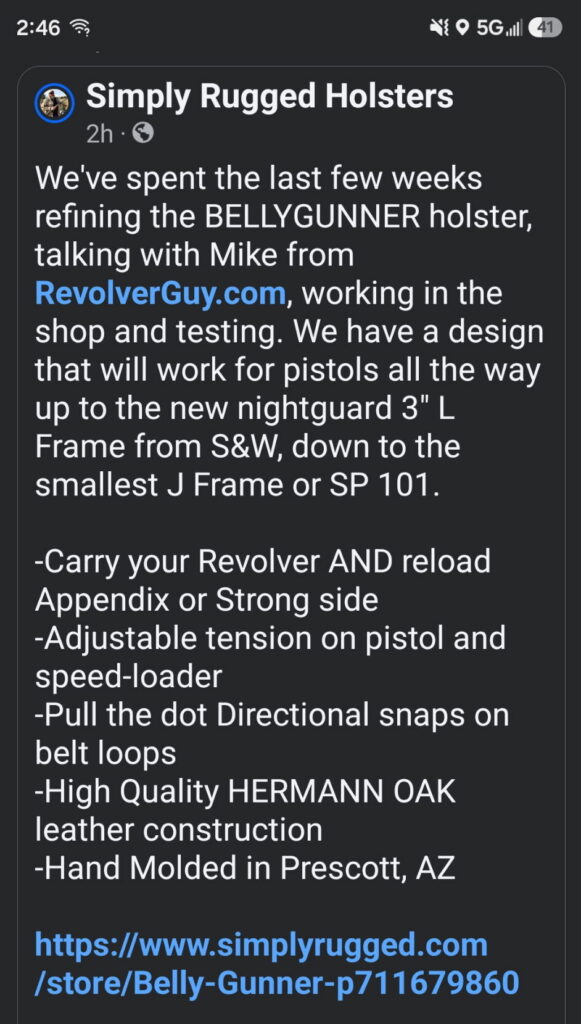
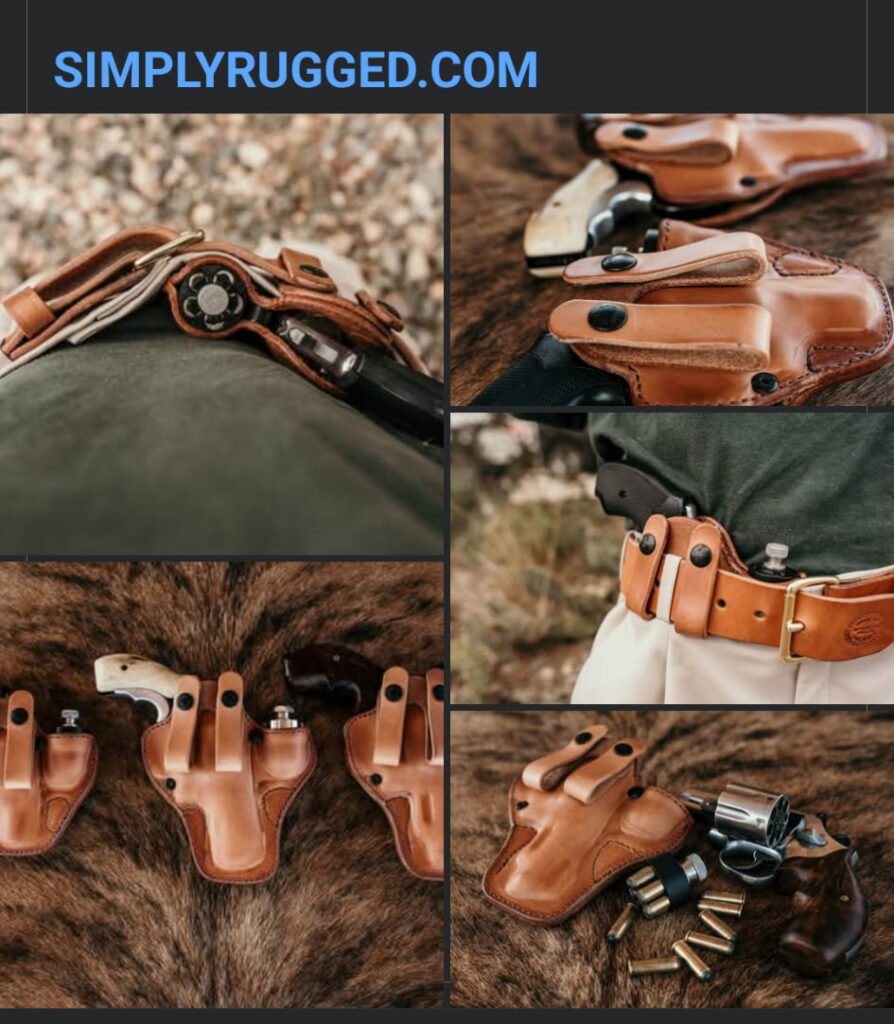
Our good friend Rob Leahy, of Simply Rugged Holsters, has introduced a new holster that will interest RevolverGuys who like to carry in the Appendix Inside the Waistband (AIWB) position. The new Simply Rugged “Belly Gunner” combines an AIWB holster with an integrated ammunition pouch, and I think it’s going to be a popular product for Rob.
Of course, I might be biased about that, because I’m the one that pushed him to make it! The path to the Belly Gunner began with an order I placed with Rob back in 2022, and wound through a number of prototypes and changes along the way, which we’ll explore.
In the Beginning
As background, I’ve been carrying semiauto pistols in the Appendix position since the last century. ; ^ )
As a tall, thin shooter without much padding on my hips, I found out very early that it was both uncomfortable and unproductive to carry concealed pistols on my strong side between 3:00 and 4:00, whether they were worn inside or outside the waistband (IWB or OWB). I tried a number of holsters and guns, trying to make it work, but they all printed too much, and left me in great discomfort as they painfully smashed the nerve that runs through this area between my belt, holstered gun, and hip.

I tried all the best holsters, from all the best makers, but none of them allowed me to get away with concealed, strong side carry. I could live with a J-Frame in a pocket holster all day long, but strong side carry just wasn’t a good match for me, particularly with any sizable gun.
As an avid reader of Gabe Suarez’s writing from the very start (anyone here remember his paid subscription newsletter, circa early-to-mid-90s? I’ve still got my copies) I was interested in the work he was doing to promote Appendix Carry and improve AIWB holster design. The argument for Appendix Carry made sense to me, but before I’d commit to spending the money on a dedicated AIWB holster, I thought I’d give AIWB a test run with an abandoned IWB holster that was collecting dust in my growing “Box-O-Holsters.”
That early Blade-Tech IWB holster had a forward cant that made it difficult to get a good grip on the gun when carried forward of the hip, but it allowed me to test the concept of carrying a gun around 2:00. It felt a little awkward at first, but to my amazement, I found I could carry a sizable gun in this position without discomfort, and I could also hide it much better than with any holster I’d ever worn behind the hip. I was sold, and I ordered my first Dale Fricke Archangel holster soon thereafter, which became my Go-To holster for daily carry.
Rounding Up
While I routinely carried semiautos in the Appendix position, I reserved my S&W Model 640 for pocket carry. I didn’t think it made much sense to carry the smaller snub on the belt, so it remained a pocket gun for well over a decade before I had the opportunity to test the Aker Model 160A in these pages.

That Aker holster worked nicely, and changed my attitude towards snub revolvers and AIWB carry. Shortly thereafter, I purchased an Archangel for my 640 and wrote about it here, describing my success with it.

One of the issues that raised its head pretty quickly during my early testing was how to carry a speedloader, when carrying AIWB. With the gun carried forward of the hip, in the same area where we’d normally carry a belt-mounted speedloader pouch, space is at a premium. It’s difficult to find a place for the pouch on the strong side which doesn’t interfere with gun access, or print too much through clothing.

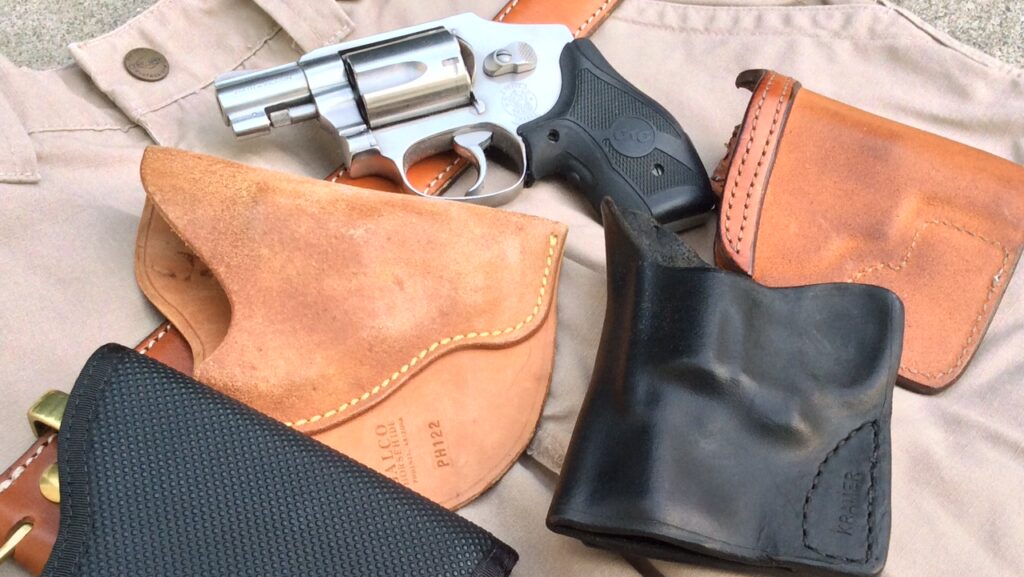
Playing around a bit, I found that I could tuck a reversed Safariland CD-2 speedloader holder in between the belt buckle and the gun, and take advantage of the open space that was created by the bulge of the cylinder. The squared, metal corners of the CD-2 were a little uncomfortable against the skin, so placing it between the belt and the pants was an improvement. I considered taking a file to the CD-2’s corners to round them out, but got distracted with other projects before I got there, to include testing the Don Hume Pack Six case and the Simply Rugged Sidewinder.

An Idea
Still, the idea of using that open space between the belt buckle and the leading edge of the AIWB holster wouldn’t go away, and I thought about ways to make effective use of it. I tried pitching the idea of an AIWB holster with an integrated speedloader pouch on the inboard edge to several companies, but didn’t get anywhere. Friend Gene DeSantis responded with his FLETC 2.0 holster, which is a neat, quality product, but it didn’t solve my problem, as an OWB strong side holster.

Galco was making the Walkabout holster, which used the general concept, but I wasn’t satisfied with the execution of the holster or pouch. I wanted a more robust holster, and a pouch that retained the loader without a flap.

By June of 2022, I was talking to Rob about the idea, and asking if he could take his Field & Stream holster design for autos (an OWB holster with an integrated mag pouch), and turn it into an AIWB revolver rig for me. Rob was already starting to make a few revolver-compatible samples of his Field & Stream, with an integral speedloader pouch, that would serve as a good starting point for my project, so he agreed to give it a try (by the way, those initial revolver Field & Streams would soon join the catalog as the Boomer holster, which we featured in our 2024 Holiday Gift Guide, and which has become a very popular item for Simply Rugged).

Rob told me up front that he didn’t have much experience with Appendix holsters, and preferred to carry his guns on his strong side, but I thought we could combine his experience and talent for holster making with my experience carrying AIWB, and come up with something that would work. I sent him a check for the amount he was charging for a Field & Stream, and asked him to work up a sample.
Exploring, Learning, Collaborating
I don’t think either of us realized it at the time, but we’d just committed to a multi-year period of experimenting, testing, learning, and educating as we worked through many different versions of the concept. It wasn’t a full-time endeavor for either of us, of course, but even if Rob and I had been able to commit our full attention to the project, it would have taken us a while to arrive at the destination.
Many RevolverGuys will look at an operation like Rob’s and assume they can make any kind or style of holster on demand, but the truth is that each style of holster requires a certain level of knowledge and expertise, if you want a good product. The industry is full of holsters made by companies who copied a design from another source, without fully understanding the nuances of the design, and the elements that make it work.

Take, for example, the pancake-style holsters that put Simply Rugged on the map. A number of outfits have made these over the years, but few have understood Roy Baker’s formula like Rob, and managed to create such good exemplars of the breed. Details like materials, ride height, cant, retention, weight distribution, and others require proper attention if your pancake is going to carry the weight of an N-Frame all day long in comfort and security, while still providing ready access. Rob understands these things, which is why his pancakes are the best in the industry.
And just because you can make an excellent OWB pancake-style holster, it doesn’t mean that you can make an equally-good IWB concealment holster, or shoulder holster, or ankle holster, or pocket holster. The skills and experience developed in learning to make one style don’t necessarily translate to another. The different carry positions and holster designs each require their own unique set of skills and knowledge to master their manufacture.
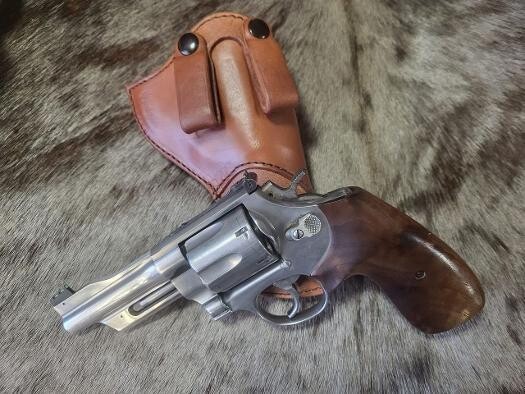
So, while Rob and his crew were highly experienced makers of leather holsters, including strong side OWB and IWB holsters, pocket holsters, and chest holsters, they didn’t have experience with AIWB designs, and it took some effort to understand the type and learn how to make them.
First Generation
The first prototype holster arrived at the end of 2022, and looked like one of Rob’s Boomer holsters with a pair of his Inside the Waistband Straps added. The IWB Straps were Rob’s solution for converting an OWB Sourdough Pancake holster into a rig that could be worn inside the pants, and it was a natural place for him to start for my project.
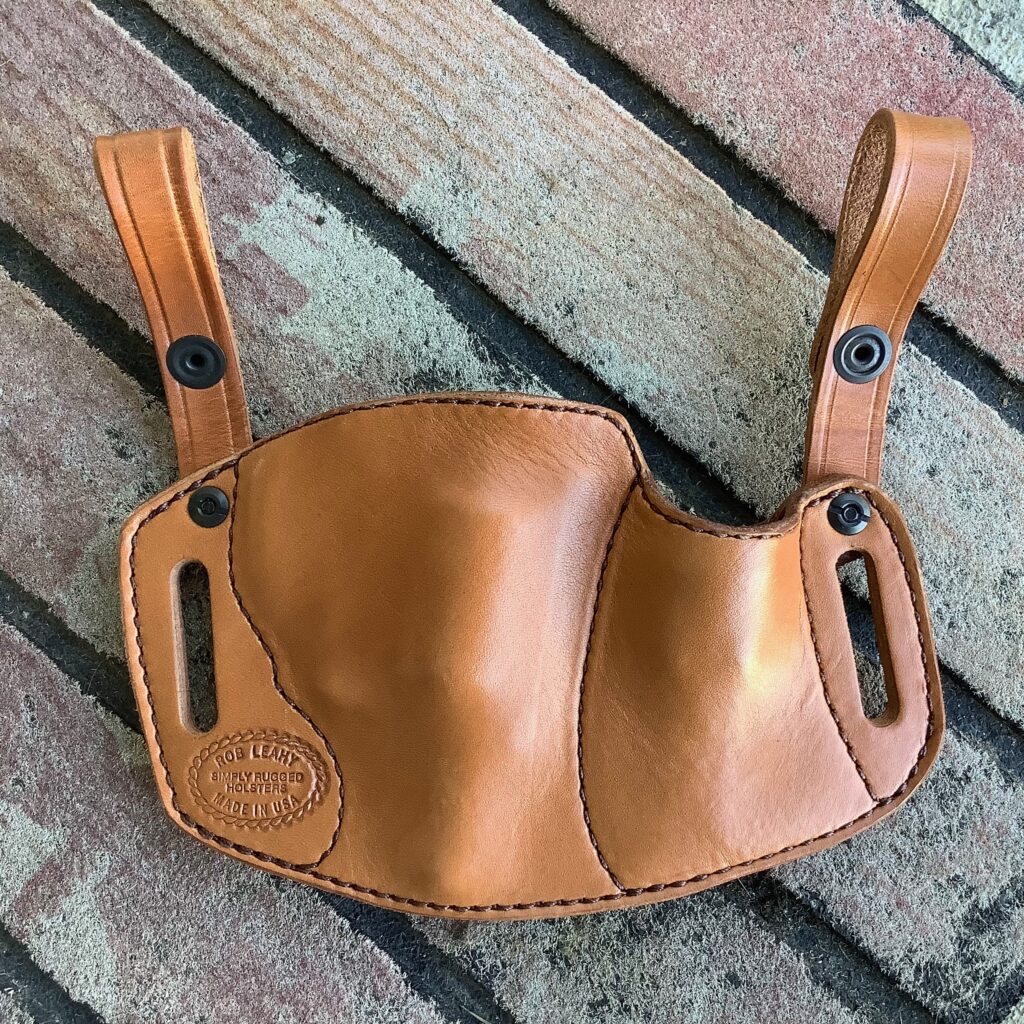
This design could have made a decent IWB holster for strong side carry, but it didn’t work for AIWB at all. The footprint was too large for AIWB (particularly on my thin waist!), and the broad leather skirt would interfere with walking, sitting, or raising my leg, since it pressed on my upper leg, outside of the pelvic crease. Additionally, the IWB Straps didn’t hold the short-bodied holster in place, against the movement and pressure of the leg.
These were new design issues for Rob and his team to learn about. Just shifting the carry position from 3:00 to 4:00 towards 1:00 to 2:00 brought a whole new set of factors into play about body mechanics and holster design. The Simply Rugged team had taken their first steps into new territory, and were learning the new ground.
I returned the holster to Rob in June of 2023 at the Shootists Holiday, and gave him a rundown of the design issues that needed to be addressed. He worked up a new design and had it shipped to me by late summer.
Second Generation
This second version had a pouch that was much trimmer, and integral belt loops that were sewn onto the top edge of the pouch. It was a big improvement, but I discovered a few items during testing that needed to be addressed.
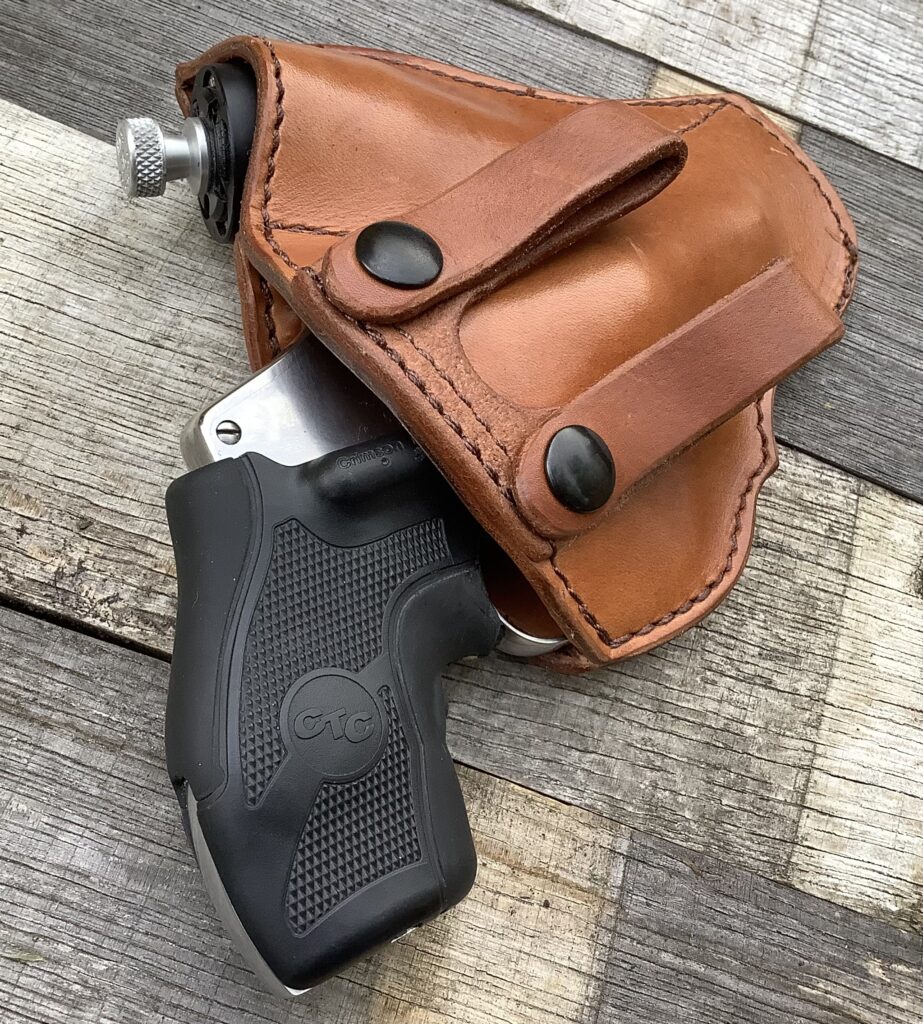
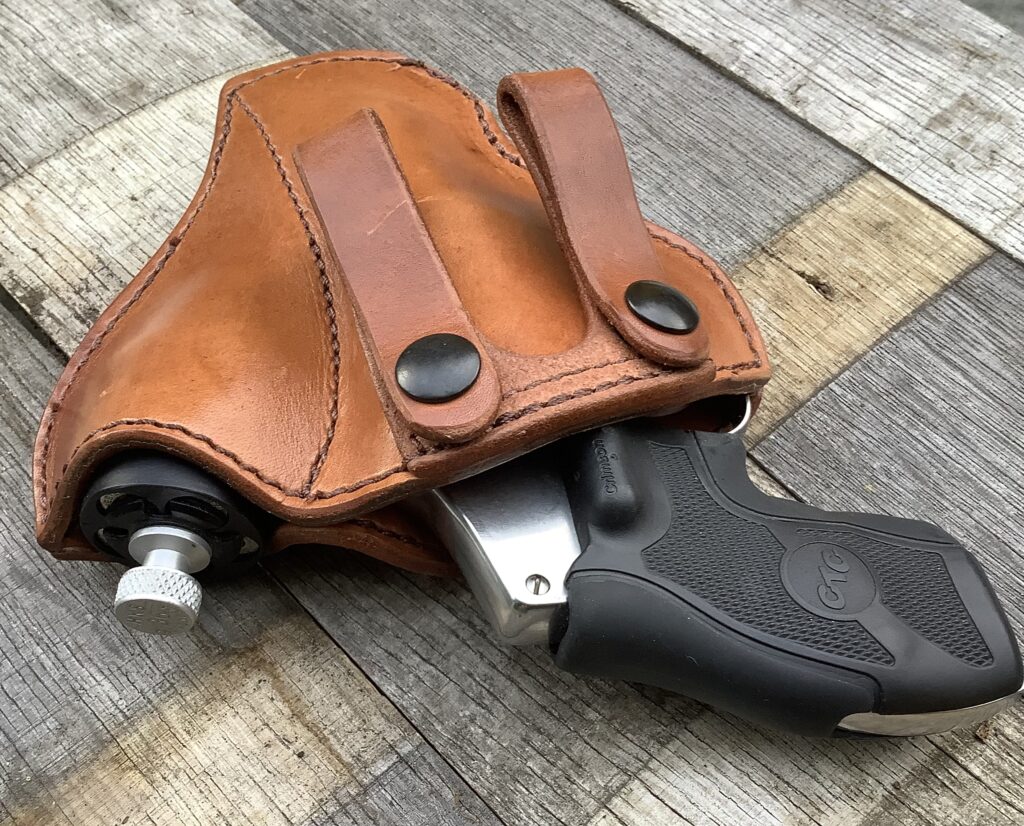
First, the pouch was built with a slight amount of forward cant, which is a good feature on the strong side holsters they were accustomed to building, but not so helpful with an Appendix rig, where you have to “break” the wrist to obtain a good grip on the gun.
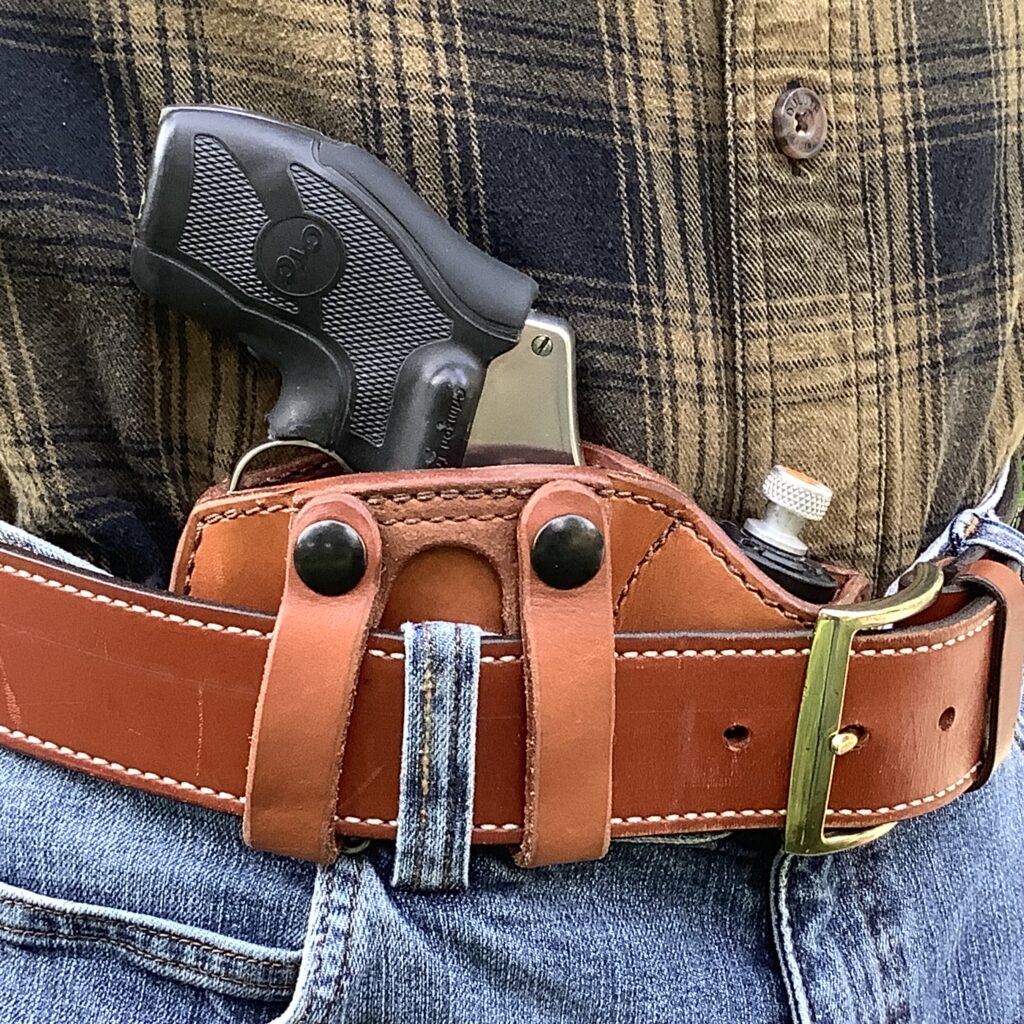
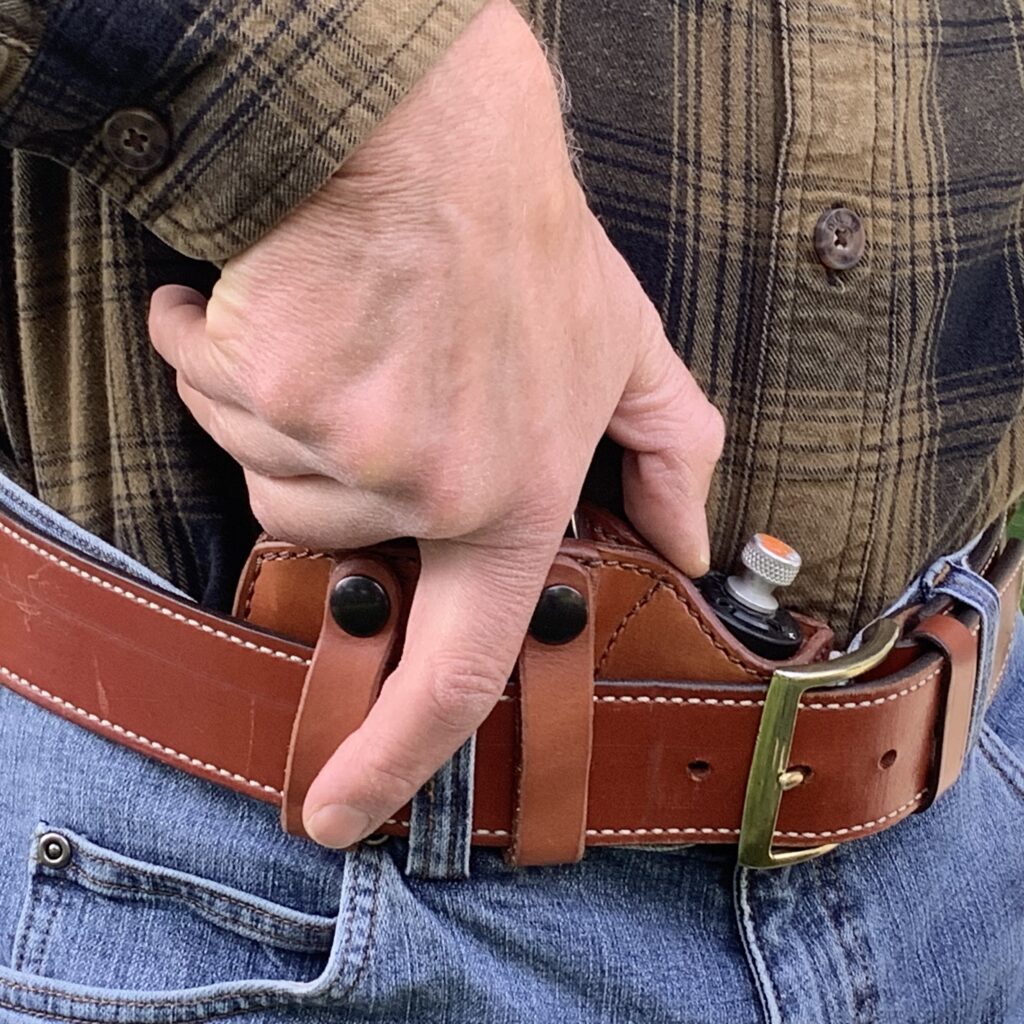
Second, the pouch carried the gun just a little high. If you compare this second prototype to the ones that followed, you’ll see the rear of the trigger guard rides a little higher, above the top edge of the belt. This gave the holster a higher center of gravity than desired. It wasn’t gross, but I wanted the gun to ride a little deeper on the belt.
Importantly, the straps on the pouch were secured with normal snaps that would get levered open by the top edge of the belt, during normal movement. This was an interesting learning opportunity for Simply Rugged, because these snaps are normally suitable for traditional IWB holsters worn from 3:00 to 4:00. Holsters worn in this location are frequently pushed up during normal movement (like when the wearer sits down), but they are rarely pushed downwards. As such, it’s the bottom of the holster’s belt loop that usually bears most of the pressure from the shifting holster’s position.
But in an AIWB holster, the snap is frequently the focus of the pressure, because of where the holster is worn. AIWB holsters are often pushed up when a user sits, squats, or runs, placing pressure on the bottom of the belt loop, but they’re also frequently forced down against the top edge of the belt, when the wearer bends forward at the waist. This latter movement forces the holstered gun downwards and applies pressure to the snaps that can lever them open, leaving the holster unsecured on the belt.
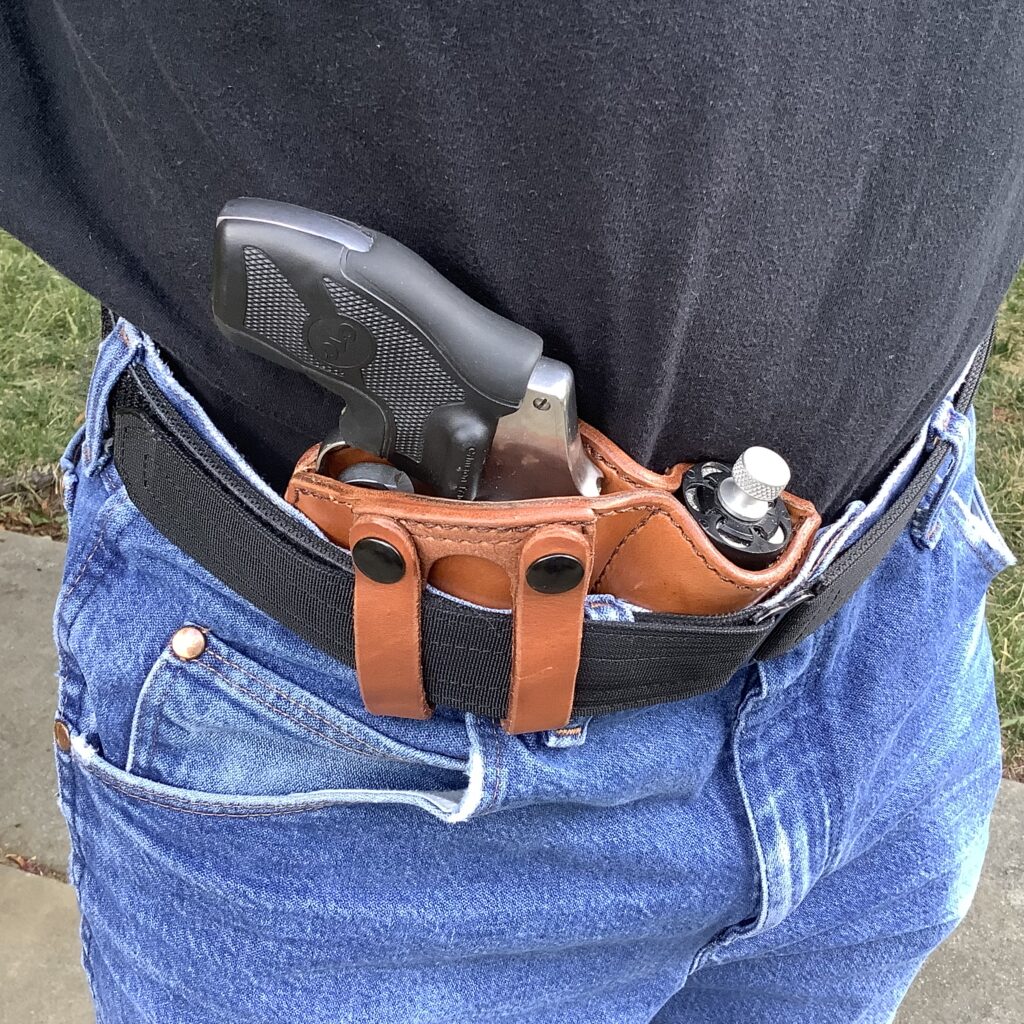
I encountered this problem with the normal snaps that were used on the second sample, so I sent it back to Rob with a request to replace them with Pull-The-Dot snaps that would withstand the burden. However, Rob thought it would be better to try making another sample, with some additional corrections that we discussed.
Third Generation
A third version of the holster arrived around February of 2024. Rob actually had two of them built, so he could test one himself, and send the other to me.
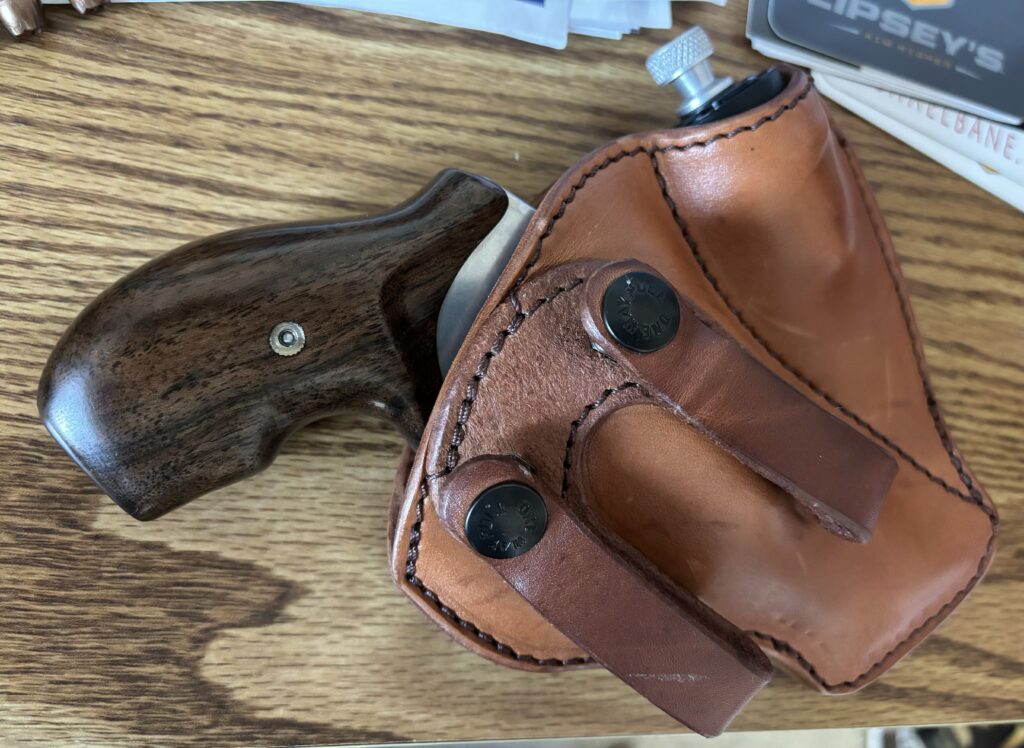
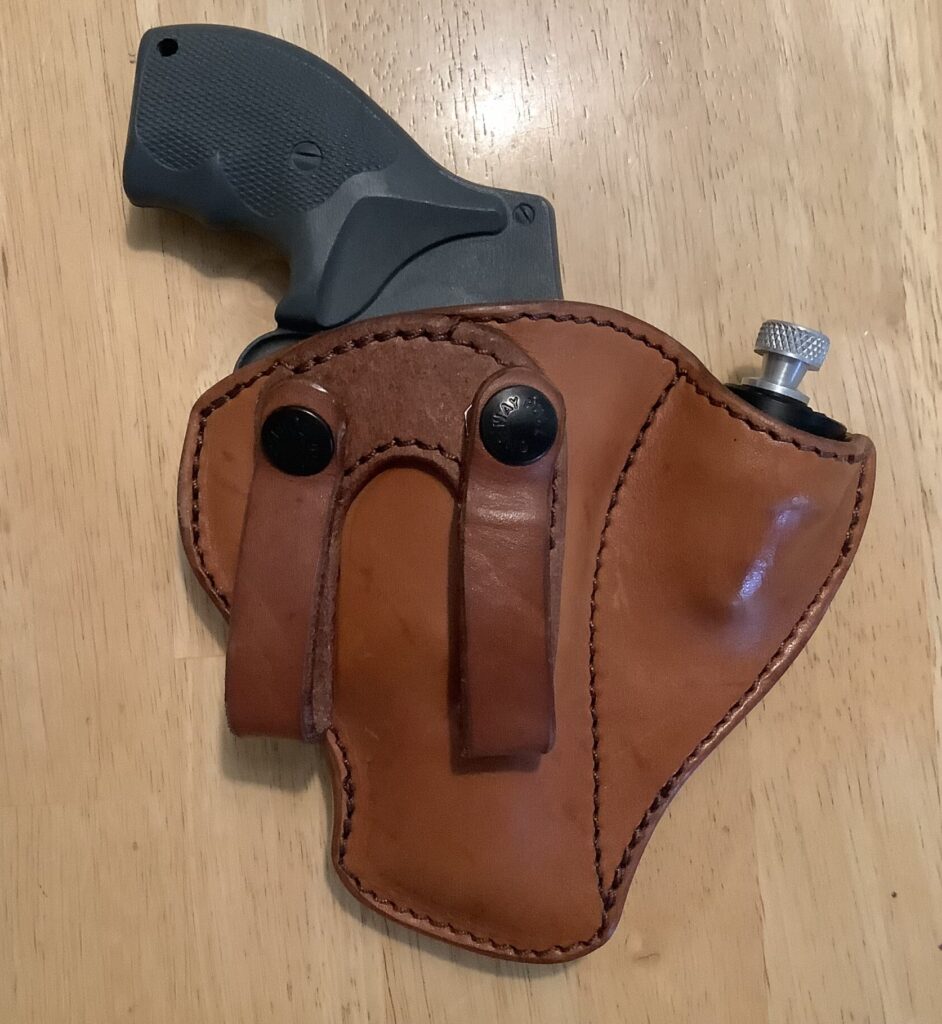
Wearing my sample revealed that the new Pull-The-Dot snaps were a big improvement, but the pouch still had a slight forward cant that frustrated getting a good grip on the gun without breaking the wrist. The integral speedloader pouch also had a significant forward cant on this sample, angling the opening of the pouch towards the belt buckle. I think these were unintentional legacies of the strong side holster pattern that was used to build this sample, where some forward cant can aid the draw of a gun (or loader) that’s carried at the 4:00 position, just behind the hip. Unfortunately, in an appendix holster, the forward cant opposes the natural draw motion, instead of assisting it, which was a valuable design lesson.
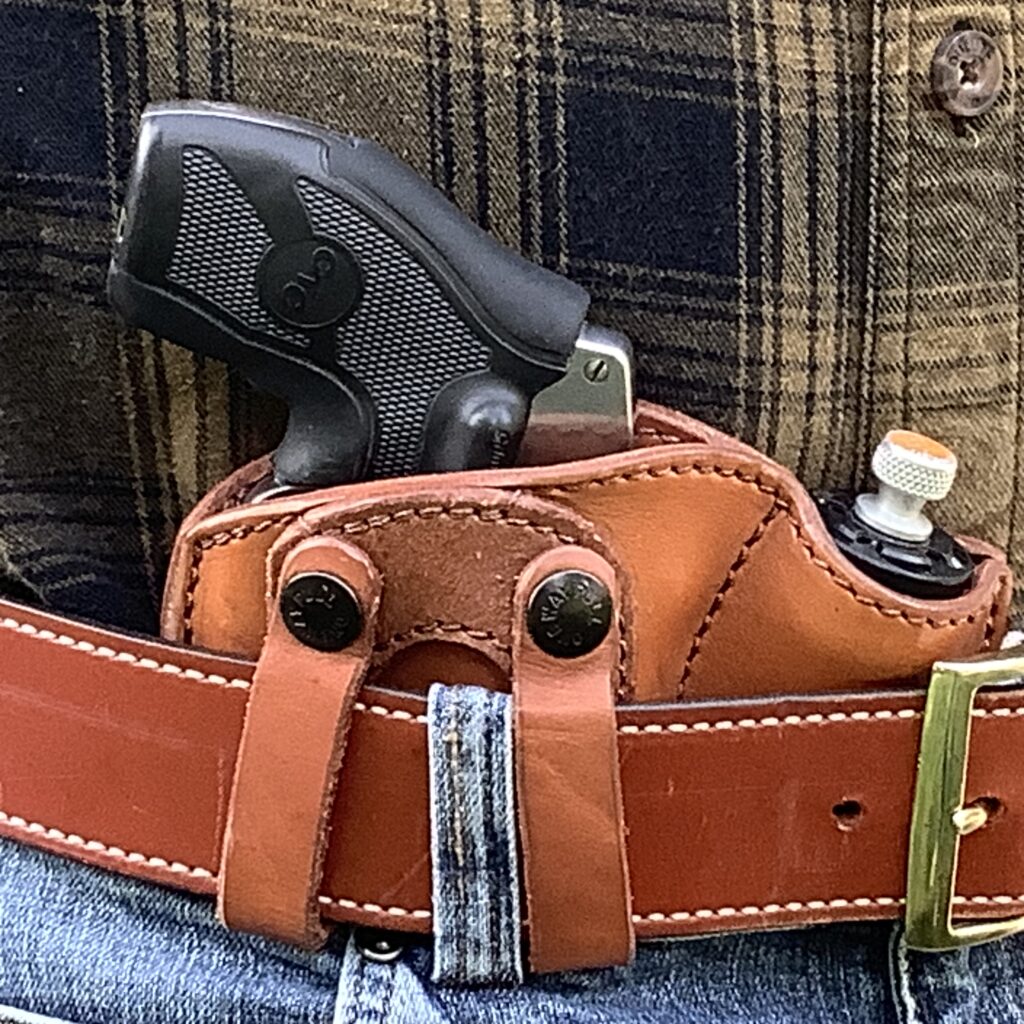
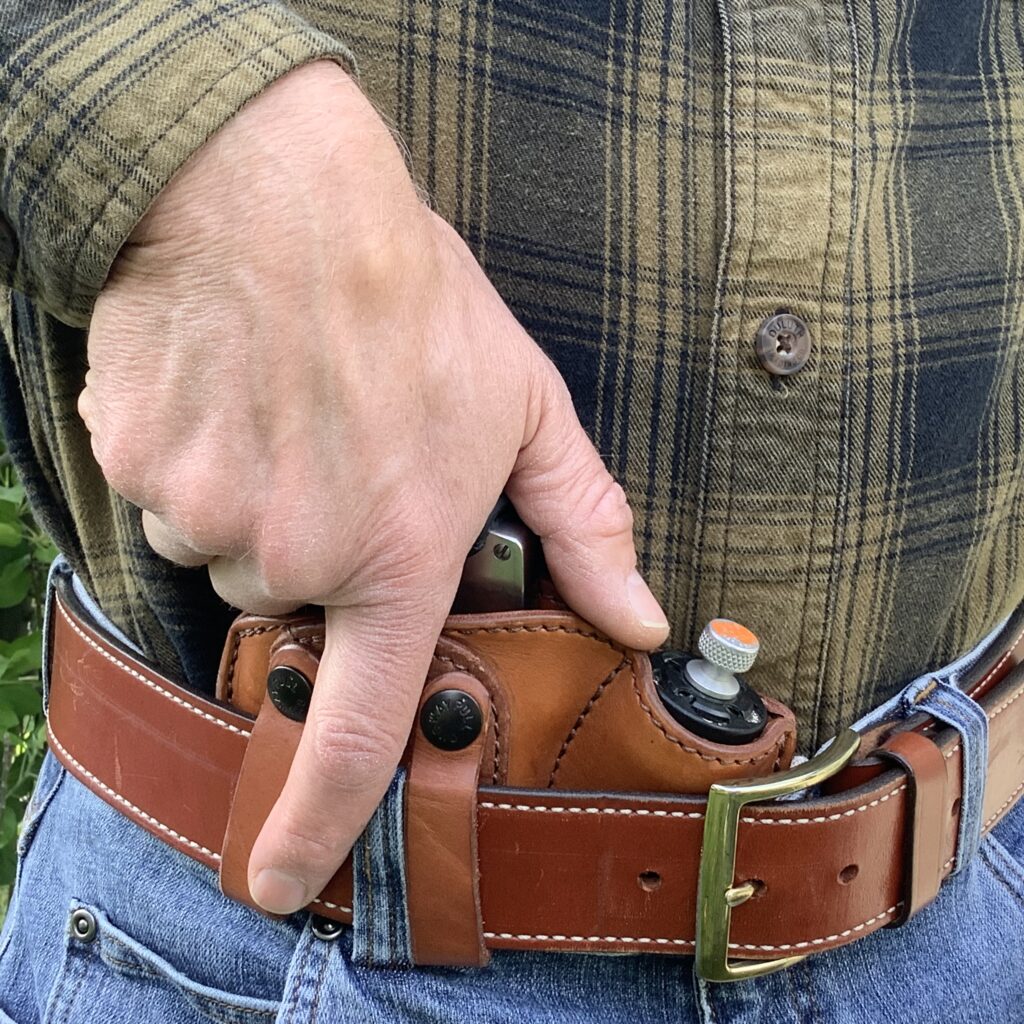
This sample also gave us an additional opportunity to deal with how an AIWB holster design can be sensitive to ride height and center of gravity. The longer belt loops on this sample (which were designed to fit 1.75” belts) made the pouch ride up on my 1.5” belt, and spill out over its top edge. A similar thing happens with any IWB design, but since the area forward of the hip is more “active” than the area behind the hip, with both the torso and the legs having a greater range of motion in that region, AIWB holsters are more prone to be displaced by physical activity.
Rob’s wear test of the other sample brought some of the same things to light. He said his sample didn’t ride well for him either, and he was determined to make another version to remedy that, based on the newfound knowledge.
More Collaboration and Experimentation
At the June 2024 Shootists Holiday, Rob and I discussed a number of elements that are unique to Appendix holster design. One was how a longer holster body could help to eliminate the tendency for a short-barreled gun to tip outwards when pressed by the abdomen. We also discussed the use of a foam wedge on the backside of an AIWB holster, to aid in comfort and to force the butt of the gun inwards, towards the abdomen, to enhance concealment.
Regarding the cant issue, we discussed how a straight, or even slightly negative, cant could make it easier to obtain a grip on the gun. As an experienced gun carrier and holster maker, he already understood these concepts, but his wear testing and our conversations helped him gain an enhanced appreciation for how they apply to Appendix designs.
Just before the Pat Rogers Memorial Revolver Roundup, in November of 2024, I visited Rob’s shop and saw a fourth version of the AIWB holster with an exceptionally radical (about 45 degrees) rearward cant / forward rake. The holster was made to explore the effect of cant on carrying a gun in the Appendix position, and the guys in the shop who built it were calling it the “IWB Boomer.”
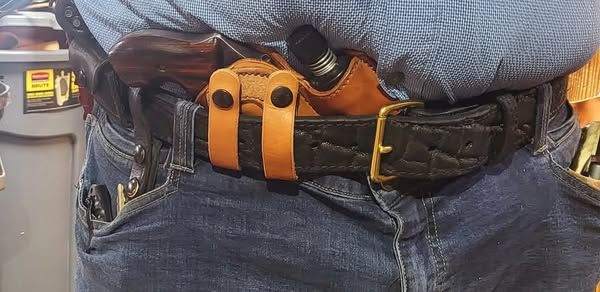
On the plus side, the IWB Boomer’s significant forward rake / negative cant neatly aligned the gun with the direction of travel that the gun hand would take to find it, providing an ergonomic advantage on the draw. In this sense, it reminded me of some of the competition holsters that present the gun at the same angle and allow for an amazingly fast draw. The holster also enhanced concealability by lowering the profile above the belt.
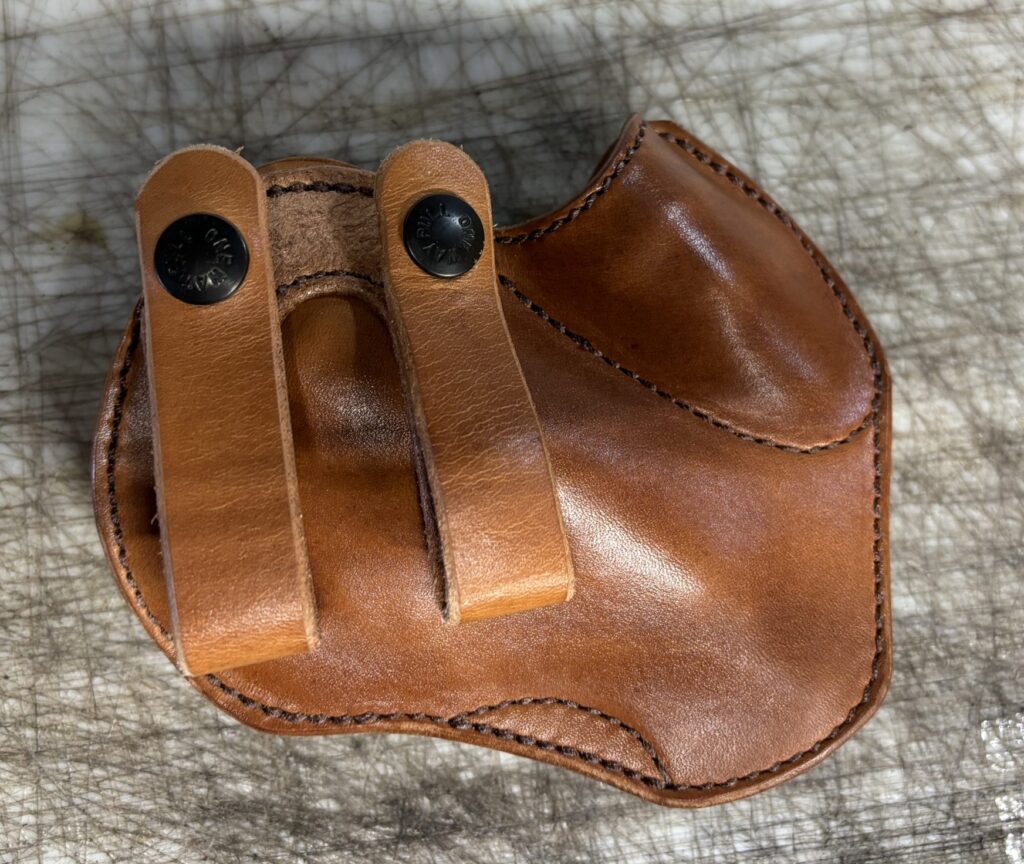
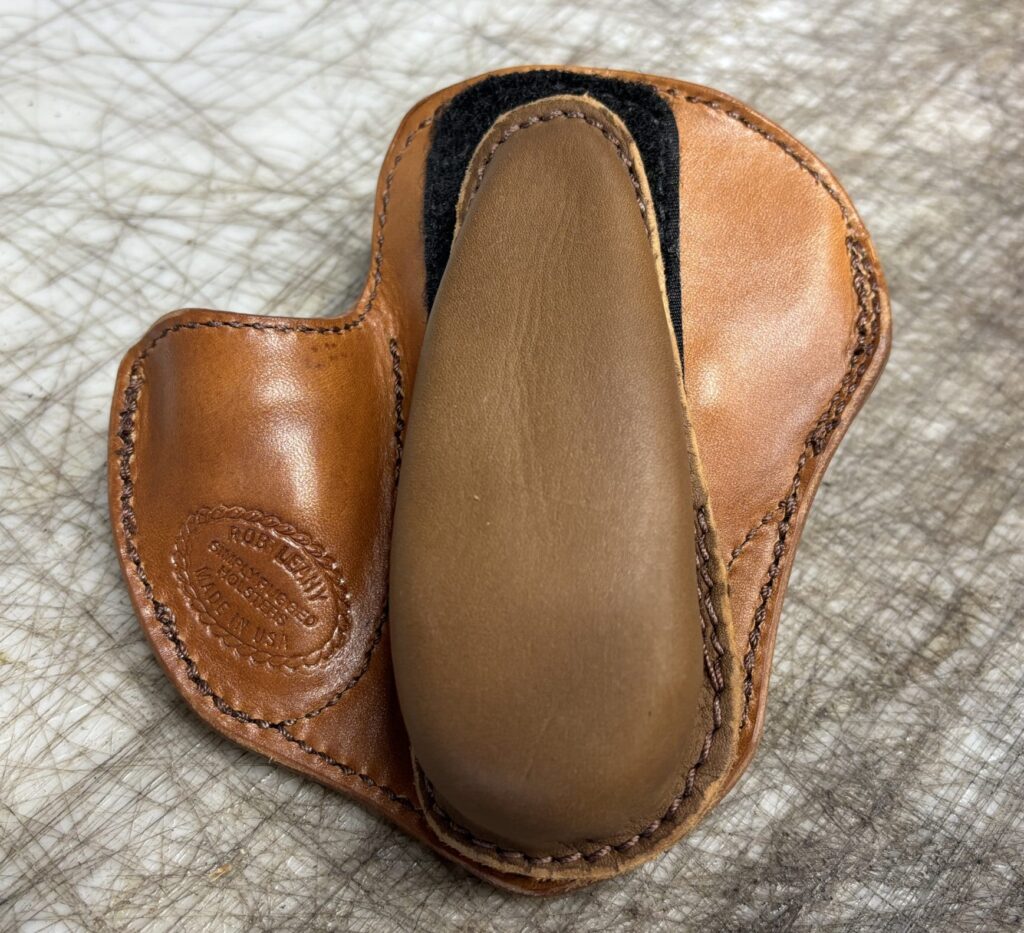
On the other end of the scale, the extreme rake sacrificed the ability to get a clean grip on the gun, because the toe of the grip frame rested on the top edge of the belt (or even overlapped the top edge and rested below it, on the outside of the belt, depending on the grip length), and didn’t allow sufficient room for the gun hand’s fingers to get in between the belt and the gun’s front strap. In practice, the fingertips had to lift the gun out of the holster a little, before the fingers had room to wrap around the grip, and form a firing grasp on the gun.
We discussed this at the shop and I expressed my preference for a holster with less forward rake, which would carry the gun closer to a neutral angle in the pouch, and allow me to obtain a sufficient grip on it without breaking my wrist more than about 20 degrees.
Fifth Generation
By December 2024, Rob had delivered the fifth version of the concept to me. This fifth holster incorporated nearly all of the features I’d been asking for in a leather AIWB rig with an integrated pouch, to wit:
-
-
- A holster that conformed closely to the bottom edge of the gun, to promote a narrow footprint that wouldn’t bind on the upper leg / groin;
- A gun pocket with a neutral-to-slightly-rearward cant, that carried the gun at an appropriate height to promote stability while preserving access to the grip;
- A longer holster body, to aid in preventing the gun from tipping outboard;
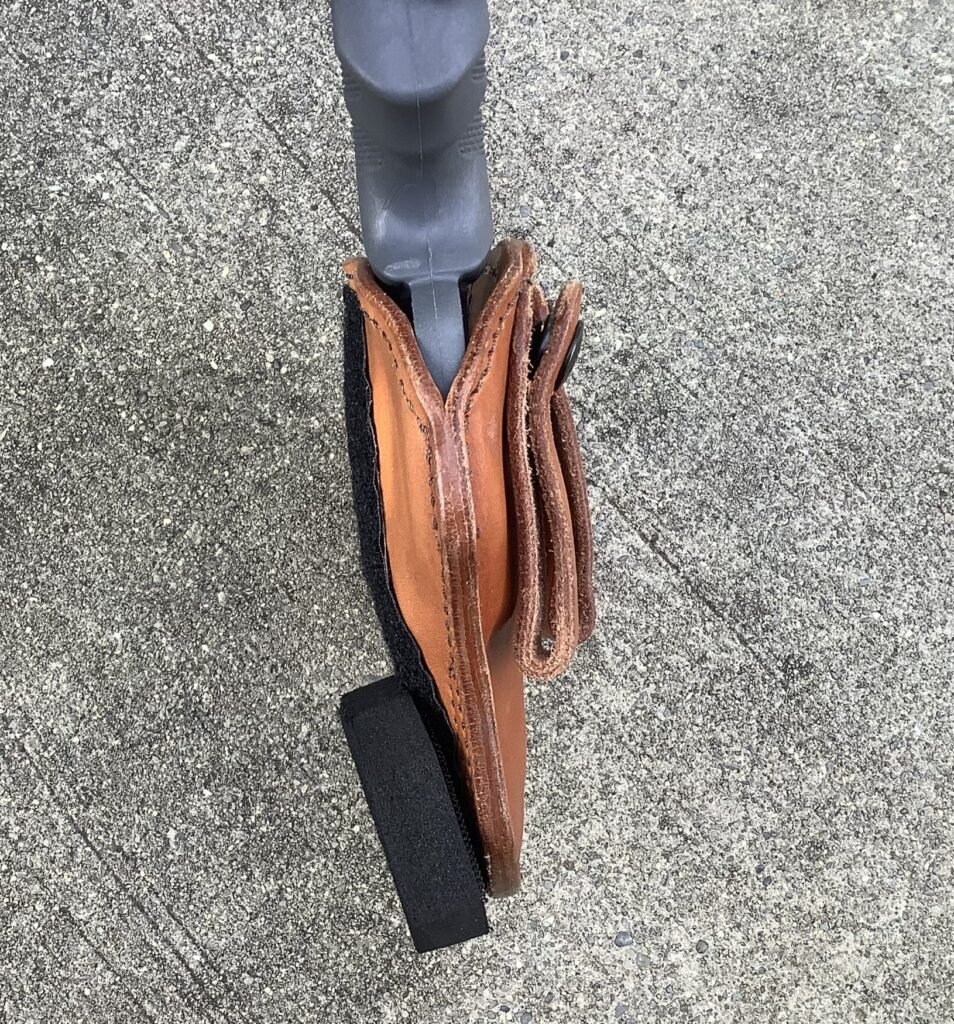
- A female Velcro strip on the back, which could be used to mount a foam wedge for comfort and concealability;
- Pull-the-Dot snaps on proper fitting belt loops, to promote stability and security;
- A speedloader pouch that filled the void ahead of the gun, and presented the speedloader vertically, for an efficient draw.
-
Wearing this 5th generation prototype showed me very quickly that the rig was more comfortable than the previous samples. The skirt of the holster body was narrow enough that it didn’t bear too much on the inguinal ligament, but was long enough to provide some leverage against the abdominal muscles trying to push the grip of the gun outboard.
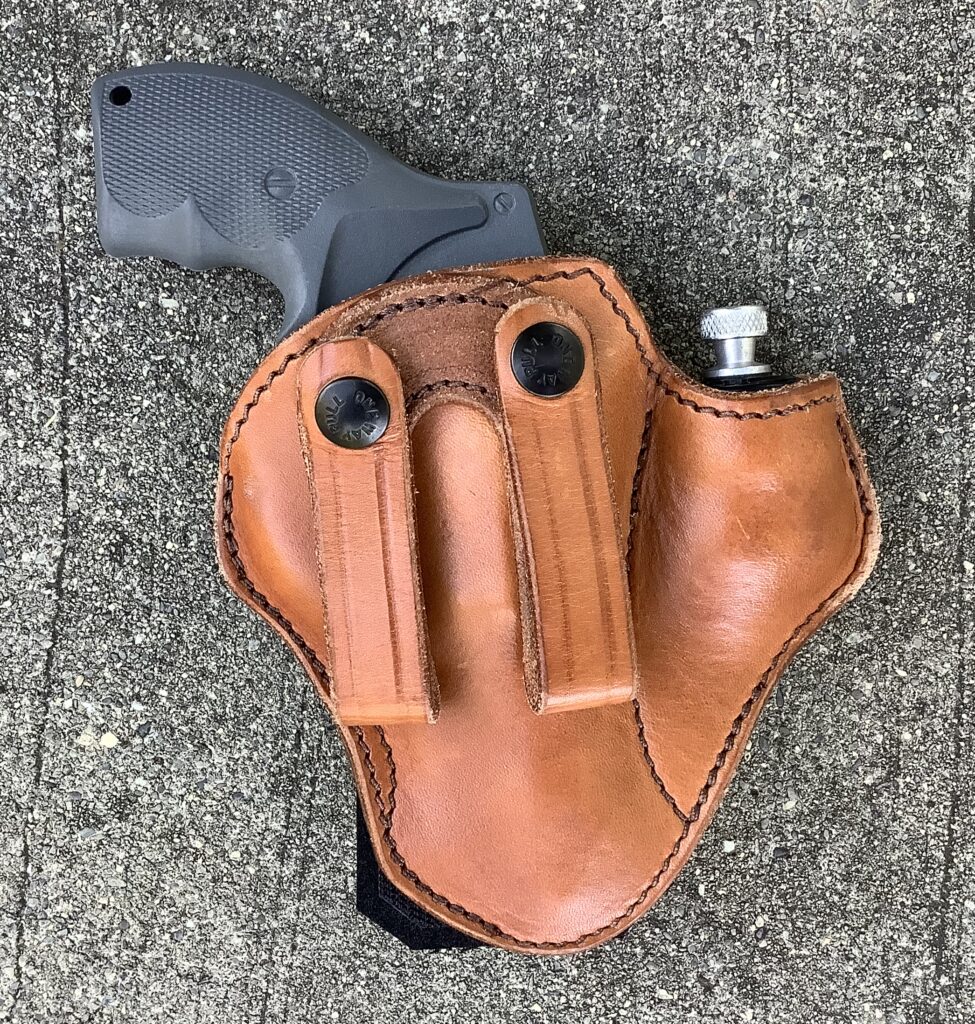
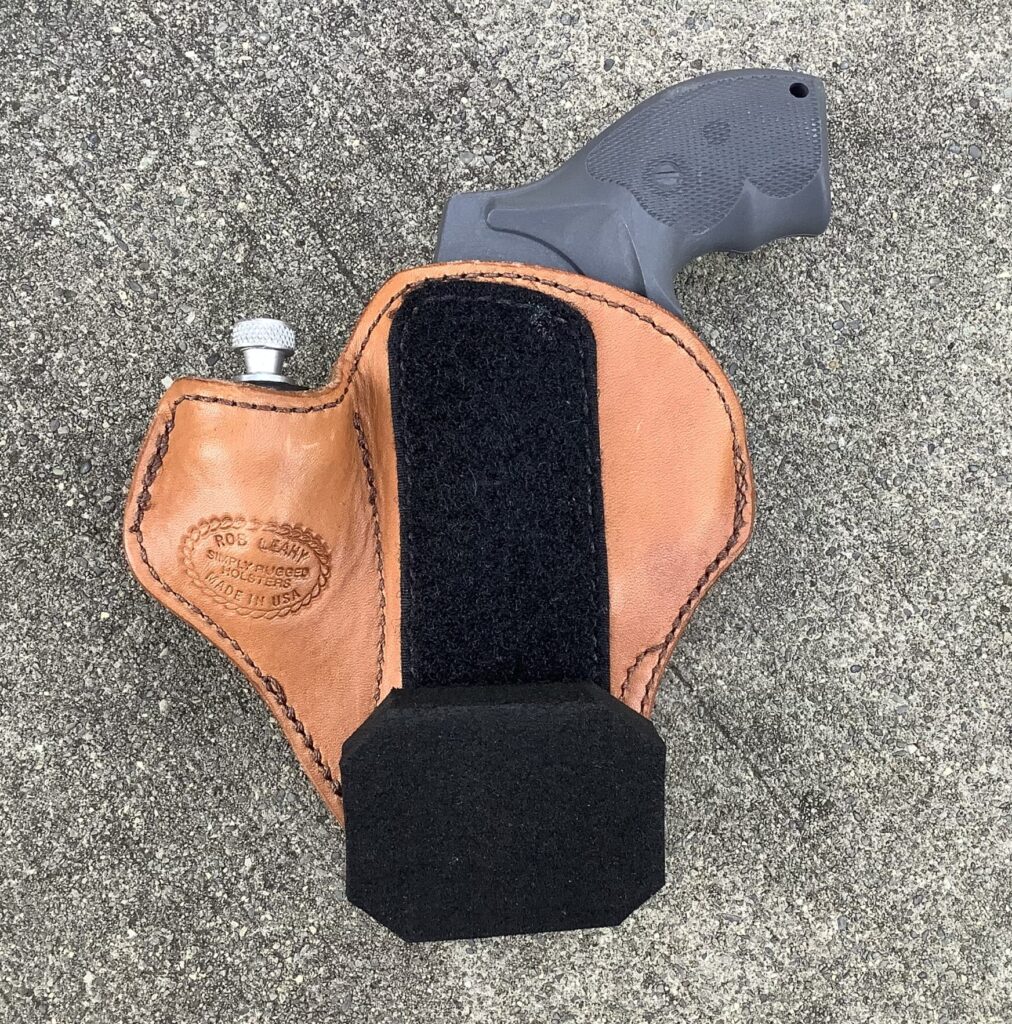
Drawing the gun from the pouch was much easier, thanks to its more neutral cant. I had to break my wrist slightly more than I wanted to establish grip, but the gun was carried at a much better angle than with the previous, forward cant versions. The gun came out cleanly, and went back into the pouch cleanly as well. The pouch was properly tensioned to provide the proper amount of friction on the gun, and keep it in place.
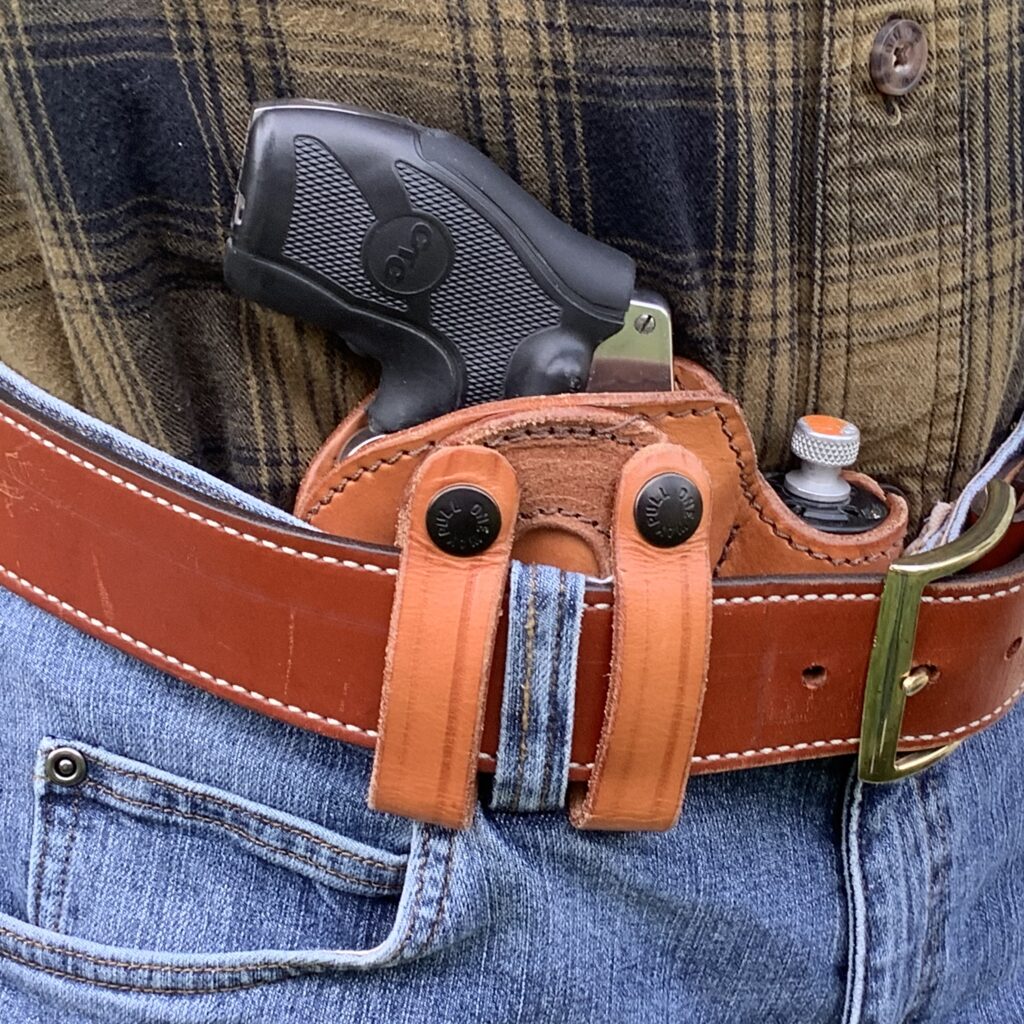
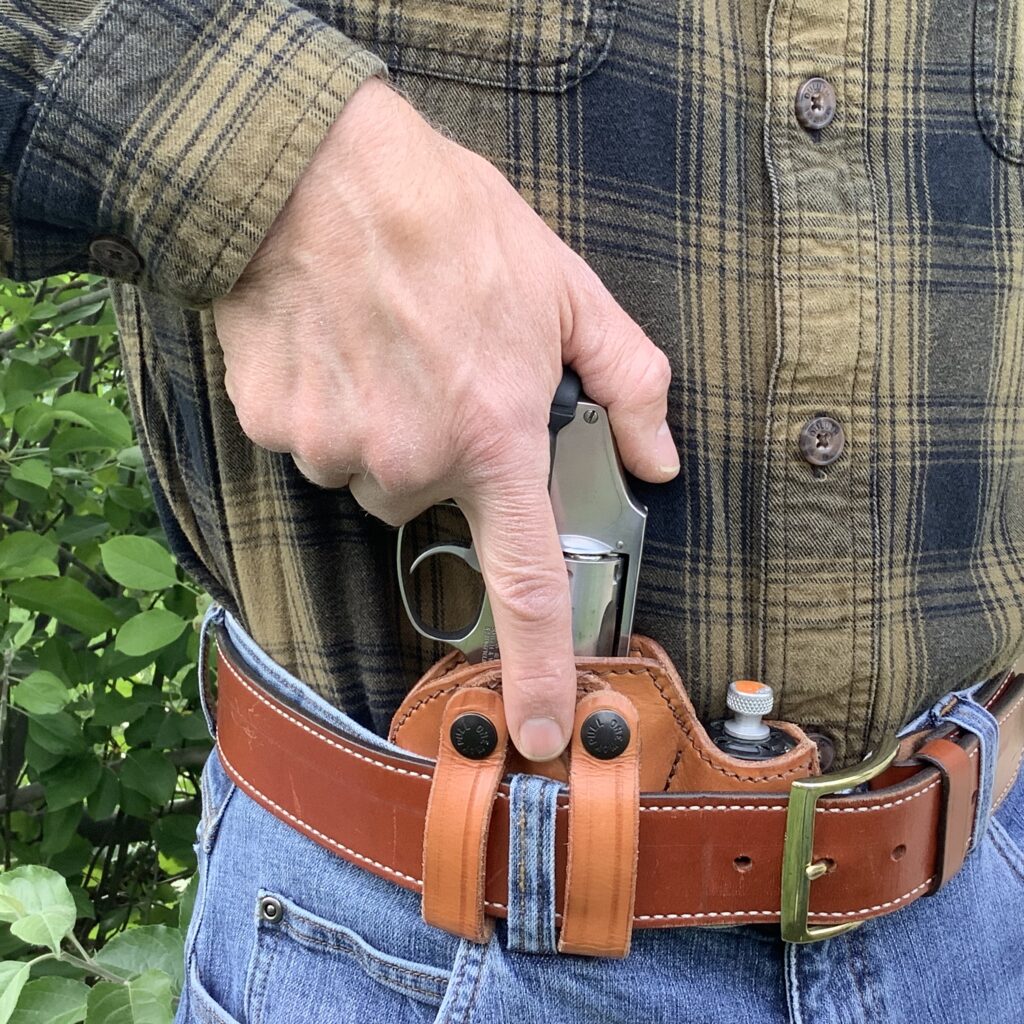
The Pull-the-Dot snaps on the straps did their job nicely, and kept everything secured throughout the day’s activities. Unfortunately, the straps were cut too long for my 1.5” belt, which gave the holster a tendency to ride up and sit too high, especially after I sat down, squatted, or bent over. If it wasn’t for the longer holster body, and the foam wedge I’d attached to the back of the holster (courtesy of the piece of female Velcro that Rob had attached to the back, for this purpose), the whole package would have spilled over the top edge of the belt, courtesy of its high center of gravity.
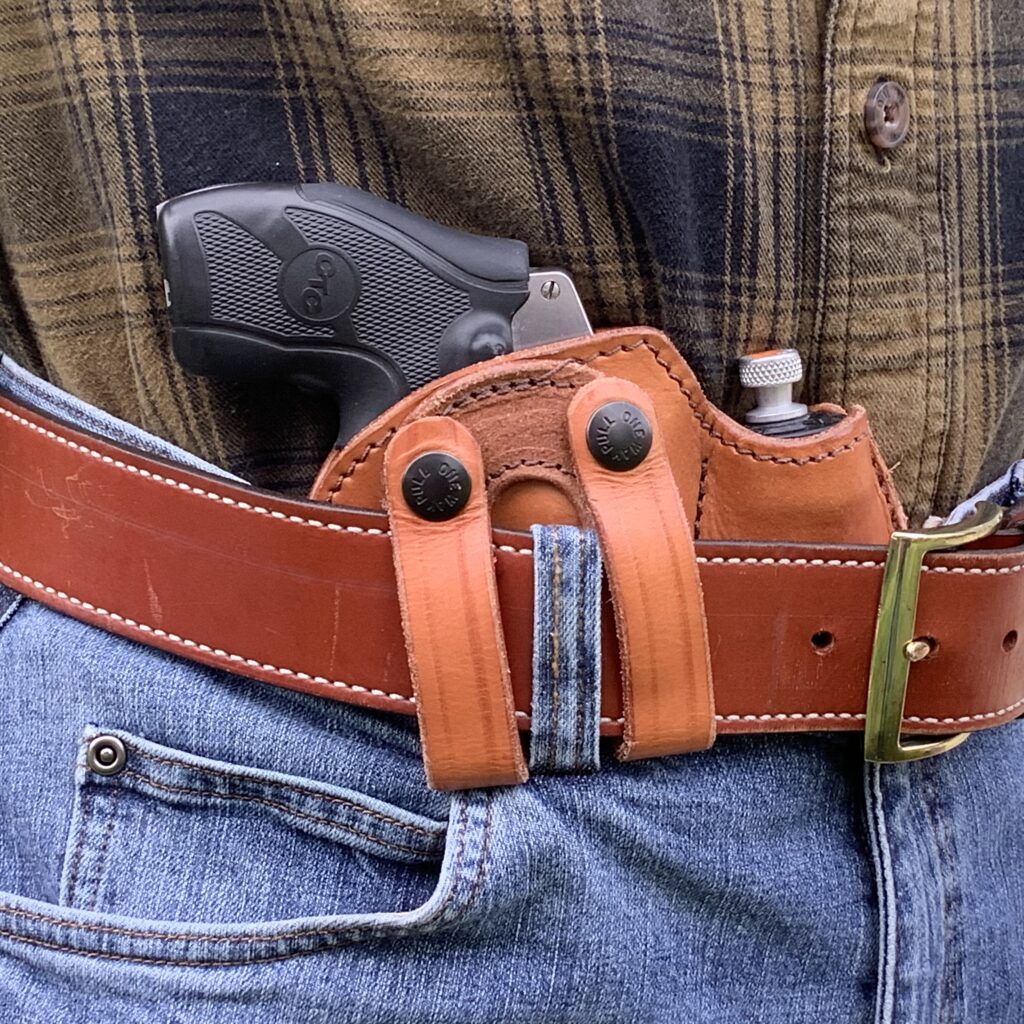
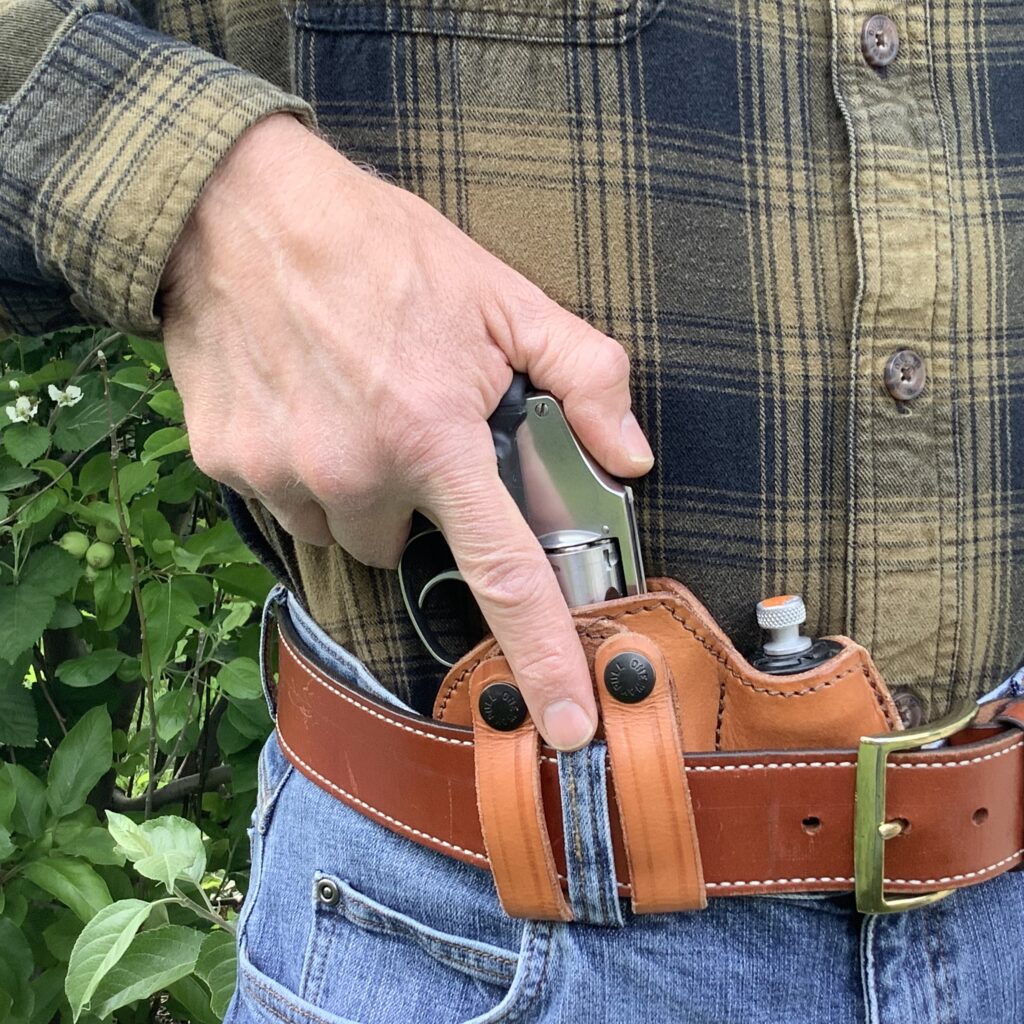
On the plus side, having the front loop too long allowed me to rotate the holster to a more rearward cant on my belt, which aided the draw–the holster didn’t have the radical 45 degree cant of the fourth design when worn in this fashion, but the extra 10-15 degrees of rear cant was helpful, and kept me from having to break the wrist too much. This new angle placed the loader pouch too far above the belt line, but the loader remained secure and the draw from the pouch was comfortable.
Speedloader Stuff
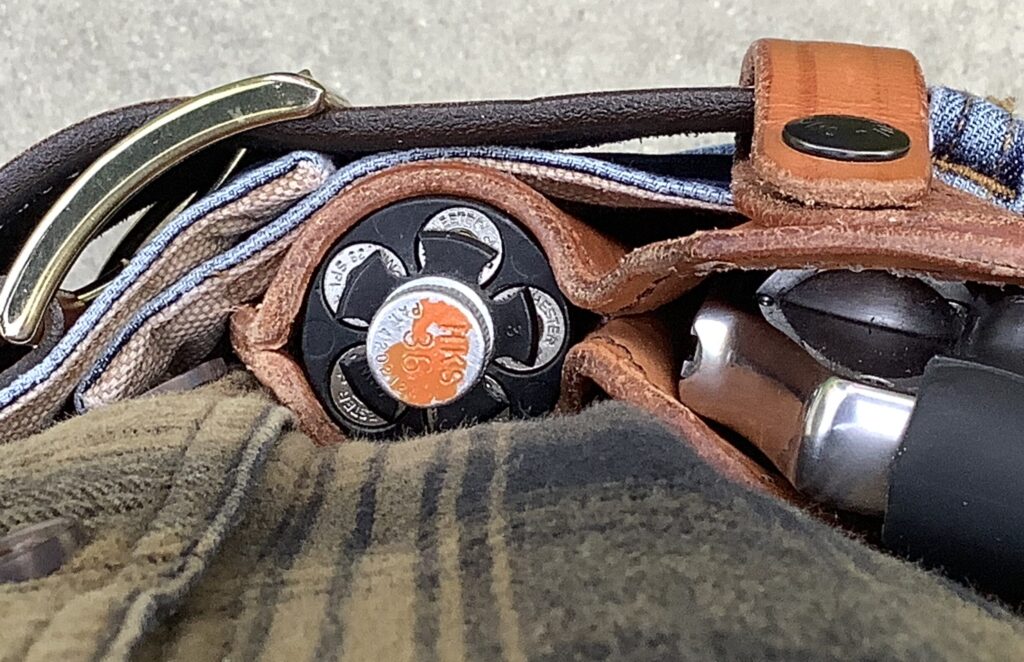
Speaking of, the 5th Gen holster’s integral speedloader pouch was well positioned for a vertical draw—a dramatic improvement over all previous generations, which required an angled drawstroke that was towards the centerline of the body. It carried my HKS #36 speedloader securely, but there was one issue I encountered with the combination that we hadn’t anticipated.
The HKS #36 is designed to promote some movement of the captive cartridge tips, to facilitate mating the loader to the cylinder with a variety of grip dimensions. HKS calls this the loader’s “jiggle,” and it helps to ensure the loader will work with grips that have shallow speedloader relief.
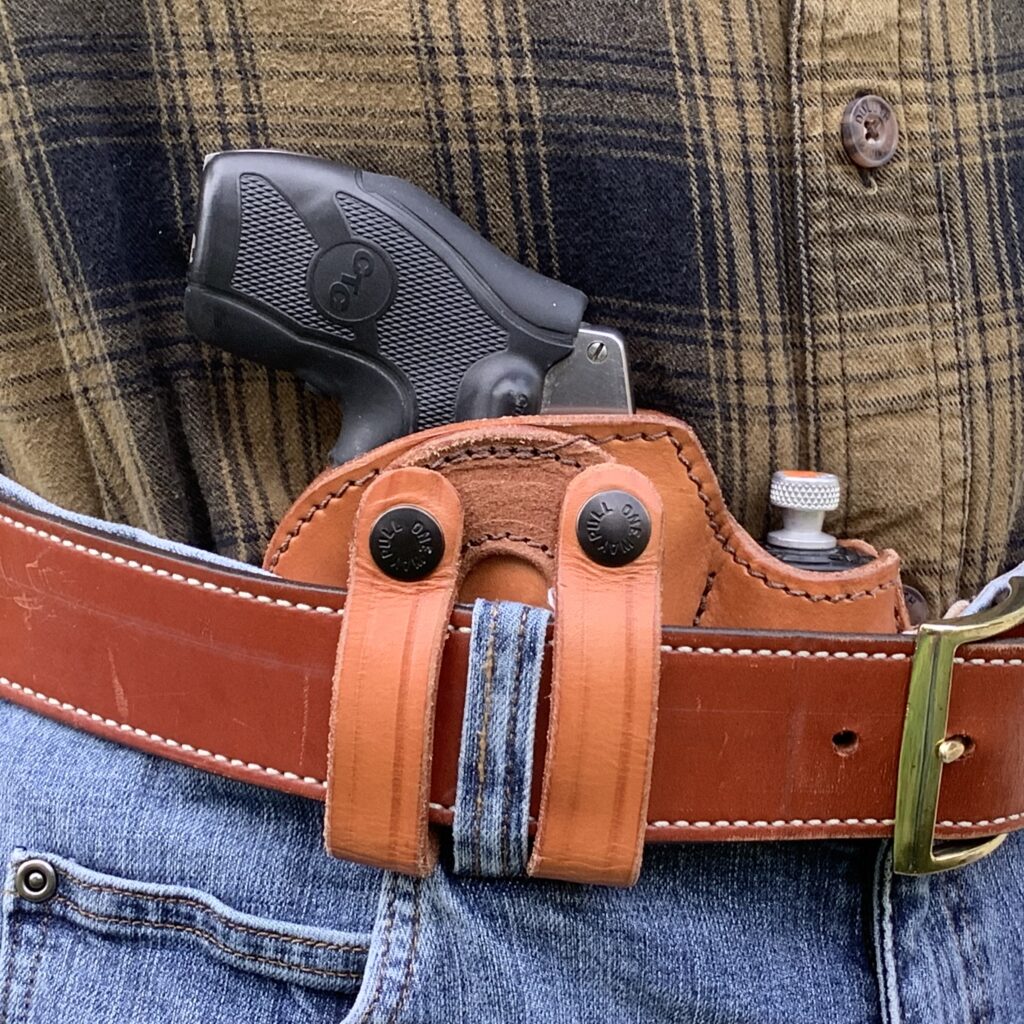
Unfortunately, this jiggle made the cartridges rattle inside the hard leather walls of the speedloader pouch, creating a noise signature that I’d rather avoid as a concealed carrier. The HKS was not alone in this regard, as a Revision CV Pod speedloader suffered the same fate, with its similar loose hold on the cartridges.
Since I like the HKS loaders, and they’re one of the dominant designs on the market, I considered how we could modify the pouch to combat the cartridge rattle. The easiest thing would be to change the shape of the pouch near the bottom, to hold those cartridges more firmly. Alternatively, gluing a shaped piece of foam into the bottom of the pouch would probably have done it, as would lining the bottom of the pouch walls with a thin layer of suede.
A more complex solution involved a short piece of dowel rod, screwed into place from the bottom of the pouch, to spread the cartridges outboard and hold them in place–technically possible, but not desirable, from a manufacturing standpoint.
Fortunately, the Jet Loader and SL Variant speedloaders I tried didn’t rattle in the pouch, because they hold their cartridges securely, with no rattle. The taller knobs on these loaders also made withdrawing the loaders from the pouch an easy task. These loaders are some of the best designs available, but their price and limited availability have kept many RevolverGuys from obtaining and using them. Instead, it seems most RevolverGuys are prone to use loaders like the HKS, Safariland, and 5-Star units, which are less expensive (especially the first two) and can be more readily found.
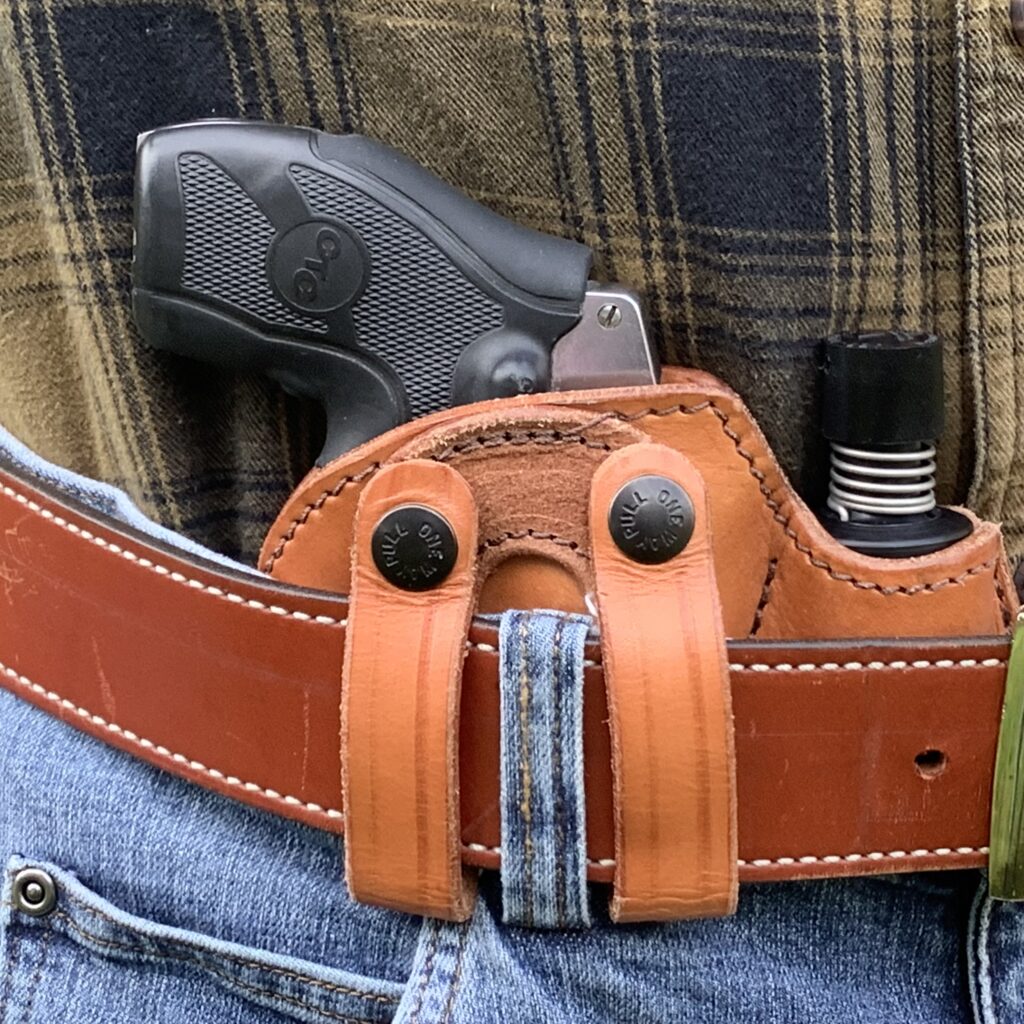
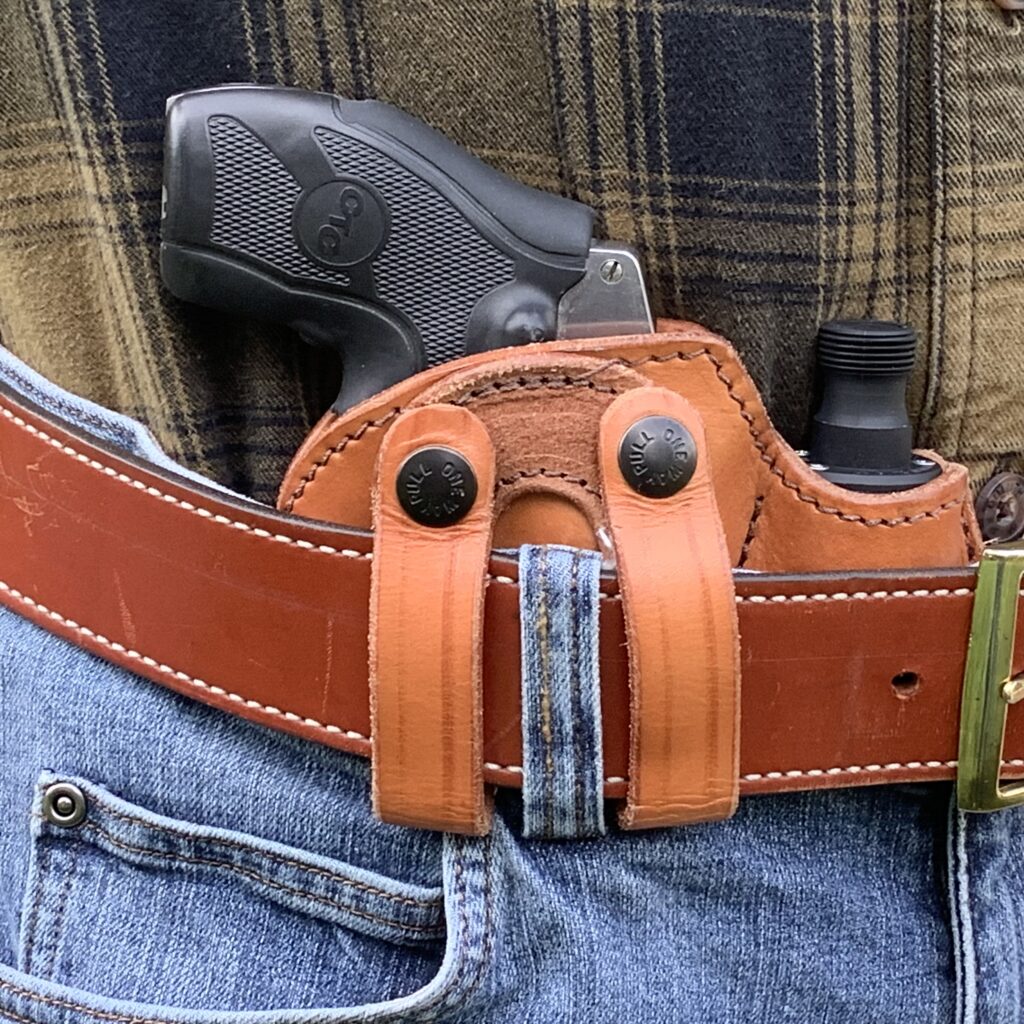
Speaking of Safariland, the firm’s Comp I loader was incompatible with the pouch on the holster, as it offers no knob or handle to withdraw it from the pouch. If this pouch was carried in a position above the belt line (like Rob’s Boomer OWB holster), you could scallop the edges of the pouch to create a set of pinch points that would let you get a purchase on the loader body and withdraw it, but with the pouch carried below the belt line, it’s not very practical. A pouch like this really demands a loader with a knob or handle that’s sizeable enough to allow you to pull the loader out of the pouch by it, so the Safariland J-Frame option is a No-Go. However, if you were carrying a larger gun in the K- or L-Frame class, the pouch would work with the Safariland Comp II or Comp III loaders for those frame sizes, as they have knobs
Name Games
Armed with the feedback from the 5th generation prototype, Rob thought he was ready to make some final changes and start production, but needed a name for it. He’d already done a soft launch of the holster as the “IWB Boomer,” but wasn’t satisfied with the name, and wanted something catchier.
We batted a few ideas around before I suggested he could name it the “Belly Gunner.” The name made me chuckle, just like his previous “Boomer” one had, and I thought it was a good fit for a gun carried forward of the hip, near the abdomen. I don’t think Rob liked it much at the start, but it quickly grew on him, and soon it was decided: Belly Gunner, it would be.
A pause
The holster was briefly offered on the Simply Rugged site in early 2025, then withdrawn from the catalog, almost as quickly, for a number of reasons.
First, the design wasn’t mature yet, and we still needed to hammer out some of the details so it would perform as well as the other holsters in the Simply Rugged family.
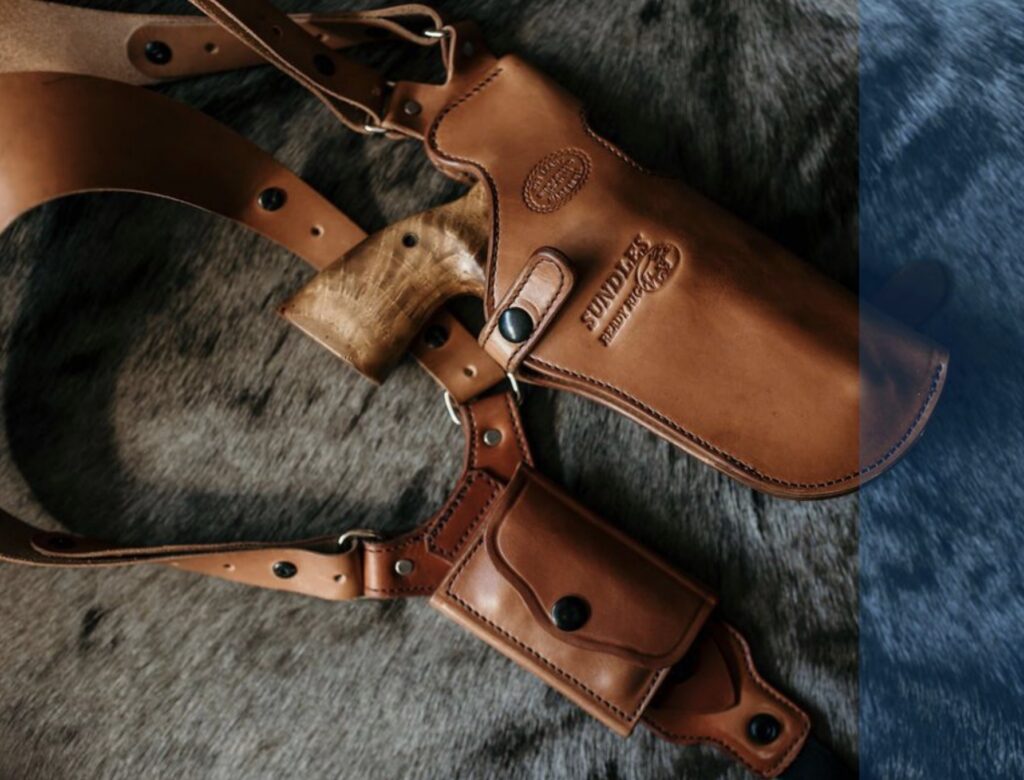
Additionally, Simply Rugged had just introduced the Tim Sundles Ready Rig, and was not prepared for the demand that followed. The Ready Rig orders overwhelmed the small shop, which was going through some personnel changes at the same time, making it a bad time to finalize the Bellygunner design and bring it to market.
Lastly, Rob was making preparations to move the shop to a larger facility, because they’d outgrown the small shop they were working out of. The logistics of the move took priority over finishing and marketing the new design.
Enter jake
The delay was fortuitous, because it set the stage for the next evolution of the Bellygunner design.
In early 2025, Rob’s son Jake had left Alaska, and returned home to Arizona, with his family. He very quickly became a central figure in the shop, and took an active role in building holsters and scouting a new location for the growing business. When I saw him in November of 2025, after I’d arrived for that year’s Pat Rogers Memorial Revolver Roundup, we discussed the Belly Gunner project at length. Jake was interested in finishing the design work, and getting the holster into the catalog. He had some of his own ideas on how we could enhance the holster, and I was excited to get some new blood involved with the stalled project.
The work would have to be delayed for a bit, as the shop was moved to its new location in early 2026, but by April, Jake had enough bandwidth to start working on the Belly Gunner again, and we were off to the races.
Sixth generation
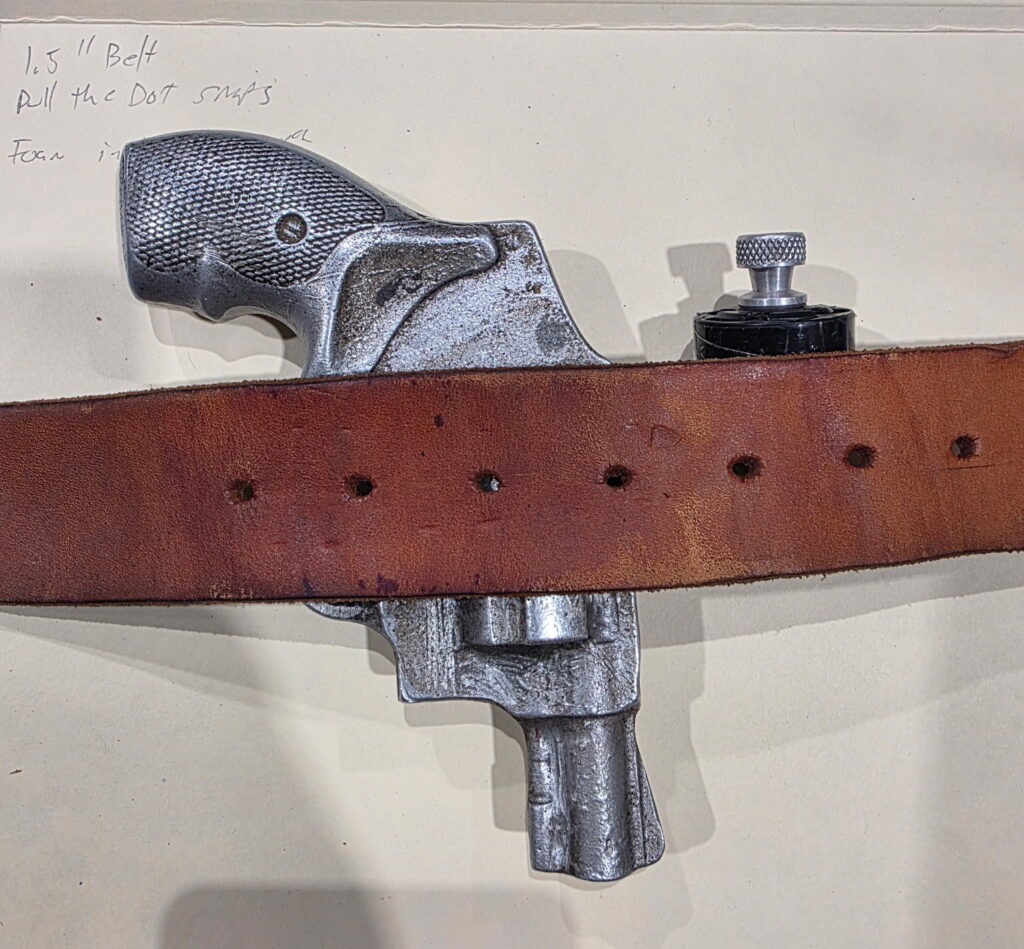
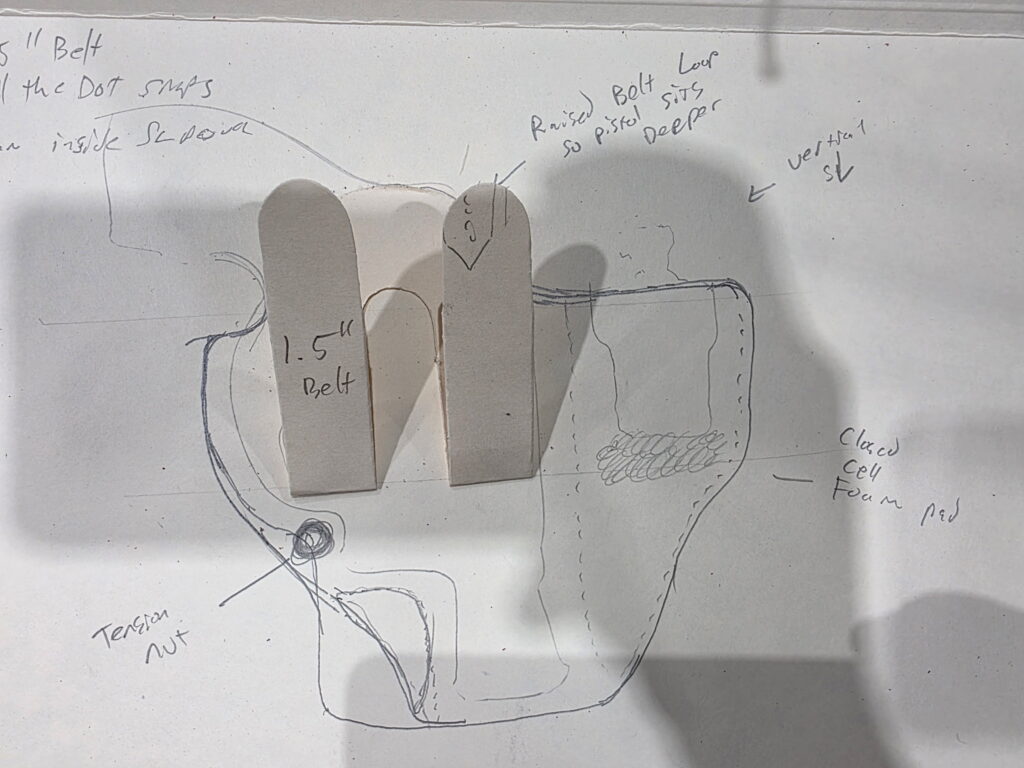
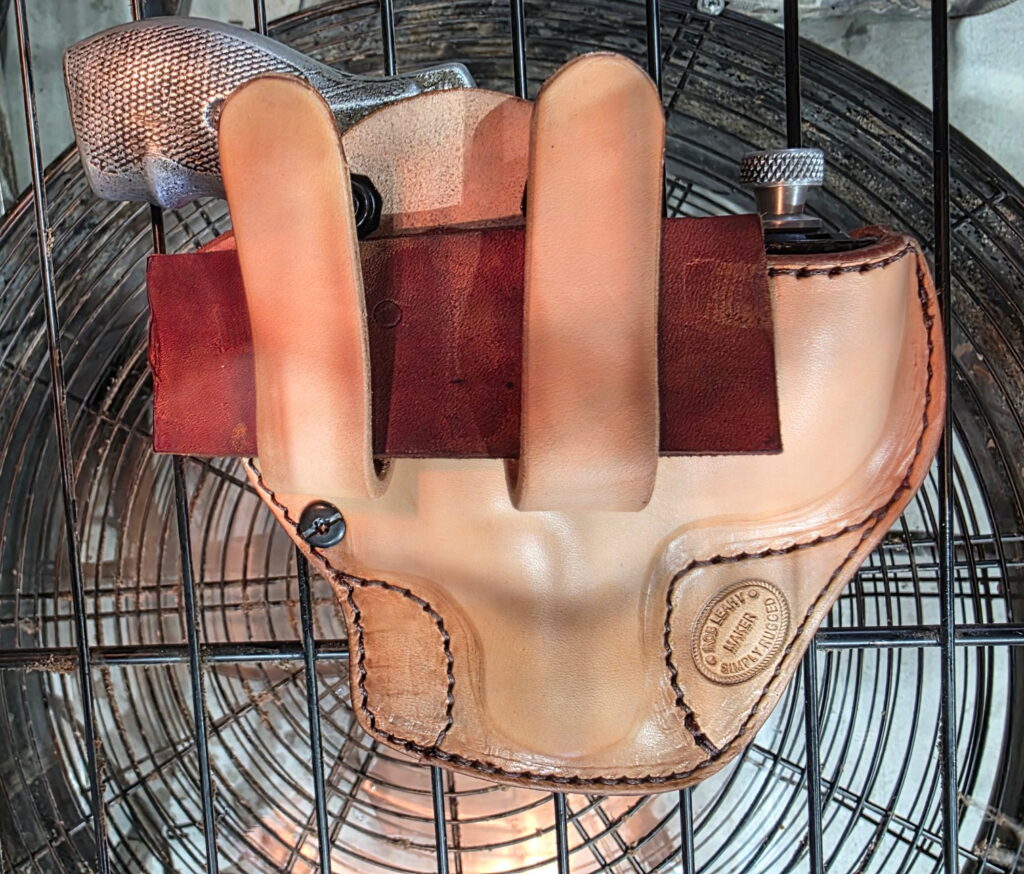
The back-and-forth with Jake resulted in a sixth generation of the Belly Gunner design. This one followed the general profile of the others, but improved on the aspects of ride height, weapon cant, and speedloader pouch design. The 6th Gen also introduced tension screws to adjust the retention qualities of the gun and speedloader pouches.
For the first time, I thought we’d really gotten somewhere with the idea. Jake’s rendition of the Belly Gunner was a marked improvement on the previous efforts, and came very close to meeting all my needs.
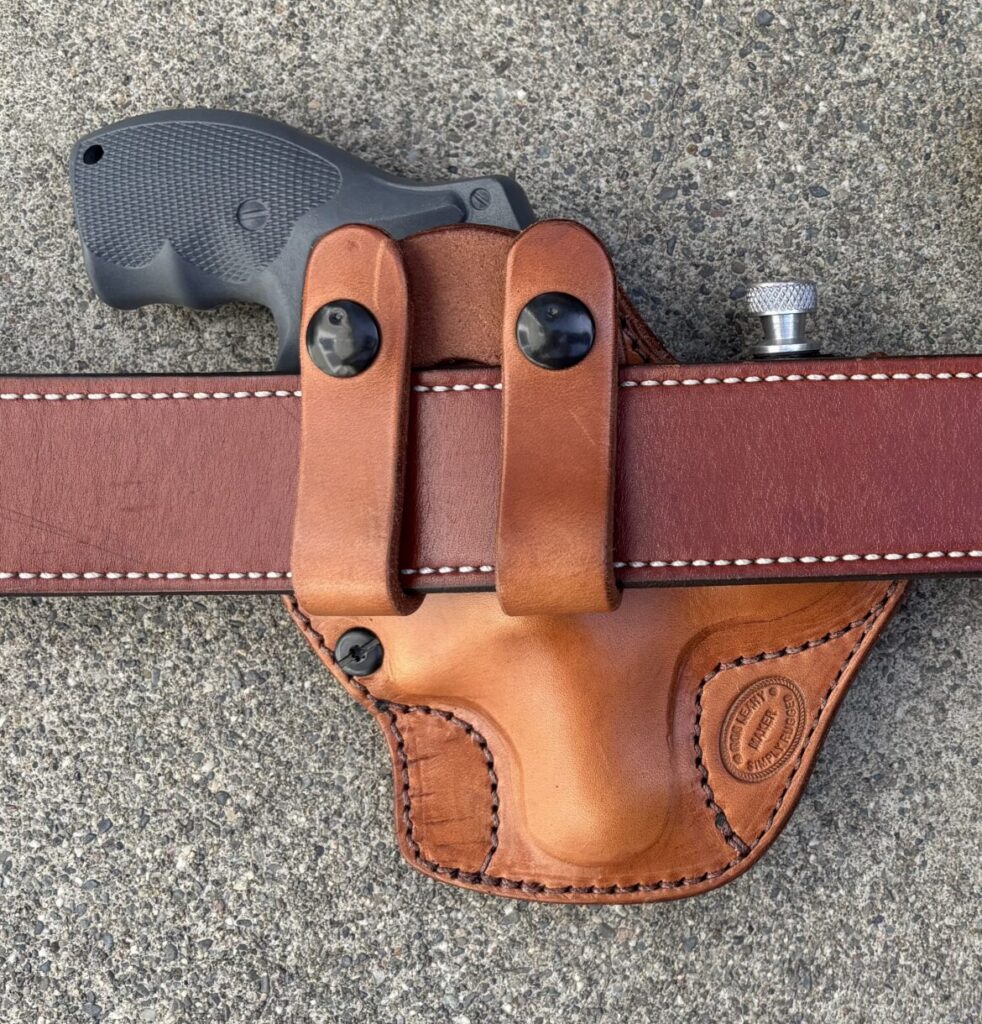
There were a few tweaks that still needed to be made, however. First, the skirt on the holster was too proud on the trailing edge, and needed to be trimmed back to avoid binding on the leg. Additionally, the belt loops were still cut a little too long for my 1.5″ belt (and even for my 1.75″ belt). The extra length allowed the holster to shift a bit more than desired, when it was worn.
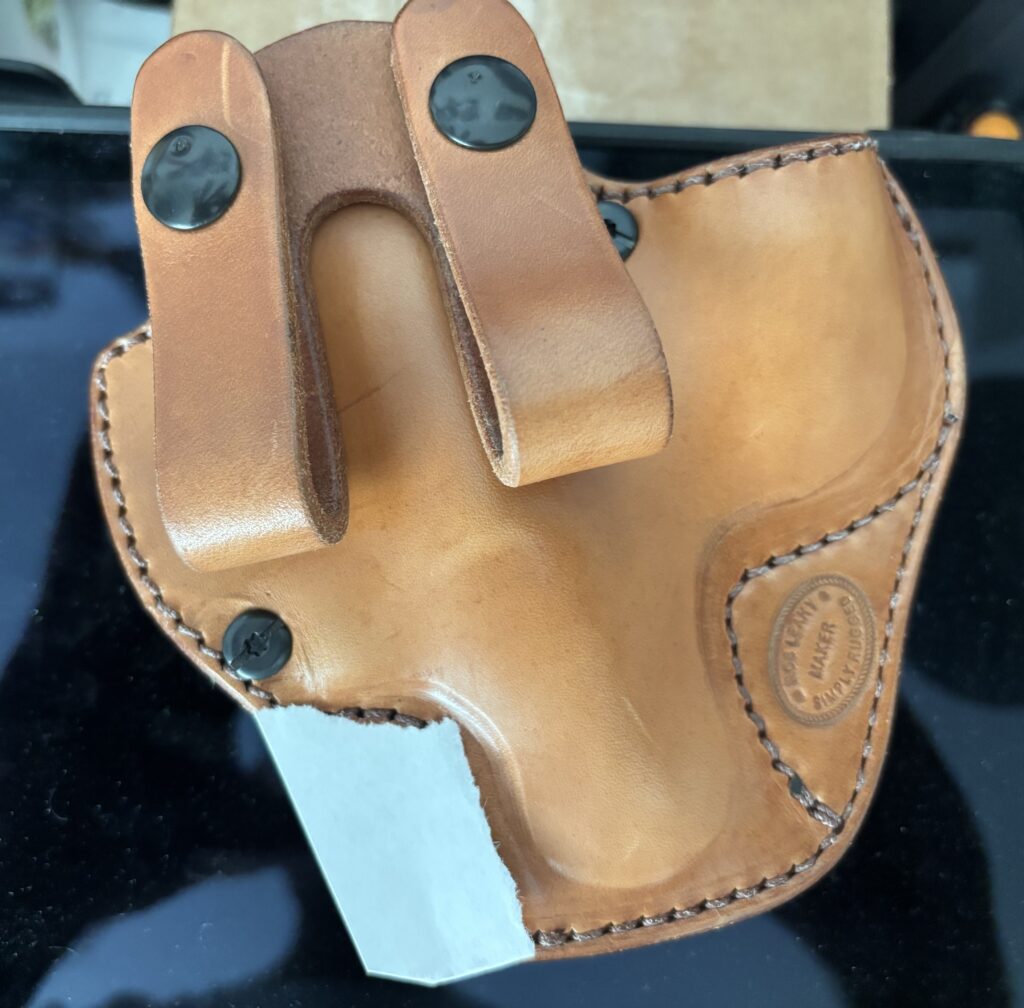
The most significant effect of this shift was that it exacerbated the tendency of the holster to crowd the area between the belt and the front strap of the grip. The toe of the gun’s grip rode too close to the top edge of the belt, preventing me from getting my fingers in there to estabblish a firing grip on the gun, while it was in the holster.
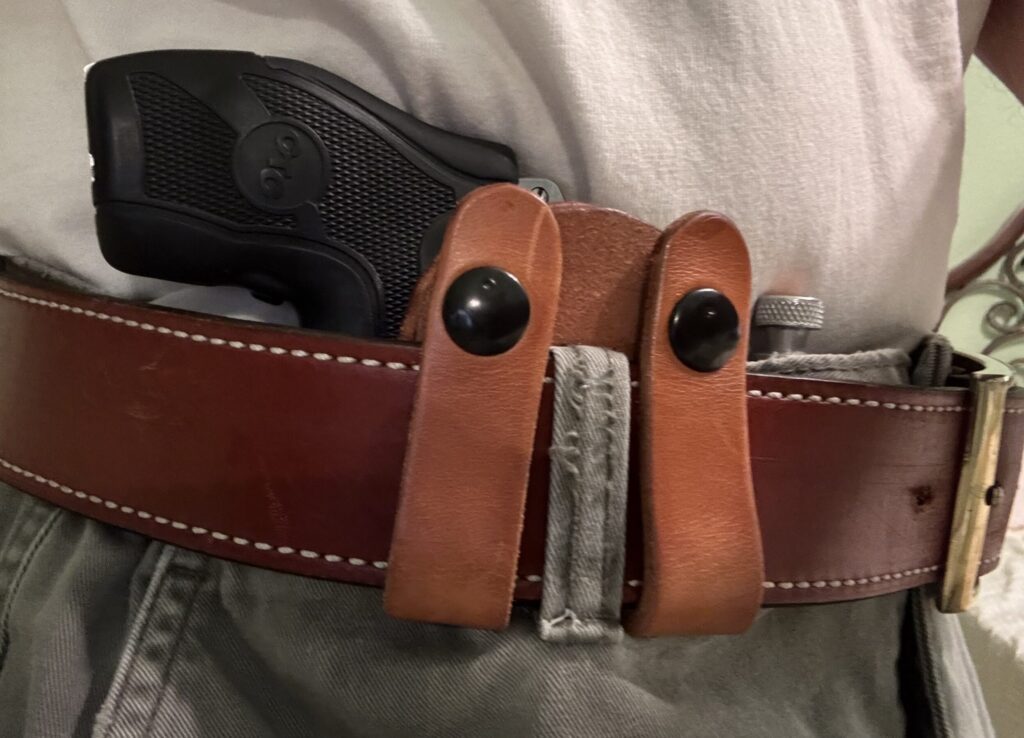
Armed with this feedback, Jake made some modifications, and announced the Belly Gunner as a catalog offering in July of 2026. Interest was strong in the design from the very start, which made both of us happy!
Final Production
As mentioned, the Belly Gunner launched in July 2026, and it was so popular that it took a while for me to get some production samples. Those finally arrived in October, and I was pleased to see that Jake acted on most of the feedback I’d given him about the Gen 6 design.
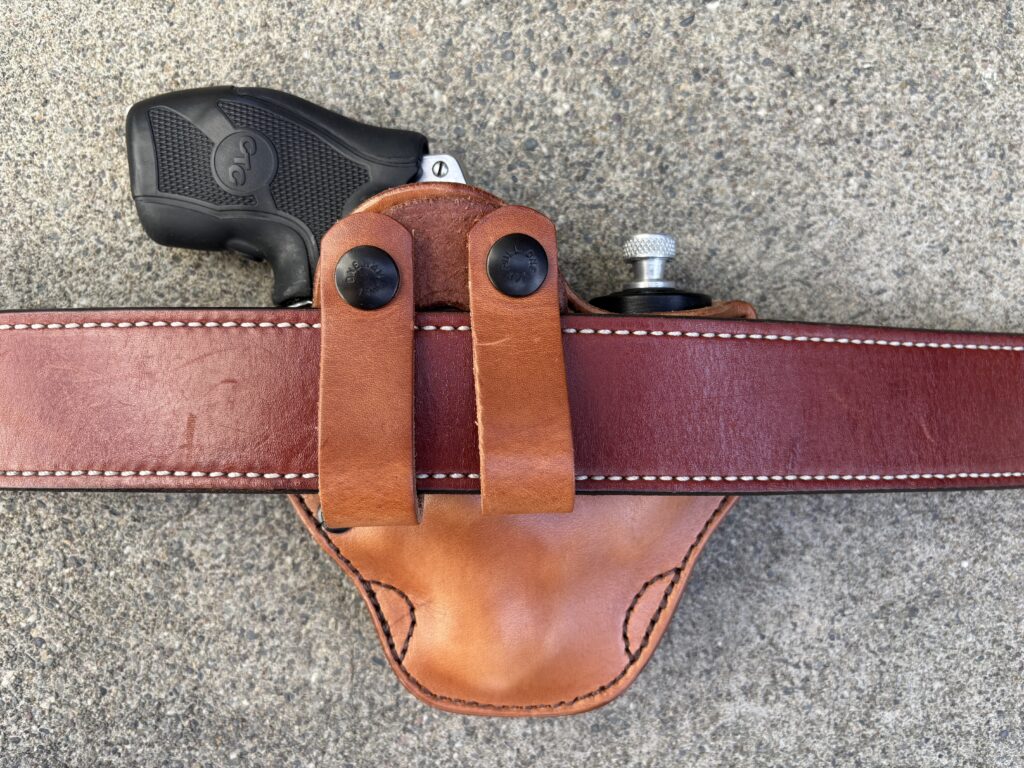
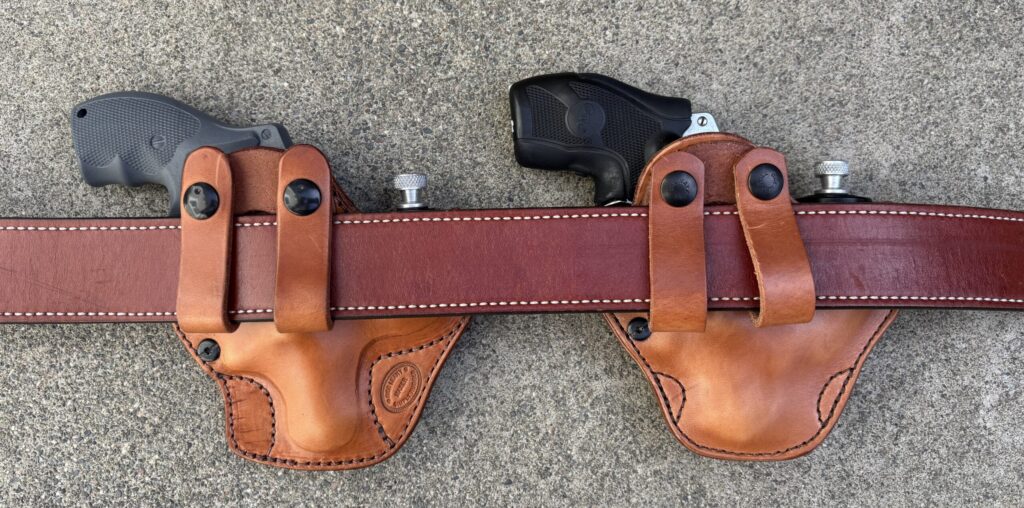
The production version of the Belly Gunner improves on Jake’s first attempt by offering a lower profile skirt on the trailing edge of the holster, which makes it more comfortable to wear. The ride height has been adjusted as well, to provide improved clearance between the top edge of the belt and the leading edge of the grip frame–I can now get a clean grip on the pistol while it’s in the holster, without getting crowded by the belt.
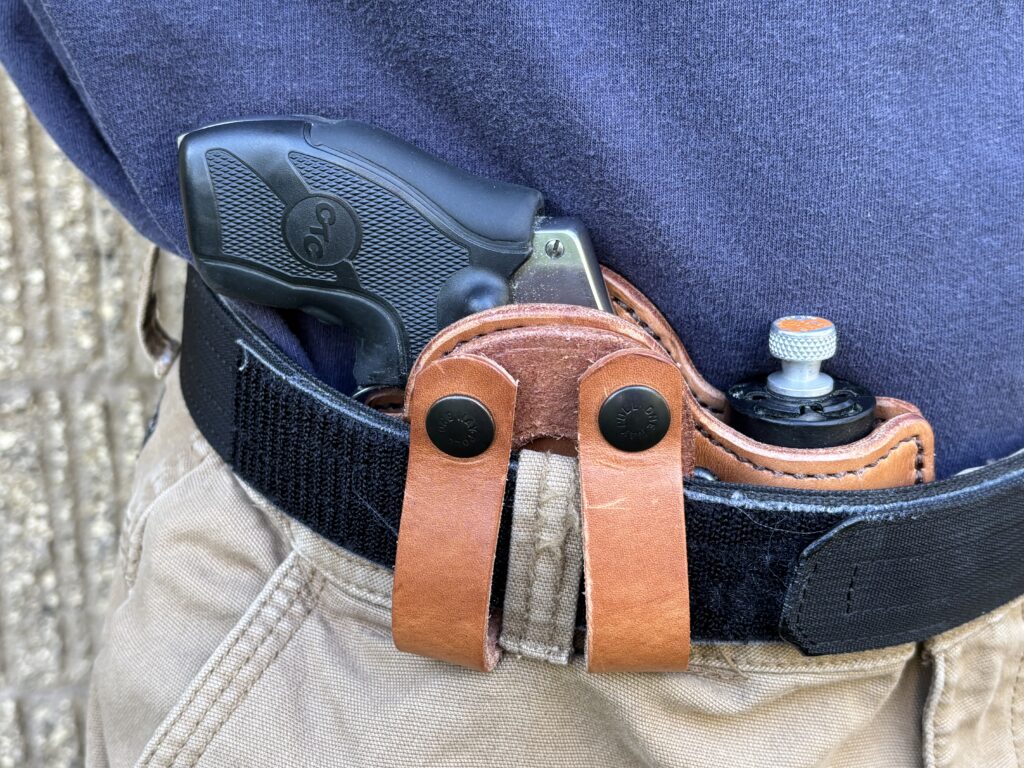
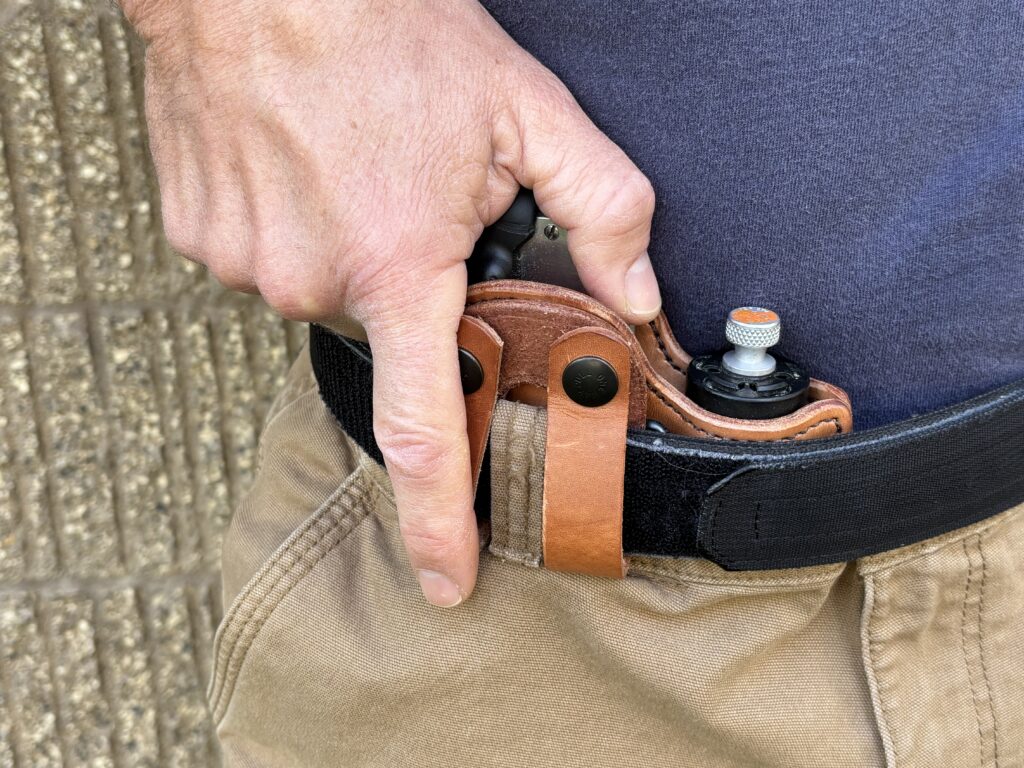
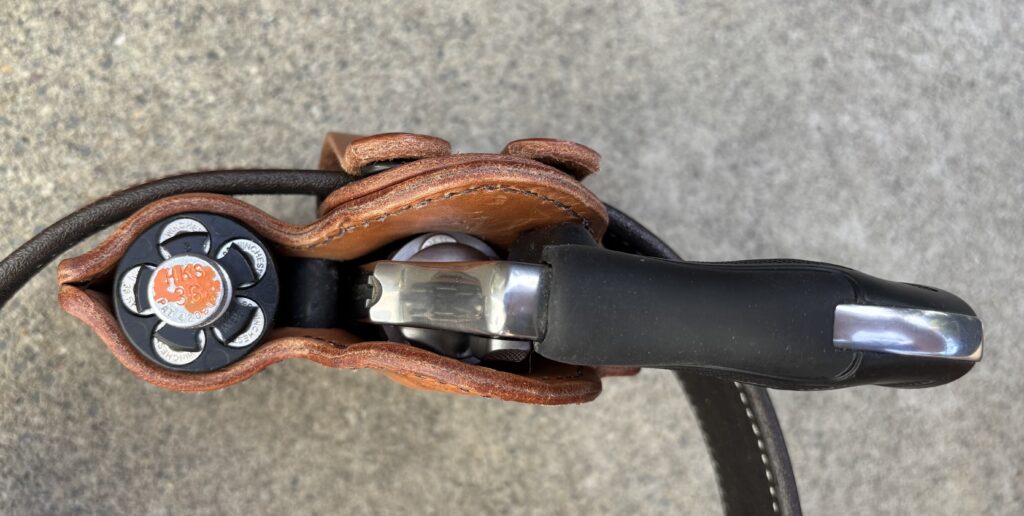
The speedloader height and angle works nicely on the Belly Gunner, providing good access to the reload, just as I’d intended.
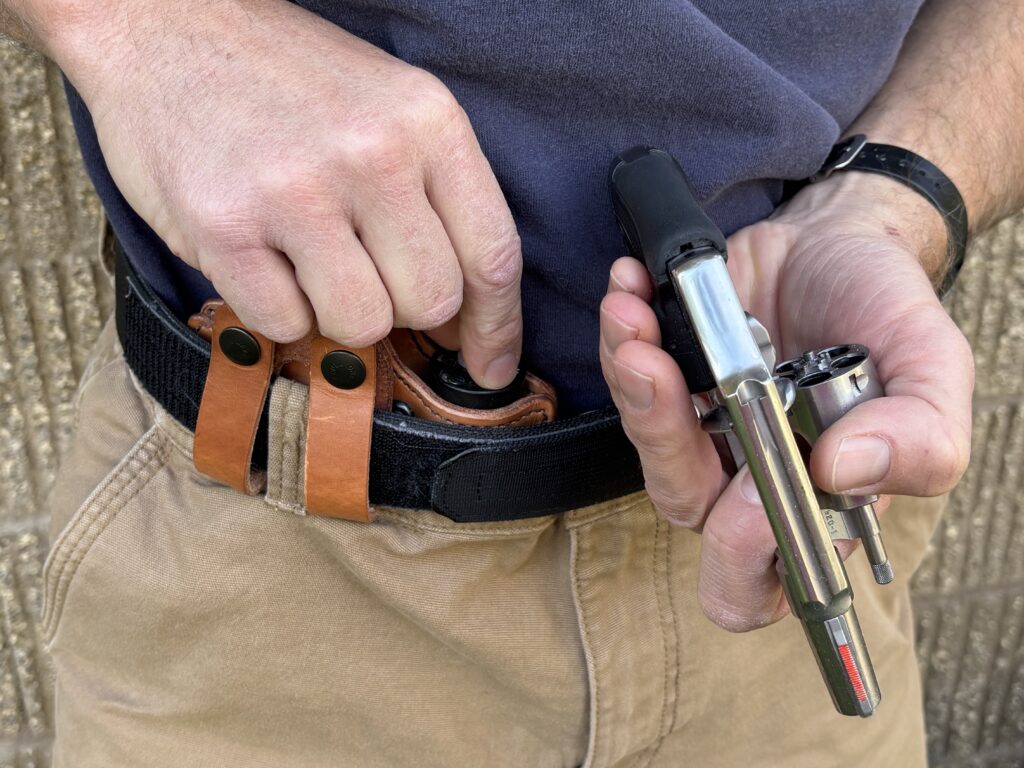
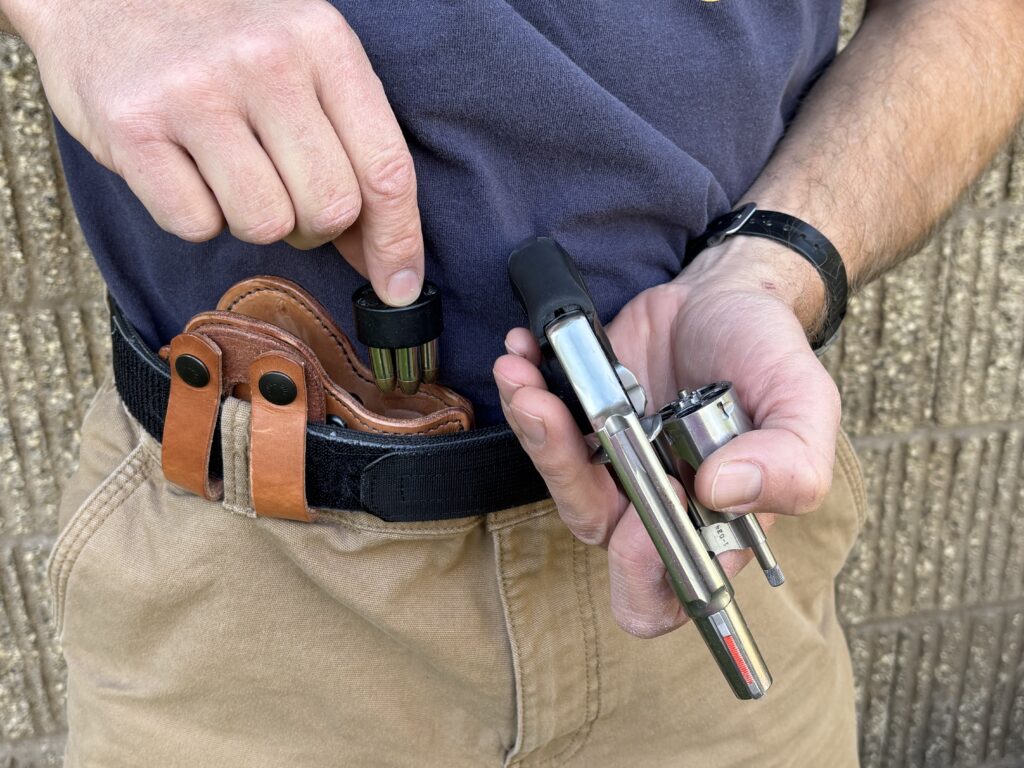
I’ve still got some personal nits to pick about the final design, though (because I’m THAT guy). The belt loops are still a little long for my tastes, and allow the gun to rock too much on my 1.75″ belt. This will probably increase comfort for some users, but I’d prefer a tighter fit, especially because I normally wear a 1.5″ belt. Fortunately, Jake wisely designed the holster to incorporate a loop that’s not sewn to the pouch, as it was in earlier generations. This will allow me to easily mount a replacement loop of the proper length (already on order) without any drama. Slick.
Additionally, I find the tension screw between the loader pouch and the holster pouch makes the holster a little too rigid in that area, and doesn’t allow the holster to bend and follow the body’s curve. This makes the butt of the gun stand a little proud on my smaller waist. Guys with a bigger waistline might not have an issue with that, but it does compromise the concealment for me, a little. I’m hoping I’ll get my holster to break-in a little bit, and slowly take on more curve, to tuck the butt more, and alleviate the problem.
That’s the thing about holsters though–because we’re all special snowflakes, you’ll never get one holster design that will cover all the bases for all users. We’ve got so many body differences and taste preferences that it’s impossible for a holster maker to accommodate all of them.
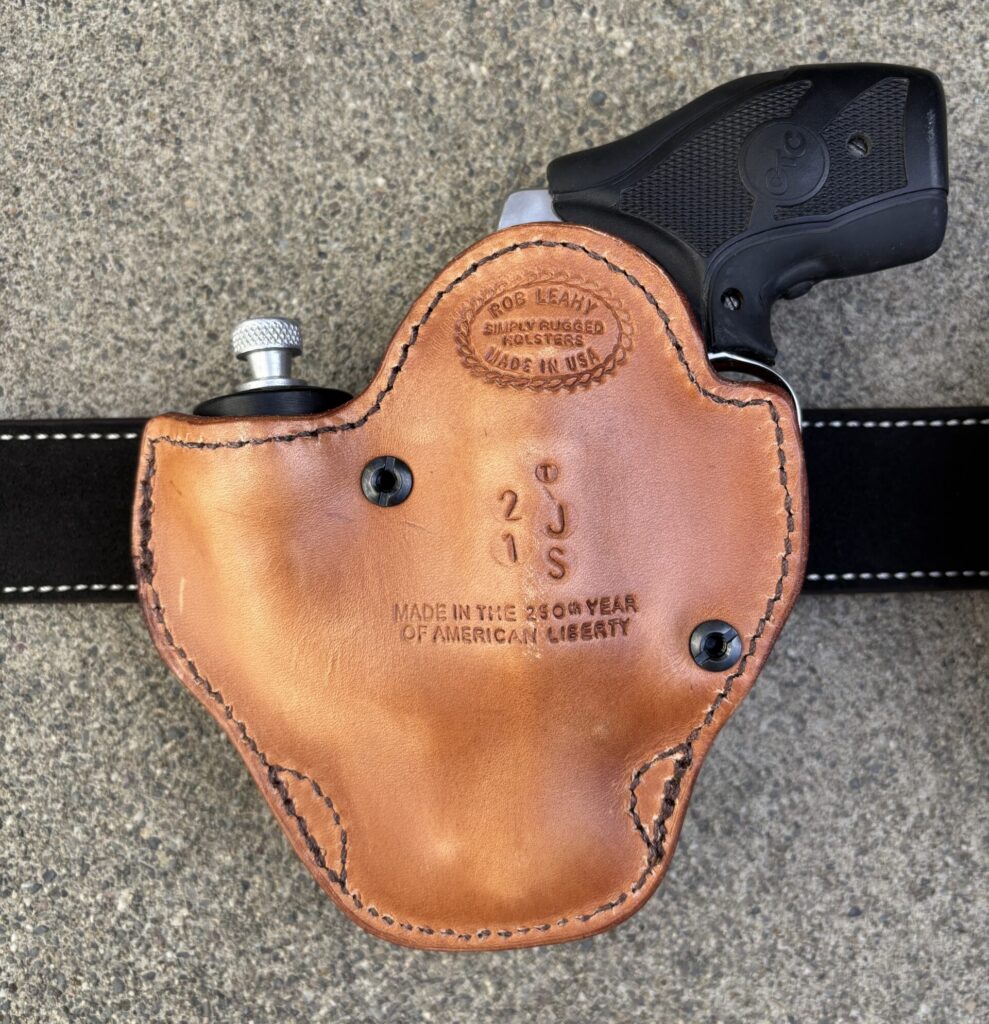
In the end analysis, I think Jake did a helluva job taking this stalled design to the end zone. What he’s accomplished here is a great piece of work. There’s no other product on the market that allows you to carry a revolver and speedloader as a single package with such comfort, concealment and efficiency. I think the Belly Gunner is going to make lots of RevolverGuys very happy, and he should be very proud of how it turned out.
Getting Yours
The Belly Gunner is available for order from Simply Rugged, with fits being offered for J, K and L-frames. You can get a BellyGunner to fit 2” and 3” barreled S&W J-Frames, Colt D-Frames, and Ruger LCRs. Larger sizes will fit bigger guns with up to 3″ barrels, including guns like K/L-Frames, SP101s, Security Sixes, GP 100s, the new Colt Vipers and King Cobras, the 3″ Pythons, and equivalent Taurus revolvers of similar frame size.
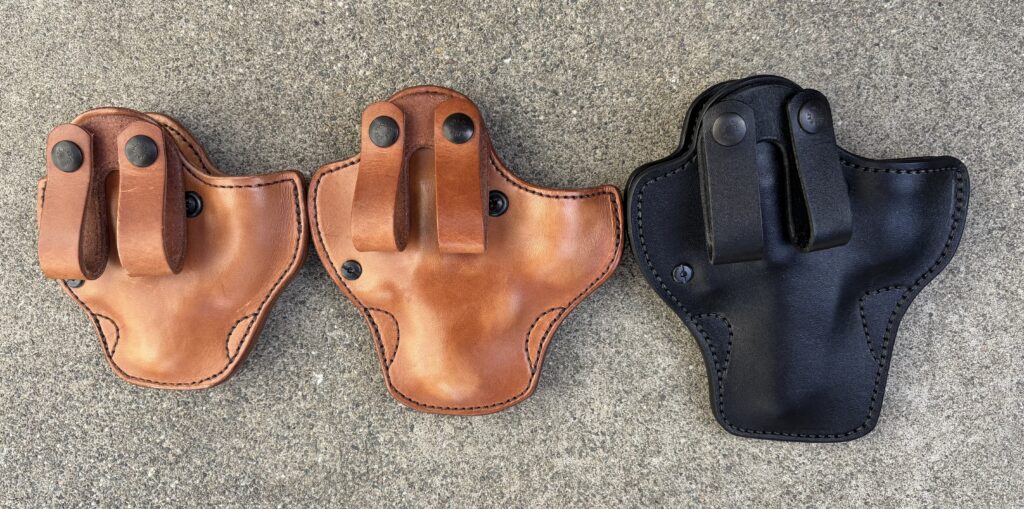
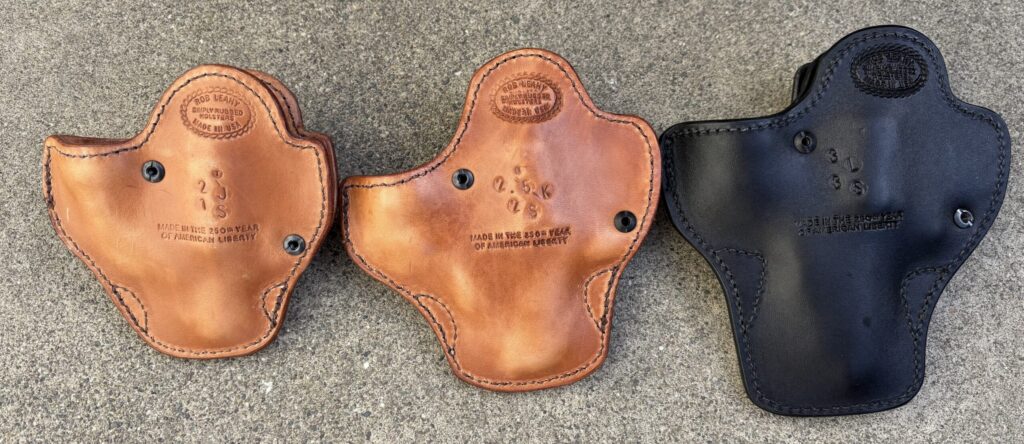
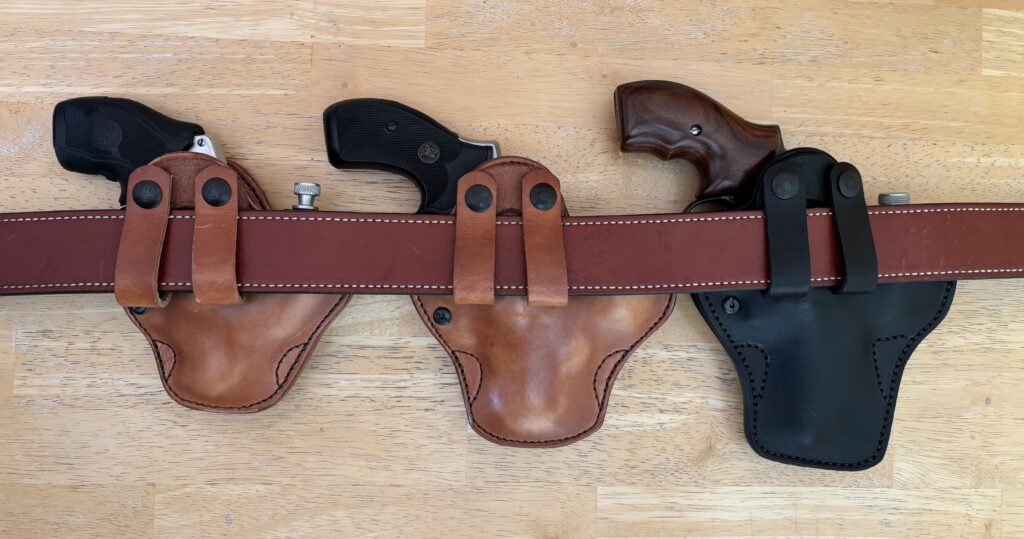
The standard belt loop size is 1.75”, but if you add a special request with your order, Simply Rugged will cut them for 1.5” belts.
You can have your Belly Gunner made with a Tan or Black finish, and both look especially handsome, to me. Since it’s worn IWB, it makes little sense to do any stamping or carving on the Belly Gunner, so they aren’t offered as options, but you’ll be missing out if you don’t add these beautiful touches to your OWB holster order from Simply Rugged.
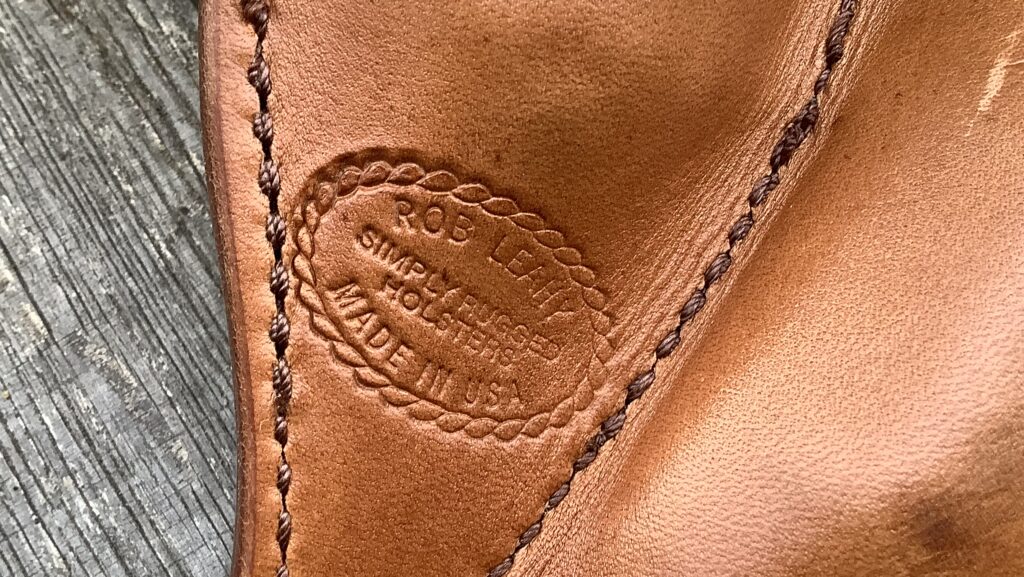
Tell ‘em Mike Sent Ya
If you like revolvers and prefer to carry them in the Appendix position, I’d encourage you to look at the Belly Gunner. While Simply Rugged may be best known for their pancake and pocket holsters, they’ve managed to create a very good Appendix holster here, with the added benefit of an integral ammo pouch that makes good use of what would otherwise be dead space on your belt. A comfortable, concealable, secure holster that keeps your reload within reach is quite a combination, and you won’t find anything like it, anywhere else in the market.
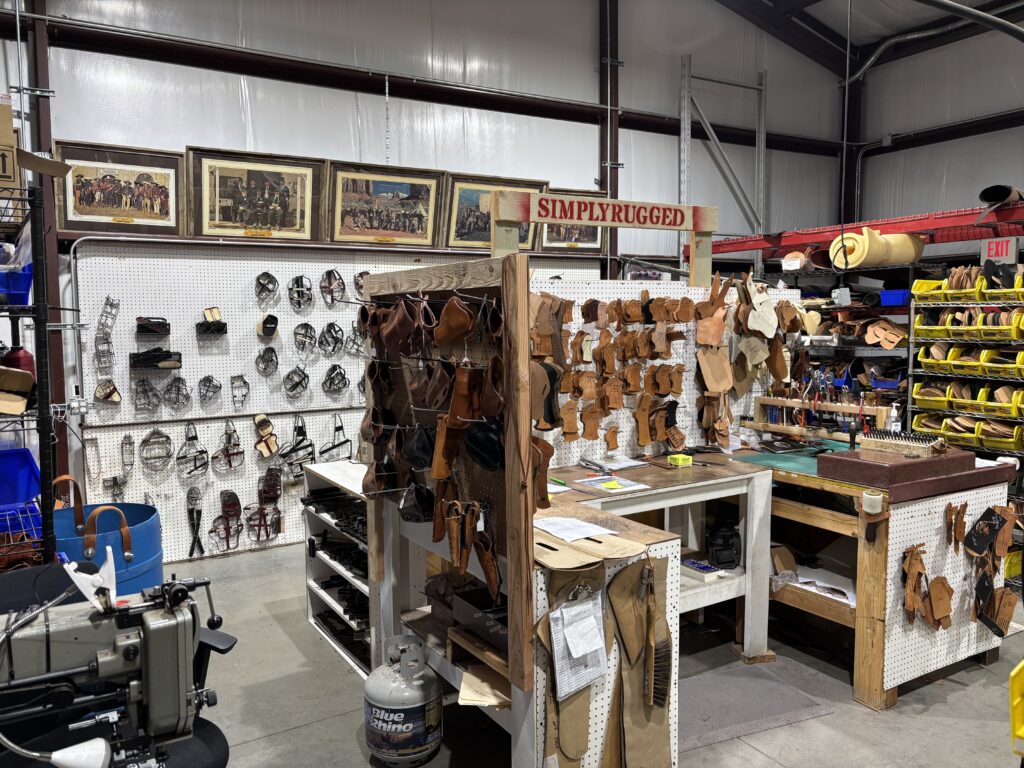
I really enjoyed getting the chance to work with my friends Rob and Jake on this project. It took a while to get there, but I think the result was worth waiting for. Check out the Belly Gunner on Simply Rugged’s website, and I think you’ll see what I mean.
*****
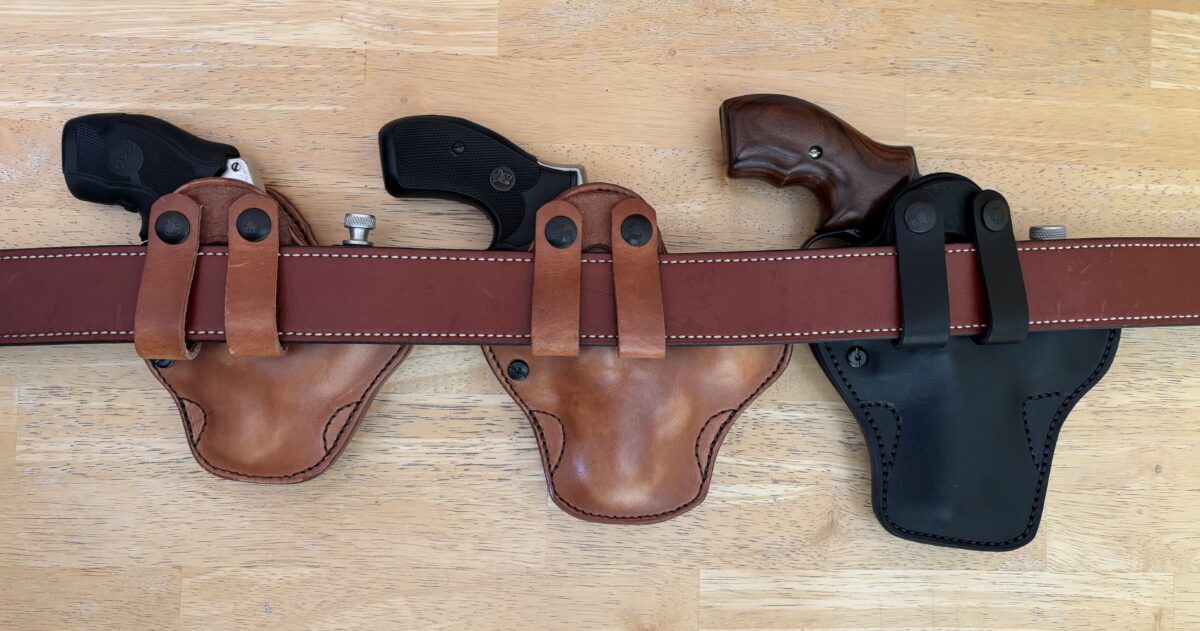
Lead Image: Belly Gunner holsters for (from Left to Right) 1.875″ S&W Model 640, 2.5″ S&W Model 66, and 3″ custom S&W Model 586
