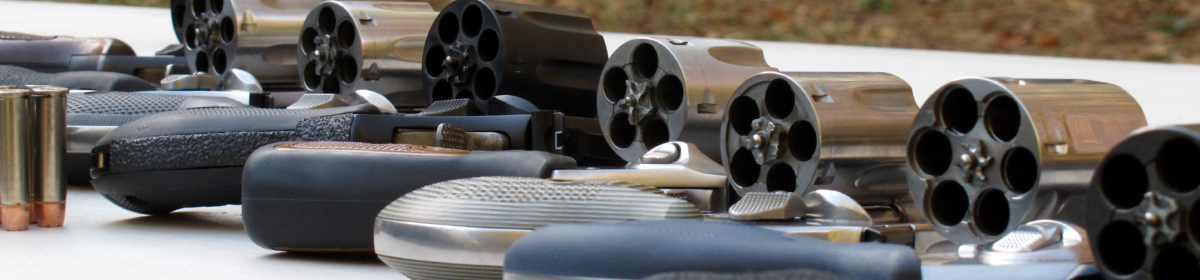
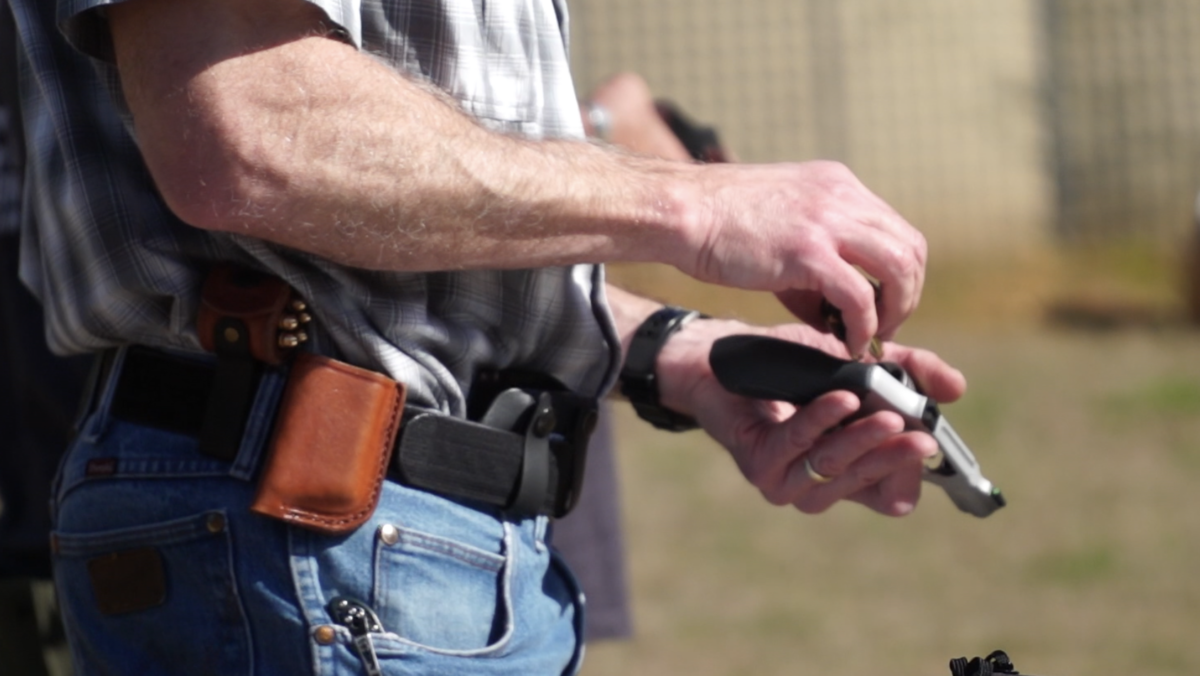
A new friend, who’s a highly experienced and well-trained shooter, recently approached me with an interesting question about reloading revolvers: “I’ve seen some instructors promote reloading the revolver with the support hand,” he said, “but others seem to prefer using the primary hand to load the ammo—who do you think is right? What hand should I use to reload?”
It’s a great question, and I thought it deserved a more detailed explanation than the one I gave him, so I’d like to try my hand (bad pun intended) at answering it here, in these pages.
A FRESH LOOK
If you’ve been reading RevolverGuy for long, you know we’ve done a lot of writing about the Ins and Outs of reloading revolvers–one of Justin’s earliest pieces addressed reloading revolvers, as a matter of fact. Similarly, one of my earliest pieces for RevolverGuy addressed Tactical Reloads (which I later updated in a more detailed article), so it’s clear we’ve been talking about reloading considerations from the start.
We’ve written about tactical reloads, partial reloads, Grant Cunningham’s Universal Revolver Reload, Mas Ayoob’s Stressfire Reload, the New York Reload, reloading for lefties, speedloader reloading tips, and reloading with one hand. We’ve had other instructors give us their take, and we’ve had both straight talk about reloading, and some tongue-in-cheek fun with the topic, too.
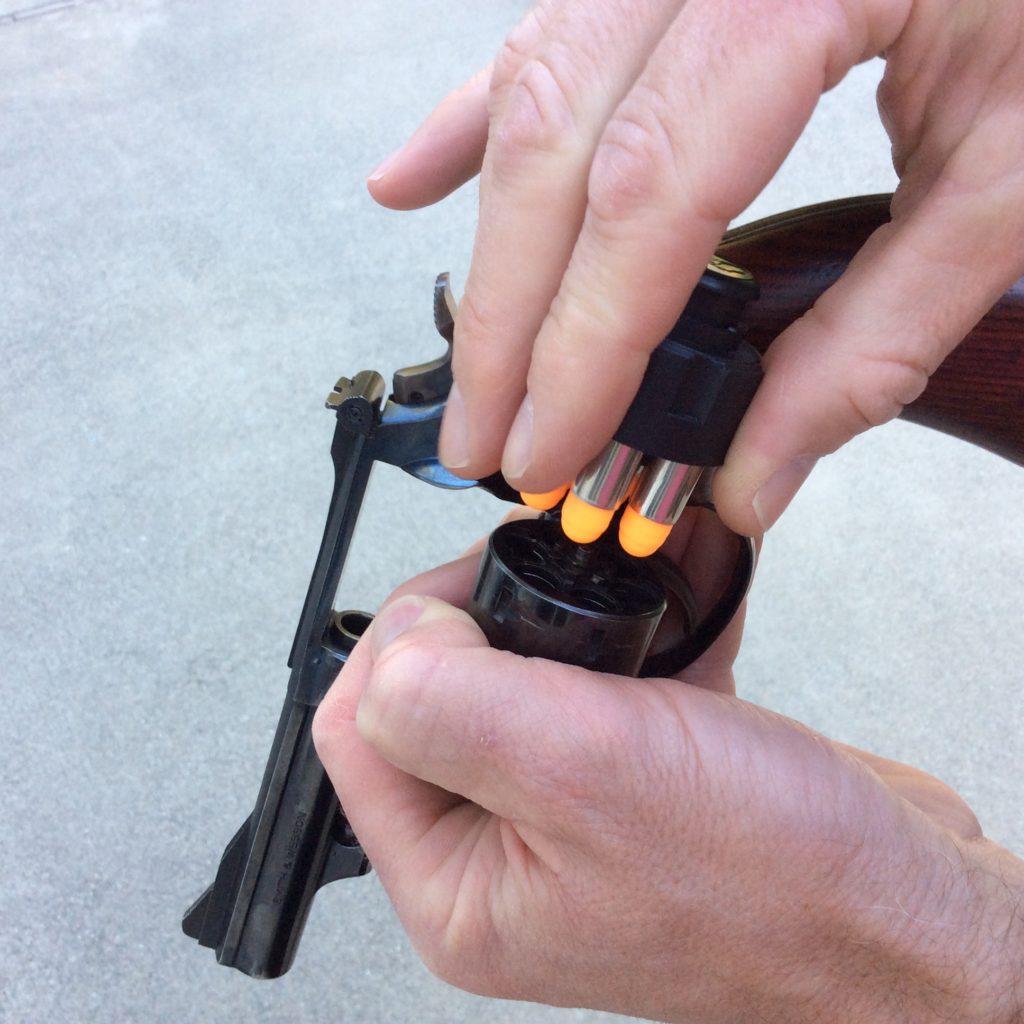
I don’t want to plow the same old ground in this piece, but I’ll probably wind up repeating a few things I’ve said before, and hope you’ll understand when I do. My real goal with this article isn’t to talk about the fine details of reloading techniques, so much, as the reasons why you might favor using one hand over the other.
I also hope the reader will understand that this article is primarily written from the perspective of a right-handed shooter. Because our revolvers have cylinders that open to the left, there’s little advantage provided to a Southpaw who wants to load with his right hand. Can it be done? Yes, but the design works against the effort, and simply makes it more efficient to load with the primary (left) hand. I’ll address exceptions where appropriate, but will primarily write this from a right-hander’s view, and hope our sinistral readers will understand–you’re used to being overlooked in these things anyhow, right? Right. ; ^ )
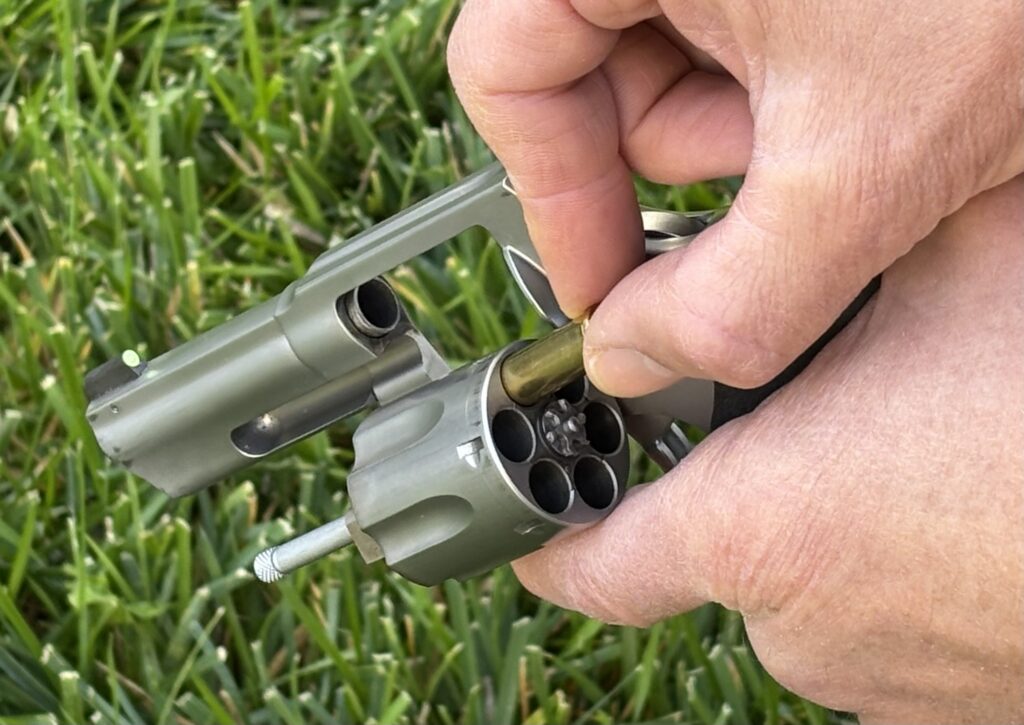
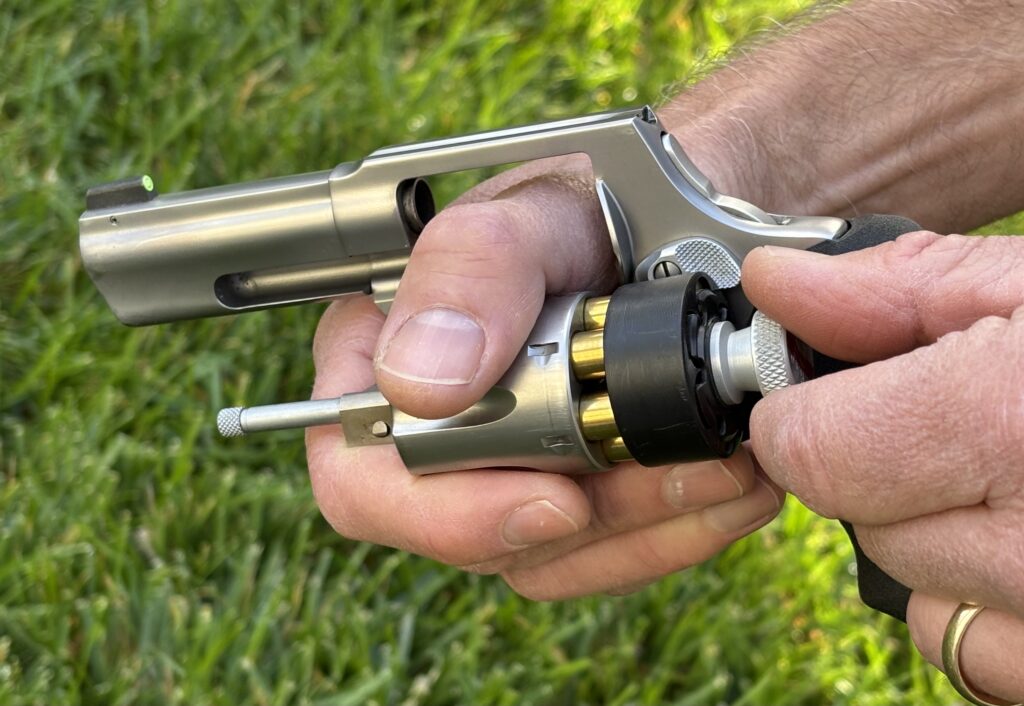
So, back to business: Why would a particular hand be preferred to do the work?
Which hand should you use to reload?
LOOKING BACK
Before I tackle those questions, it’s probably a wise idea for us to look at where we’ve been, first.
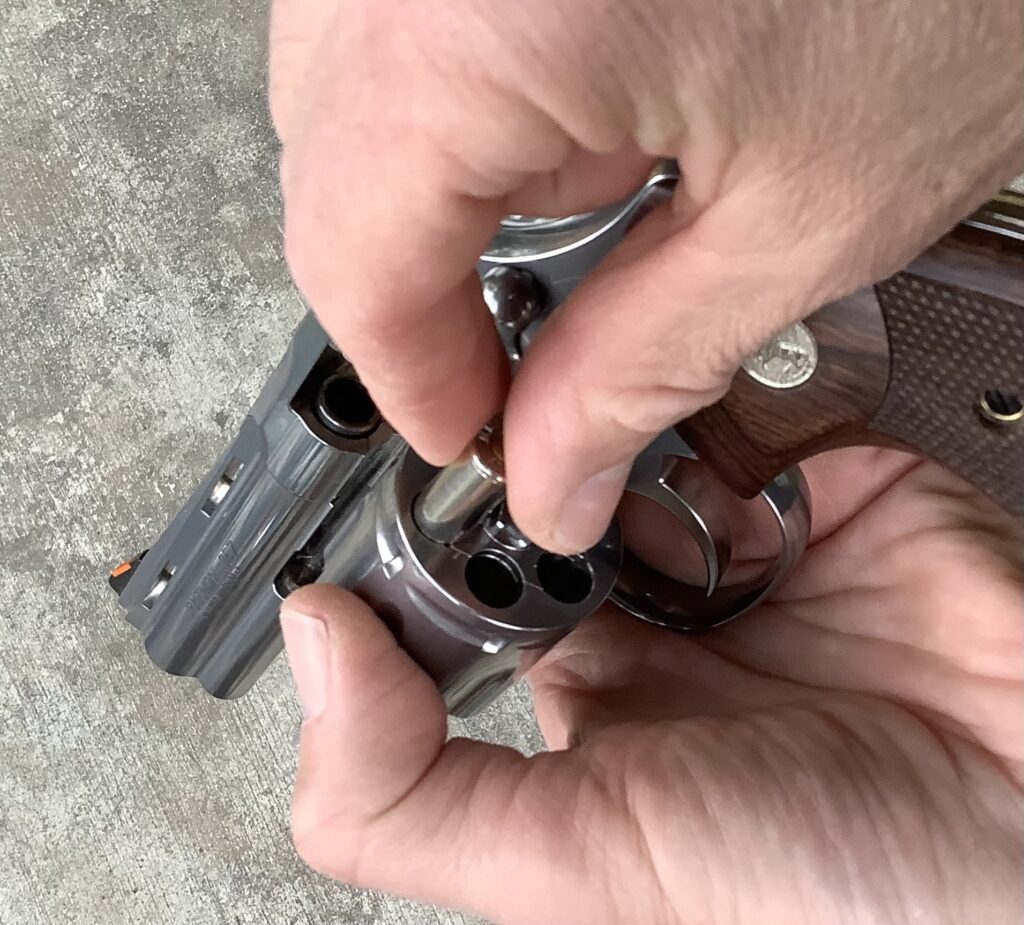
By the time the swing-out cylinder, double action revolver rose to the fore as the dominant military and police handgun in America, a standard practice of transferring the weapon to the weak hand (OK—the “support hand,” for you tacticool guys who are too awesome to have a “weak” hand) for unloading and reloading had been established.1 We can probably attribute most of this to the fact that the service revolvers of this era were being replenished with loose rounds, and it’s a much easier job to fill the chambers with your more dexterous and coordinated strong hand, when you’re doing it one- by-one.2
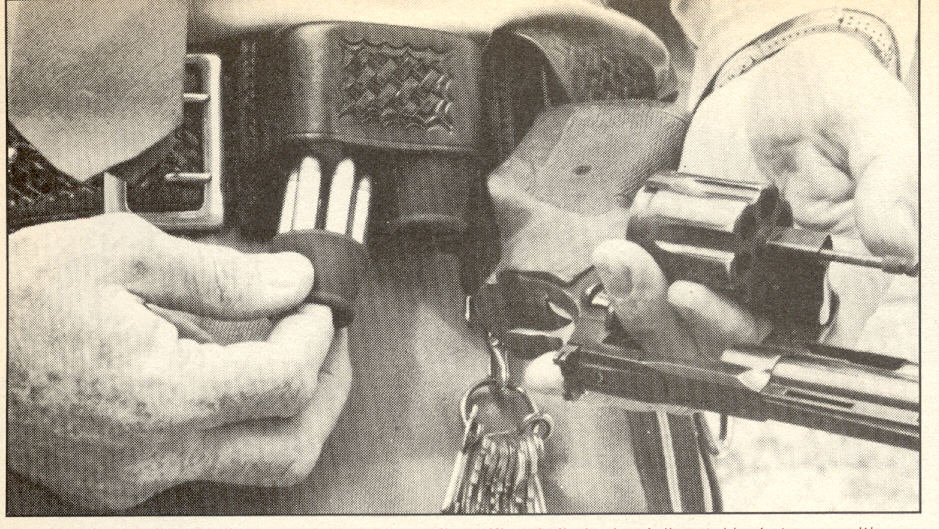
When speedloader designs went mainstream in the 1970s, American cops were so used to shoving the ammo into the gun with their strong hands that they generally used the new loading tools in the same way. The strong hand was more coordinated, so there was good reason not to break with tradition.

This state of affairs remained mostly unchanged until the mid-80s, when the new Safariland Comp-series loaders (that had been patented in January of 1978) became popular in certain corners of the revolver world. The push-release mechanism on the Safariland Comps made them more suitable for weak-hand use, so some cops and agencies began to experiment with, and promote, using them in this manner.3 They were still in the minority though, as most cops and agencies preferred the strong hand for loading.
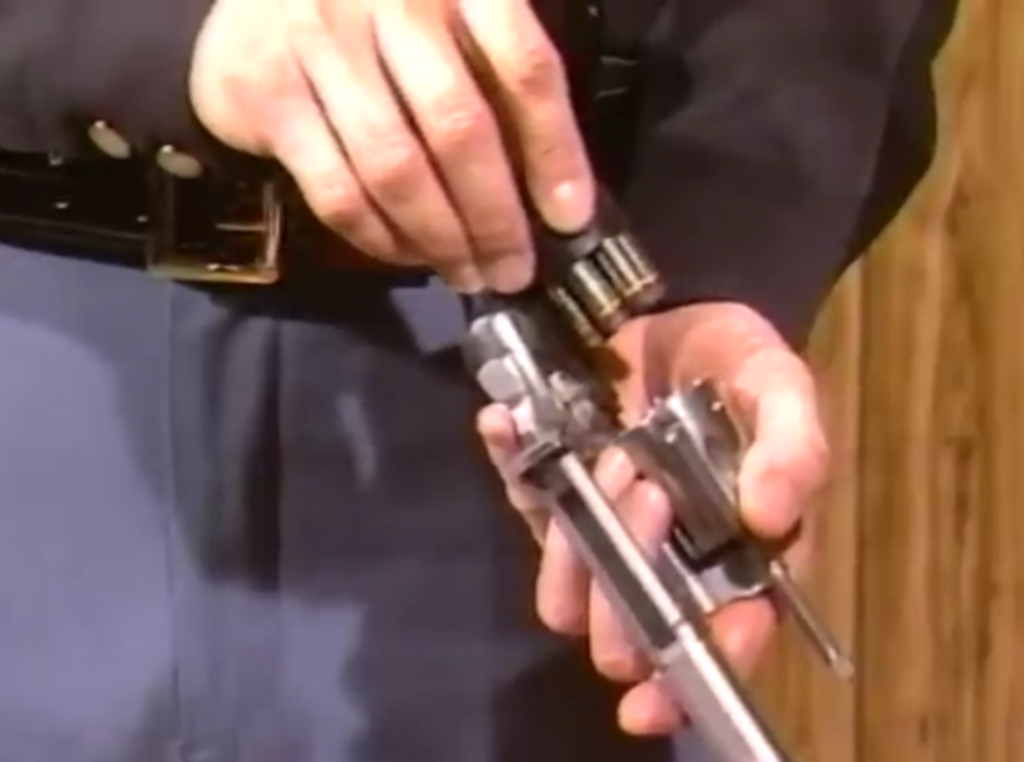
The stage for the showdown was now set. Minority advocates for loading with the weak hand felt that time could be saved by not transferring the gun between the strong and weak hands, while majority advocates for loading with the strong hand felt their methods offered superior reliability and speed.
SPLIT DECISION
So, who was right?
Well, probably both of them, to be honest. Each side had a pretty good argument to make, but, as with many things, it’s more a matter of context, than objective truth. For example, the things that are important to a shooter training for self-defense may not be as important to a competitor, and vice-versa. The context changes everything.
With that in mind, let’s take a look at some of the Pros / Cons of each system, to help you make your own evaluation of what’s “best.”
STRONG HAND PROS
I think there’s little to argue about, when it comes to the dexterity advantage possessed by the strong hand. Jobs requiring fine motor coordination (like feeding individual cartridges into their chambers, or even lining up a loaded speedloader with the cylinder) are almost always done with greater ease, speed, and precision when you use your strong hand. With enough practice, you can train your weak hand to perform at a similar level, but the strong hand is just naturally better at these tasks, without the dedicated training.
Using the more dexterous strong hand also provides a good hedge against the debilitating effects of Sympathetic Nervous System (SNS) arousal. When your body dumps powerful chemicals like adrenaline into your blood during a moment of stress, you can very quickly lose your coordination and your sense of touch. When you’ve “got the shakes,” and you feel like you’re “all thumbs,” wouldn’t you rather improve your position by using the more skillful and comfortable hand to load your gun?
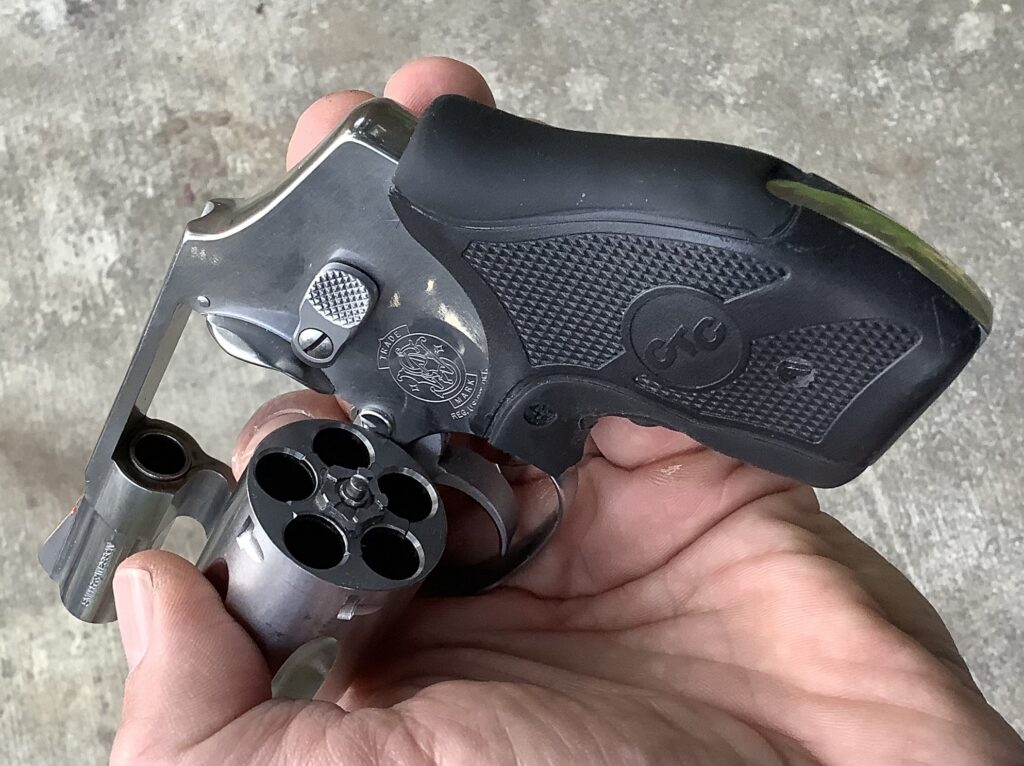
Cradling the gun in your weak hand, and using the strong hand to load, also provides an indexing advantage that I like to demonstrate in my classes. When the cylinder is being held by your weak hand, it’s easier for your strong hand to “find” the chambers with the cartridges it’s holding, due to proprioception. Simply put, your strong hand can easily find your weak hand, because it can sense its position, even without seeing it. This is of great importance when you’re trying to load the gun in the dark, when you have blood in your eyes, when your glasses have been knocked off, when your vision is suffering the effects of Sympathetic Nervous System arousal (like tunnel vision, or fixed-distance focus), or you’re injured and everything looks blurry. Trying to find the location of the open cylinder, somewhere in space “to the left,” when you’re holding the gun by its grip in your strong hand, is more difficult and much more dependent on your vision.
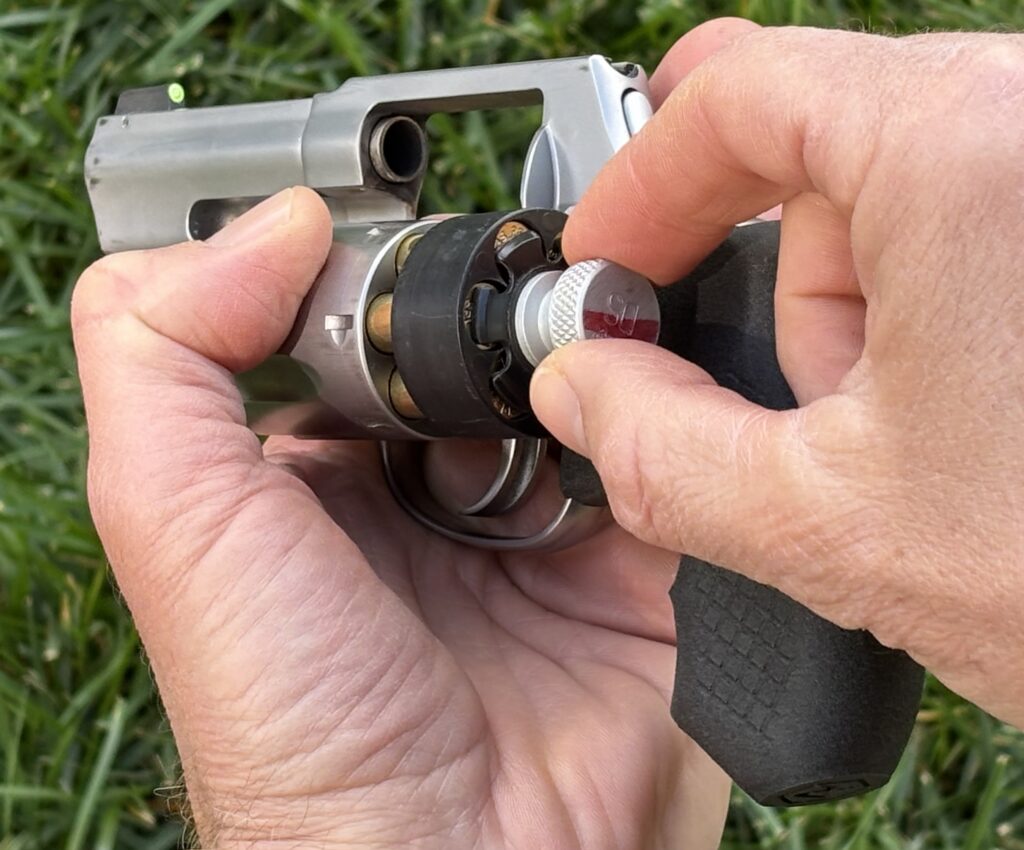
The strong hand is also more adaptable to using a variety of speedloader designs. The popular twist-style loaders (HKS and 5-Star), for example, require the cylinder to be held in place before the release knob can be turned to release the payload, and it’s easier to pull this off when the weak hand is trapping the cylinder and the strong hand is working the loader.
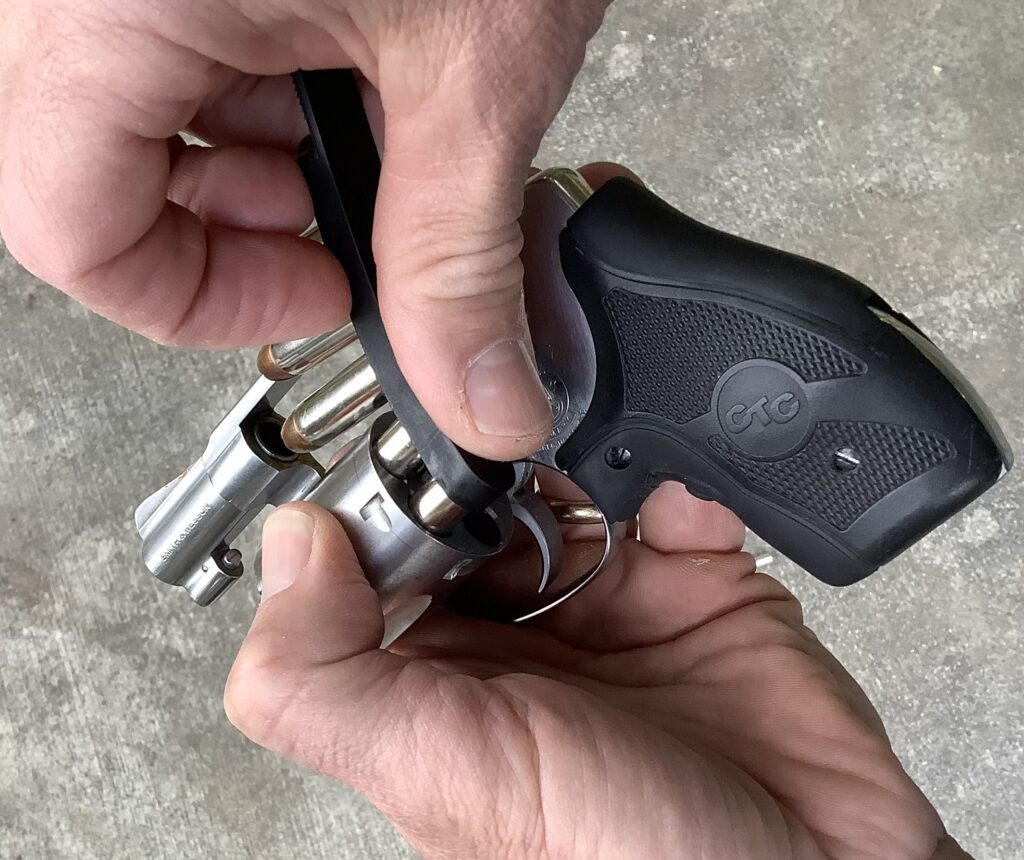
I find the same applies to the strip-style loaders, which work much better when the cylinder is held firmly in place, and not allowed to rotate as the strip is peeled away.
Right-handed shooters who want to maintain a shooting grip on the gun during loading will suggest that it’s possible to stabilize the cylinder with the shooting hand thumb, or the index fingertip poking through the cylinder window, and they’re not necessarily wrong (assuming their hand is big enough, and their finger is long enough, to pull it off). However, holding the cylinder in place with the weak (left) hand is a more universal, reliable and robust technique. Small hands can do it. So can hands that are covered in sweat, water, or blood. So can hands that are shaking from stress, weakened from arthritis or injury, or numb with cold. It just works better to use the whole hand, than to rely on the tip of a finger, to do the job.4
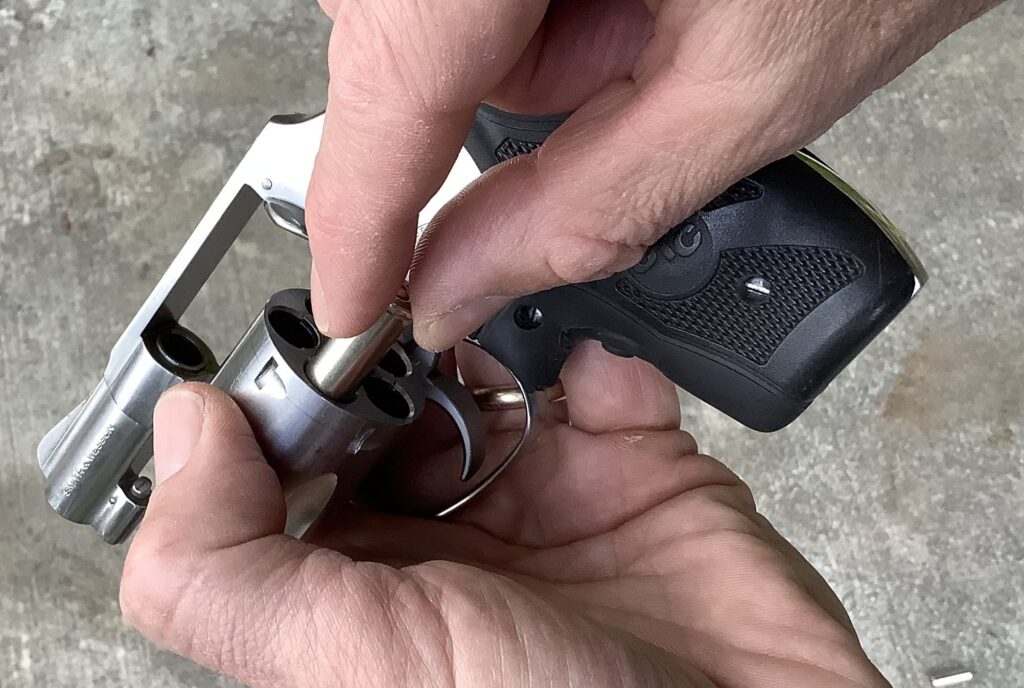
While I’m talking about controlling the cylinder, I should note it’s easier to load loose cartridges into the cylinder when it’s cradled in your weak hand. This is not only a function of the strong hand’s ability to be more accurate in inserting the cartridges into the chambers, but also the control you have over the cylinder’s rotation. Depending on the technique used, the weak hand thumb and fingers can rotate and stage the cylinder to accept the next cartridge(s) when you’re loading with the strong hand. With practice, it’s easy to stage the cylinder so the most accessible chambers, at 9 O’Clock, are ready to accept the cartridge(s), and it’s also easy to rotate the cylinder in a manner that you improve your chance of getting the gun to fire on the first attempt, if you have to close the cylinder in a hurry and resume shooting, before it’s fully loaded (the “partial load”).
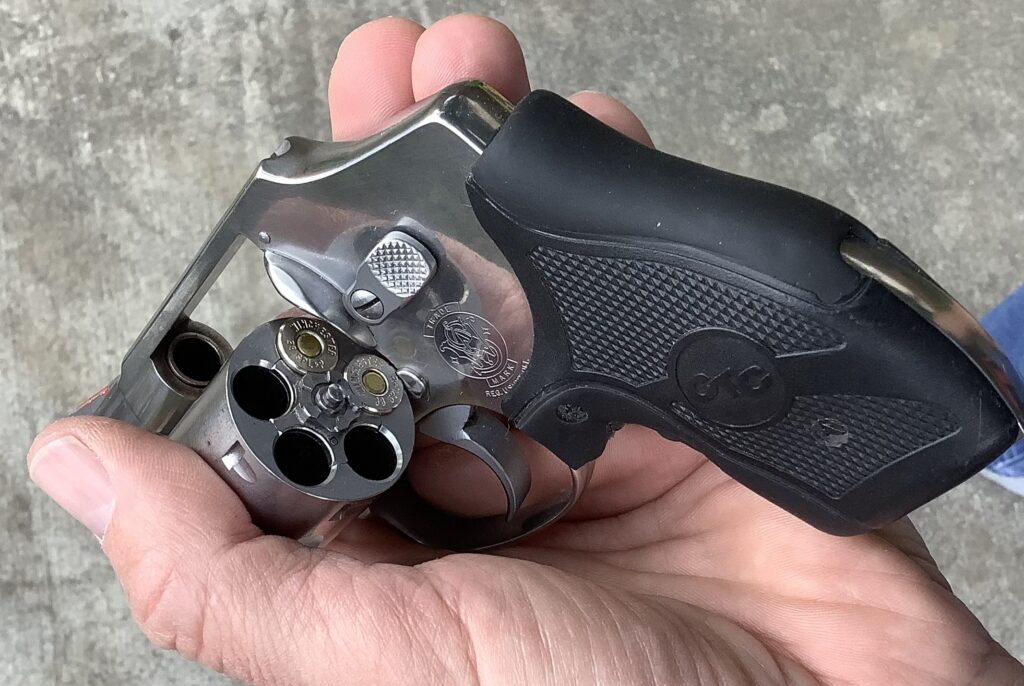
In contrast, when you load a cartridge into an unsupported cylinder with your weak hand, it will rotate as the unbalanced cylinder turns to place the weight at the bottom. It can be more difficult to get those cartridges into the moving target, especially if it moves unpredictably as the gun is moved around.5 You’ll have more difficulty setting yourself up for success with a bang, instead of a click, on the first attempt to fire if you’re loading loose cartridges with your weak hand.
STRONG HAND CONS
The principal weakness of using the strong hand to load the gun is the requirement to shift the gun back and forth during the loading process. The gun has to be passed off to the weak hand to hold it during reloading, then moved back to the strong hand for shooting.
This requirement introduces several points of concern. First, there’s the obvious element of time—it may (and I emphasize may, since the point is arguable) take longer to get the gun back into action with the additional handling required, and that’s not an advantage when you’re trying to complete the maneuver as quickly as possible.
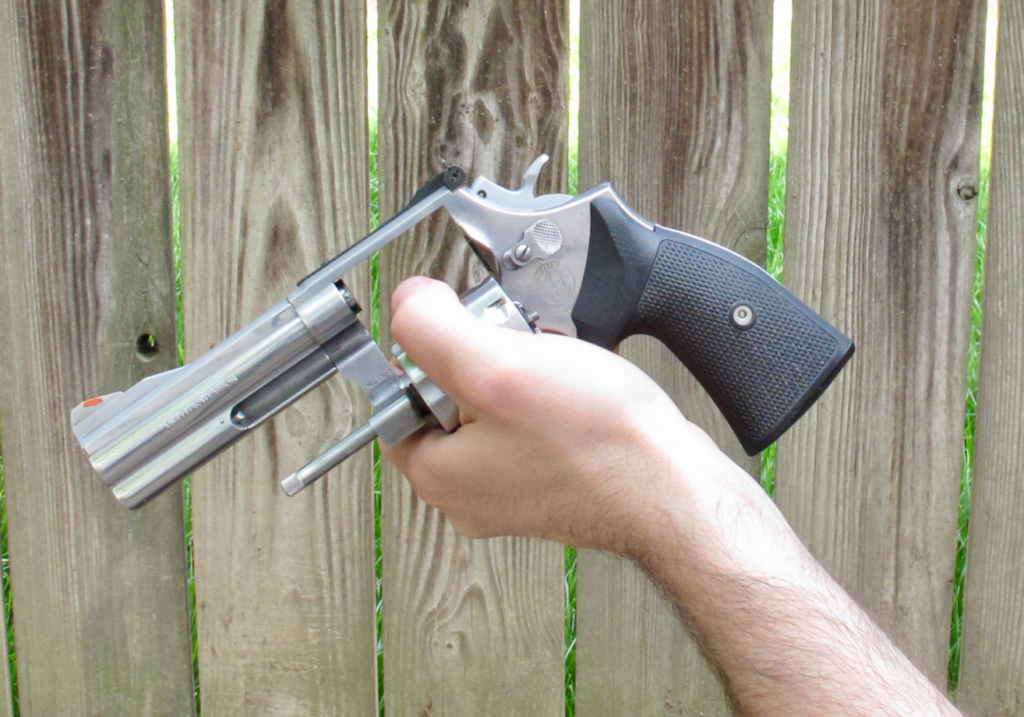
There are additional risks which must be considered with shifting the gun, though. First, there’s a potential that the gun can be fumbled and dropped, especially in a moment of great stress. Additionally, there’s a possibility that the strong hand will fail to reestablish a proper shooting grip on the gun after the transfer, forcing the shooter to make a difficult choice between taking additional time to fix the grip before shooting, or accepting the improper grip in the hope that it won’t spoil the shooting result too much (or worse yet, prevent the gun from operating, by blocking the hammer’s throw, and such).
WEAK HAND PROS
Advocates for loading with the weak hand naturally argue the opposite track, and point out that keeping the gun in the shooting hand maintains the consistency of the firing grip, and reduces the risk that the gun will be fumbled, as it’s shuttled back and forth between hands.
Similarly, they argue that keeping the gun in the shooting hand reduces the time to reload, by virtue of decreasing the gun’s travel time.
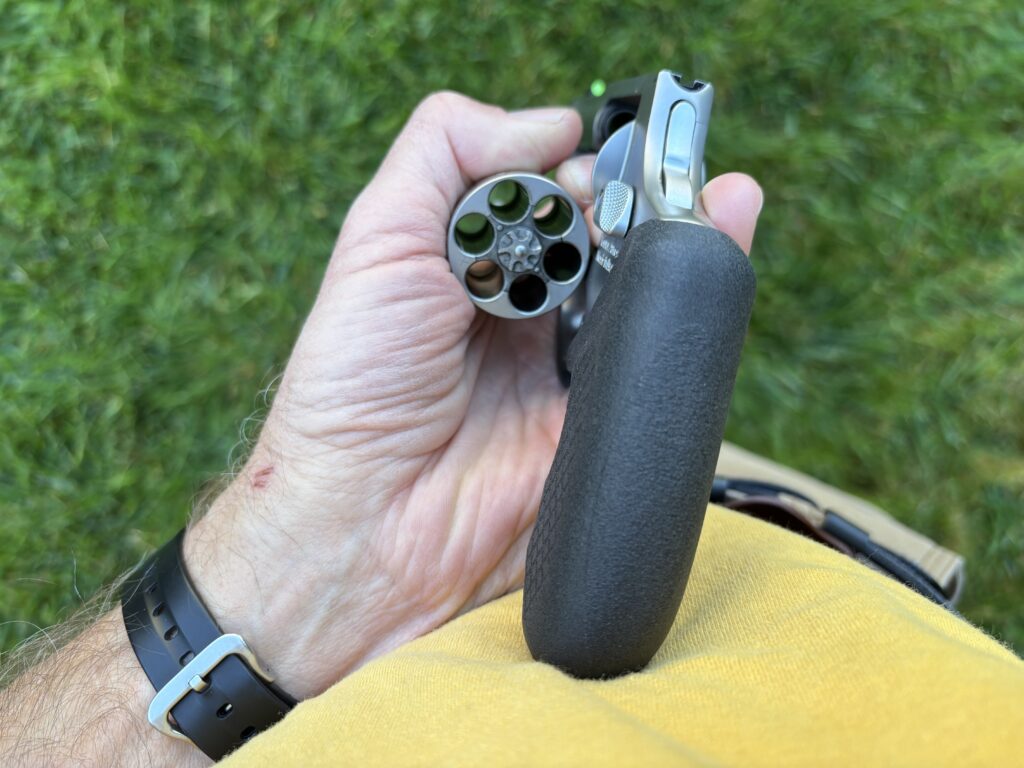
Another positive of weak hand reloading is that it makes it easy to hold the gun in a true vertical orientation for both unloading and loading. Keeping the muzzle straight up during unloading helps to aid the spent cases to fall free, and prevent fouling from accumulating under the star, by letting gravity do its thing.
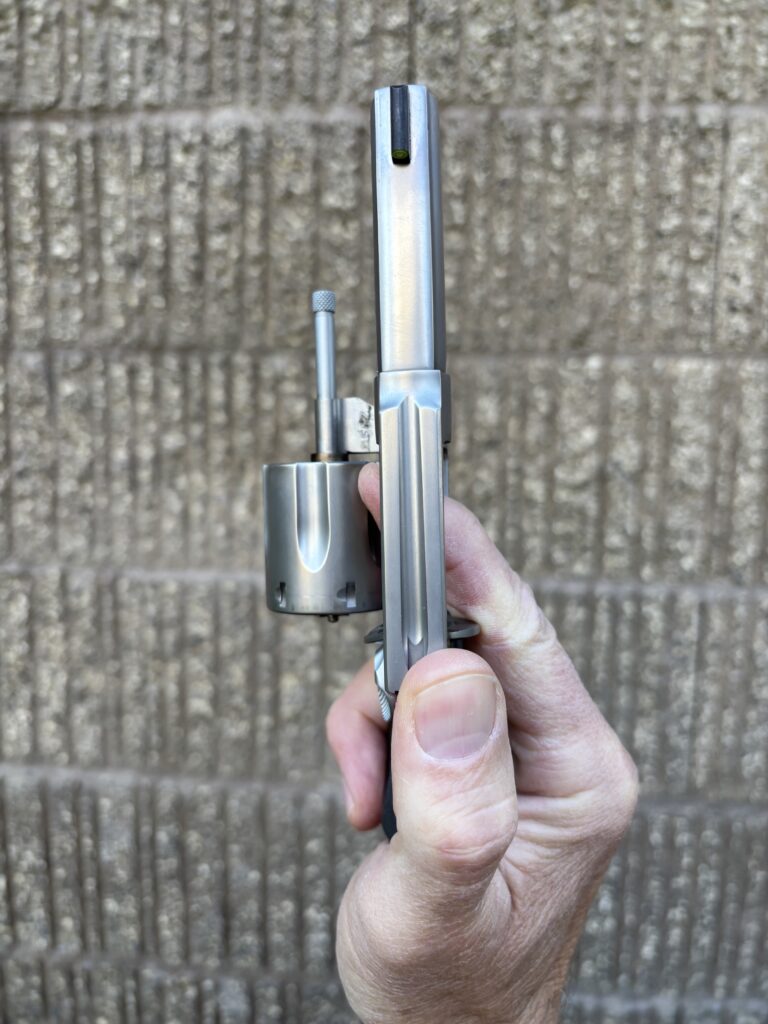
Similarly, holding the muzzle straight down as you load creates the best opportunity for rounds to fully seat in their chambers—particularly those that are dropped from speedloaders that rely on gravity feeding (just about all of them, with the exception of the spring-loaded Comp III, JetLoader, and SL Variant). Holding the gun in the shooting hand makes it easy to hold the gun straight up or down, which can be difficult-to-impossible with some of the traditional strong hand loading techniques, where the best you can do is to hold the gun at a 30-45 degree angle for loading, depending on your wrist’s flexibility.
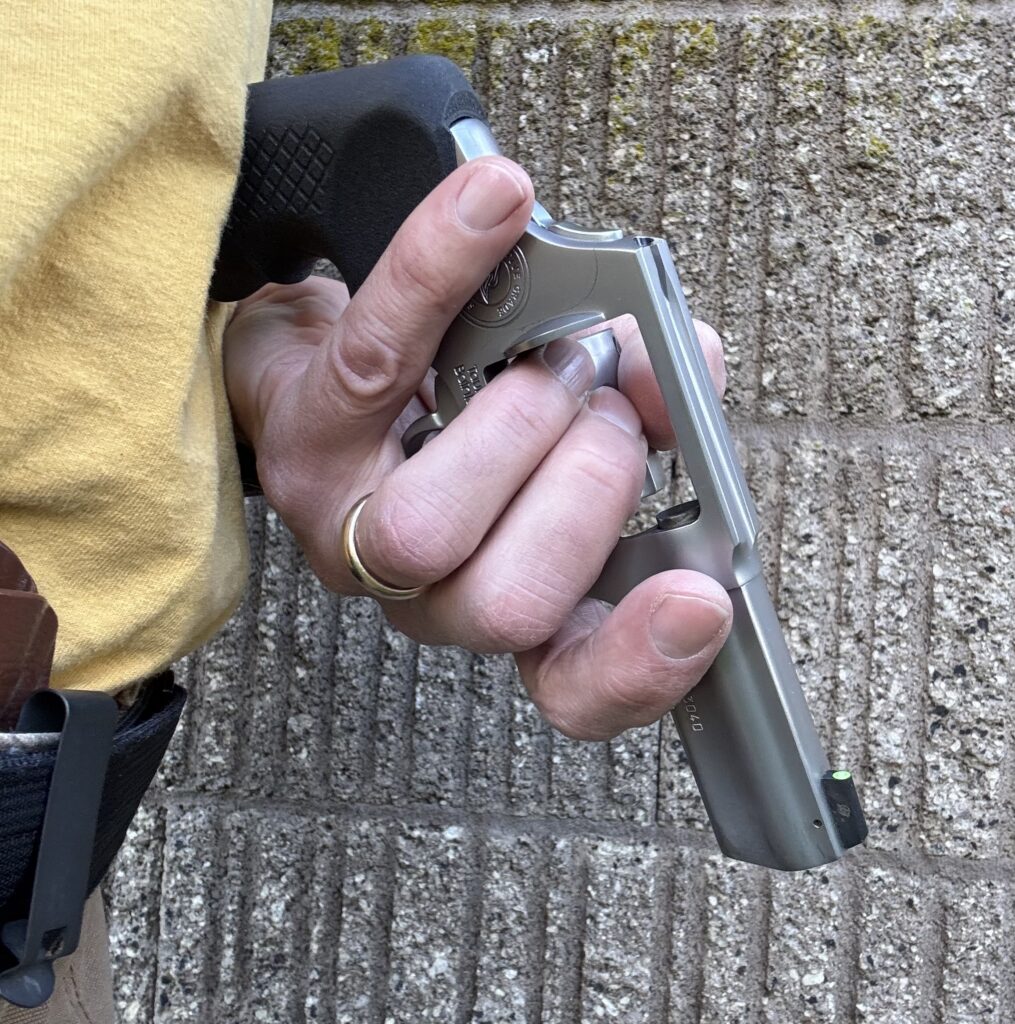
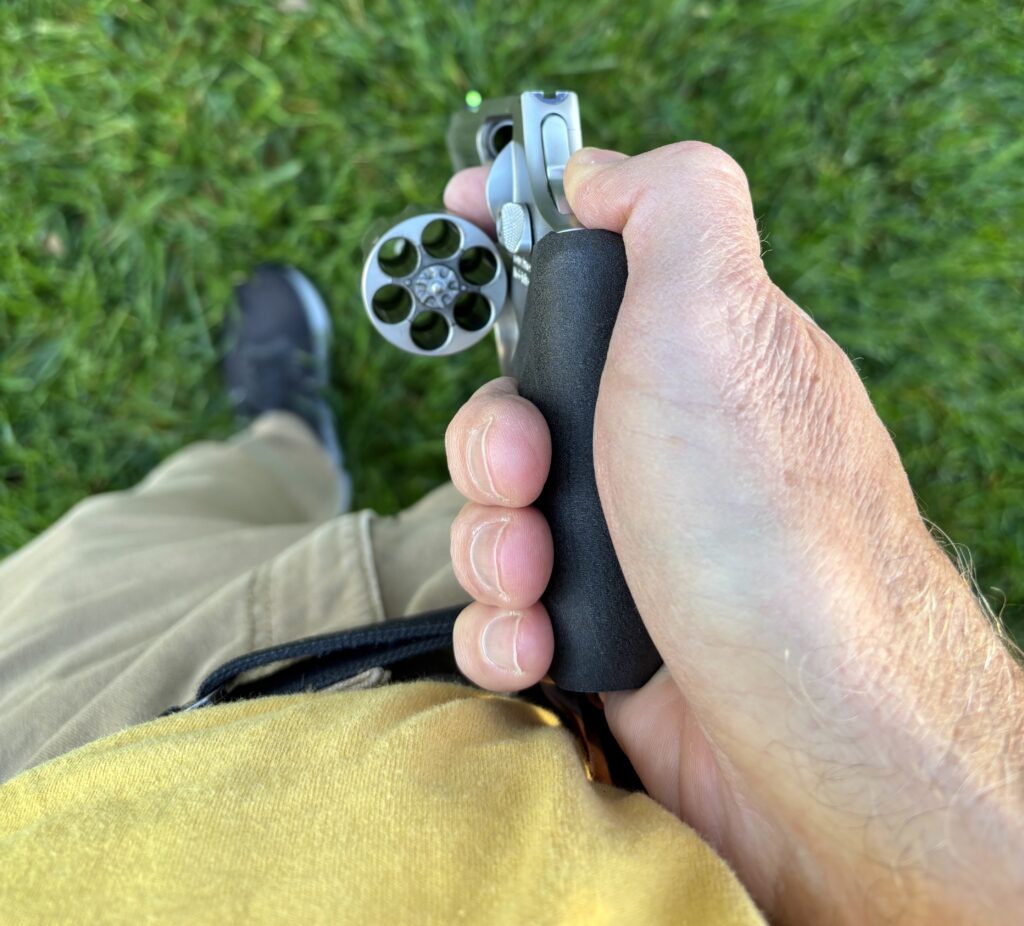
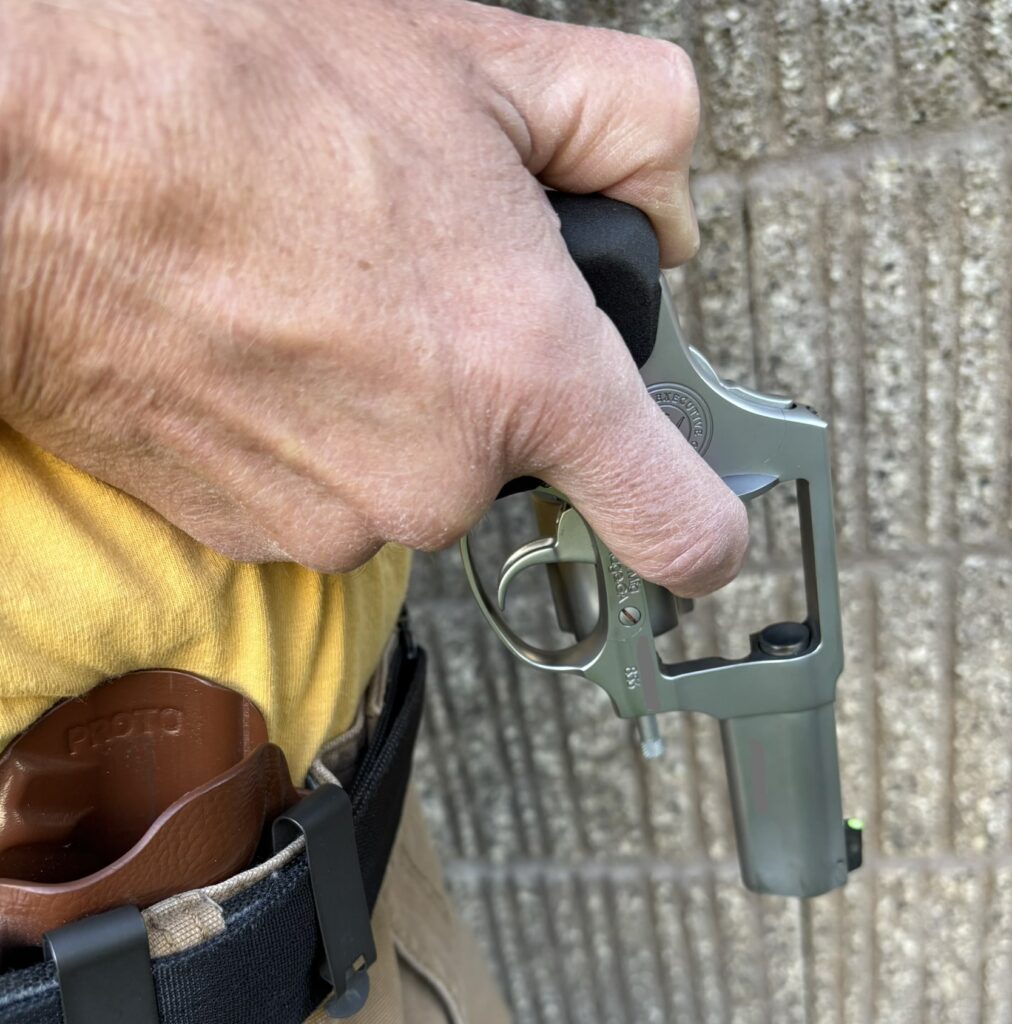
An infrequently-discussed advantage of weak hand loading concerns the carriage of spare ammunition. The shooter who plans to reload with his weak hand has the advantage of being able to carry his spare ammunition on the opposite side of the body as his gun. This can be a significant advantage, as the gun can hog the prime real estate on the strong side of the belt, and make it difficult to find a good spot for the ammo pouch on the same side.
This is particularly true in my preferred mode of concealed carry, appendix inside-the-waistband (AIWB), but it’s also true for strong side outside (OWB) and inside-the-waistband (IWB) carry, particularly if the concealing garment has an open front, like a jacket, which denies some areas from being used. It’s also true for uniformed personnel, who have to carry a lot of gear on their belt, and place it so it’s accessible to the hand that’s most likely to use it. 6
In any case, placing the spare ammo on the same side of the body as the hand that will be using it improves both access and efficiency, and weak hand reloading supports this practice.
WEAK HAND CONS
The principal perceived advantage of weak hand loading is speed, but it’s only faster if the shooter is adept enough with his weak hand to avoid adding time on the clock. Shifting the gun back and forth in strong hand loading doesn’t take nearly as much time as fumbling the reload with a less dexterous weak hand.
As I’ve previously mentioned, the weak hand loading strategy relies upon certain styles of loading devices to achieve the best advantage. You can certainly load individual cartridges with your weak hand, or even with a strip-style loading device, but the best results are obtained with speedloaders that release their payload with a push—loaders like the Safariland Comp-series, the SpeedBeez update of the old Dade design, and the spring-assisted loaders like the JetLoader and SL Variant. You’ll struggle to load your gun with the same kind of efficiency with a twist-style, or a strip-style loader, in my experience, and this goes double for left-handed shooters trying to load with the right hand.
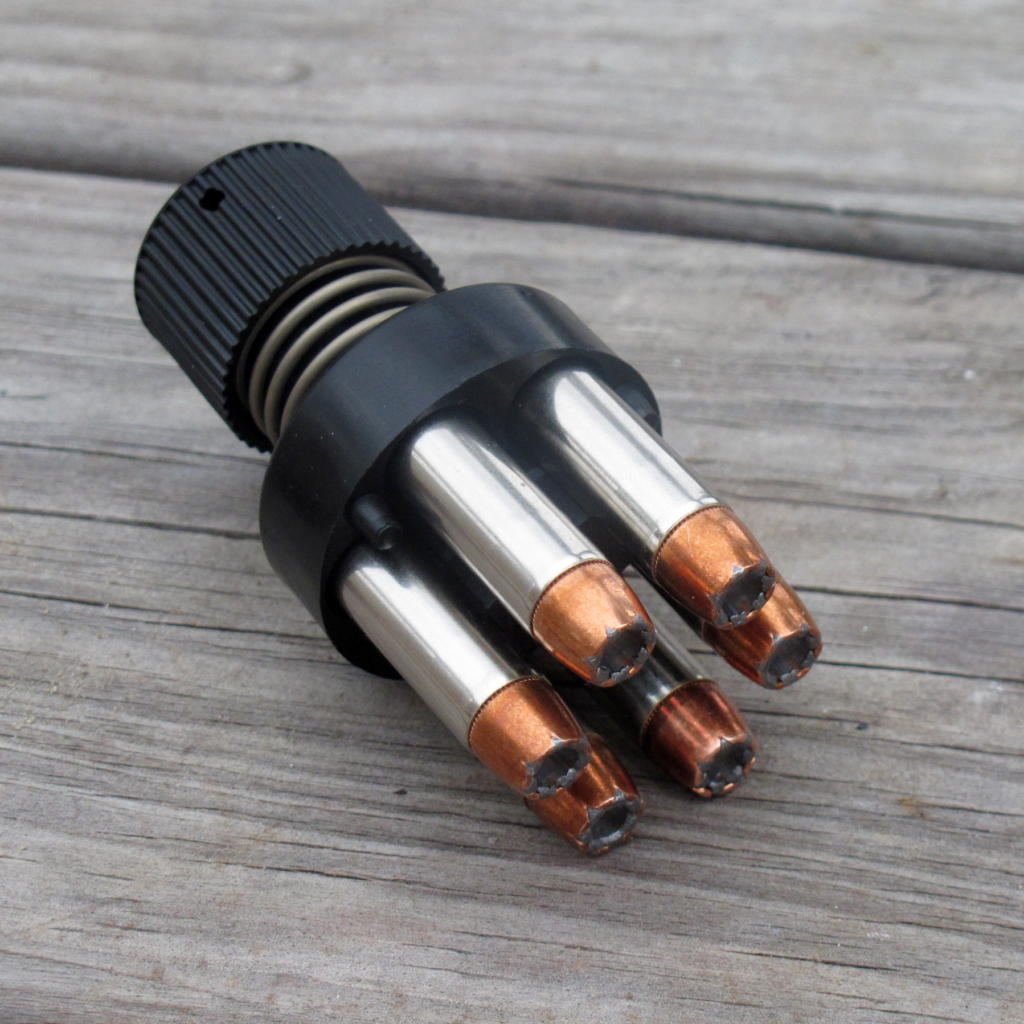
Unfortunately, most of the push loaders have one or more undesirable traits for duty use—cost, availability, size and weight, poor cartridge retention, or a limited range of revolver fits. The shooter can make accommodations to overcome these negatives, but it’s a hard fact that the most inexpensive, common, and low-profile loaders are generally not preferred for weak hand loading. Equipment selection will have to be more deliberate if you plan to reload with the weak hand.
The unrestrained cylinder is more susceptible to flopping around, turning, and even falling back into the frame when you’re loading with your weak hand, thus spoiling the effort. As previously mentioned, some shooters may be able to stabilize it sufficiently with a thumb or finger on their strong hand, but many will not have the reach, flexibility, or strength to do it. Trying to load the gun without cylinder support while you’re on the move, or loading in an unconventional position (think: trying to make yourself small behind cover when people are shooting at you), may prove to be very difficult.
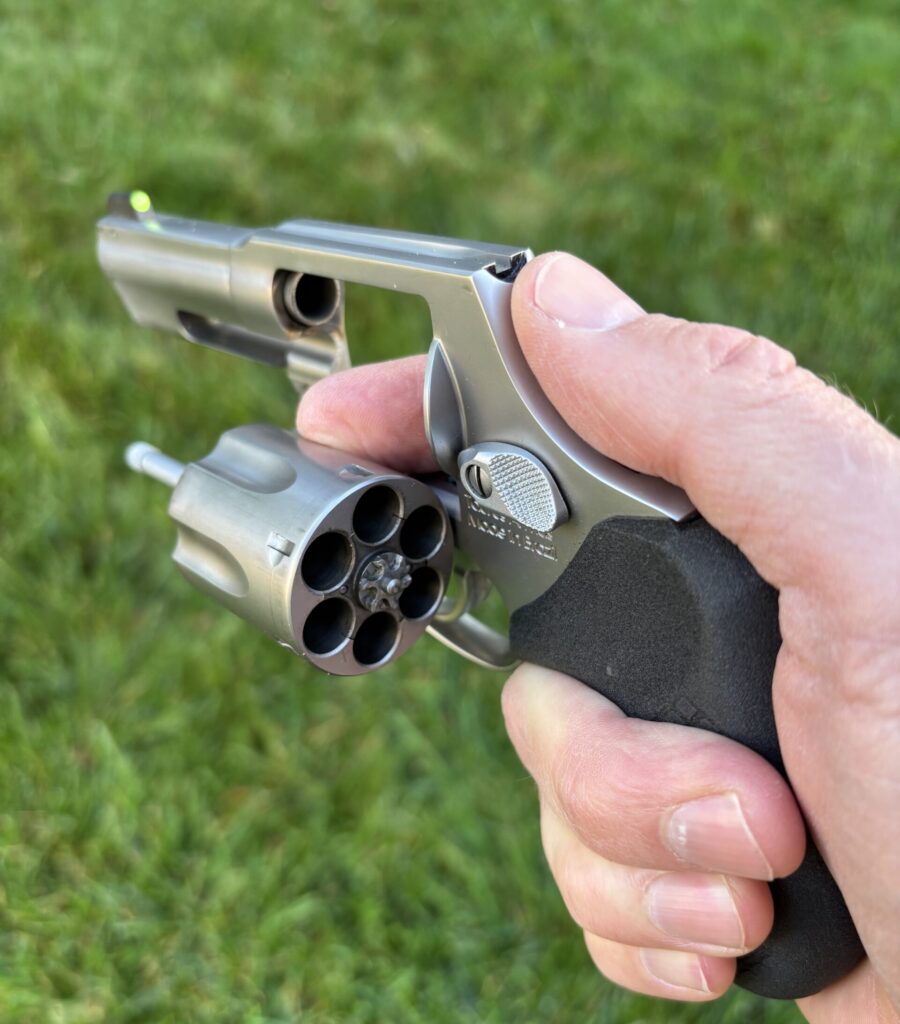
Additionally, I’ll return to something I addressed previously, as a strong hand Pro–it’s harder to advance the cylinder, and stage it to accept the next cartridge(s), when you’re loading loose rounds with your weak hand. You can certainly turn the cylinder with your weak hand, then hold it with the tip of your strong hand finger, to stage the empty chambers, but it’s not as efficient as cradling the cylinder in your weak hand, and using the weak hand digits to turn it while your strong hand is fetching the ammo.
A concern that’s not often addressed is the crane or yoke of the revolver is unsupported during weak hand loading, and the stress on that part may eventually cause a failure. Note that in the Smith & Wesson and Colt designs (among many others), the yoke/crane is retained in the frame by the head of a very small screw (solid in the early designs, but now a spring-loaded plunger in newer designs).
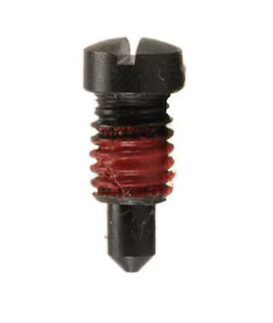
It’s only a small bearing surface on the tip of the screw that interacts with a slot in the yoke/crane to keep everything in place, and when you repeatedly hammer a reload into the unsupported cylinder with your weak hand (especially with the spring-assisted loaders), you’re peening the tip of the screw/plunger, which will eventually be unable to do its job properly. When that finally happens, your cylinder assembly may depart the gun entirely, or (if you’re lucky) just move forward far enough that you can’t close the cylinder into the frame, without pushing the yoke back into proper alignment. The same kind of thing can happen on Ruger revolvers like the SP101 and GP100, even though they don’t use a screw to retain the yoke.
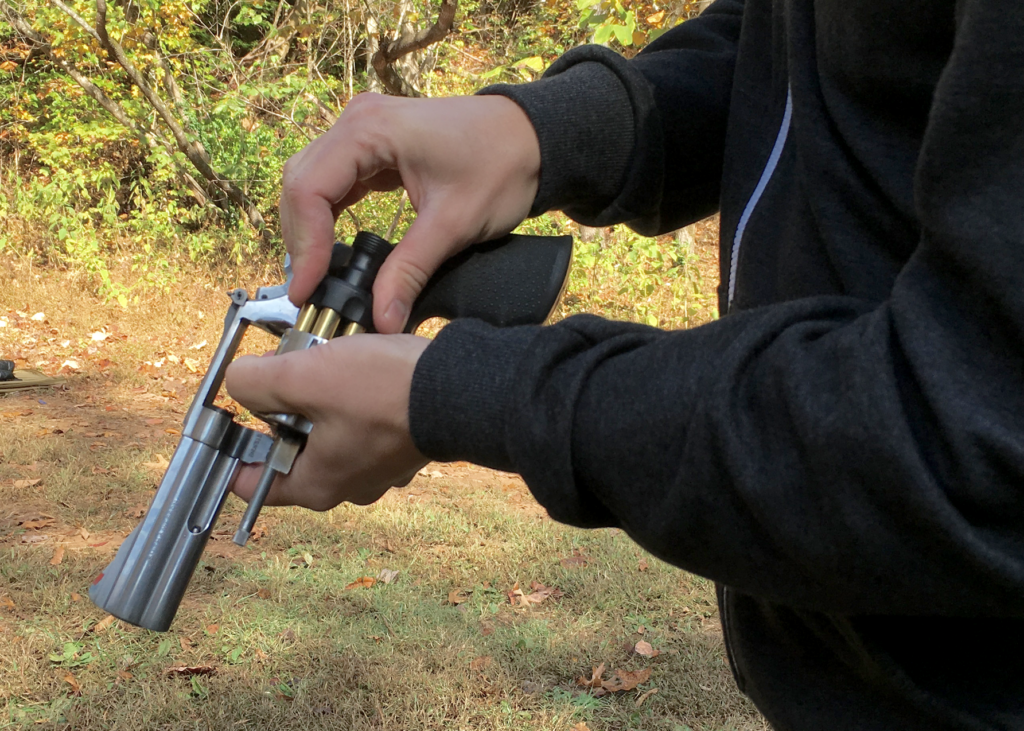
This is not a concern with strong hand reload methods that cradle the cylinder in the weak hand, and support it against the force of the loading effort. Those methods will help to prevent a catastrophic failure at an inopportune moment.
THE C-WORD
We return, then, to the issue of context.
If you’re a shooting sports competitor, and your ranking depends on shaving off seconds (or fractions of seconds), it makes sense that you would favor a faster technique over one that is slower, but more robust. It also stands to reason that you’re willing to invest significant time and effort into practicing with your weak hand, to ensure it’s capable of the desired performance, on the clock.
In that event, you might favor a weak hand reload technique, especially since your reloads will always be performed from a standing position, on a well-lit range, where you can use your eyes to look the loader into the cylinder. It will be especially nice that you can stage a number of outsized loading devices, with large handles, in open-top pouches on the off side of your belt, where your weak hand can quickly grab them up.
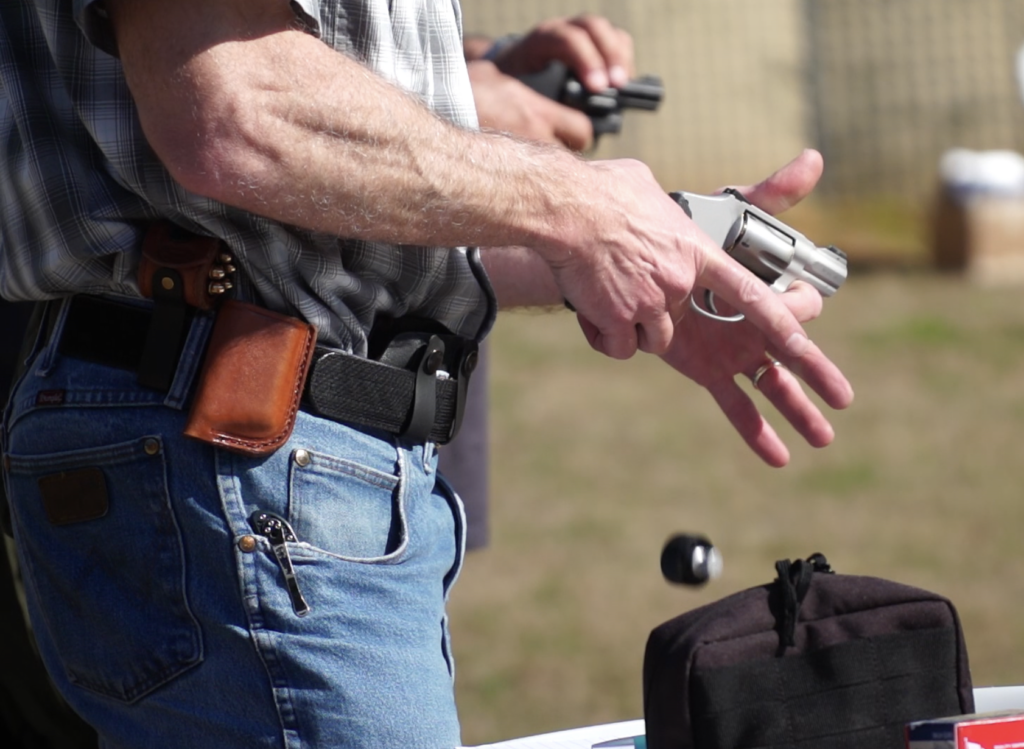
If you’re training for self-defense or duty, and you require techniques that are more resistant to survival stress, injury, and environmental considerations, you might think differently. If it’s more important for a technique to be reliable and robust, even in bad conditions, than it is to be a second faster, you might favor the strong hand technique.
If it’s more important for a technique to be adaptable to a wide variety of loading tools and methods (thumbing loose rounds into chambers, using speed strips or a compact loader that’s suitable for concealed carry, using a twist-style loader because nobody else makes a non-twist-loader that’s properly sized for your gun), then you might consider favoring the strong hand.
WHAT’S BEST?
So, we return to the question of what’s the best method, and I’ll simply say, “it depends.” It depends on what you’re trying to do, how much training effort you want to expend, and what environment you plan to work in.
I enjoy the sporting use of firearms very much, and enjoy getting to challenge myself in competitive events when I can, but I’m not a serious competition shooter. I’m most interested in the use of firearms for duty and self-defense, and that’s where my training focus lies.
Knowing that, I’m much more interested in perfecting my strong hand reloading technique, because I feel it’s more appropriate for my needs. I think there are advantages to using the strong hand to reload a revolver in a martial context which outweigh any fractions of time that I could save by using a less robust, and less appropriate, weak hand method. In my mind, loading with the weak hand is for games, and loading with the strong hand is for combat.7
Your focus, and your calculus, may be entirely different, and I have no problem with that. As my old StoppingPower.net forum pal, Jim Higginbotham, used to say, “we must all find our own salvation.” Figure out what’s most important to you, make an informed choice, and do the work.
Most importantly, be safe out there!
*****
ENDNOTES
1.) Here, I might as well just use the terms “left” and “right,” because the general presumption of the era was that shooters would place their revolvers in their left hand to reload. There was little provision for Southpaws in the military and law enforcement worlds of the late 19th and early 20th Centuries, and they were typically expected to conform to right-handed protocols (some state police agencies even required their left-handed officers to carry their guns in right-handed holsters, for uniformity, into the 1980s!).
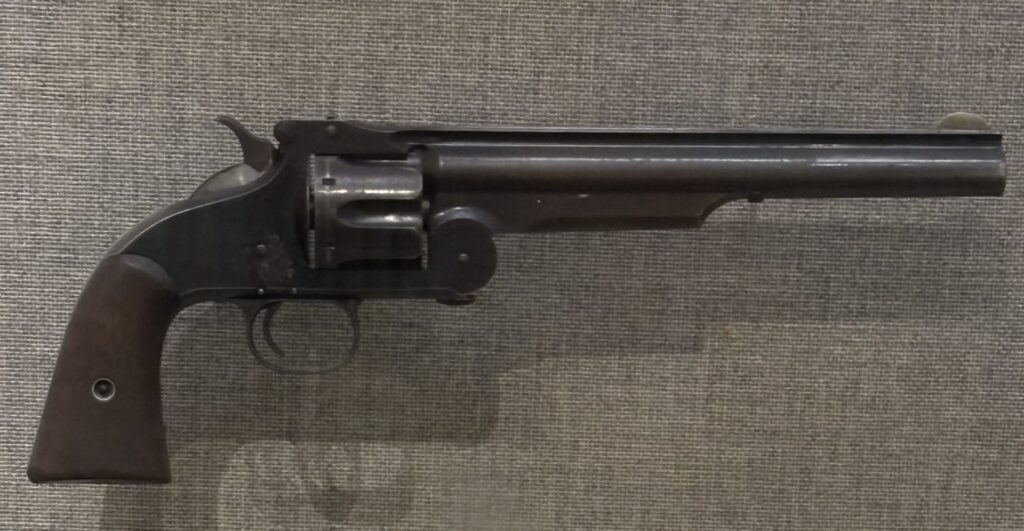
The S&W American / Model No. 3 was the first self-contained cartridge revolver adopted by the U.S. military, in 1870. Its top-break design didn’t favor a particular hand for unloading and loading, but only 1,000 were purchased, and it didn’t last long in service.
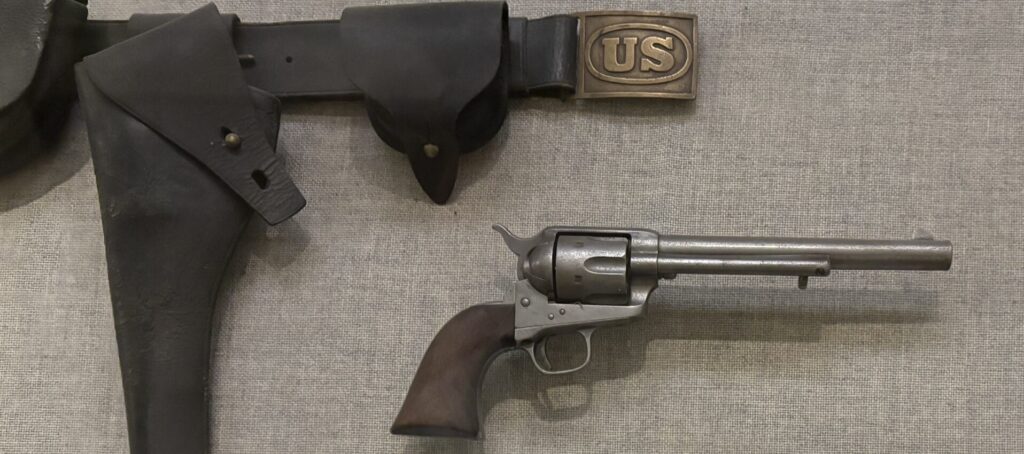
In contrast, the Colt Model P / 1873 / Single Action Army that superseded the Model No. 3 (and the short-lived, Colt Model 1860 Army Richards Conversion) became legendary in the course of its service life, and was even brought out of retirement when its own replacement proved unsatisfactory. While the Army expected it would often be fired with the left hand at the time it was adopted (more on this in Endnote #6, below), the design (like the 1860 Army Richards Conversion) encouraged shooters to load it with their right. In practice, it’s best to hold the gun muzzle up in the left hand, and turn the cylinder with the left thumb and fingers, while the right hand works the ejector rod. Once the cylinder is cleared, the gun is held muzzle down with the left hand, as the right hand feeds the gun through the gate.
By the time the double action Colt Model 1892 / New Army replaced the SAA, the standard practice of holding the gun in the weak (left) hand to reload it had been well-established, and there was no reason to change it for the new swing-out cylinder gun.
2.) The Federal Bureau of Investigation’s Practical Pistol Course (PPC), in use by 1945, was heavily promoted by the Bureau, and widely adopted as a training and qualification standard by the nation’s state and local law enforcement agencies. The course required the shooter to load and shoot 50 rounds, and in the FBI, all of those rounds were carried loose in a pants pocket (typically, the right front pocket, because it was a right-handed world in the ’40s).
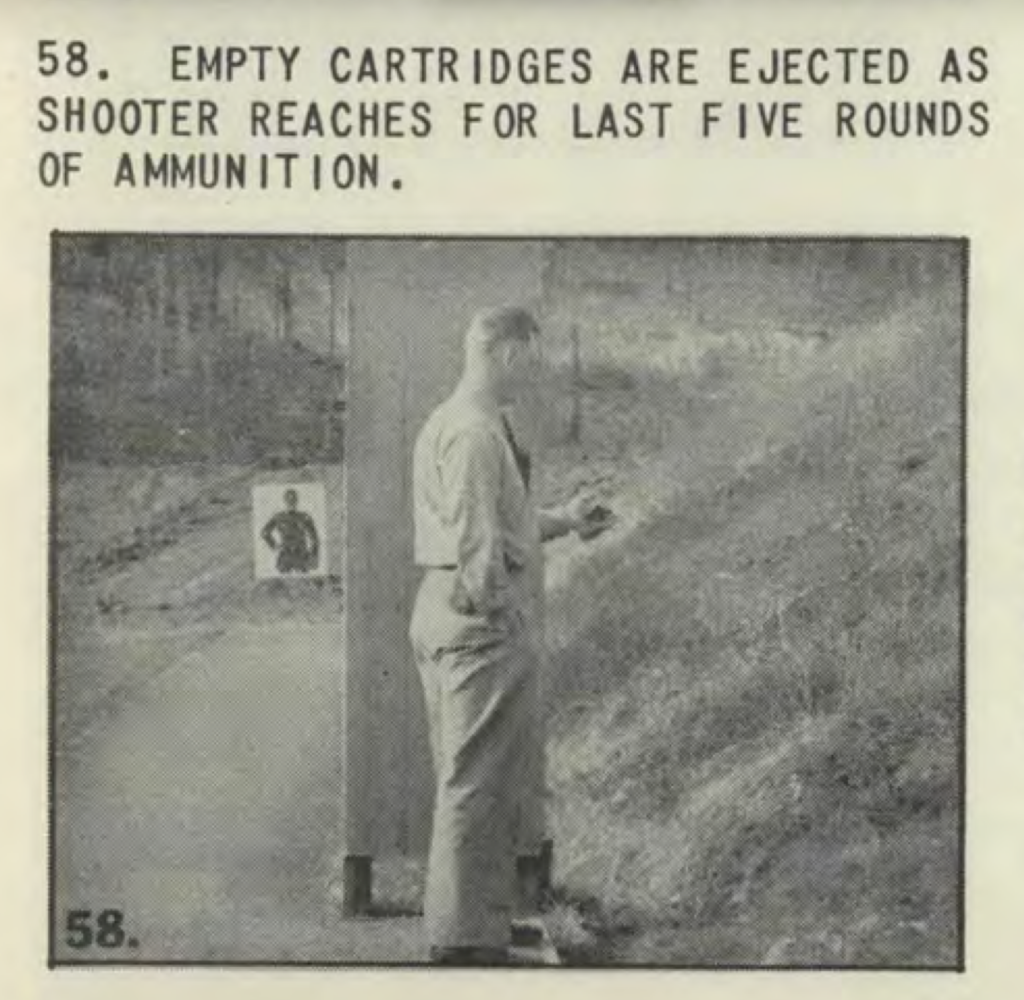
It wasn’t until the 1976 adoption of the Tactical Revolver Course, which replaced the PPC, that the FBI made provisions for an agent to use a six-round ammunition pouch, in lieu of the pocket, to hold some of the rounds. Even then, the loose rounds were still loaded by hand, after they were removed from the pouch. It would be almost another decade before round-body speedloaders (the Safariland Comp II) were issued to agents by the Bureau, and authorized to be used for training and qualification. Some major police agencies had already moved to semiautos before the FBI finally got away from loading loose rounds as their default method of reloading service revolvers!
Uniformed patrol officers of the 1920s – early 1970s typically carried their spare ammunition (when it was carried, at all) in loops or in dump pouches on the Sam Browne, and fed their guns with loose rounds, as well. It wasn’t until the 1970s that we started to see law enforcement officers really take advantage of the speedloaders that had been used in competition since the 1960s, and even by the 1980s, they still weren’t in use in many agencies.
3.) The Safariland Comps weren’t the sole impetus, here. Some shooters had been using their weak hand to load their revolvers with loose rounds, or with other loader designs (like the Spee D Loader, issued by LAPD, the push-button Bucheimer and Dade loaders, or the slip-ring Second Six loader), before the Safariland Comp loaders were available. However, the introduction of the Safariland loader, with its push-style release, really encouraged shooters to experiment with the technique.
4.) Southpaws who want to load with their weak (right) hand have their own variation on this trick, and try to hold the cylinder open with the trigger finger, as they load with their right hand. It can certainly be done, but I think it suffers from the same problem that the cylinder is not held as securely as it would be in strong-hand loading techniques. Additionally, the trigger finger can crowd things a little more and prevent the clean use of a speedloader, especially on the small-frame guns, where things are tight to begin with. Perhaps a sinistral reader will correct me, but I just don’t see the advantage of loading with your right hand on a gun where the cylinder swings out to the left. Put the gun in your weak hand, and load with your strong one.
5.) The technique of stabilizing the cylinder with the shooting hand (right) trigger finger or thumb, to allow weak-hand loading, doesn’t help much here. You can hold the cylinder steady enough to load a loose round or two at 9 O’Clock with the cylinder held in place this way, but you can’t advance the cylinder and stage it for the next round(s) unless you use the loading hand to do it–this is inefficient, and destroys any advantage you’d hope to gain by using the weak hand to load.
6.) You’ll have to excuse me while I take another historical detour, for a moment.
You’d think that the uniformed soldiers and coppers of the early revolver era would have placed their spare ammo on the strong side of the belt, to improve the strong hand’s access to it, but it seems they generally did the opposite.
We can probably blame the U.S. Army for this, since they’d been issuing flapped, crossdraw-style holsters for belt guns since Sam Colt’s Model 1851 Navy arrived on the scene. These holsters, and the ones that followed throughout the 19th Century, carried the revolver on the right side, butt foward, so it was most easily accessible by reaching across the body with the left hand. This was driven by the fact that the right hand was expected to wield the saber that was carried on the left side as the primary close-quarters weapon (the Army’s penchant for standardization didn’t leave much room for the sinistral soldier). The revolver could still be drawn with the right hand using a reverse grip, “cavalry draw,” if its use was preferred to the saber.
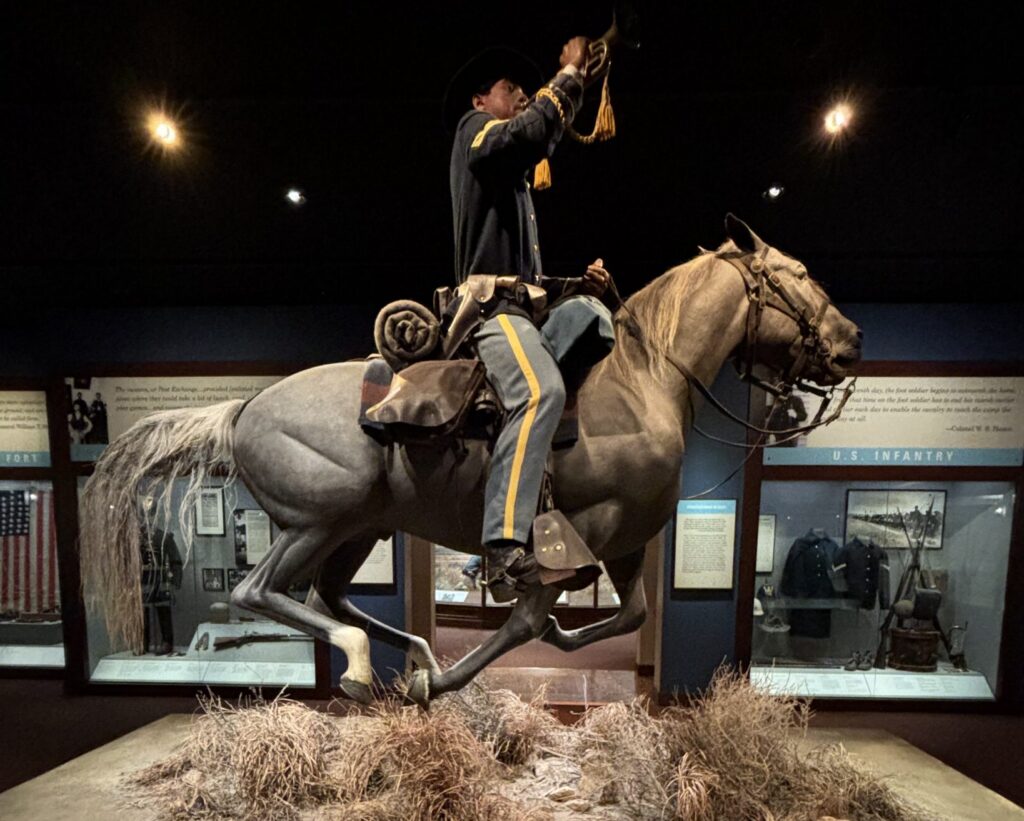
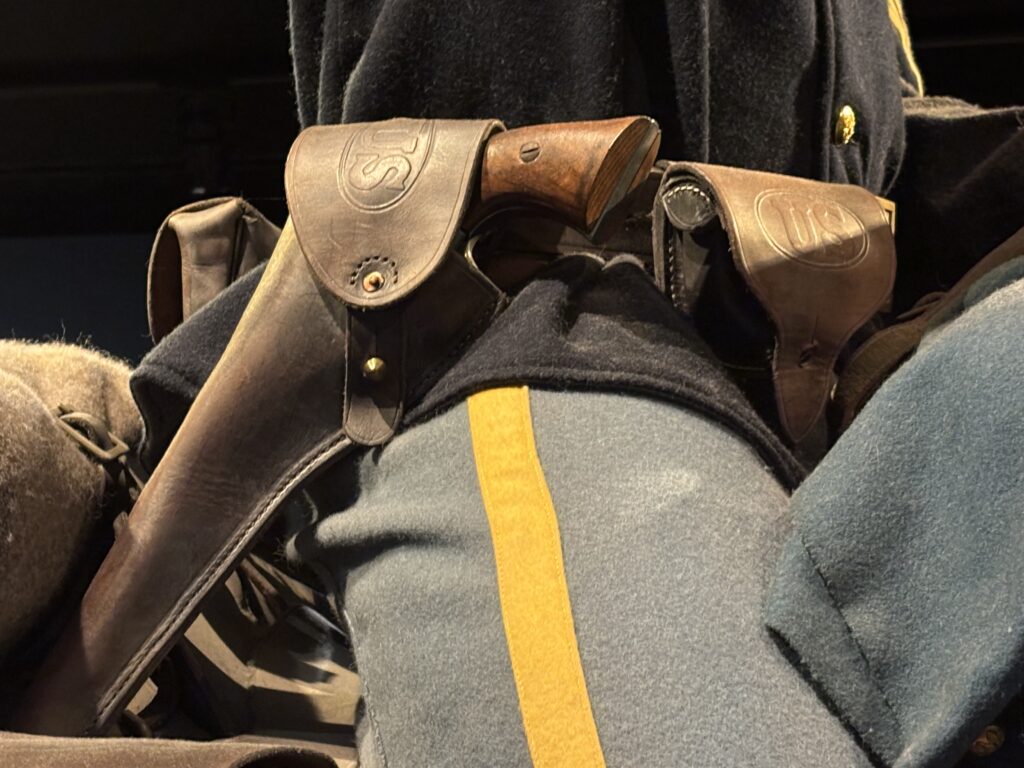
Paper cartridges for the Model 1851 Navy (and later 1860 Army) were carried in a large leather pouch that was positioned forward of the saber, on the left side. This mostly open area was chosen for its availability, and for the ease of access that it afforded the right (loading) hand. A smaller pouch for percussion caps neatly fit on the right side of the belt, in the more restricted space between the buckle and the holstered revolver.
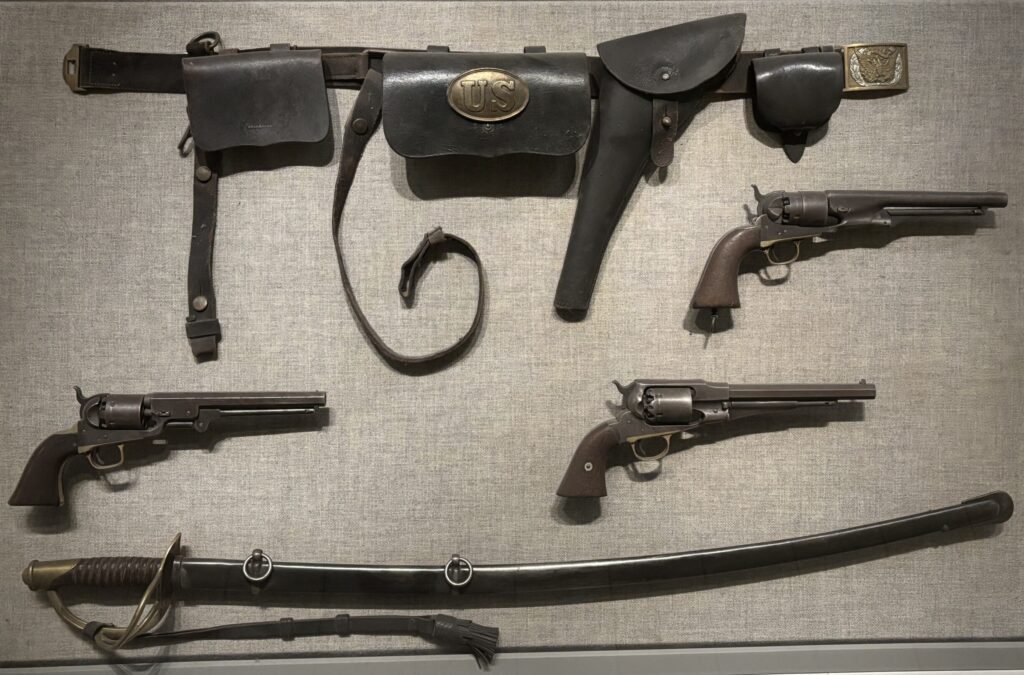
This pattern of carrying spare cartridges on the left, forward of the saber, and the butt-forward gun on the right, largely continued with the fielding of the Colt Model 1873 / SAA (although it seems some troops smartly carried spare cartridges in modified percussion cap pouches on the right side, forward of the gun).
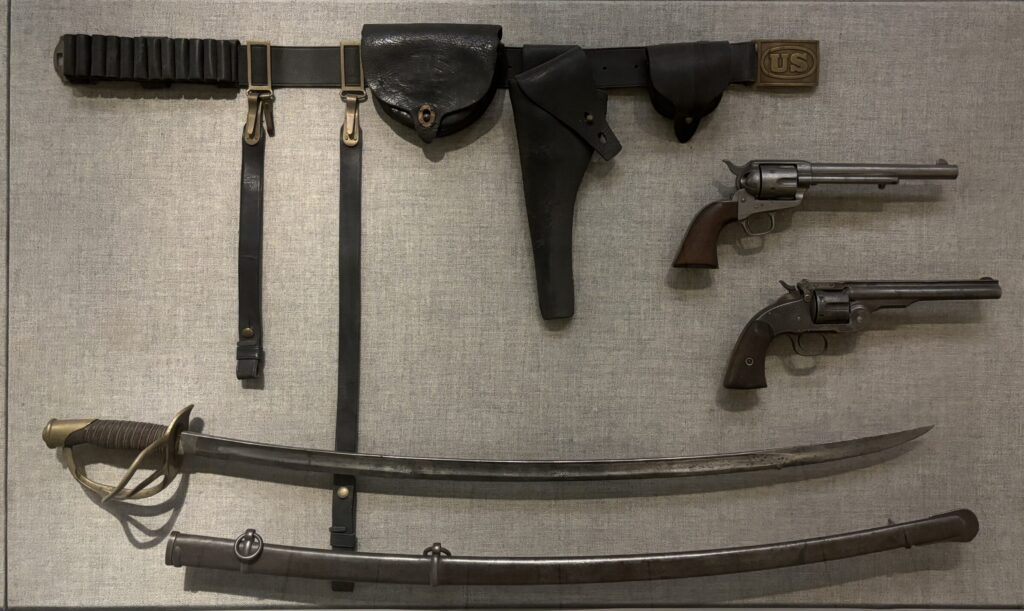
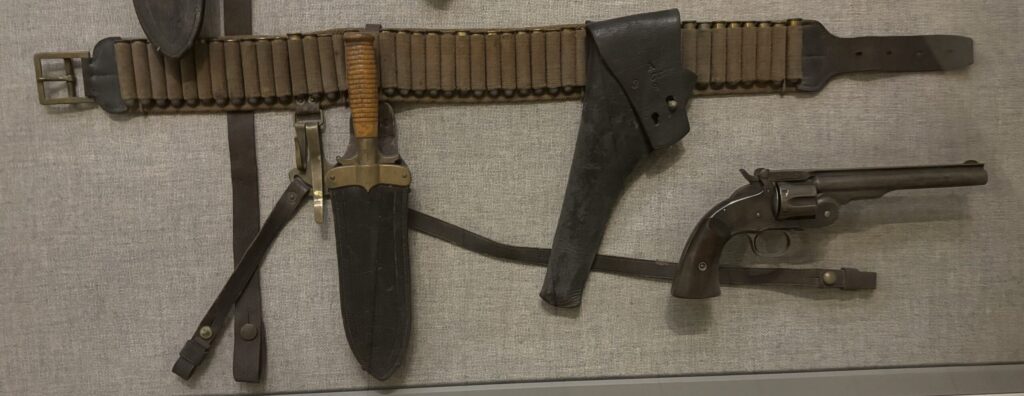
When the Colt 1892 became the service’s first, double action, cartridge-fed, revolver, the Army continued the established pattern with the Model 1892 holster, that was made to be worn on the right side, and hold the gun in a butt-forward presentation.
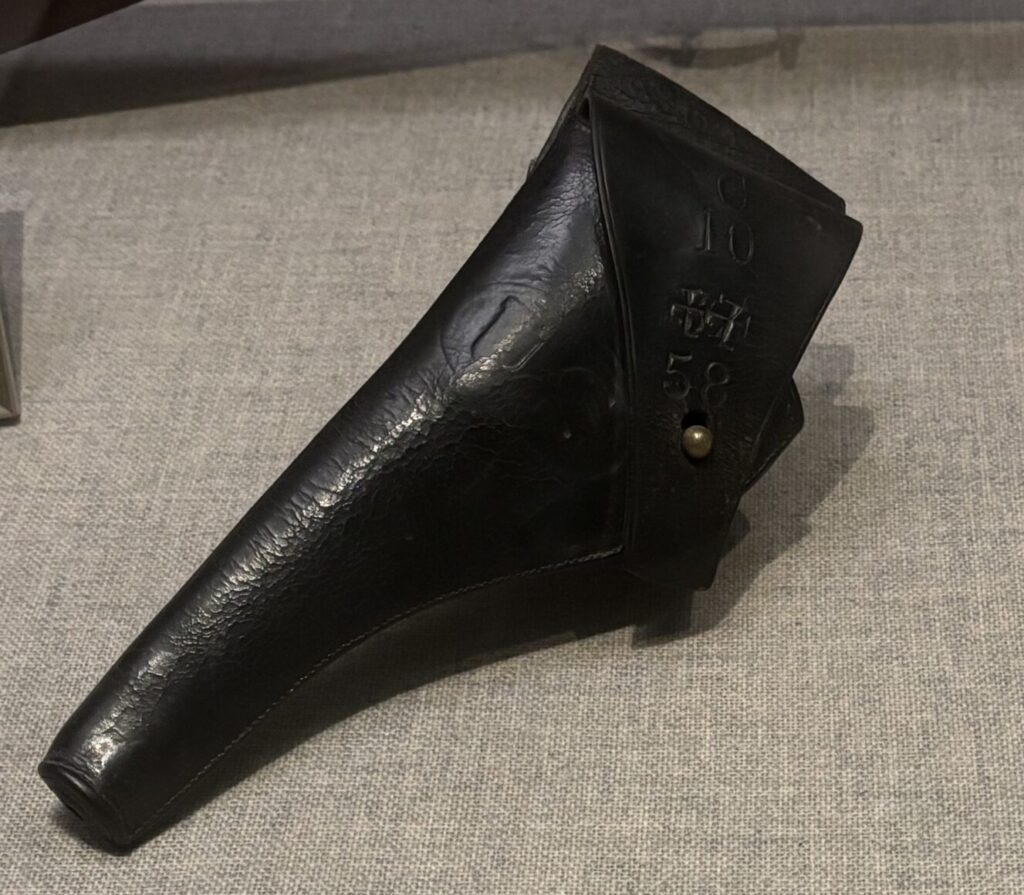
The Model 1892 holster would later be modified to accommodate the Army’s new Model 1909 and 1917 revolvers, and by The Great War, the standard setup for a revolver-packing Doughboy was a 1917 revolver carried “cavalry style” on the right side, even though saber use was no longer a prime consideration. The spare ammo (by now, .45 ACP cartridges in moon clips) was still carried in pouches (now made of canvas) that hung on the left side, where they wouldn’t interfere with the holstered gun on the right.
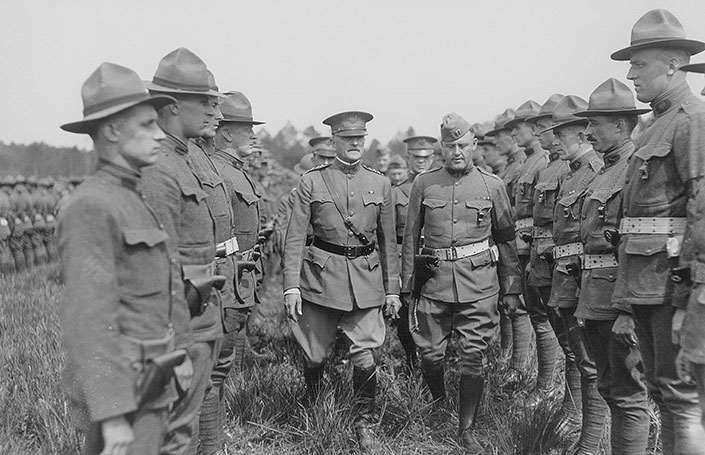
Besides keeping it out of the way, I suppose carrying the ammo on the left helped to offset the weight of the gun on the right. It may also have deconflicted with the chest straps that were sometimes used in the era. However, knowing the military as I do, I suspect the arrangement of carrying spare revolver ammunition on the left side had more to do with appearance and tradition, than utility. Regardless, it did make it more awkward for the strong hand to reach the spare ammo, especially if you were squatting, kneeling with your strong knee down, or lying flat on your belly.
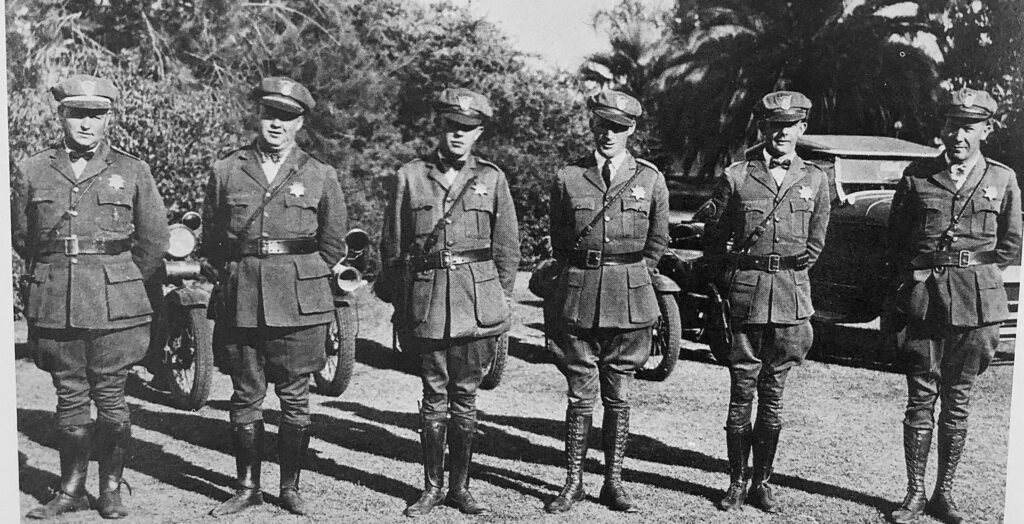
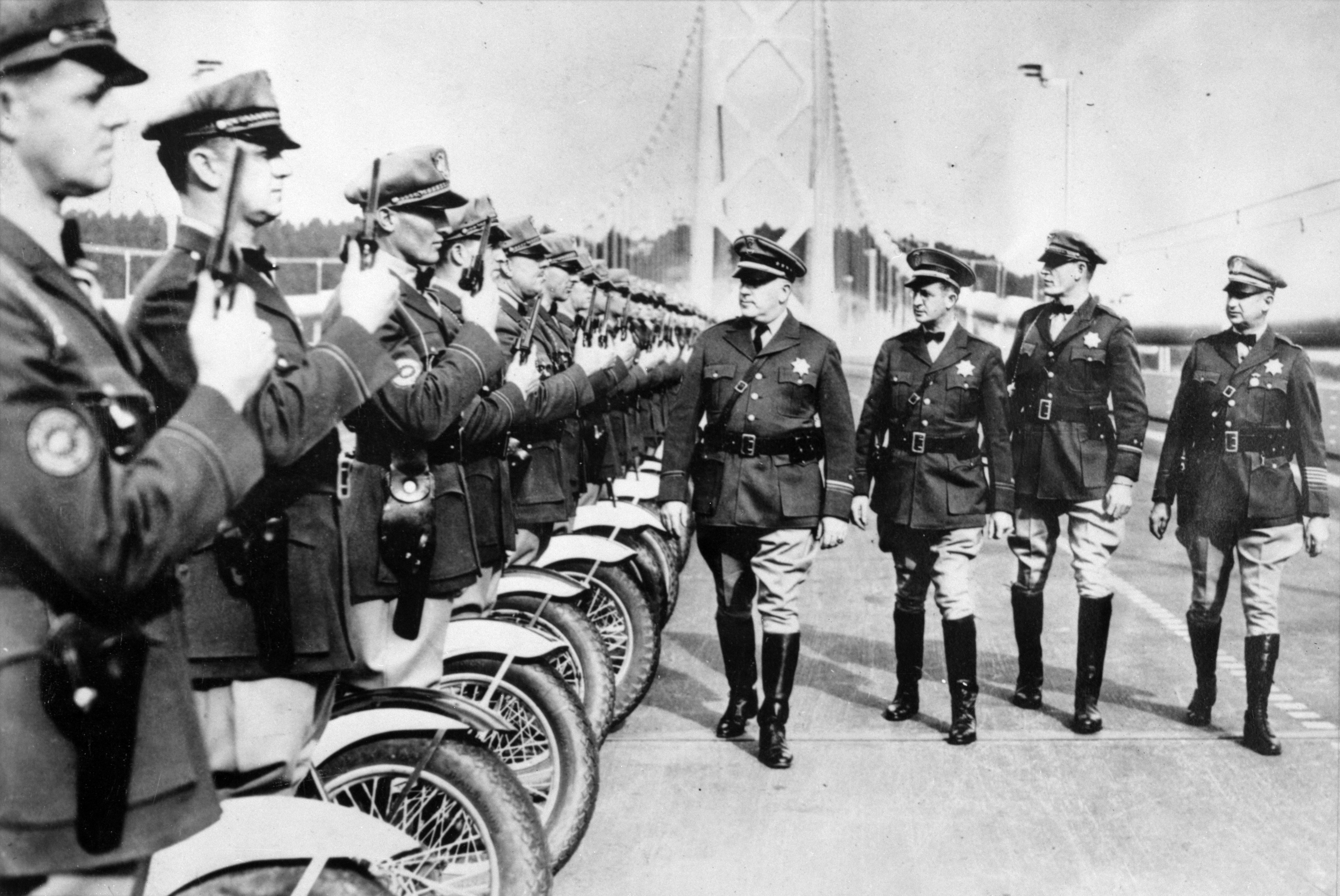
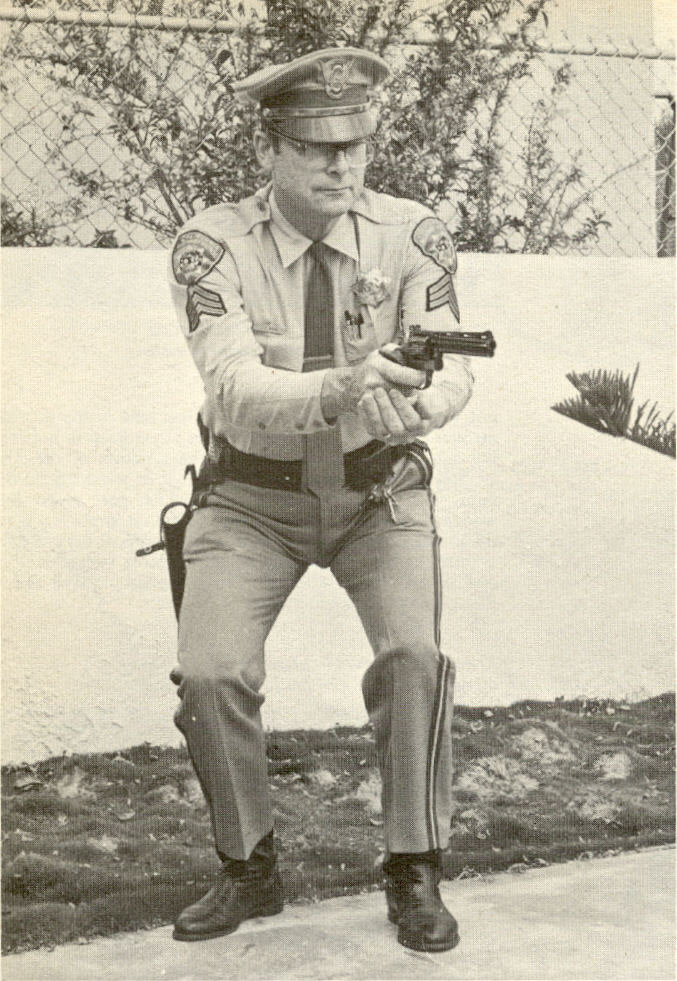
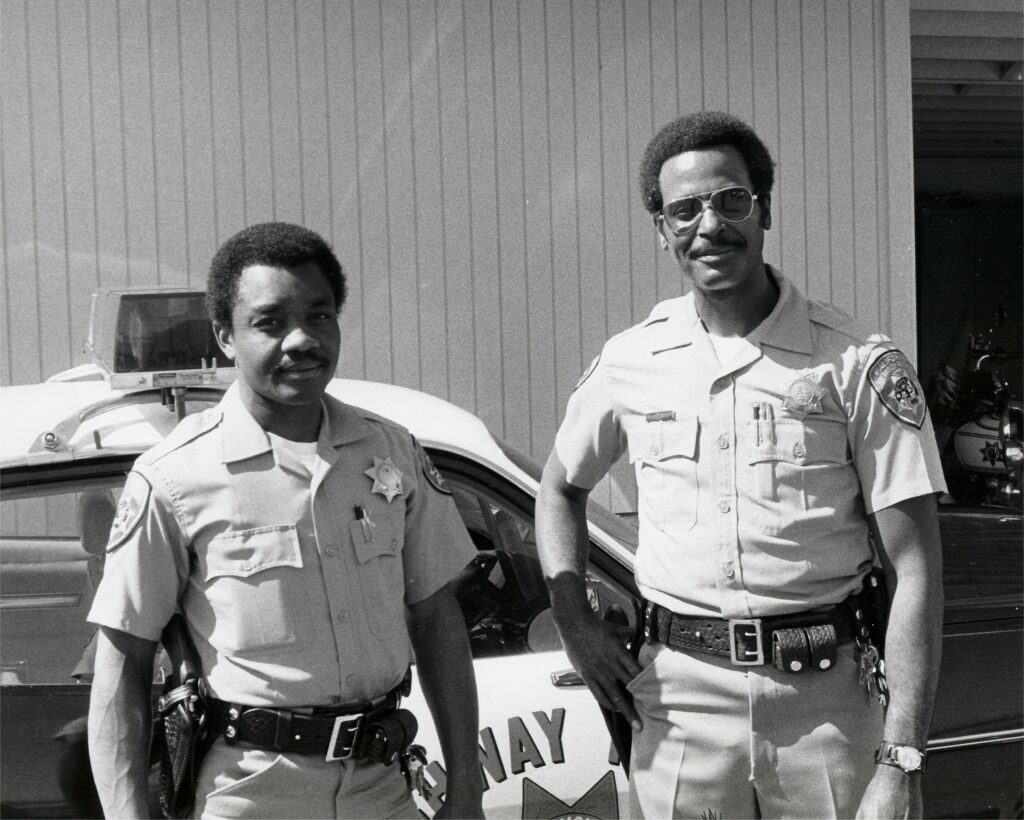
The practice stuck, though, and eventually migrated to uniformed policemen in 20th Century America, who copied the military pattern of carrying the gun on one side, and the spare ammo on the other. In many agencies (i.e., the California Highway Patrol and Los Angeles Police Department), strict uniform policies actually required the ammo pouch to be placed on the side opposite the holstered gun, as late as the 1980s.

Interestingly, the construction of the leather Sam Browne gun belt may have encouraged this practice as well, since wearing the belt “upside down” (compared to the British military standard) to place a half-lined belt’s reinforced, double layer of leather on the right (gun) side, would also place the hooks and post (that secure the buckle and tip of the belt) on the right side as well. The hooks and post would prohibit threading the ammo pouch onto the belt from that side, and the double-layer of leather would frustrate efforts to feed it onto the belt from the other end and pull it all the way around to the right front. In essence, the belt forced you into putting the pouch on the side opposite of the gun–the side where the belt’s tip was located, and where the belt was still a single thickness of leather (on the left, for an officer who wore the gun on the right).
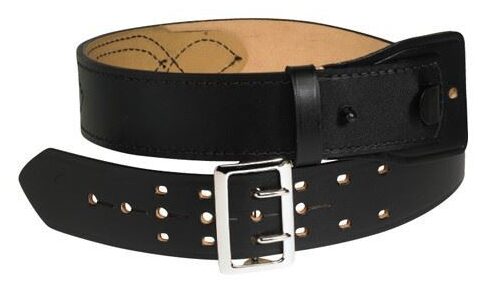
So, while the best place (from the perspective of loading efficiency) to carry spare ammo for the revolver, while in uniform, would have been on the gun side, it was usually carried on the off side, instead, for practical reasons, or to comply with regulations. This would eventually work out quite nicely when autos replaced revolvers, but it wasn’t an ideal setup for officers loading from loops, or with a speedloader. In those cases, it would have been much more efficient to carry the ammo on the gun side, instead.
Things weren’t much better for officers with dump pouches carried on the side opposite of the gun. They had to get a little creative to make it work, with techniques like the “tray” method. In this technique, a right-handed officer with dump pouches on his left front would pop the snap on the pouch and fill his left hand with loose cartridges. The empty gun would be cradled in the left hand, with the palm cupping the rounds, and the gun’s extractor rod poking down through a gap between fingers. The officer would continue holding the gun and ammo in his left hand, as he plucked a round from the cupped “tray” of his palm with his right hand, then loaded it into a chamber. Rinse and repeat, until the cylinder is full. You won’t set any speed records doing it this way, but it’s a bit easier than juggling six loose rounds in your right hand, and trying to load them into the gun without spilling any.
7.) I’ve previously argued that I don’t think it’s likely you’ll have to, or even be able to, reload your revolver in extremis as an armed citizen. Things are different for the military and police, but regular citizens just don’t seem to find themselves in situations where it happens.
That said, if you ever do need to reload your revolver while you’re still engaged in a fight, you’ll want to get it done efficiently. Why do I use the term efficiently, instead of quickly? Because efficiency denotes a lack of unnecessary movement and energy, and it’s important to eliminate that when you’re under duress. Efficiency leads to the speed that we seek.
A super-fast technique that only works in controlled and favorable conditions will fail you when the circumstances aren’t ideal, and will require you to repeat the effort. This sacrifices any potential speed advantage that the technique may have provided—it’s not efficient, and it’s not fast.
I think it’s far better to use a technique that’s marginally slower, but more reliable, in such circumstances. A technique like that might cost you an extra second or two in training, or on the playing field, but will save you from disaster when the balloon goes up. A slower technique, executed successfully on the first attempt, is more efficient (and therefore, faster) than a theoretically faster technique which is fumbled.
I think the strong hand reload is much more robust than the weak hand reload, and even if it’s marginally slower (a debatable proposition, in my case—I’m no Caleb Giddings, after all), I’d rather rely on it for survival. My “slow” strong hand reload is still much better than fumbling my “speedy” weak hand reload, when I’m playing for keeps.
You may disagree, and that’s OK. As we used to say in the early dawn of the internet, before things got all jacked up, YMMV.

For better or worse, I remain a strong-hand-reload revolver guy because (for me) it’s something I do instinctively. It’s the reverse with my semi-auto pistols.
I also belt carry all handguns in cross-draw holsters, which (again for me) is the fastest, most accessible position whether I’m standing or sitting down. That probably won’t work well for folks who have large, protuberant bellies.
I’ve spent a lot of time practicing both right-hand and left-hand reloading (I’m right-handed; there’s a reason it’s called the “right” hand), so I’m fairly proficient at both. (I do a lot of “right-handed” things with my left hand; I’m not ambidextrous, but I am bi. I know people who are so right-handed they can’t wave goodbye with their left hand; fortunately, I’m not one of them.) Nowadays I almost always reload with my left hand for two reasons: The minor one is that I can carry my speedloaders opposite the gun and balance the weight a little bit instead of adding to it on the gun side. (That sounds silly, but when you’re as old and banged-up as I am, it makes a difference.) The real reason is, I figure if I keep the gun in my shooting hand, there’s a lot less chance I’ll drop it in the stress of a fight. I’ve never dropped one yet, but then I’ve never been in a gunfight, either. Maybe I’m just too paranoid, but as the great philosopher Charles Manson once said, “Paranoia is total awareness.”
Well, I’ll be. I didn’t think I’d ever see you quote Charlie. I might just stick around, to see what you come up with, next! 😁
We’ve all got to find our own salvation. Personally, I’m less concerned about dropping the gun than the ammo/speedloader. There’s lots of gun to hang onto, but much less to get a solid grip on, with the ammo–it’s easier to fumble that stuff, I think.
It sounds like it’s working for you though, so please go forth and slay dragons with it!
You make a good point about the speedloader/ammo being more droppable than the revolver. But about the only thing I’m blessed with, besides rugged good looks, is not-quite ambidexterity that lets me do some things left-handed almost as well as, or sometimes better than, I can do them right-handed. I don’t recommend left-handed reloading for everyone, but it seems to work for me, and I’ve never dropped a speedloader or speed strip yet. (Knock on wood.)
And if I drop a speedloader I can pick it up or grab another one (one is none, etc.), but dropping a revolver with the action open is almost certain to damage it beyond useability.
Very true, which is why we all have to figure what works best for us–sounds like you have!
If my old brain is sorting the files up there right, I remember starting the academy in 1976 using belt loop loaders and then a couple of weeks in we were allowed to use speed loaders.
Big relief. Even helped me on the 50.
Thanks Mike for another excellent article.
Glad you liked it pal! You guys were progressive, adding speedloaders that early. Lots of big agencies didn’t catch up for another 10 years . . .
I entered on duty with the U.S. Border Patrol in 1978. We were issued S&W Model 19s, 4″, .357 magnum revolvers.
Our firearms training consisted of 2 hours every other week day, for 14 weeks. We were issued .38 Special wadcutter ammunition only. The course of fire was a modified PPC Match #5. Distances started at the 7 yard line, then to the 15 yard line, the 25 yard line and finally the 50 yard line. Total rounds for the qualification course was 42 rounds on the PPC course and 30 rounds on the Bullseye course.
My class never fired one round of magnum ammunition during training.
The training stressed accuracy.
We learned to reload from belt loops, loading 2 rounds at a time, utilizing the strong hand to open the cylinder and eject the empty cases. The support hand (left hand for righties) held the cylinder open and rotated it to position it for the next two rounds.
We cut off the length of the belt loops to facilitate this as the wadcutter rounds were much shorter in overall length that duty ammunition.
I late in life shot PPC for a short time. Even though using speed loaders I stuck to the technique I had drilled into my brain at the Academy.
Great, comprehensive article Mike.
Thanks.
Wynn, that’s a great checkpoint, to measure our journey. Thanks for sharing it! I’d never heard the bit about having to shorten the loops for the wadcutters–that’s a neat bit of info.
One of my buddies who spent time with the Feds is still quite adept with a 2x2x2 pouch, after all the practice he got with them. He’s almost as fast loading a cylinder with pairs of rounds as he is with a speedloader.
Forgive me if I overlooked it but you seem not to have mentioned one aspect of Ayoob’s StressFire reloading technique to get a more vertical orientation of the revolver when the action is opened. Described for the gun transferred from right hand to left hand: The intial “clamp” of the cylinder between the middle and ring fingers of the left hand and the thumb is shifted so that the extractor/ejector rod goes between the index and middle fingers.
It’s there in a photo caption. Also, the Stressfire article is hyperlinked in the opening.
Wow, that took me back, Mid Michigan Academy 1980, we actually experimented with this in class. 3 people, (2 guys and 1 woman) could load equally well using a weak hand to hold and insert cartridges from a speed loader. The rest of us were miserable failures at this. I had never heard the word ambidextrous at the time. To be fair several got much better with the “weak hand” load technique, but not me. Fortunately in laters years when we swapped out to semi autos my left hand got smarter.
Jim, I remember the transition to autos and seeing some veteran coppers inserting mags their with their strong hand, as the weak hand held the gun–old habits die hard! Now, after a few generations have grown up on autos, we’ve got the reverse happening, with auto shooters trying to load revolvers with their weak hand. Funny how things come around . . .
Having started LE in 1980, I have seen some transitions. Some good some bad. I’ve been getting nostalgic so I love this site.
Indeed you have, Sir, and not necessarily for the better!
Glad you’re enjoying the site. Tell your friends!
Thank you for the good read, Mike. I am also a fan of the right hand doing the reloading chores while the left hand holds the gun. I will trade the slight decrease in speed for the advantage in handling when things get sporty. I was taught to swap the gun and load with the right hand in the NM Law Enforcement Academy in 1988. Most officers I knew would carry speedloaders and some form of loop on either side of their Sam Browne buckle; that worked pretty well. I carried Safariland Comp II’s for my L frame in a double split six style pouch on the left side and a six-shot loop on the right side of my buckle. I could reach the loaders with my right hand satisfactorily.
About the only concession I made for PPC competition was to use my left thumb to activate the ejector rod instead of striking it with my right palm. This made reloads marginally quicker as the right hand could be headed to a loader while the left hand shucked the empties. Standard pressure wadcutters didn’t often require much force to jettison, but I didn’t trust that technique when clearing max loaded .357 cases for serious work.
I usually wear a 2X2 pouch just left of center with a small revolver AIWB these days in civilian clothes. Like you, I usually run a Simply Rugged Sidewinder speedloader pouch behind my holster, nearly back to 3 o’clock. A speed strip in my right front pocket isn’t too much trouble to add.
Thanks again for the great article and the outstanding end notes, Sir!
That sounds like a great combo to me, buddy–a pair of Comps, and a set of loops. You’d be prepared for any possibility with that setup. I’d put my loaders over to the left of the buckle as well, if I was using those tools. The loops would be much more useful on my right.
100% agree with your assessment on unloading–that’s a chore for a slap with the palm, when shooting high pressure duty ammo! No thumbs allowed.
Thank you sir for yet another good read on reloading. Just when I think the topic has been covered. But still, a good read and I enjoyed you tossing in all the historical information. Interesting how training and techniques have changed.
I’m too old and habituated to the right hand reload technique to make any changes now. Gonna have to stick to “dancing with the one who brung you to the dance” mind set.
However, I will offer up a cautionary story about changing up your reload, even a little, and what unintended problems could arise.
About once a year I pull out the S&W 4” 10 shot 22LR model 617 for the sole purpose of working on the fundamentals. You know, kind of a sight alignment, sight picture, and trigger press tune up. I bear down on it and with the only goal of trying to hit the x ring with every shot at different ranges. I do this for 5-6 consecutive range trips and shoot 200 rounds per trip. I enthusiastically recommend this kind of thing to keep skills sharp. And moreover, doing a bunch of shooting with the obnoxiously heavy double action trigger pull on rim fire revolver is really good training.
Ok, so here’s the problem. My go to indoor range charges by the half hour for lane fees and I’m a pretty frugal guy (cheap-ass) and only want to pay for 30 minutes each trip.
So, to greatly speed up reloads and have maximum trigger time I use the Speed Beez reloader w/100 shot loading block to get in my 200 rounds.
The rest of the year my range visits are simply what ever revolver I’m shooting that week along with 6-8 HKS speed loaders. The HKS speed loaders are my EDC defensive load out and I use them exclusively at the range to practice reloads when it counts. Muscle memory.
For those that don’t know, the Speed Beez reloader is a push button type in which, once lined up, I will use the palm of my hand to firmly inject the rounds into the cylinder.
Well, after 5-6 range trips and 1000 rounds, my brain decides, without my permission, that’s how to perform a reload. When I go back to my more typical range routine and reach into my pocket, pull out the HKS loader, get it all aligned and then immediately hit the twist button with the palm of my hand! Dang it, depending on the grip and gun, I jam the HKS loader into the grip/cylinder locking up the whole thing. Now I’m out of the fight holding an expensive paper weight.
Luckily, it doesn’t take but a short time to erase the Speed Beez loading technique and regain that ol’ muscle memory.
The point is, be careful in changing up something, under stress it could be disastrous.
Glenn, that’s an EXCELLENT caution, and I appreciate you sharing it with us!
By the way, the images, descriptions and history regarding early U.S. military and police holsters in endnote # 6 are excellent. Another reason for the early use of cross-draw holsters is when mounted on horses cavalrymen and cowboys could reach their revolvers easier with that style of rig, with or without flaps.
Years ago, a late friend gave me a vintage leather Ruger flap holster (stamped “Handmade for Ruger by Bianchi”) in excellent condition. It’s designed to hold a 7 1/2-inch Blackhawk, though just about any single-action revolver will fit well, except for a tiny piece like the Ruger Bearcat. An online source states that Bianchi produced those Ruger holsters from 1977 to 1981 and about 170,000 were made.
Yessir, that was unmentioned, but understood. A strong side, top draw holster certainly doesn’t mix with being mounted on a horse!
On your point about cowboys and cavalrymen being able to reach the gun easier, it’s worth thinking about the mechanics of reaching for a gun on horseback-if you wear it strong-side, grips facing back like we wear duty guns today, the barrel gets pushed away from your body by the leg as it fits into the Stirrup, driving the grips into your side and making it nearly impossible to draw. Crossdraw carry allows the angle of the barrel to avoid being pushed away from the body and allowing the draw to be possible.
Mike, you’ve touched on a subject that is somewhat akin to the Boeing vs. Airbus, GE vs. Rolls-Royce (jet engines, folks), Ford vs. Chevy; and Diet Coke vs. that other disgusting fizzy drink in blue cans . . . and you did a superb job in detailing those techniques.
During my second decade on soil, my primary handgun experience was with a Ruger Super Single Six that was a birthday present from my paternal grandfather. I got pretty good with it, and the overall handling as well as loading/unloading procedure became second nature. To this day, with my Super Single Six Convertible and 357/9mm Blackhawk, it’s like riding the proverbial bicycle.
When I started in patrol school in early 1972, I was now immersed into the world of the double action revolver. Our chief firearms instructor was a crusty lieutenant who, in our eyes, had probably been around when Prohibition shootouts were a thing. Our department issued a hodge podge of Colt and S&W .357 revolvers at the time, along with the fashionable LAPD type cartridge dump boxes. In addition to proper weapon handling skills, shooting technique, and some Newhall wisdom, and tactics, he placed a good bit of emphasis on the reload. Our qualification course required a good number of reloads, and his objective was to get us to where we could reload fast AND efficient. What was drilled into our little brains was probably a mix of several of the ‘techniques’ Mike has referenced.
Maintaining control of the revolver was the paramout objective. If you lose tactile control of your gun, then no speed loader is going to make up for that. In retrospect, our training was closest to the universal reload procedure, with some slight variations. The emphasis at the time was the weak hand controlling the cylinder was cupped under it for when rounds got fumbled, we could recover them from our hand instead of the rounds hitting the ground. We were also instructed and tested on strong-hand-disabled reload by getting the cylinder open, dumping the empties, sliding the barrel under our duty belt enough to wedge the cylinder open, reload the chambers, and grasp the gun, close the cylinder and fire weak hand.
All of that was fine, and by the end of the academy time, each of us had gone through probably close to 600 rounds of wadcutters on the training range. That was a lot of reloading, and building of muscle memory. Last few range sessions had us step up to using full power .357 loads, and things got interesting. We had to qualify with the .357 Magnum rounds to be put out with an FTO. Fast forward to being on a rural stretch of highway, after midnight, in rain, and having to reload. The brain-gaming of having to reload in such scenarios was common for those of us who were actually gun nerds. It wasn’t long before I acquired some HKS speed loaders and kept those close by even though they were not authorized at the time.
Then along came the Irritable People Squabbling Constantly (IPSC) and they allowed police duty rigs. Despite the fact that by @ 1990, we had gone to semi-auto duty pistols, I still shot my revolvers against guys with hopped up 1911s with compensators and primitive Tasco PDP-1 scopes. Most of these matches were at indoor ranges, and my acumen at revolver reloading got better as time went on. Later larger outdoor IPSC, and later IDPA matches polished my speedloader skills.
The long and short of it is that there is no one ideal technique. You find a system that works for you even under less than ideal circumstances, and practice it until you can do it in your sleep. For those Baroque era music buffs, the great Johaan Sebastian Bach was known to tell his students: Practice doesn’t make perfect, perfect practice makes perfect.
Great thoughts, thank you! Only at RevolverGuy can one read a discussion about reloads and Bach! 😁
When I carry a revolver (pocket in summer, cross-draw on belt in winter), I always carry my speed loaders on my weak/left side. So, I’ve always practiced reloads with my weak/left hand. I have tried dominant-hand reloads like the “FBI Reload” where I move the revolver into my left hand and reload with my right. However, that’s never felt any faster than doing a left-hand reload, and it requires me to move the firearm to my left hand and then back to my right. I just don’t think that’s very optimal; for me, anyway.
Wow, what a write up! Deep links to some of RG’s greatest hits and endnotes that would make a great article on their own.
Reading your article and revisiting the back catalog I realized I’m some sort of ambidextrous when refilling my wheel guns.
In my early professional years I carried an M49 (the real Bodyguard) as a second gun, frequently in my left outer pocket, while my HiPower and its spare magazines were sealed against Minnesota winters under a heavy coat. Didn’t give much thought to recharging the bellygun, but always had an HKS or Bianchi Speed Strip handy in another pocket. I switched hands to eject the empties and insert fresh cartridges with my more dextrous right hand as was the fashion.
Then I brought my GP100 to our API350 course where Gunsite regular Giles Stock taught me how to recharge with my left hand. By taught I mean rewiring my nervous system and tattooing the instructions on the inside of my skull. I mostly used Safariland Comp IIs and a couple Comp IIIs, which I came to appreciate. I was a version of high speed and low drag in those days. By the end of the week I could beat half the class recharging their 1911s. Of course the other half outdid me during the Saturday shoot off, but great fun was had. The Colonel awarded me an E-Ticket.
[Ignore misspent interval packing a Glock 22 at work…]
In my semi-retirement I’ve readopted the revolver as my preferred sidearm. No longer high speed nor low drag, I tried to simplify my manual of arms by adopting the Universal Reload. No dice with a belt gun. My left hand takes over the controls and reaches for the Comp III in the Simply Rugged Sidewinder on my left hip. The Comp III, the SLVariant with the sports adapter, or the currently unaffordable JetLoader, are much easier for my arthritic mitts to manipulate. Like the ad says, the Sidewinder is quick as a snakebite.
But for “minding my own business” EDC I carry a J-frame in my right front pocket or IWB behind the hip hanging on a Hamre Hook. I really don’t expect to need a second cylinder full, or to be granted the time to recharge if I do. I don’t care to fuss with speedloaders, though the AHolster carrier works if you can spare a pocket. Despite the odds I carry a Tuff Products Quick Strip in my right back pocket and switch hands to empty and refill my pocket guns.
When the left hand recharge works it’s appreciably faster than switching hands, at least when using a full-size gun. When things go wrong, which is more likely with the smaller guns, the traditional reload is more certain.
After reading the comments and rereading the endnotes, I saw that you solved one of the great mysteries of my life: Why did the U.S. military, in its great wisdom, revert to the butt-forward design for its holsters for the Model 1917 revolvers, after getting it right with the Model 1912 and 1916 holsters for the 1911? Turns out it was apparently frugality, not tradition, as I’d thought. (I missed that on my first reading.)
(Incidentally, if you’re a Prohibition buff, you’ve probably seen the photo reproduced in several books of an African-American Prohibition agent bashing in a barrel of booze (Oh, the humanity!) while he’s wearing a revolver in a 1917 flap holster on his left hip, so the butt is to the rear as the universe intended. At least he got it right, even if the brains in the War Department didn’t.)
Yes, they kept reusing old stock and modifying it for the new guns. They also tried to use one holster for multiple guns (i.e., S&W Schofield and Colt SAA), meaning it worked poorly for both.
Typical military.
The Indiana State Police video had another useful crumb of knowledge; if your support hand is taken out of commission during the fight, it suggests to open the cylinder, tuck the barrel into your shoe to support it while using your good hand to operate your speed loader. Although this is for people who wear actual shoes, a Croc likely won’t stabilize even a J-frame properly. (an Ugg boot might but i’m not the right guy to test this theory)
Jeb, check out our article on reloading with one hand. You can type it in the search box, or follow the hyperlink at the beginning of this article. You’ll see that same technique discussed.
I’m still thrilled that I’m able to use a speed loader without getting into hot water!
Mike, your article provides welcome relief dispelling the belief that there’s only one way to correctly reload a revolver, as some gun pundits seem to imply.
Thanks again!
Great article Mike!
I was interested to see somebody else mention bashing Safariland speedloaders in can damage the crane yoke. I did the same to a new GP100 reloading strong hand and my gorilla paws nearly pushed the crane yoke a good deal out of the frame. I was heartbroken to say the least! If those blasted things aren’t perfectly centered on the extractor star pin they just don’t want to go!
HKS man for life, they’re slower, but I’ve they have never shed rounds downrange when I’m pulling them out of pouches on the firing line. It’s hard to tell when you truly have the Safarilands truly locked down correctly on the cartridges. The HKS’s I can throw across gravel and they never come loose. As you reiterate in your article, I’ll take a minor hit to speed for the ease and reliability under stress. Still pretty damn fast all things considered, have Nick Jacques of Jox Pouches to thank for that! Wish he still made em!
Thanks Mike for another informative article. Especially the part about protecting the yoke screw! Although I use Comp I’s with my strong hand, I will now put more focus on supporting the cylinder.
Years ago me and a friend took a snub nosed revolver class taught by a retired CIA operator who had opened a training company. He had us bring HKS speed loaders and taught the weak hand reload exclusively. Since it was just the two of us in the class he had us very proficient with the weak hand reload by the end of the class. I practiced this method for a while afterwards, but as you pointed out, I started thinking there was more potential for a flub under stress, so I reverted back to the strong hand reload.
I had the chance to test both right hand and left hand reloads this past weekend at the Pat Rogers Memorial Revolver Roundup. Until Sunday I was prone to load my belt guns with the left hand method and my pocket guns with my right. Under stress it’s demonstrably possible to screw that up by mixing elements of both methods. Oops. Given my EDC is mostly Js and small Ks I’m switching to the strong hand recharge for everything, if I can…
I’m glad you got to test that Michael. I find that even though I prefer the Ayoob Stressfire system, I still frequently revert back to an earlier method that I learned first–“primacy of learning,” and all that. I can see how it would be tough to keep two different methods straight, based on frame size. I think you’re making a wise choice to settle on a single one.
I got busy helping some folks who needed a little extra, and didn’t get to see much of your reloads, but what I saw looked real good. Great job, in class! It was lots of fun working with you.
As a lefty, I’ve found this to be the best method for muscle memory and gross motor skills under stress.
1. I press the cylinder release forward with my shooting hand trigger finger. (I’ve had Ruger Revolvers and the button press is a tiny bit more difficult to actuate in your shooting grip. I’ve never owned a Colt)
2. Grab the cylinder through the opening while pushing it open with my support hand and tip the gun vertical, so the empties are facing straight down. Usually after only 1 cylinder of fire the forcing cone won’t be red hot, but you do risk a burn with your thumb in the frame.
3. SMACK the ejector rod with my left hand palm. The #1 mistake you see YouTube gun experts make is getting too cute and soft with the ejector rod. They like to give it a little light wiggle with one finger with the gun horizontal, and you always see cases failing to extract. If you’re using a speed loader, a case hung up in the cylinder blocks your reload completely.
4. Pointing the gun downwards now, I either use a speed loader or speed strip with my shooting hand while holding the revolver by the cylinder with my support hand. I have a holster from Simply Rugged that allows a speed loader to ride alongside my model 60. Otherwise it’s 1-2 speed strips in a pouch or pocket because they carry flat. You can practice and get good at loading 2 at a time.
5. I shut the gun with my support hand while re-acquiring my firing grip and brining the sights up at the same time.
It’s a long description but it’s pretty fast and fool proof for me. Practice makes perfect gang. Revolvers are actually a great ergonomic choice for left handed shooters, vs something with a right hand only safety for example.
Great stuff, thank you! I see right-handers commit many of those errors, too.
Are you using the Boomer holster from Rob? We’ve got an article about Rob’s new Bellygunner holster coming tomorrow–it incorporates a loader pouch with the holster for those who like Appendix Carry.
The Boomer, I bought it a few years ago, it’s excellent for strong side carry and can go IWB or OWB. It rides too deep for appendix on me and the angle of the butt is wrong.
I’m definitely a customer for the Bellygunner, it’s been a sticky holster appendix for me this year. I tried one from Harry’s but I find it both uncomfortable and not great concealment for me.
This is pretty much the exact same technique I use, and for the exact same reasons. When it comes to actuating the cylinder release, I’ve found that using the pad of my trigger finger works best for pushing a S&W release forward, while curling my finger and using the side of my knuckle pushes in a Ruger release more naturally. With Colt, I can usually slide the side of my finger into the slot and pull it back fairly easily. After a bit of practice, the procedure is nearly as instinctive as reloading the brass-chucker I use on duty. Mr. Mike is right, we wrong-handers usually do get overlooked in these kinds of things, but at least sensible techniques exist for these kind of things instead of trying to manipulate single-sided safeties like you mentioned. 😂
Ive handled some Colts, and I think I would “grab” the release with my curled trigger finger and pull it. The 2.5” Matte black Python is on my short list of next carry guns.
A little add on from the competitive shooting side- I still do a traditional strong hand reload, even using Comp 3s, in Classic Division ICORE and IDPA. While the weak hand load can be a little faster, and seems to make more sense to people that grew up with autos, I find it doesn’t work in a wide variety of circumstances- namely, loading while moving is a pain in the butt with a weak hand load. And getting the empties out while moving, working the ejector rod with a weak hand, can leave the gun at a weird angle they may not allow rounds to fall out.
And it’s a little harder to stay safe, as the gun is kind of awkward pointed straight down. It’s odd trying to move and load like that. Try it yourself sometime reader, point a gun at the ground a foot in front of your feet and then try to run and turn quickly.
Unfortunately, a great deal of competitive shooting with wheel guns involves moon clips, which solve a lot of the above problems. Empties always fall out since the rounds are connected, and they go in much easier since they’re small and don’t have any buttons or knobs to work. But moon clip guns are extremely uncommon for conceal carry or service use, so the advantages they have as a weak hand technique is pretty much confined to the shooting sports. (And even some moonlcip users use a strong hand reload, Jerry being the archetypical example)
Darren, thanks for that! I appreciate you chiming in, since I’m not experienced in that world.